Posts summarizing Anthropic guidance recommend XML-style tags for task, context, constraints, and output structure, plus nested priorities and examples. Use it when briefs keep drifting, but treat claimed quality gains as anecdotal until you test your own prompts.
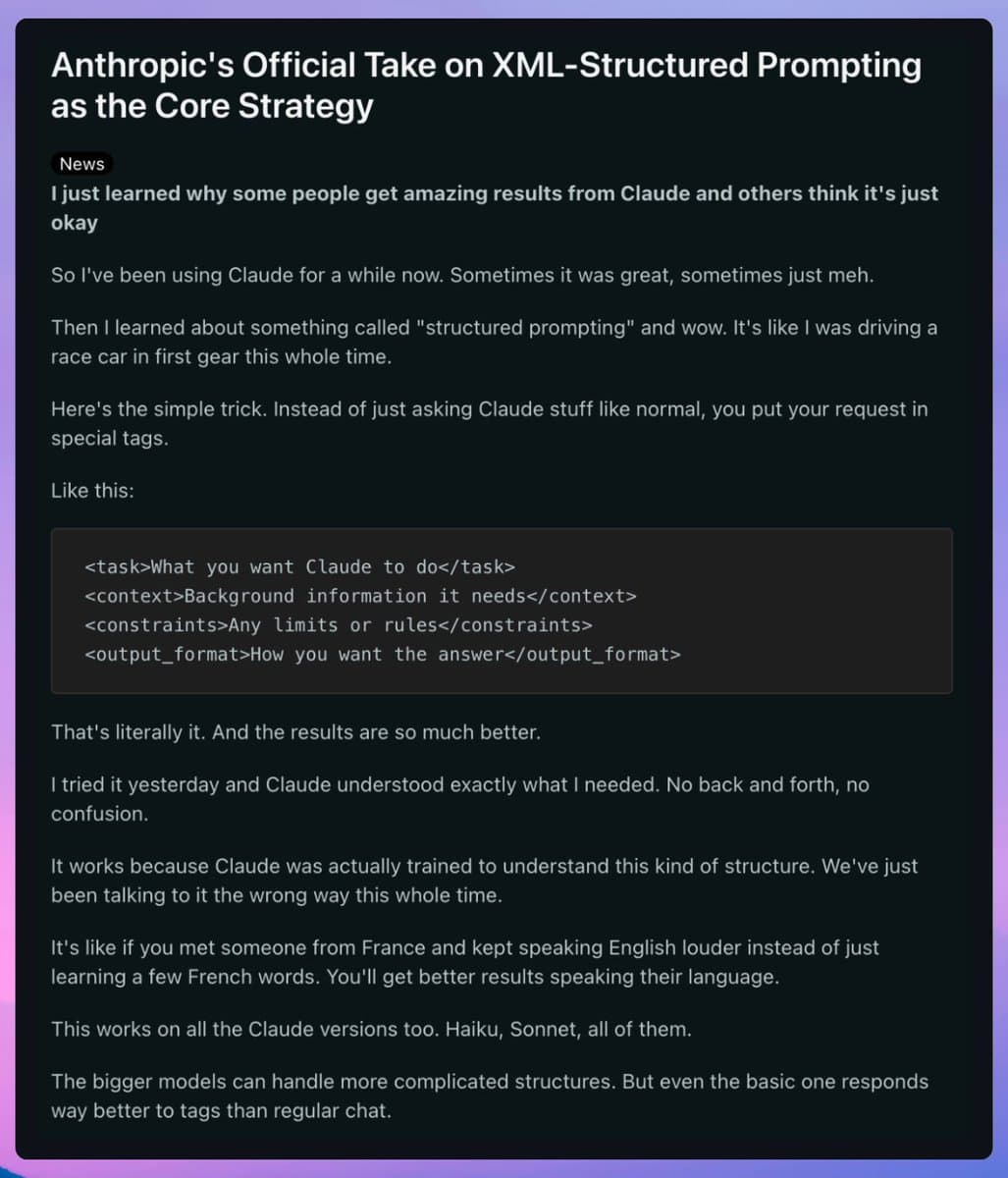
The practical shift is simple: stop writing one long brief and start labeling each part of the job. The thread's starter template in the basic template uses four buckets — <task>, <context>, <constraints>, and <output_format> — which maps neatly to creative work like moodboards, shot lists, lyric rewrites, or scene treatments.
That structure is meant to tell Claude what each block is for, not just what words to parse. In the tag explainer, the author describes tags as separate context containers, and the hierarchy example adds that outer tags carry the main objective while nested tags hold audience, tone, or style details.
The clearest creator use case is reference handling. Instead of mixing inspiration and instructions in one paragraph, the isolation demo shows separate <good_example>, <bad_example>, and <your_task> blocks so the model can borrow the right pattern without copying the wrong one. That is useful when you want a trailer script in the rhythm of one sample, but not its clichés.
Constraint-heavy briefs are another good fit. According to the validation example, a dedicated <validation_rules> block can specify exact length, section count, and citation requirements; the before-after prompt pairs that idea with a tagged product-description prompt that the thread says outperformed a plain-English version.
This is a workflow recommendation, not a confirmed product launch, and the strongest claims in the thread are anecdotal. The post says XML prompting works across Claude models in the model note, but the quoted gains — better quality, stronger constraint-following, less hallucination — are examples from one creator's summary rather than published benchmark results. For creative teams, that makes the technique promising precisely because it is easy to test against your existing prompts.
A shared prompt pack uses Claude's XML structure for channel planning, title testing, upload systems, Shorts funnels, retention rewrites, and competitor audits. Use the templates when you want the model to ask for constraints before it drafts strategy.
 release
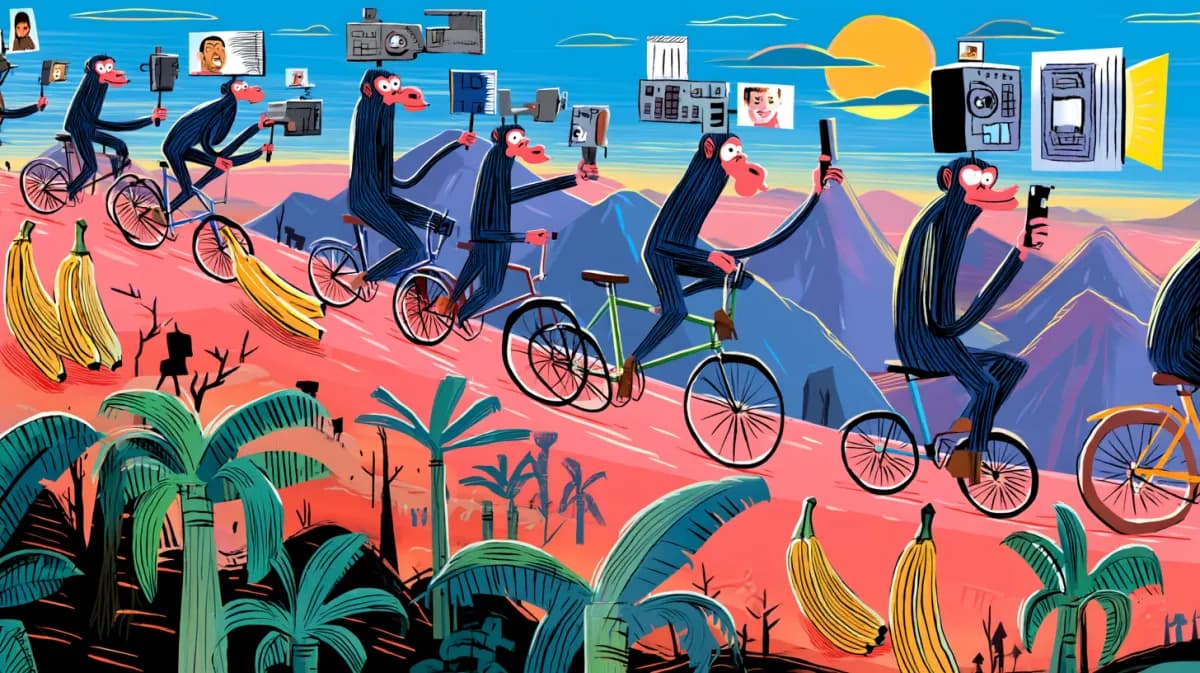
Topview added Seedance 2.0 to Agent V2, pairing multi-scene generation with a storyboard timeline and Business Annual access billed as 365 days of unlimited generations. That moves longform video workflows toward editable sequences instead of stitched clips.
 workflow
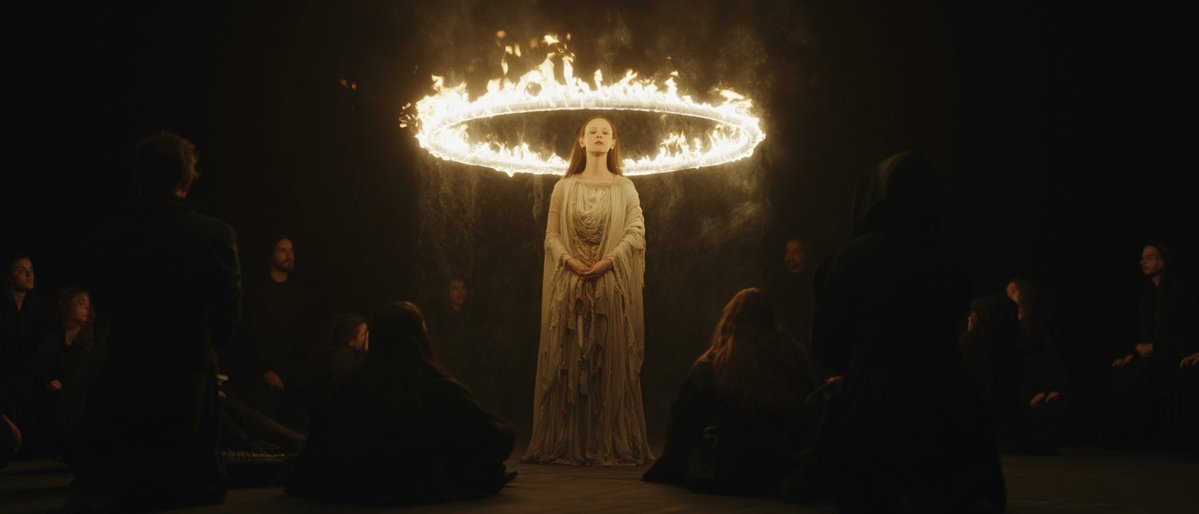
Creators are moving from V8 calibration complaints to darker film-still scenes, fashion shots, and worldbuilding tests, with ECLIPTIC remakes showing stronger depth and lighting. Retest saved SREF recipes if you rely on V8 for cinematic ideation.
 workflow
A shared workflow converts GTA-style stills into photoreal images with Nano Banana 2, then animates them in LTX-2.3 Pro 4K using detailed material, skin, vehicle, and camera prompts. Try it for trailer-style previsualization if you want more control at lower cost.
 workflow
Shared Nano Banana 2 workflows now cover turnaround sheets, distinctive facial traits, and photoreal rerenders that keep the framing of a reference image. Use one prompt grammar for concept art, editorial portraits, and animation prep.
Content isolation works differently. <good_example>This is how to do it well</good_example> <bad_example>Avoid this approach</bad_example> <your_task>Now apply the good example</your_task> Claude treats each tag as a separate context space. Prevents contamination between Show more
Prompt engineering is dead. Anthropic just published their internal playbook on what actually matters: XML-structured prompting. Only 2% of users know this exists. Here's what changed:

This works across all Claude models. Haiku, Sonnet, Opus. The bigger models handle more complex tag hierarchies, but even Haiku responds better to structure than conversational prompts. You're speaking Claude's native language.


