MiniMax introduced a flat-rate Token Plan that covers text, speech, music, video, and image APIs under one subscription. It gives teams one predictable bill across modalities and can be used in third-party harnesses, not just MiniMax apps.
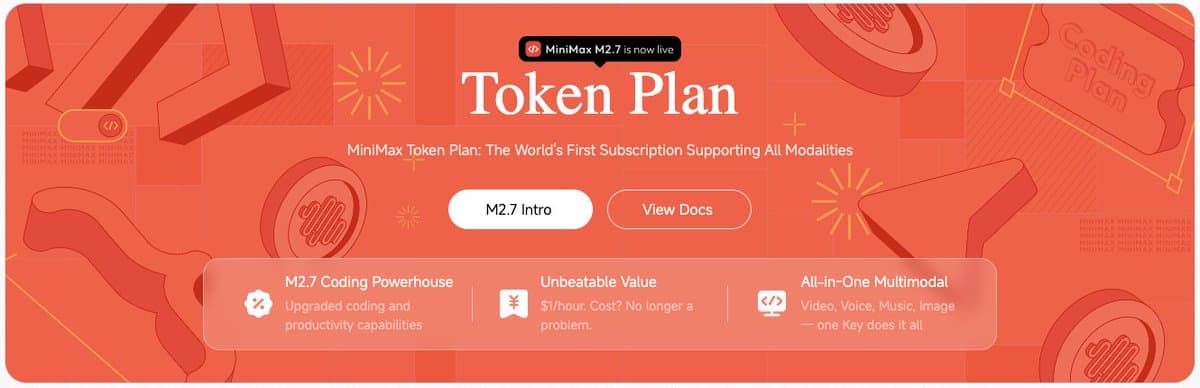
MiniMax's launch post says the Token Plan is a single subscription for "text, speech, music, video, and image" APIs rather than separate usage-based billing across modalities launch thread. That makes this more of a packaging and procurement change than a new model release, but it is still an implementation-level update for teams that have been mixing generation modes inside one product.
The attached [img:0|pricing table] shows the plan structure spans M2.7 text requests plus daily allowances for Image 01, Speech 2.8, Music 2.5, and Hailuo 2.3 video generation at multiple tiers. MiniMax's plan details also points developers to a subscription page via the Token Plan page and to an open multimodal toolkit via the ClawHub toolkit.
MiniMax says the Token Plan is "not restricted to specific websites and applications" and works in "favorite third-party harnesses" harness support. For engineering teams, that is the key operational detail: the subscription is being positioned as API capacity that can travel into external agents and dev tools, not just MiniMax-owned surfaces.
MiniMax also says "pricing and M2.7 five-hour usage remain the same as the Coding Plan" plan details. According to the pricing table post, the entry M2.7 tier starts at 1,500 requests per five hours and scales to 30,000 requests per five hours on the highest tier, while non-text modalities are capped by per-day quotas such as images, speech characters, songs, and short video generations.
Physical Intelligence says its RL token compresses VLA state into a lightweight signal that an on-robot actor-critic can adapt in minutes. This matters for last-millimeter manipulation, where full-size models are often too slow or too coarse to tune online.
 release
OpenClaw shipped version 2026.3.22 with ClawHub, OpenShell plus SSH sandboxes, side-question flows, and more search and model options, then followed with a 2026.3.23 patch. Teams get a broader plugin surface, but should patch quickly and review plugin trust boundaries as the ecosystem grows.
 release
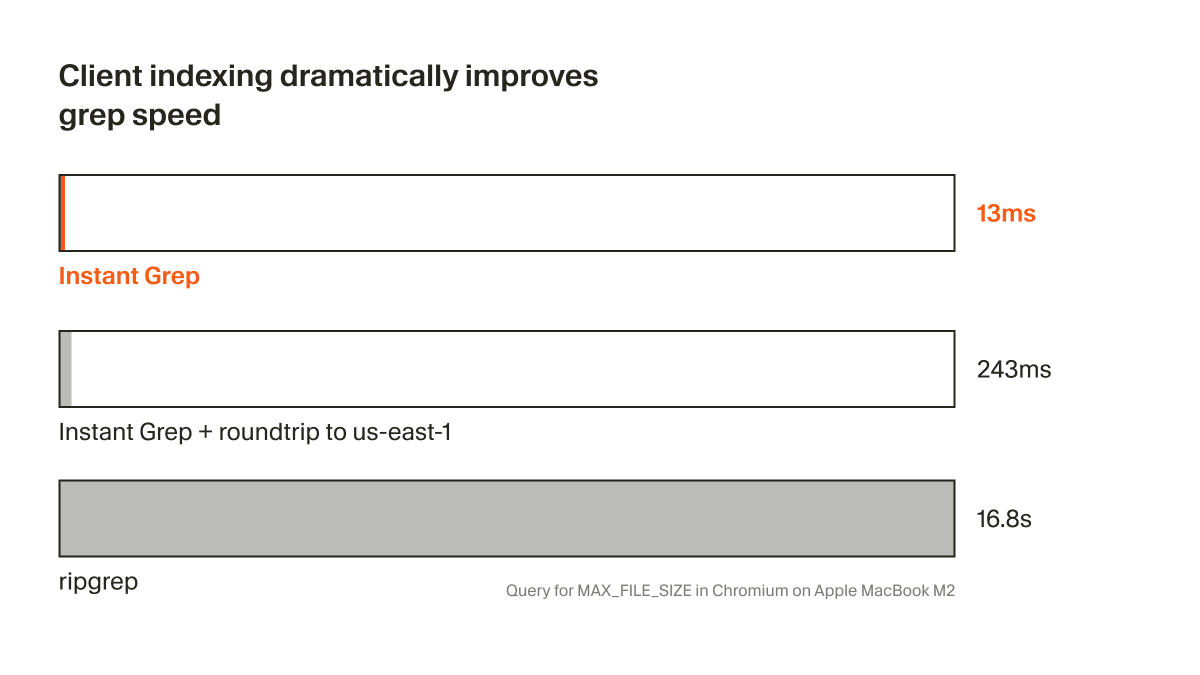
Cursor shipped Instant Grep, a local regex index built from n-grams, inverted indexes, and Bloom filters that drops large-repo searches from seconds to milliseconds. Faster candidate retrieval shortens the coding-agent loop, especially when ripgrep-style scans become the bottleneck.
 breaking
ChatGPT now saves uploaded and generated files into an account-level Library that can be reused across conversations from the web sidebar or recent-files picker. It removes repetitive re-uploading and makes past PDFs, spreadsheets, and images part of a persistent working context.
 breaking
Epoch AI says GPT-5.4 Pro elicited a publishable solution to one 2019 conjecture in its FrontierMath Open Problems set, with a formal writeup planned. Treat it as an early milestone worth reproducing, not blanket evidence that frontier models can already automate math research.
Introducing the MiniMax Token Plan: First All-Modality API Subscription Flat-rate API access to MiniMax's leading text, speech, music, video, and image models. Stop juggling multiple unpredictable bills for different modalities. One key. One predictable bill. All modalities. Show more

MiniMax trains world-leading models across all modalities: text, speech, music, video, and image. MiniMax Token Plan usage is not restricted to specific websites and applications and can be used in all of your favorite third-party harnesses.