ChatGPT now saves uploaded and generated files into an account-level Library that can be reused across conversations from the web sidebar or recent-files picker. It removes repetitive re-uploading and makes past PDFs, spreadsheets, and images part of a persistent working context.
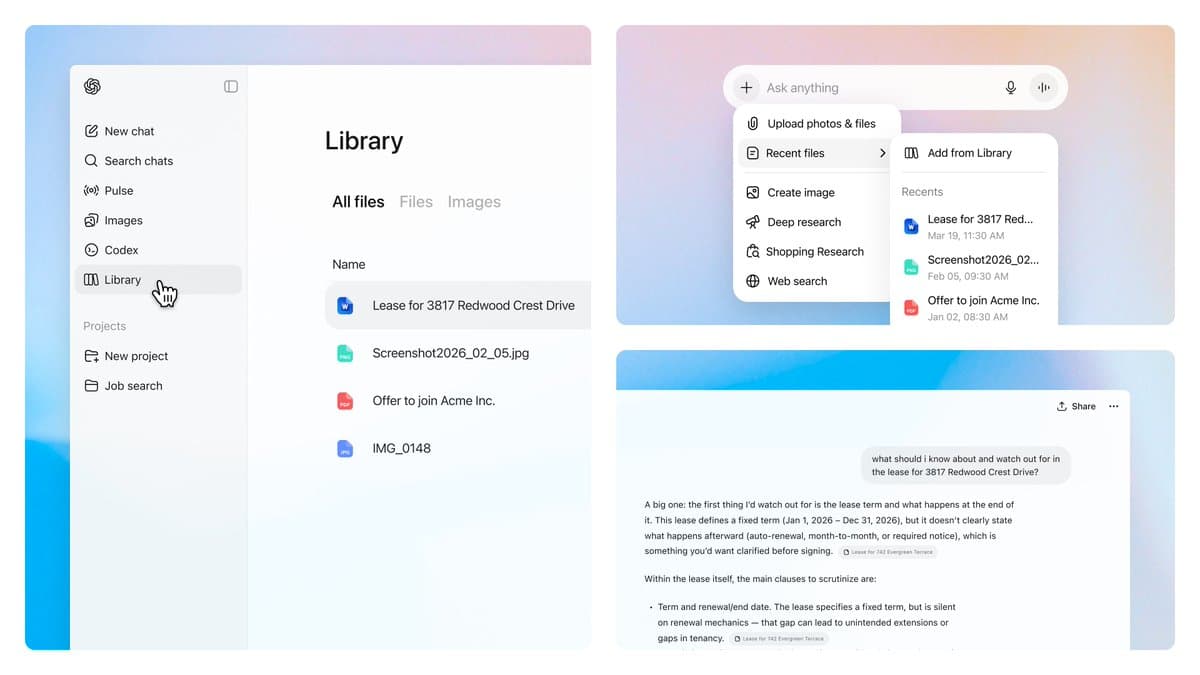
Library that automatically saves uploaded and created files so they can be reused across later chats, with access from the web sidebar and a recent-files picker in the composer, according to OpenAI's rollout post and the release-notes summary.Library tab, and "ask ChatGPT about something you've uploaded" OpenAI's rollout post.Library view is web-only, while recent-file access and file search are also rolling out on iOS and Android; availability is for Plus, Pro, and Business users globally, with EEA, Switzerland, and UK access still pending OpenAI's announcement frames this as a retrieval and reuse update, not just another attachment picker. Files you upload or create in ChatGPT are now saved automatically, surfaced in a new Library tab, and available again through Recent files in the composer. The product screenshots [img:0|Library UI] show separate tabs for All files, Files, and Images, plus an Add from Library path inside the chat input.
The rollout details in the release-notes thread and the linked OpenAI help-center notes add the implementation split: Library browsing is on web, while mobile gets recent-file access and file search. That matters because the storage model now sits above any single thread. As one technical summary puts it, file storage is "separated from the original thread," so a PDF, spreadsheet, or generated image no longer has to be re-uploaded just to become usable in a new conversation.
For engineers using ChatGPT as a lightweight analysis surface, the practical change is persistent working context. Historic uploads can be pulled back into later chats for follow-up questions, document review, or cross-session iteration, which turns prior attachments into something closer to a reusable workspace than a one-shot prompt artifact. A supporting walkthrough describes it as a "centralized hub" for documents, spreadsheets, and images, and says you can ask questions about "historic uploads."
The limits still matter. The size-cap breakdown says uploads remain capped at 512 MB per file, with text and document files limited to 2 million tokens, spreadsheets to roughly 50 MB depending on row size, and images to 20 MB each. That means the launch reduces friction around reusing files, but it does not turn ChatGPT into a general-purpose large-asset repository. Early user reaction in one brief practitioner post is mostly about workflow smoothness: having files "right in ChatGPT" makes the flow "move even smoother."
Vercel Emulate added a programmatic API for creating, resetting, and closing local GitHub, Vercel, and Google emulators inside automated tests. That makes deterministic integration tests easier to wire into CI and agent loops without manual setup.
 release
OpenClaw shipped version 2026.3.22 with ClawHub, OpenShell plus SSH sandboxes, side-question flows, and more search and model options, then followed with a 2026.3.23 patch. Teams get a broader plugin surface, but should patch quickly and review plugin trust boundaries as the ecosystem grows.
 release
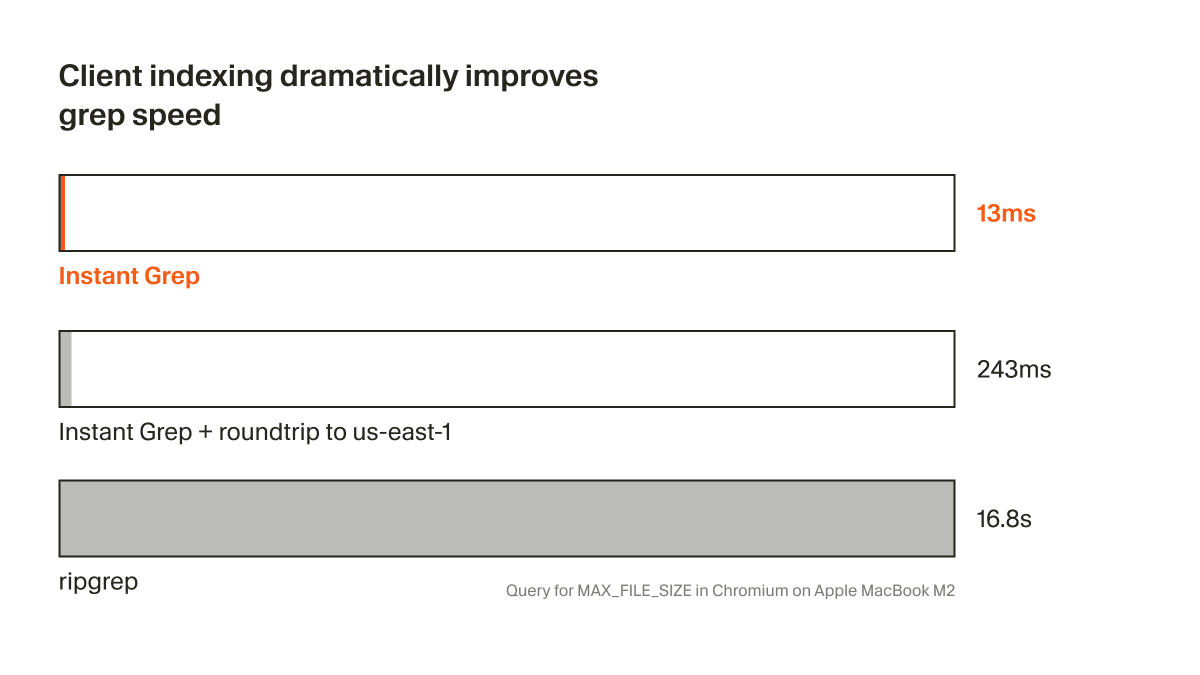
Cursor shipped Instant Grep, a local regex index built from n-grams, inverted indexes, and Bloom filters that drops large-repo searches from seconds to milliseconds. Faster candidate retrieval shortens the coding-agent loop, especially when ripgrep-style scans become the bottleneck.
 breaking
Epoch AI says GPT-5.4 Pro elicited a publishable solution to one 2019 conjecture in its FrontierMath Open Problems set, with a formal writeup planned. Treat it as an early milestone worth reproducing, not blanket evidence that frontier models can already automate math research.
 breaking
Claude can now drive macOS apps, browser tabs, the keyboard, and the mouse from Claude Cowork and Claude Code, with permission prompts when it needs direct screen access. That makes legacy desktop workflows automatable, and Anthropic is pairing the push with more background-task support for longer agent loops.
It’s now easier to find, reuse, and build on the files you upload and create in ChatGPT. You can quickly reference files in a chat using recent files in the toolbar, ask ChatGPT about something you’ve uploaded, or browse your files in the new Library tab in the web sidebar. Show more

ChatGPT now features a dedicated "Library" tab in the web sidebar, acting as a centralized hub for all documents, spreadsheets, and images you have uploaded or generated over time. You can now natively ask ChatGPT questions about your historic uploads, turning your past files Show more


ChatGPT can now carry your documents across conversations. ChatGPT’s new Library turns file uploads from one-off chat attachments into a reusable account-level store, automatically saving PDFs, spreadsheets, presentations, documents, and images so you can bring them back into Show more
It’s now easier to find, reuse, and build on the files you upload and create in ChatGPT. You can quickly reference files in a chat using recent files in the toolbar, ask ChatGPT about something you’ve uploaded, or browse your files in the new Library tab in the web sidebar.

It’s now easier to find, reuse, and build on the files you upload and create in ChatGPT. You can quickly reference files in a chat using recent files in the toolbar, ask ChatGPT about something you’ve uploaded, or browse your files in the new Library tab in the web sidebar.
OpenAI updated ChatGPT release notes confirming the rollout of file storage in ChatGPT, where uploaded or created files like PDFs, spreadsheets, and images are now automatically saved to your Library You can reference saved files via recent files in the composer or browse them Show more


