Vercel Emulate added a programmatic API for creating, resetting, and closing local GitHub, Vercel, and Google emulators inside automated tests. That makes deterministic integration tests easier to wire into CI and agent loops without manual setup.
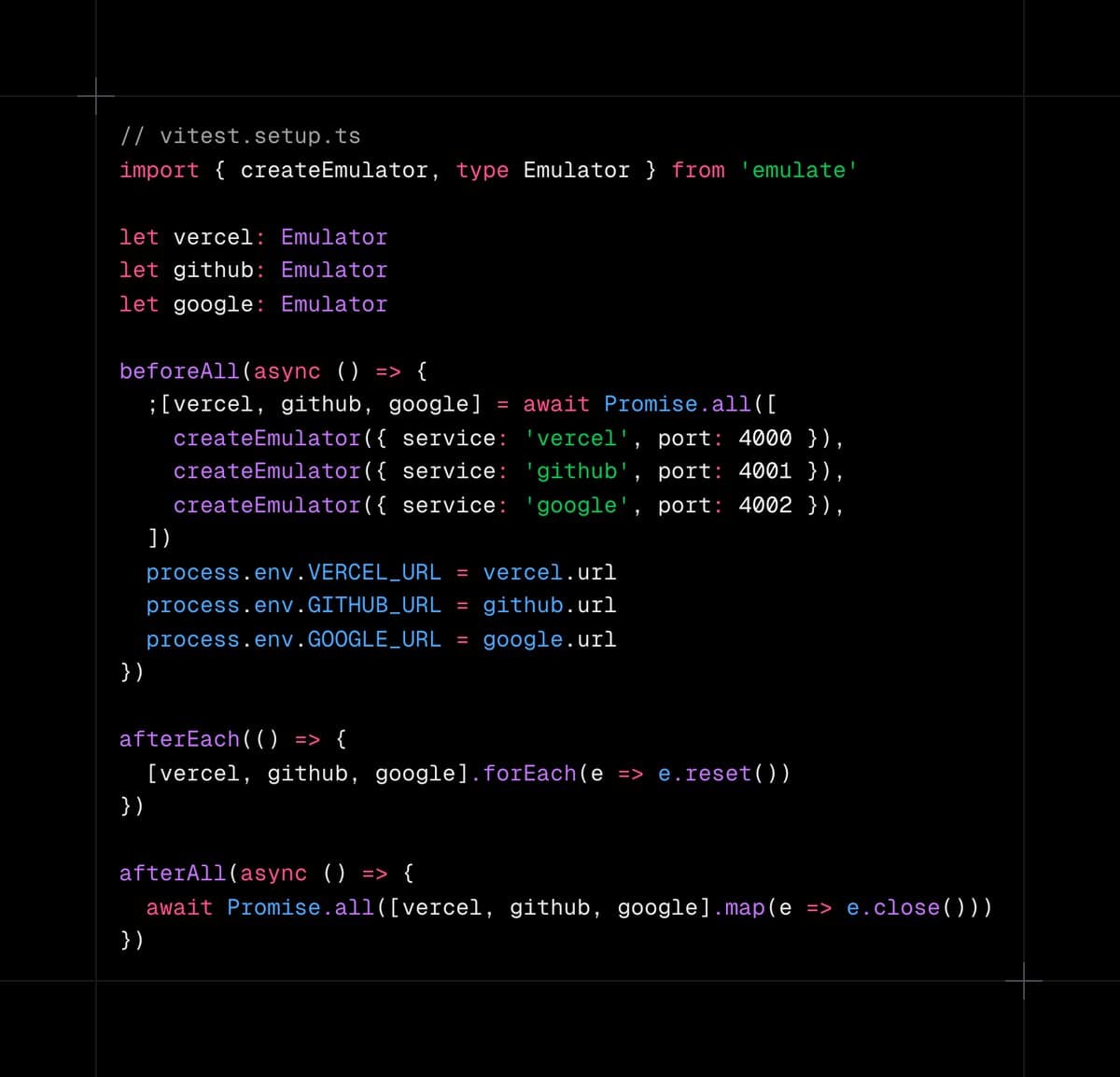
The new API adds lifecycle controls around Emulate inside test code: create an emulator for Vercel, GitHub, or Google; inject it through environment variables or directly through an SDK; then reset and close it as part of the suite. In the announcement, that sequence is the entire pitch for using Emulate in automated tests.
According to the repo overview, Emulate is meant to be “fully stateful” and “production-fidelity,” which is a stronger claim than a fixture-based mock server. The same source says developers can start all supported services with zero configuration, control individual services programmatically, and load custom YAML or JSON seed data for users, orgs, projects, tokens, and OAuth clients.
The practical change is that external-service test dependencies can now be managed as part of the suite itself instead of as preconfigured infrastructure. In the follow-up, Emulate is described as making integrations “easy to test, stable to run, and predictable” anywhere determinism matters, including agents and CI.
That matters because emulator lifecycle hooks reduce leftover state between runs. The repo documentation says services can be reset or closed programmatically, which is the kind of control needed for parallel test runs, repeatable failures, and hermetic CI. A separate supporting comparison also points to broader demand for faster, more controllable CI execution beyond stock GitHub Actions, though Emulate addresses the integration-dependency side rather than runner performance itself.
Claude can now drive macOS apps, browser tabs, the keyboard, and the mouse from Claude Cowork and Claude Code, with permission prompts when it needs direct screen access. That makes legacy desktop workflows automatable, and Anthropic is pairing the push with more background-task support for longer agent loops.
 release
OpenClaw shipped version 2026.3.22 with ClawHub, OpenShell plus SSH sandboxes, side-question flows, and more search and model options, then followed with a 2026.3.23 patch. Teams get a broader plugin surface, but should patch quickly and review plugin trust boundaries as the ecosystem grows.
 release
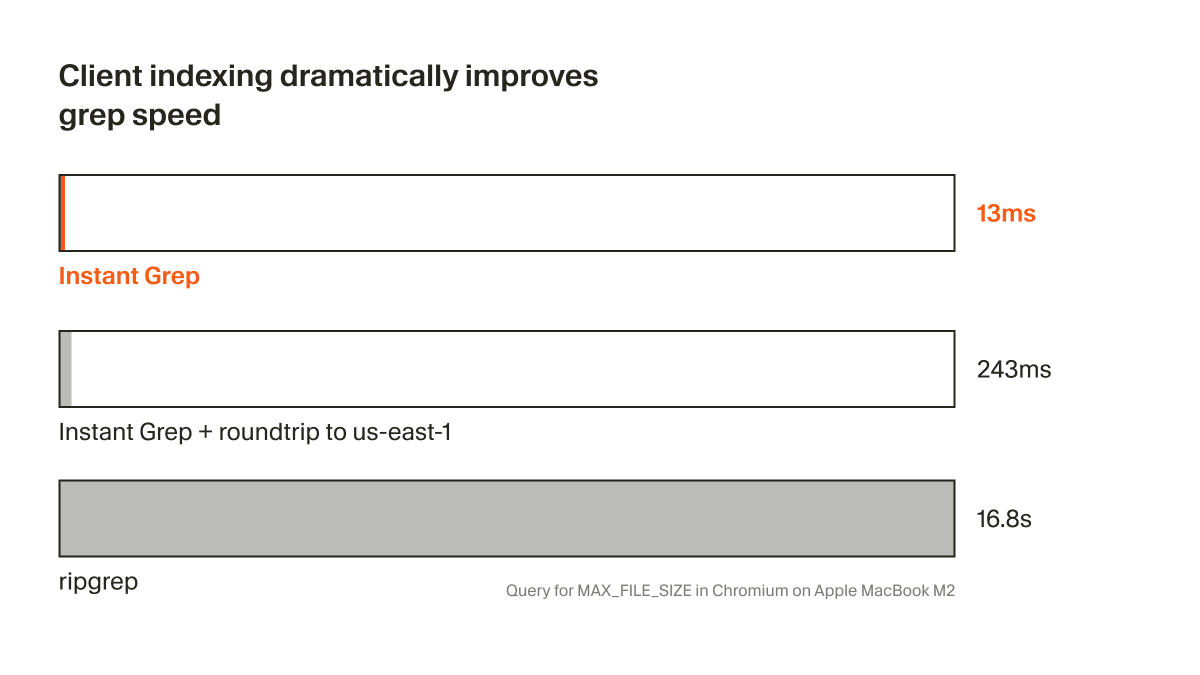
Cursor shipped Instant Grep, a local regex index built from n-grams, inverted indexes, and Bloom filters that drops large-repo searches from seconds to milliseconds. Faster candidate retrieval shortens the coding-agent loop, especially when ripgrep-style scans become the bottleneck.
 breaking
ChatGPT now saves uploaded and generated files into an account-level Library that can be reused across conversations from the web sidebar or recent-files picker. It removes repetitive re-uploading and makes past PDFs, spreadsheets, and images part of a persistent working context.
 breaking
Epoch AI says GPT-5.4 Pro elicited a publishable solution to one 2019 conjecture in its FrontierMath Open Problems set, with a formal writeup planned. Treat it as an early milestone worth reproducing, not blanket evidence that frontier models can already automate math research.

Another banger by @mvanhorn github.com/vercel-labs/em…
So true