PlayerZero launched an AI production engineer and claims its world model can simulate failures before release, trace incidents to exact PRs, and beat existing tools on real production test cases. If those numbers hold, the interesting shift is from code generation to debugging, testing, and observability after code ships.
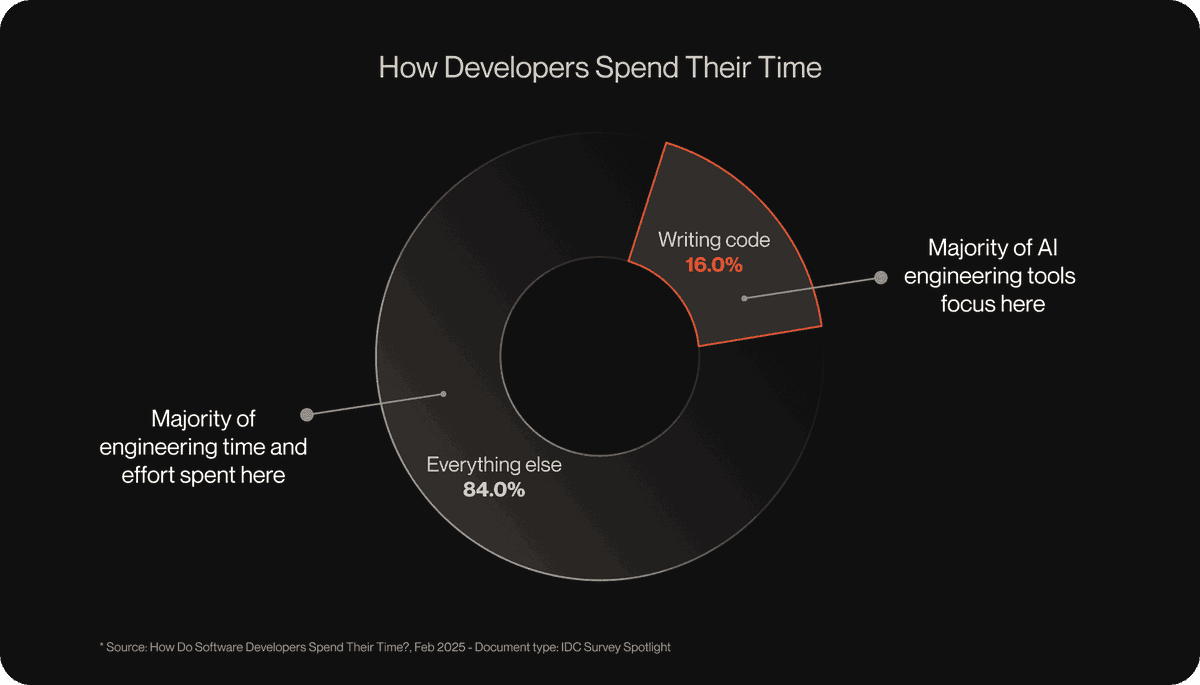
PlayerZero's core claim is that production debugging is a context problem, not just a code problem. In the opening thread, the company says "84% of developer time" goes to "testing, debugging, and firefighting," then positions its system as an agent for that work rather than for code generation.
The product centers on a "World Model" that connects the codebase, observability stack, and support tickets into what the detailed post calls "one living system." The same description appears in a launch summary, which says the graph maps "every code change, alert, ticket, and past incident" so the agent can reason across runtime behavior, not just repository state.
Before code ships, Sim-1 reportedly simulates how a change will behave using production-derived signals instead of hand-written tests or synthetic staging flows. After code ships, the company says the agent can trace a failure to "the exact PR," identify which customer configurations are affected, and route the fix to the right engineer; the demo thread adds that the fix is then pinged in Slack for approval.
PlayerZero's strongest claims are benchmark and workflow deltas, but they are self-reported. In its benchmark post, the company says it reaches 92.6% accuracy on "real production test cases," with 87.1% recall and 80.4% precision; the same post puts Codex at 79.5% and Claude Code at 72.6% on that test set.
For issue prediction tied to real outcomes, PlayerZero says its bug confirmation rate is 64%, compared with 16.3% for Cursor BugBot and 11% for Claude Code. A supporting chart post defines that metric as the share of flagged issues that became tickets within 30 days, which is more deployment-facing than a pure code benchmark.
The company also claims root-cause analysis drops from "18 to 47 hours" for a human engineer with partial observability to "under 2 hours" with PlayerZero, and that confirmation rate improves from 54% in month one to 71% by month six across 14 companies, according to the same benchmark thread. A documented launch summary adds broader enterprise claims including cutting production issues by half and reducing response time to minutes, but those figures are less specific about methodology.
The practical shift here is from code-writing assistance to post-merge and post-deploy reasoning. An external recap describes the system as mapping "services, APIs, dependencies, and configs" so failures can be explained across PRs, telemetry, and support workflows rather than inside one IDE session.
That aligns with the more concrete practitioner framing in a supporting reaction, which says "the code is in 1 place, but the reasoning is scattered across 10 places." If PlayerZero's architecture works as advertised, the differentiator is not faster autocomplete; it is a shared operational model that can predict regressions before release and narrow incident triage after release.
The launch materials also lean heavily on enterprise positioning. the company thread says the team came out of Stanford's DAWN lab, previously did inference research at OpenAI, and has backing from the founders of Figma, Dropbox, Vercel, and Databricks, while the company site and the launch writeup pitch the product around large production environments where debugging time and support escalations dominate engineering cost.
Claude can now drive macOS apps, browser tabs, the keyboard, and the mouse from Claude Cowork and Claude Code, with permission prompts when it needs direct screen access. That makes legacy desktop workflows automatable, and Anthropic is pairing the push with more background-task support for longer agent loops.
 release
OpenClaw shipped version 2026.3.22 with ClawHub, OpenShell plus SSH sandboxes, side-question flows, and more search and model options, then followed with a 2026.3.23 patch. Teams get a broader plugin surface, but should patch quickly and review plugin trust boundaries as the ecosystem grows.
 release
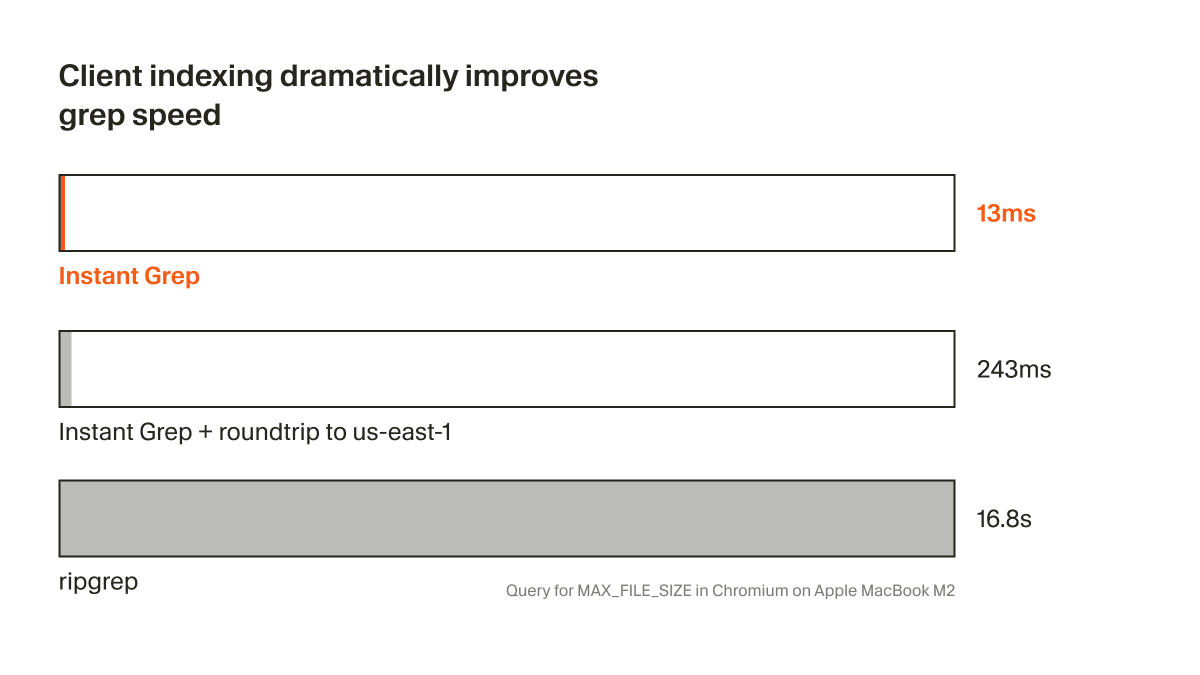
Cursor shipped Instant Grep, a local regex index built from n-grams, inverted indexes, and Bloom filters that drops large-repo searches from seconds to milliseconds. Faster candidate retrieval shortens the coding-agent loop, especially when ripgrep-style scans become the bottleneck.
 breaking
ChatGPT now saves uploaded and generated files into an account-level Library that can be reused across conversations from the web sidebar or recent-files picker. It removes repetitive re-uploading and makes past PDFs, spreadsheets, and images part of a persistent working context.
 breaking
Epoch AI says GPT-5.4 Pro elicited a publishable solution to one 2019 conjecture in its FrontierMath Open Problems set, with a formal writeup planned. Treat it as an early milestone worth reproducing, not blanket evidence that frontier models can already automate math research.