Edit Banana can reconstruct screenshots into editable DrawIO files using SAM 3. Try it to save rebuild time on diagrams, flowcharts, and site comps pulled from references.
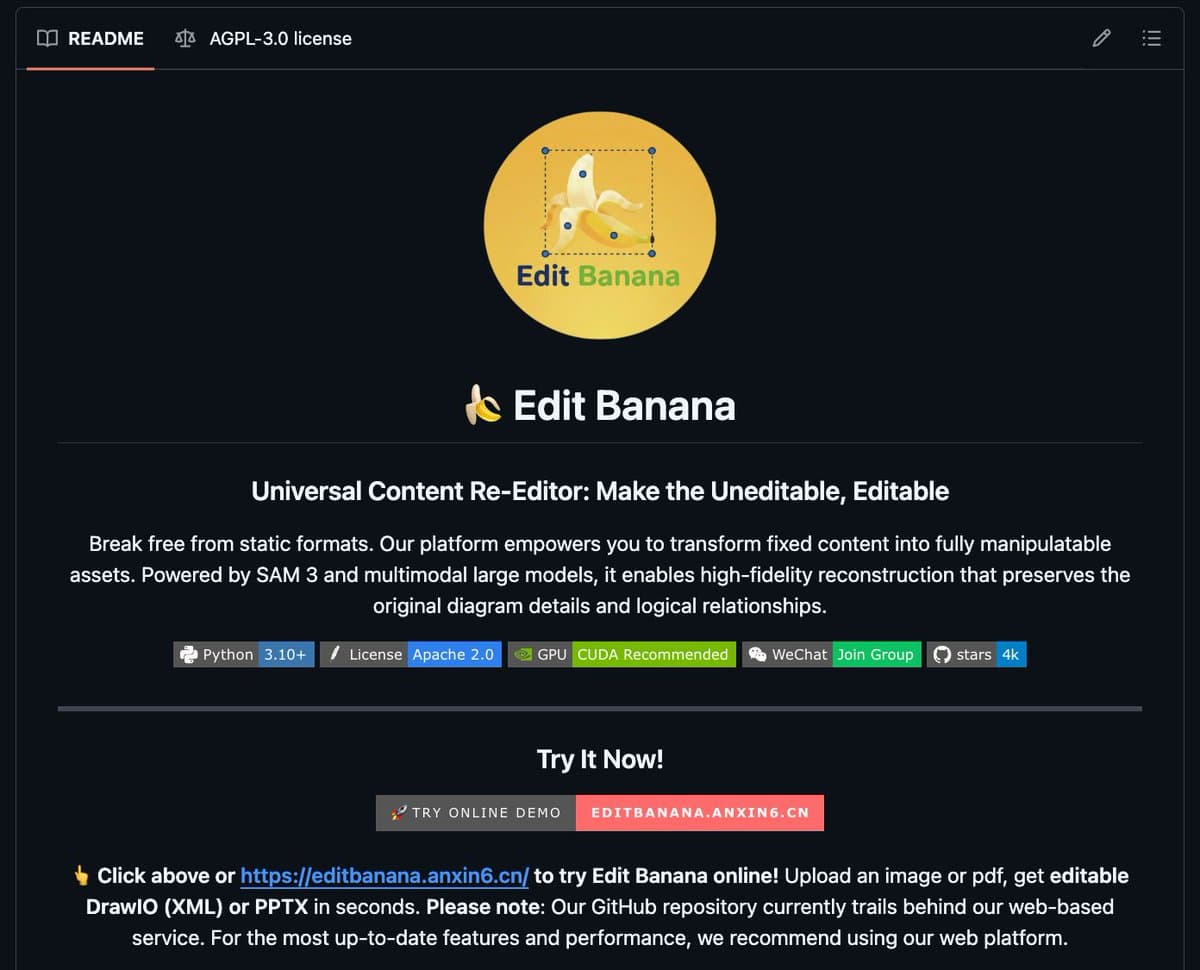
Edit Banana’s core promise is simple: upload an image or PDF, get back an editable diagram file instead of redrawing it from scratch. In the announcement, Hasan Toor says the stack uses SAM 3 to segment shapes, arrows, and icons, then runs multimodal analysis in four passes so smaller elements are not missed.
The output target matters for creative workflows. The same [img:0|README screenshot] shows a web demo positioned around DrawIO XML and PPTX export, with the repo published under Apache 2.0 and a live demo plus code repository linked from GitHub. That makes the tool more useful for moodboard pull-aparts, architecture diagrams, deck graphics, and UI references that need to become editable components again.
Edit Banana lands inside a bigger pattern: creators increasingly want source material they can manipulate, not screenshots they can only trace over. The reposted Web to Design post describes the same idea applied to websites — paste a URL, get an editable UI you can variant and extend.
That same “make static inputs reusable” logic shows up in adjacent production stacks. In this workflow thread, David Recap chains Firecrawl, Apify, Gemini 2.5 Pro, and Gamma to turn scraped brand sites and ad-library assets into a finished audit deck in about five minutes, while the design-tools video points to Paper and Pencil as prompt-based design environments that iterate layouts and export code. Edit Banana is narrower, but the creative value is similar: recover structure from references so the next step is editing, not rebuilding.
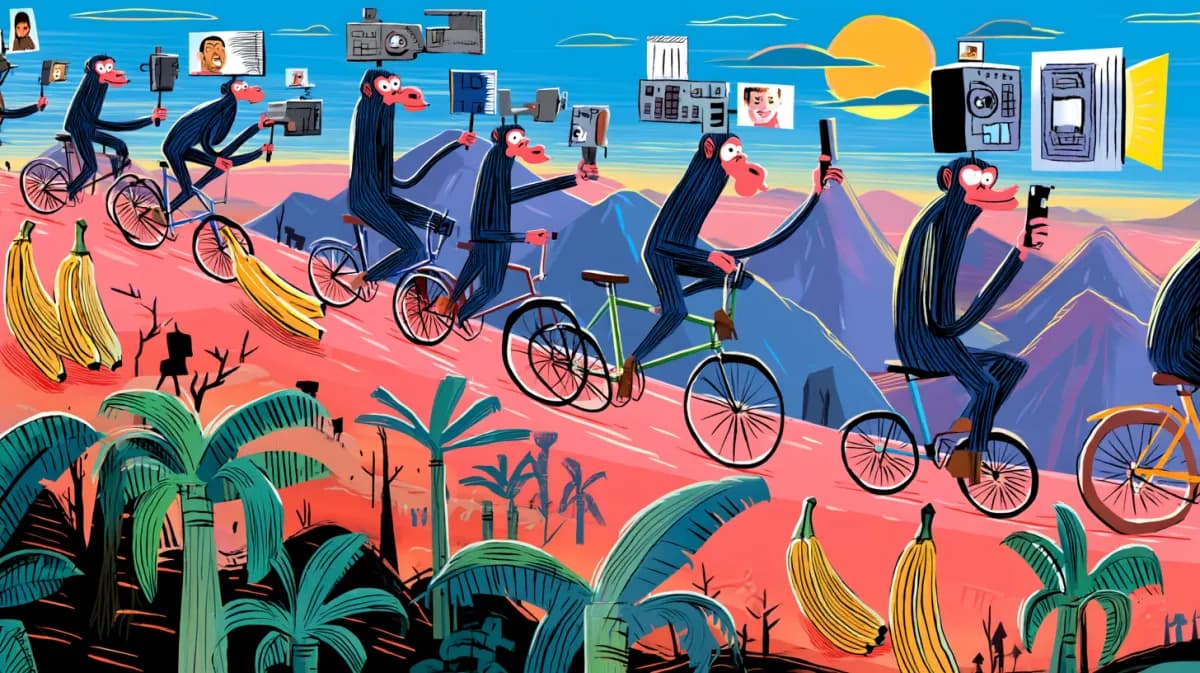
Claire Silver detailed an installation where Mary writes and sketches continuously for five days, with audience inputs routed through live feeds and a modified Edwardian telephone. It shows one way to turn AI art into a physical, durational experience instead of a single screen-based image.
 release
Topview added Seedance 2.0 to Agent V2, pairing multi-scene generation with a storyboard timeline and Business Annual access billed as 365 days of unlimited generations. That moves longform video workflows toward editable sequences instead of stitched clips.
 workflow
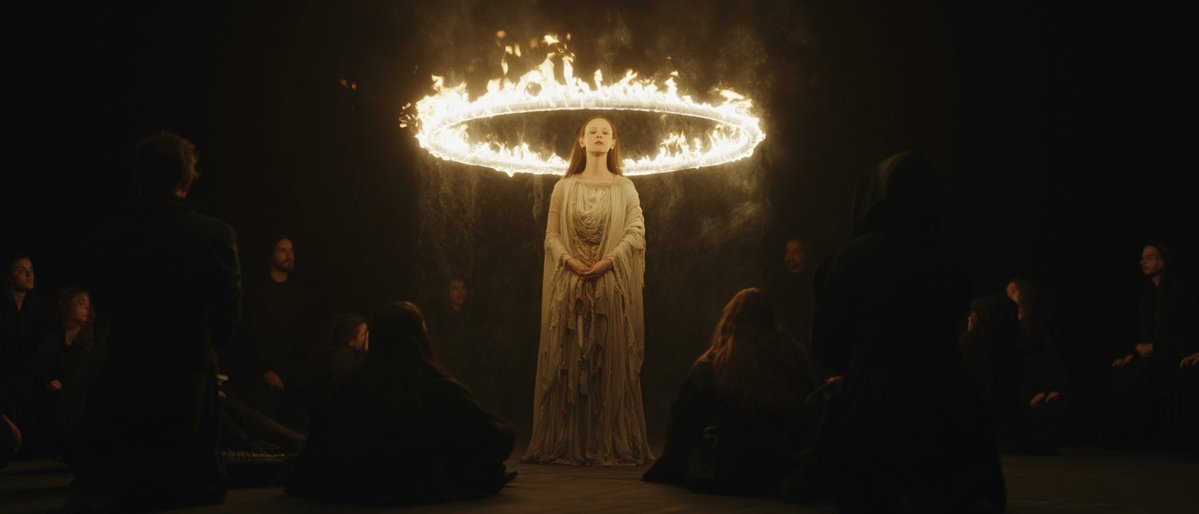
Creators are moving from V8 calibration complaints to darker film-still scenes, fashion shots, and worldbuilding tests, with ECLIPTIC remakes showing stronger depth and lighting. Retest saved SREF recipes if you rely on V8 for cinematic ideation.
 workflow
A shared workflow converts GTA-style stills into photoreal images with Nano Banana 2, then animates them in LTX-2.3 Pro 4K using detailed material, skin, vehicle, and camera prompts. Try it for trailer-style previsualization if you want more control at lower cost.
 workflow
Shared Nano Banana 2 workflows now cover turnaround sheets, distinctive facial traits, and photoreal rerenders that keep the framing of a reference image. Use one prompt grammar for concept art, editorial portraits, and animation prep.
🔥🚨BREAKING: You can now turn any screenshot into a fully editable diagram in seconds. It's called Edit Banana. → Upload a screenshot of any flowchart, architecture diagram, or technical schematic → SAM 3 segments every shape, arrow, and icon with pixel-perfect accuracy → Show more

Introducing Web to Design. Turn any website into an editable UI. Just paste a URL. Create new variants, different pages, or build components inspired by the original design. We’ve been using this internally a ton, it’s the fastest way to go from a raw idea to a prototype.
The free ad audit is the oldest play in the ad agency sales book for acquiring new clients. Unfortunately, it also takes 2-3 hours per prospect, and most agencies cap out at a few per week. So I automated the entire thing with @Lucas_fabric. Here's how it works: → Enter a Show more


