Epoch AI estimates that NVIDIA, Google, AMD, and Amazon consumed nearly all high-bandwidth memory and advanced packaging tied to frontier AI chips in 2025. Track this if you are planning compute, custom silicon, or open-weight infrastructure strategy.
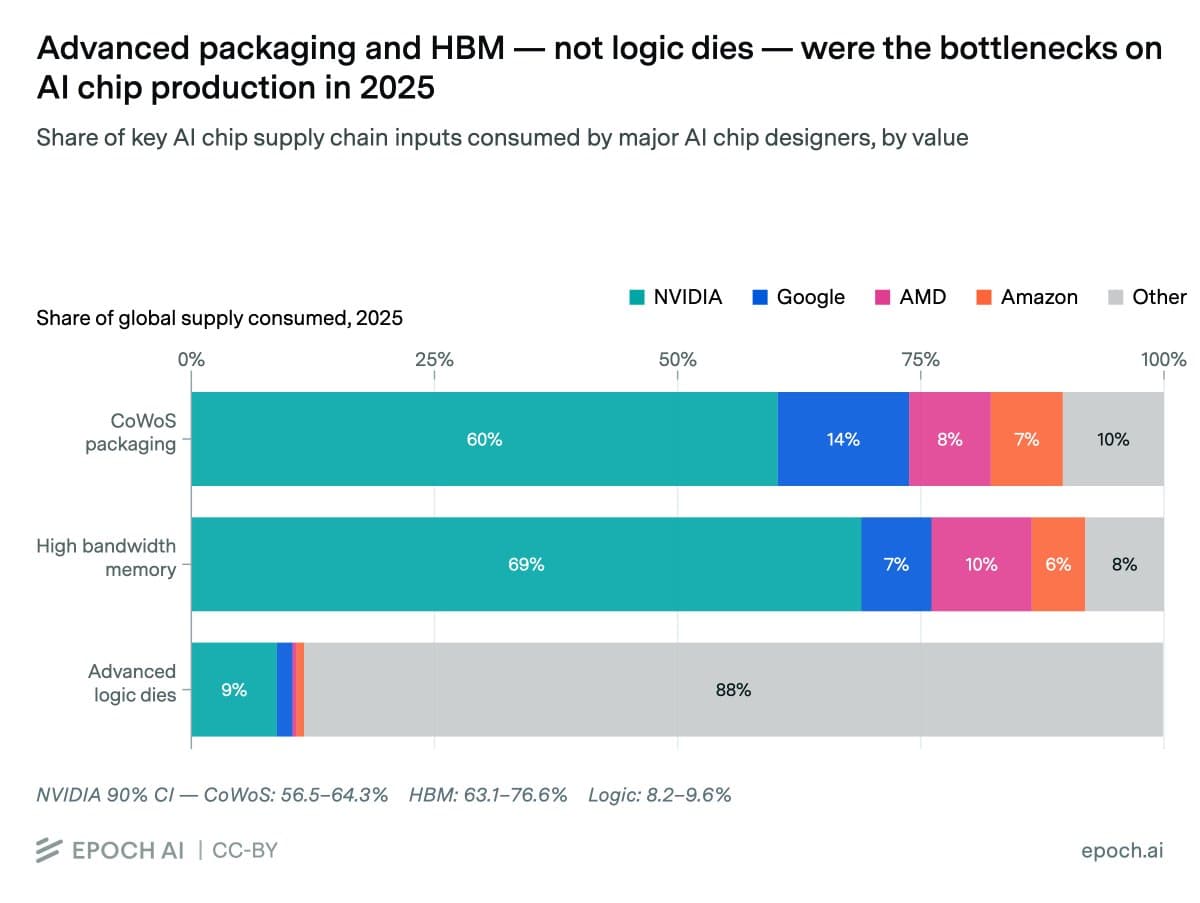
Epoch’s estimate is that packaging and memory, not logic dies, were the hard constraint on AI chip production in 2025. In the main thread, it says the four largest AI chip designers consumed about 90% of global CoWoS packaging and HBM supply by value, while advanced logic remained broadly available to other markets such as phones, laptops, and automotive.
The methodology post adds the reproducible part engineers will care about: Epoch built the estimate from chip technical specs, unit costs, market-size data, its AI Chip Sales hub, and a model for manufacturing lags and inventory timing. It also links to the full data insight and SemiAnalysis context for deeper methodology and industry background.
The distribution is highly concentrated. According to Epoch’s chart breakdown, NVIDIA alone accounted for 60% of CoWoS consumption and 69% of HBM consumption in 2025, versus much smaller shares for Google, AMD, and Amazon. By contrast, AI chip designers together used only 12% of advanced logic supply, which is why Epoch argues “advanced packaging and HBM — not logic dies — were the bottlenecks.”
If Epoch’s estimate is directionally right, compute planning is increasingly a memory-and-packaging problem, not just a foundry-node problem. That changes how engineers should interpret capacity announcements: new accelerators do not translate cleanly into deployable inference or training volume if HBM stacks and CoWoS lines remain the scarce inputs.
Meta’s MTIA plan makes that concrete. The company says it is developing and deploying “four new generations” of MTIA chips within two years, with MTIA 300 already in production for ranking and recommendations and MTIA 400/450/500 aimed at GenAI inference and training through 2027. Its MTIA coverage frames the push as reducing dependence on external vendors while improving “performance-per-watt” for Meta’s own workloads.
NVIDIA is also moving up the stack. The filings summary says it plans to invest $26 billion over five years to build open-weight AI models, which would put the same company that dominates accelerator supply deeper into model competition. That combination matters because the firms setting model and platform strategy are also the ones competing most aggressively for the constrained components Epoch identified.
Researchers report US data centers may need 697–1,451 million gallons per day of new peak water capacity by 2030 in a baseline scenario, even if national totals stay small. Model local peak-day water constraints, not just annual averages, when planning new clusters.
 release
OpenClaw shipped version 2026.3.22 with ClawHub, OpenShell plus SSH sandboxes, side-question flows, and more search and model options, then followed with a 2026.3.23 patch. Teams get a broader plugin surface, but should patch quickly and review plugin trust boundaries as the ecosystem grows.
 release
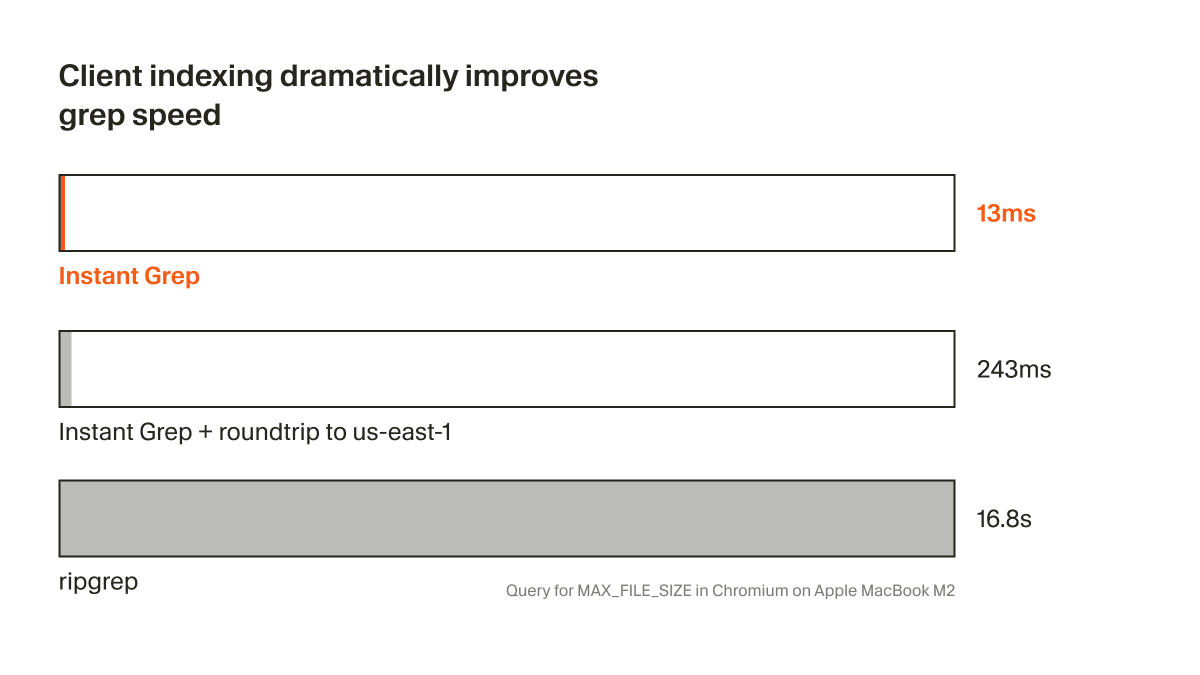
Cursor shipped Instant Grep, a local regex index built from n-grams, inverted indexes, and Bloom filters that drops large-repo searches from seconds to milliseconds. Faster candidate retrieval shortens the coding-agent loop, especially when ripgrep-style scans become the bottleneck.
 breaking
ChatGPT now saves uploaded and generated files into an account-level Library that can be reused across conversations from the web sidebar or recent-files picker. It removes repetitive re-uploading and makes past PDFs, spreadsheets, and images part of a persistent working context.
 breaking
Epoch AI says GPT-5.4 Pro elicited a publishable solution to one 2019 conjecture in its FrontierMath Open Problems set, with a formal writeup planned. Treat it as an early milestone worth reproducing, not blanket evidence that frontier models can already automate math research.
How much of the world's advanced chip packaging and high-bandwidth memory does AI consume? Almost all of it. We estimate the four largest AI chip designers consumed ~90% of global advanced packaging and HBM supply in 2025, suggesting these inputs were bottlenecks in 2025.

NVIDIA confirmed it will invest $26 billion over the next five years to build open-weight AI models. For years, the market wondered if OpenAI would build its own chips; instead, NVIDIA built its own OpenAI.

Meta has significantly accelerated its custom silicon strategy by announcing the development and deployment of four new generations of MTIA chips over the next two years. This roadmap includes the MTIA 300, which is currently in production for ranking and recommendations, Show more