CopilotKit published a generative-ui repo plus an MCP server for bringing agent-built interfaces into existing applications. It gives teams concrete patterns for controlled, declarative, and open-ended UI surfaces instead of ad hoc demos.

CopilotKit's announcement centers on a new generative-ui repo that tries to standardize how teams think about AI-generated interfaces. In the company's wording, it covers "all the patterns, specs and real examples" needed to get started with generative UI, which makes this more of an implementation map than a product launch.launch thread
The new wrinkle is the MCP server. CopilotKit says the "Open Generative UI repo just got an MCP Server," and describes that as a path to bring generative UI to agents "inside any application."MCP server post That matters because it shifts the project from a static reference into something closer to an integration layer for agent-driven UI surfaces.
The linked repo breaks the space into three patterns with different control boundaries. According to the repo summary, controlled generative UI uses pre-built components where the agent chooses what to render and fills in data; declarative generative UI uses structured specs such as A2UI and Open-JSON-UI to share control; and open-ended generative UI points to MCP Apps for more custom, dynamically generated interfaces.
The same summary also highlights AG-UI as a "bidirectional communication layer" for real-time UI updates between agent and application.repo summary That gives engineers a concrete mental model: CopilotKit is not arguing for one canonical UI pattern, but for a stack of protocols and examples that can support anything from tightly constrained widgets to fully agent-shaped app surfaces.
Vercel Emulate added a programmatic API for creating, resetting, and closing local GitHub, Vercel, and Google emulators inside automated tests. That makes deterministic integration tests easier to wire into CI and agent loops without manual setup.
 release
OpenClaw shipped version 2026.3.22 with ClawHub, OpenShell plus SSH sandboxes, side-question flows, and more search and model options, then followed with a 2026.3.23 patch. Teams get a broader plugin surface, but should patch quickly and review plugin trust boundaries as the ecosystem grows.
 release
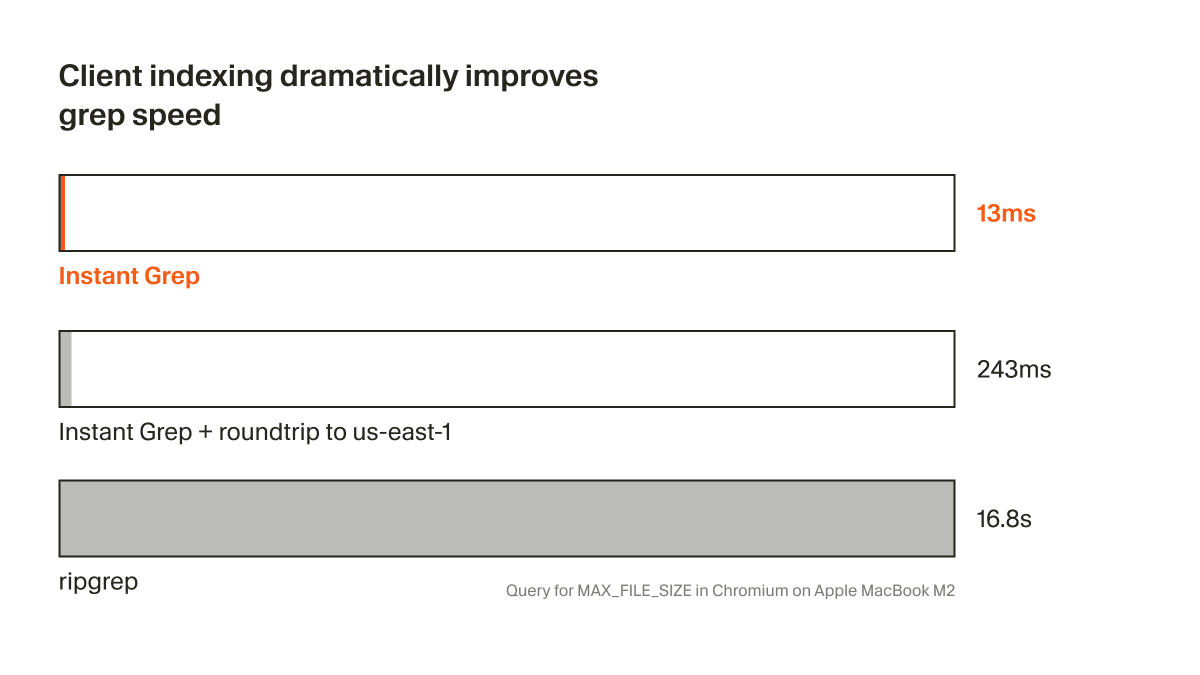
Cursor shipped Instant Grep, a local regex index built from n-grams, inverted indexes, and Bloom filters that drops large-repo searches from seconds to milliseconds. Faster candidate retrieval shortens the coding-agent loop, especially when ripgrep-style scans become the bottleneck.
 breaking
ChatGPT now saves uploaded and generated files into an account-level Library that can be reused across conversations from the web sidebar or recent-files picker. It removes repetitive re-uploading and makes past PDFs, spreadsheets, and images part of a persistent working context.
 breaking
Epoch AI says GPT-5.4 Pro elicited a publishable solution to one 2019 conjecture in its FrontierMath Open Problems set, with a formal writeup planned. Treat it as an early milestone worth reproducing, not blanket evidence that frontier models can already automate math research.
Your app needs Generative UI. But what does that mean? And where should you start? We put together an educational repo covering all the patterns, specs and real examples so you don't have to figure it out from scratch.
Save this repo and share it with teammates: github.com/copilotkit/gen…
The Open Generative UI repo just got an MCP Server 💥 This lets you bring generative UI to your agents inside any application. See how a @LangChain agent turns a technical document into a beautiful, custom diagram with the Open Generative UI MCP. Code: github.com/CopilotKit/Ope…

Introducing Open Generative UI Repo 🌟 We built an open-source version of @claudeai's new feature for your own AI agents! It's a template for building rich, interactive AI-generated UI with CopilotKit and @LangChain LangGraph. Ask the agent to visualize algorithms, create 3D