FastVideo published an LTX-2.3 inference stack that claims 5-second 1080p text-image-to-audio-video generation in 4.55 seconds on a single GPU. If the results hold up, test it for lower-cost interactive video generation and faster iteration loops.

FastVideo's core claim is unusually specific: 5-second 1080p video with audio in 4.55 seconds on one GPU, using an optimized LTX-2.3 pipeline. The team's launch thread pegs that at "3.9x faster than the next fastest option," and links both a live demo and blog post for inspection.
That matters because most public video-gen speed claims soften one of the hard parts: lower resolution, no audio, or multi-GPU serving. FastVideo is explicitly claiming full-HD output with audio and positioning it as real-time enough to preserve the feedback loop for prompt iteration; in the latency post, the team says the goal is to avoid "broken feedback loops during creative ideation and iteration."
The more interesting engineering detail is the single-GPU requirement. In the deployment post, Hao AI Lab says high-quality 1080p generation on one GPU "dramatically simplifies deployment," specifically calling out the absence of context parallelism. For teams experimenting with interactive video products, that implies a narrower serving footprint and fewer distributed-systems complications than multi-GPU video stacks usually demand.
FastVideo is also being packaged as something developers can try rather than just watch. The repo announcement points to the FastVideo repo, and both the credits post and later follow-up post repeat links to the live demo, blog, and repository. The thread's product framing is broad: rapid ideation, interactive storytelling, personalized content generation, and future local-generation workflows.
Flash-MoE now shows SSD-streamed expert weights pushing a 397B Qwen3.5 variant onto an iPhone at 0.6 tokens per second, extending its earlier laptop demos. Treat it as a memory-tiering prototype rather than a deployable mobile serving target, because speed, heat, and context headroom remain tight.
 release
OpenClaw shipped version 2026.3.22 with ClawHub, OpenShell plus SSH sandboxes, side-question flows, and more search and model options, then followed with a 2026.3.23 patch. Teams get a broader plugin surface, but should patch quickly and review plugin trust boundaries as the ecosystem grows.
 release
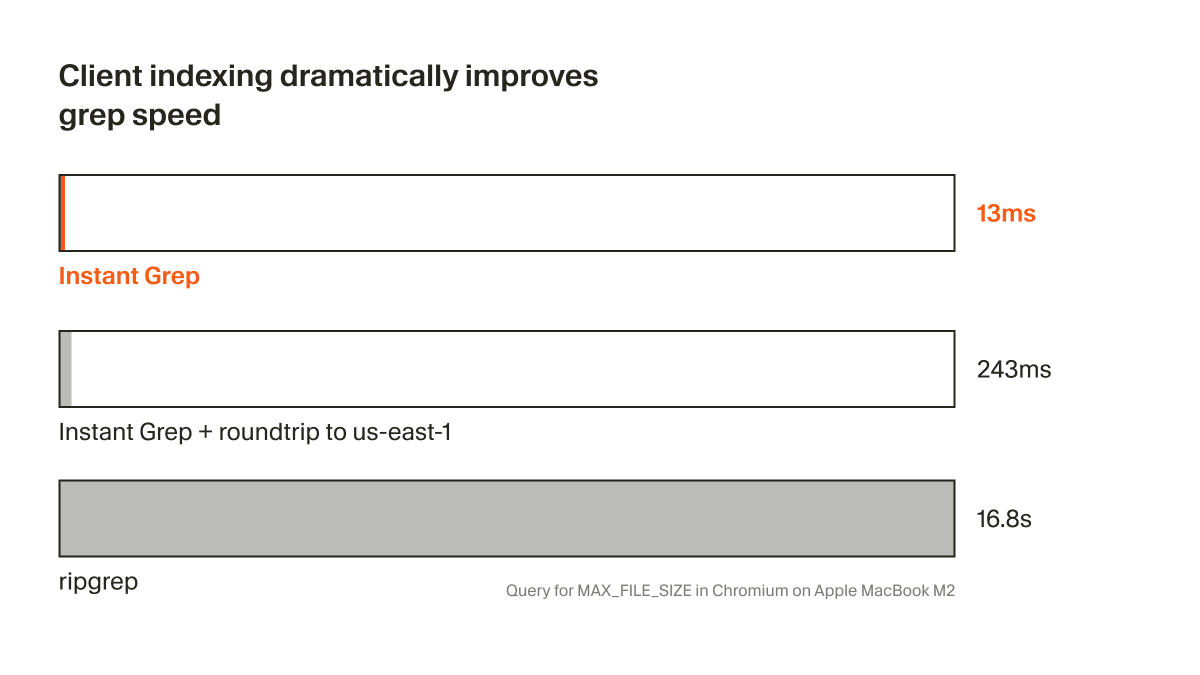
Cursor shipped Instant Grep, a local regex index built from n-grams, inverted indexes, and Bloom filters that drops large-repo searches from seconds to milliseconds. Faster candidate retrieval shortens the coding-agent loop, especially when ripgrep-style scans become the bottleneck.
 breaking
ChatGPT now saves uploaded and generated files into an account-level Library that can be reused across conversations from the web sidebar or recent-files picker. It removes repetitive re-uploading and makes past PDFs, spreadsheets, and images part of a persistent working context.
 breaking
Epoch AI says GPT-5.4 Pro elicited a publishable solution to one 2019 conjecture in its FrontierMath Open Problems set, with a formal writeup planned. Treat it as an early milestone worth reproducing, not blanket evidence that frontier models can already automate math research.
(5/N) If you are excited about the future of fast, interactive generative video, please check out the FastVideo repo. github.com/hao-ai-lab/Fas… We will also be at #NVIDIAGTC 2026, so keep an eye out for us and come say hi!
(1/N) Content creators have been stuck with costly and slow video generation APIs for far too long. We couldn’t take it anymore.😅😭 FastVideo’s new real-time inference stack has the fastest 1080p TI2AV pipeline ever.😍🚀🚀 Our optimized LTX-2.3 pipeline creates 5-second 1080p Show more