Nous Research said Hermes Agent crossed 10,000 stars, while users reported easy migrations from OpenClaw and stable long-running use. If you test it, focus on persistent memory, MCP browser control, and delegation behavior under real workloads.
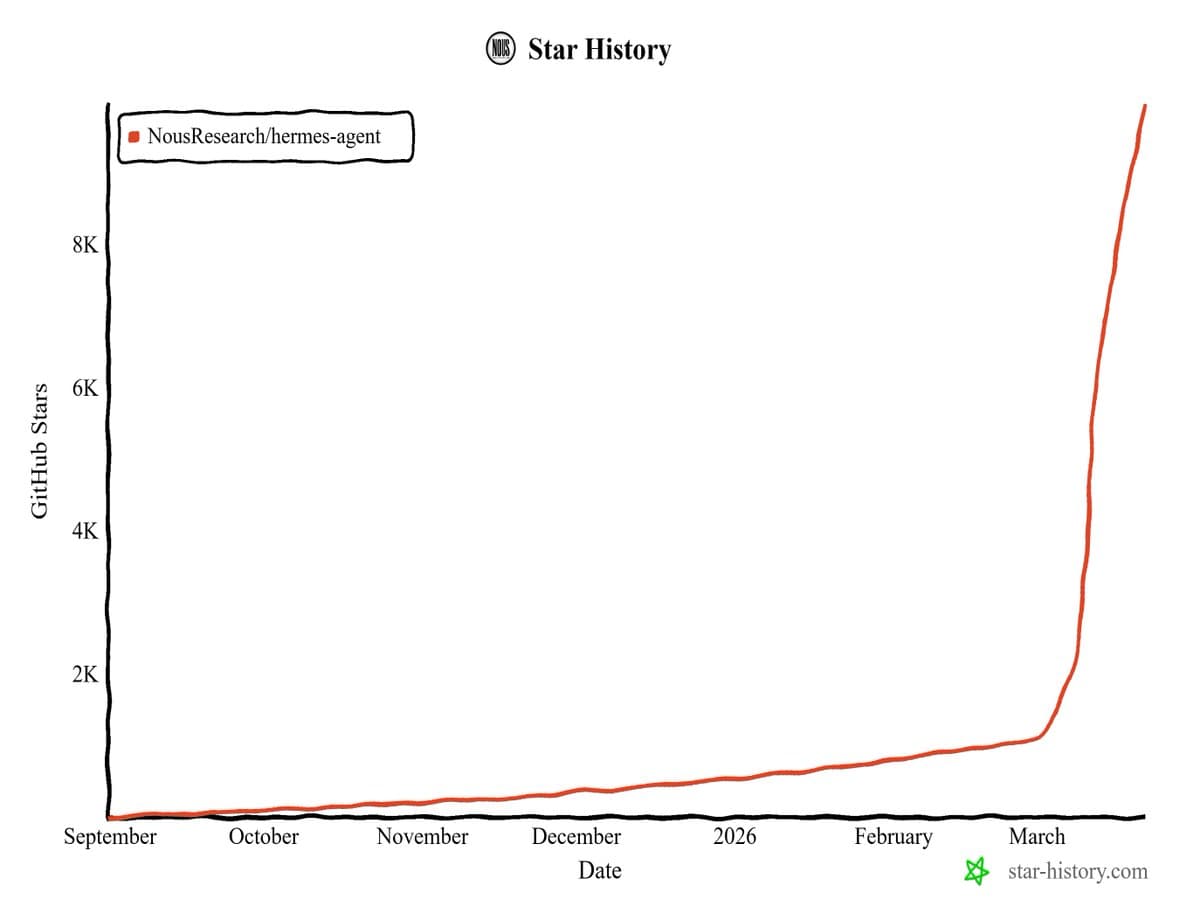
Nous framed the news as an adoption milestone, with the announcement saying Hermes Agent is now its biggest open-source project and linking to the GitHub repo. The repo summary attached to that post describes an agent designed for VPS, GPU clusters, and serverless deployment, with support for multiple providers and interfaces including CLI, Telegram, Discord, Slack, WhatsApp, and Signal.
That same repo description says Hermes includes a “built-in learning loop,” knowledge persistence, parallel subagent spawning, and autonomous scheduling via cron-like automation repo summary. That matters more than the star count itself: the project is being presented as a long-running agent framework with state, tooling, and orchestration primitives, not just another prompt wrapper.
The clearest architectural detail comes from the explainer video, which breaks Hermes into an entry point, the main agent, and state-management systems. Teknium’s summary points to “continual learning capabilities through experiential knowledge,” while the linked video summary describes memory nudging, flushing, and compression, plus recursive skill discovery and guarded system-prompt construction.
A separate screenshot of Hermes Agent v0.4.0 makes that abstraction concrete. The visible toolsets include browser control, code execution, cron jobs, delegation, file operations, Home Assistant integrations, and Honcho functions, while the skills list references items such as “claude-code,” “codex,” “hermes-agent-spawning,” and “jupyter-live-kernel.” Another user report says Hermes was connected to a native Chromium browser “via built in MCP” MCP browser post, which suggests the project is already being used as an MCP-capable operator rather than only a CLI agent.
Most of the practitioner feedback in this evidence set is anecdotal, but it is unusually specific. One user said they had “set up Hermes Agent to replace my OpenClaw” and found it “very reliable” and “very easy to migrate and set up” migration report. Another said they “depend on Hermes more than openclaw” because it was “more consistent in my experience” consistency report.
The strongest operational claim is uptime: one user said they had been “running hermes agent for eight days” without needing “to restart it a single time” uptime report. There is also ecosystem evidence beyond direct usage; the Paperclip adapter repo points to a TypeScript adapter for running Hermes as a managed employee inside Paperclip, exposing its persistent memory, multi-provider model support, delegation, and session continuity through another automation stack.
Claude can now drive macOS apps, browser tabs, the keyboard, and the mouse from Claude Cowork and Claude Code, with permission prompts when it needs direct screen access. That makes legacy desktop workflows automatable, and Anthropic is pairing the push with more background-task support for longer agent loops.
 release
OpenClaw shipped version 2026.3.22 with ClawHub, OpenShell plus SSH sandboxes, side-question flows, and more search and model options, then followed with a 2026.3.23 patch. Teams get a broader plugin surface, but should patch quickly and review plugin trust boundaries as the ecosystem grows.
 release
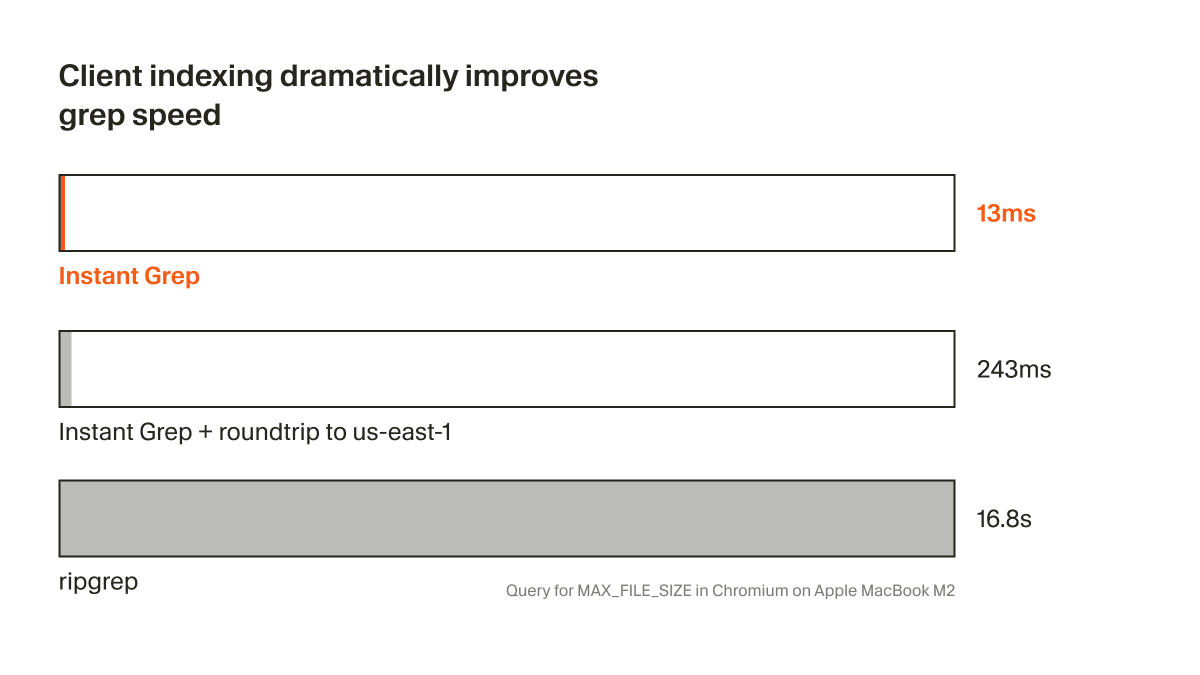
Cursor shipped Instant Grep, a local regex index built from n-grams, inverted indexes, and Bloom filters that drops large-repo searches from seconds to milliseconds. Faster candidate retrieval shortens the coding-agent loop, especially when ripgrep-style scans become the bottleneck.
 breaking
ChatGPT now saves uploaded and generated files into an account-level Library that can be reused across conversations from the web sidebar or recent-files picker. It removes repetitive re-uploading and makes past PDFs, spreadsheets, and images part of a persistent working context.
 breaking
Epoch AI says GPT-5.4 Pro elicited a publishable solution to one 2019 conjecture in its FrontierMath Open Problems set, with a formal writeup planned. Treat it as an early milestone worth reproducing, not blanket evidence that frontier models can already automate math research.
Hermes Agent is our most adopted open source project yet, and today has officially hit 10,000 stars on GitHub! Github repo: github.com/NousResearch/h… Many exciting updates to come, stay tuned!

Just set up Hermes Agent to replace my OpenClaw last week, and has been very reliable. Very easy to migrate and set up. Not yet explore this to the fullest, but so far, I’m enjoying it

Hermes Agent is our most adopted open source project yet, and today has officially hit 10,000 stars on GitHub! Github repo: github.com/NousResearch/h… Many exciting updates to come, stay tuned!
If you haven't yet - check out this video by Igor on how Hermes Agent achieves impressive continual learning capabilities through experiential knowledge - and a lot more! youtube.com/watch?v=PVs2VT…
Beautiful.

been running hermes agent for eight days and I have not had to restart it a single time

been running hermes agent for three days and i have not had to restart it a single time….


