LlamaIndex open-sourced LiteParse, a model-free local parser for 50+ document types that preserves layout well enough for agent workflows. Use it as a fast first pass before expensive OCR or VLM parsing, especially when you need table structure and local execution.

LiteParse is a new open-source CLI and library for local document parsing. In the product repost, LlamaIndex describes it as a “lightweight and open source CLI and TS library,” which matters for engineers who want to wire parsing into TypeScript-heavy agent stacks instead of treating it as a hosted API.
The technical hook is that LiteParse tries to preserve document structure without using models. The launch thread says it is “more accurate than PyPDF, PyMuPDF, MarkItDown” on readability and shows table output as a spatial grid; the accompanying table parsing demo contrasts that with a competing parser that emits a messy sequential list. LlamaIndex’s GitHub repo also frames it as layout-aware extraction with OCR and screenshot support for cases where text alone is not enough.
A separate open-source repost summarizes the tool as “lightweight, local” with “no API calls,” reinforcing that the release is aimed at teams that need predictable local execution rather than another remote parsing dependency.
LlamaIndex is packaging LiteParse directly into agent workflows instead of asking developers to build glue code first. In the install post, the setup is a single npx skills add command, and the company says the parser can plug into “46+ different agents,” including Claude Code, Cursor, Warp, and OpenClaw.
That packaging matters because the parser is meant to do two jobs in coding agents: solve document-reading tasks directly, and turn PDFs, office files, or images into context that the agent can use while writing code. The Claude Code demo shows the install flow and a document-analysis task inside Claude Code, while the launch thread adds that LiteParse supports native screenshotting capabilities. The broader positioning in LlamaIndex’s blog post is clear: use LiteParse for the fast, cheap first pass, and escalate to heavier VLM-based parsing only when the document is too complex for text parsing alone.
ChatGPT now saves uploaded and generated files into an account-level Library that can be reused across conversations from the web sidebar or recent-files picker. It removes repetitive re-uploading and makes past PDFs, spreadsheets, and images part of a persistent working context.
 release
OpenClaw shipped version 2026.3.22 with ClawHub, OpenShell plus SSH sandboxes, side-question flows, and more search and model options, then followed with a 2026.3.23 patch. Teams get a broader plugin surface, but should patch quickly and review plugin trust boundaries as the ecosystem grows.
 release
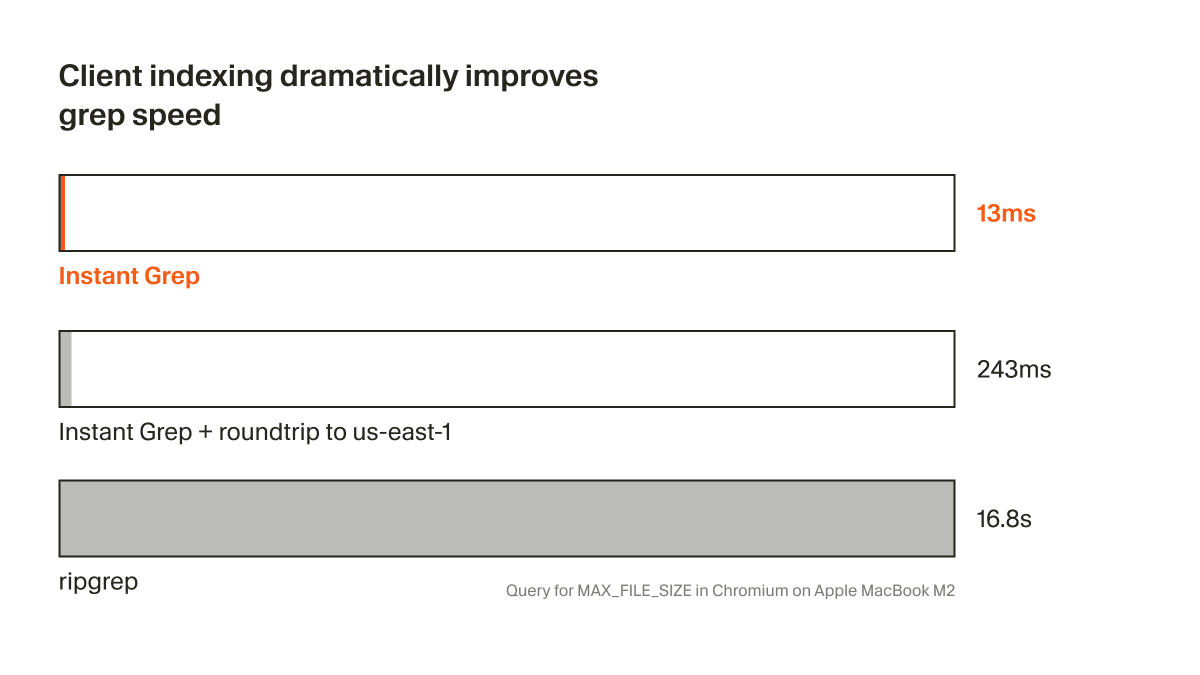
Cursor shipped Instant Grep, a local regex index built from n-grams, inverted indexes, and Bloom filters that drops large-repo searches from seconds to milliseconds. Faster candidate retrieval shortens the coding-agent loop, especially when ripgrep-style scans become the bottleneck.
 breaking
ChatGPT now saves uploaded and generated files into an account-level Library that can be reused across conversations from the web sidebar or recent-files picker. It removes repetitive re-uploading and makes past PDFs, spreadsheets, and images part of a persistent working context.
 breaking
Epoch AI says GPT-5.4 Pro elicited a publishable solution to one 2019 conjecture in its FrontierMath Open Problems set, with a formal writeup planned. Treat it as an early milestone worth reproducing, not blanket evidence that frontier models can already automate math research.
Introducing LiteParse - the best model-free document parsing tool for AI agents 💫 ✅ It’s completely open-source and free. ✅ No GPU required, will process ~500 pages in 2 seconds on commodity hardware ✅ More accurate than PyPDF, PyMuPDF, Markdown. Also way more readable - see Show more
LiteParse is our free, blazing-fast document parser that you can plug into 46+ different agents - with one command 🔥 From Claude Code to OpenClaw to Cursor to Warp. Use liteparse to solve a task directly or read docs as context to write code. All you have to do is `npx skills Show more

We've spent years building LlamaParse into the most accurate document parser for production AI. Along the way, we learned a lot about what fast, lightweight parsing actually looks like under the hood. Today, we're open-sourcing a light-weight core of that tech as LiteParse 🦙

We just open-sourced LiteParse 🎉 A lightweight, local document parser in the shape of an easy-to-use CLI. No API calls, no external service, no cloud dependency. Just fast text extraction from common file formats, right from your terminal. It's built for developers who want