Oracle disputed reports of delays at the Abilene site, said 200MW is already operational, and reiterated that the campus supports liquid cooling and multiple hardware generations. Infra teams tracking capacity and supplier signals should treat the recent delay narrative as disputed.
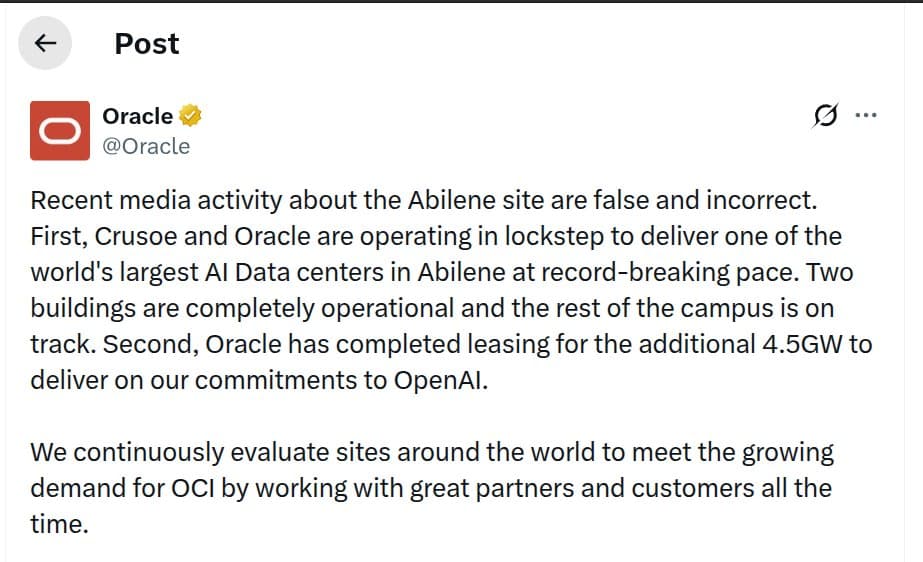
Oracle's position is direct: the Abilene campus is not delayed. In the statement captured in Oracle's post, the company says Crusoe and Oracle are operating “in lockstep” and that “two buildings are completely operational” while “the rest of the campus is on track.” That matters because the immediate dispute is not over a future roadmap slide; Oracle is asserting live capacity already exists on site.
The follow-up statement adds a more specific operating figure. In Oracle's follow-up, Oracle says the “Abilene site remains on schedule, with 200MW already operational,” and rejects claims that planned capacity has slipped. A widely reshared copy in the reposts shows how the denial spread, but the substantive update is Oracle putting both schedule status and current energized capacity on the record.
The most actionable new detail is Oracle's explanation of how it expects the campus to absorb hardware churn. According to the data-center note, its AI facilities are designed for liquid cooling, higher hardware density, and “multiple generations of hardware from a range of vendors.” Oracle's analogy is that swapping to newer accelerators should be more like replacing a refrigerator than rebuilding the structure.
That framing is paired with a larger capacity claim. In the Abilene post, Oracle says it has completed leasing for an additional 4.5GW to meet its OpenAI commitments. Taken together, the company is contesting two separate market concerns at once: that Abilene is behind schedule, and that newer chip requirements would force major redesigns before more capacity can come online.
NVIDIA introduced a coalition of labs and platform vendors to co-develop open frontier models, including Mistral, LangChain, Perplexity, Cursor, Reflection, Sarvam, and Black Forest Labs. Watch it if you want open-model efforts tied to DGX Cloud, NIM, and production tooling instead of weights alone.
 release
OpenClaw shipped version 2026.3.22 with ClawHub, OpenShell plus SSH sandboxes, side-question flows, and more search and model options, then followed with a 2026.3.23 patch. Teams get a broader plugin surface, but should patch quickly and review plugin trust boundaries as the ecosystem grows.
 release
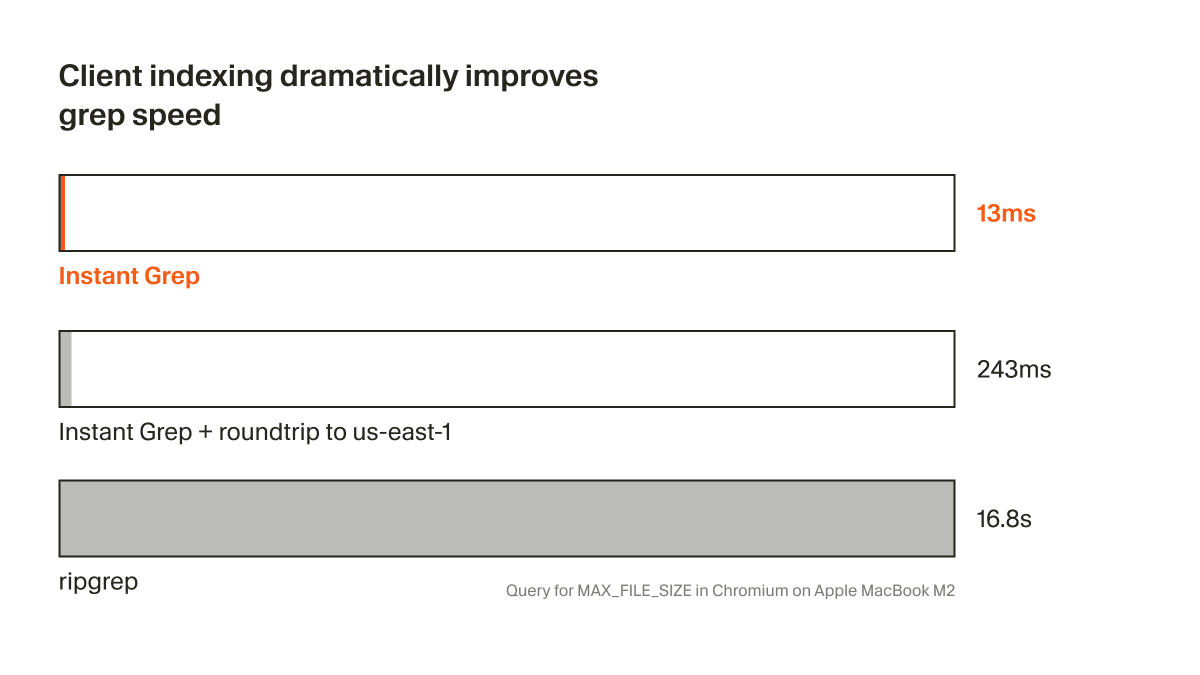
Cursor shipped Instant Grep, a local regex index built from n-grams, inverted indexes, and Bloom filters that drops large-repo searches from seconds to milliseconds. Faster candidate retrieval shortens the coding-agent loop, especially when ripgrep-style scans become the bottleneck.
 breaking
ChatGPT now saves uploaded and generated files into an account-level Library that can be reused across conversations from the web sidebar or recent-files picker. It removes repetitive re-uploading and makes past PDFs, spreadsheets, and images part of a persistent working context.
 breaking
Epoch AI says GPT-5.4 Pro elicited a publishable solution to one 2019 conjecture in its FrontierMath Open Problems set, with a formal writeup planned. Treat it as an early milestone worth reproducing, not blanket evidence that frontier models can already automate math research.
Oracle just made another public statement. "Abilene site remains on schedule, with 200MW already operational. Any claim that the planned capacity at this site is delayed is inaccurate. " Some recent reports suggested they were falling behind or struggling to adapt to new Show more
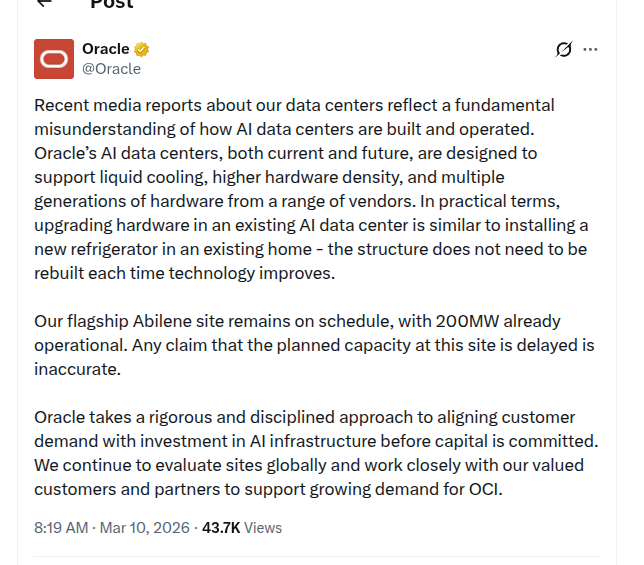

Recent media reports about our data centers reflect a fundamental misunderstanding of how AI data centers are built and operated. Oracle’s AI data centers, both current and future, are designed to support liquid cooling, higher hardware density, and multiple generations of
Last week media report on OpenAI and Oracle triggered a massive selloff as there was news circulationg that Oracle and OpenAI called off plans to work together on an expansion of a massive AI data center under construction in Abilene, Texas But Today Oracle just made an official Show more

Recent media activity about the Abilene site are false and incorrect. First, Crusoe and Oracle are operating in lockstep to deliver one of the world's largest AI Data centers in Abilene at record-breaking pace. Two buildings are completely operational and the rest of the campus