OpenAI rolled out interactive visual explanations for more than 70 math and science concepts in ChatGPT. Try it for education products or internal learning workflows that benefit from manipulable models instead of static tutoring.
OpenAI’s launch post says ChatGPT now supports “dynamic visual explanations” for math and science topics, starting with more than 70 concepts. The key product change is that explanations are no longer just prose: users can manipulate variables and watch formulas, graphs, and scientific relationships update live. In OpenAI’s wording, ChatGPT now “guide[s] learners by showing how formulas, variables, and relationships behave in real time” OpenAI post.
The demos in ChatGPT demo and [vid:1|visual walkthrough] show the intended interaction pattern. One sequence uses sliders to change a plotted curve; another shows animated gas particles moving inside a cylinder, matching the kind of physical intuition that static tutoring interfaces usually cannot provide. OpenAI frames this as a learning feature for math and science rather than a new model release or API surface.
The initial topic list is broad but concrete. According to TestingCatalog, it includes algebra, geometry, and physics staples such as circle area, compound interest, kinetic energy, Ohm’s law, slope-intercept form, surface area of a sphere, and the PV = nRT equation. The same post says the current catalog is “most relevant to high school and college age learners,” which makes this look like a packaged educational layer on top of existing ChatGPT usage rather than a general-purpose visualization engine.
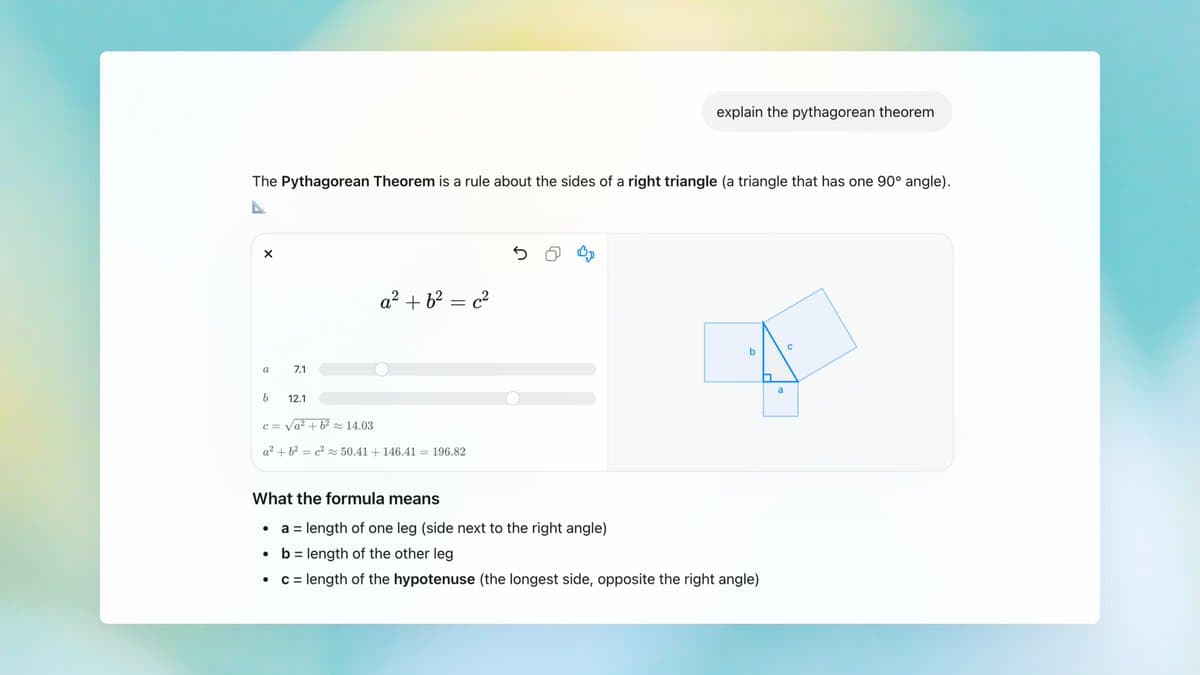
The screenshot in [img:4|Pythagorean demo] shows how the system works in practice for the Pythagorean theorem: sliders adjust side lengths, the interface recomputes (c = \sqrt{a^2 + b^2}), and the diagram updates the attached squares on each side of the triangle. That is a meaningful product distinction from conventional step-by-step tutoring, because the explanation stays coupled to a manipulable model.
OpenAI’s usage claim gives the rollout some scale. The company says in usage figure that 140 million people use ChatGPT for math and science help every week. If that audience gets the same interactive treatment across all plans, this is less about adding a handful of animated lessons and more about shifting a major tutoring workflow from static answers to exploratory UI components.
Vercel Emulate added a programmatic API for creating, resetting, and closing local GitHub, Vercel, and Google emulators inside automated tests. That makes deterministic integration tests easier to wire into CI and agent loops without manual setup.
 release
OpenClaw shipped version 2026.3.22 with ClawHub, OpenShell plus SSH sandboxes, side-question flows, and more search and model options, then followed with a 2026.3.23 patch. Teams get a broader plugin surface, but should patch quickly and review plugin trust boundaries as the ecosystem grows.
 release
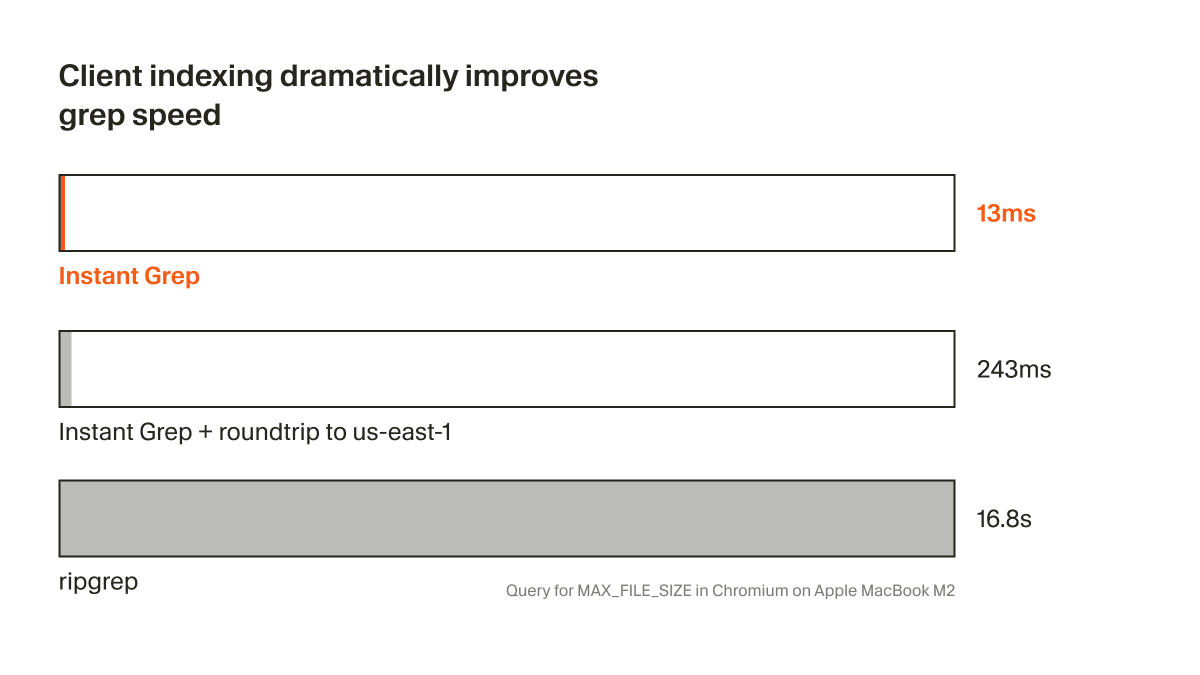
Cursor shipped Instant Grep, a local regex index built from n-grams, inverted indexes, and Bloom filters that drops large-repo searches from seconds to milliseconds. Faster candidate retrieval shortens the coding-agent loop, especially when ripgrep-style scans become the bottleneck.
 breaking
ChatGPT now saves uploaded and generated files into an account-level Library that can be reused across conversations from the web sidebar or recent-files picker. It removes repetitive re-uploading and makes past PDFs, spreadsheets, and images part of a persistent working context.
 breaking
Epoch AI says GPT-5.4 Pro elicited a publishable solution to one 2019 conjecture in its FrontierMath Open Problems set, with a formal writeup planned. Treat it as an early milestone worth reproducing, not blanket evidence that frontier models can already automate math research.
openai.com/index/new-ways… "Today, we’re making learning these [math and science] concepts in ChatGPT even more interactive with new dynamic visual explanations. Starting with more than 70 core math and science concepts, ChatGPT will guide learners by showing how formulas, Show more
OpenAI is rolling out a new interactive learning experience on ChatGPT with dynamic visual explanations. "Interactive learning is rolling out starting today to all logged-in ChatGPT users. Today, the list of math and science topics is most relevant to high school and college Show more


140 million people use ChatGPT to help them understand math and science concepts every week.