Claude Code 2.1.75 and 2.1.76 added MCP elicitation dialogs, max effort mode, remote-control session spawning, transcript disablement, and compaction hooks. Teams running longer autonomous sessions get tighter control over inputs, session management, and failure handling.
Elicitation and ElicitationResult hooks to intercept replies before they are returned 2.1.76 release CLI changelog./effort now supports a max mode that “reasons for longer,” claude --name can label sessions at startup, and Remote Control can start entirely new sessions instead of only attaching to existing ones max effort post Remote Control.PostCompactThe biggest implementation change is MCP elicitation. According to the CLI changelog, MCP servers can now pause a task and ask for “structured input mid-task” via form fields or a browser URL, which turns user clarification into a first-class protocol step instead of a free-form chat detour. The same release adds Elicitation and ElicitationResult hooks, so teams running custom MCP integrations can intercept or override those responses before they go back to the server CLI changelog.
Claude Code also added primitives for longer-running repo work. The changelog details say worktree.sparsePaths lets claude --worktree use git sparse-checkout for large monorepos, and PostCompact fires after compaction completes. In the same build, deferred tools loaded via ToolSearch no longer lose their schemas after compaction, fixing a failure mode where array and number parameters were rejected with type errors CLI changelog.
The operational fixes are aimed at sessions that run unattended for longer. Anthropic's release thread says auto-compaction now has a circuit breaker after three failed attempts, while Remote Control fixes address idle-session death, one-at-a-time queueing, stale work-item redelivery after JWT refresh, and bridge-session recovery after long WebSocket disconnects CLI changelog.
Anthropic also exposed more direct runtime controls. In an end-of-week product post, a team member said /effort can now be set to max, which “reasons for longer and uses as many tokens as needed,” but must be enabled per session because it burns through usage limits faster max effort post. That makes effort an explicit session-level tradeoff instead of a hidden model behavior.
Session management got broader across surfaces. Remote Control can now start new sessions, not just operate existing ones Remote Control. Voice mode is “rolled out to 100% of users,” including Claude Code Desktop voice rollout, and Claude Code on web and desktop can run a setup script setup script. The companion product thread adds smaller but practical controls: claude --name <NAME> labels a session from startup, /color changes the prompt input color, and sessions can be auto-named after plan mode other new things.
The lower-level 2.1.76 diff adds one more deployment-relevant knob. The further changes mention an option to “disable transcript persistence entirely,” alongside new config and env-surface additions and a warning when the current model is scheduled for retirement further changes. Anthropic also changed --plugin-dir to accept only one path per flag, requiring repeated flags for multiple directories CLI changelog.
Version 2.1.75 landed less than two days before 2.1.76 and established the same pattern of control and reliability work. The headline change was that Opus 4.6 now gets a default 1M context window on Max, Team, and Enterprise plans, where that capacity had previously required extra usage 2.1.75 release. The update also added memory-file timestamps so Claude can distinguish “fresh vs. stale” memories and show hook source in permission prompts, which matters when settings, plugins, or skills trigger confirmation flows 2.1.75 changelog.
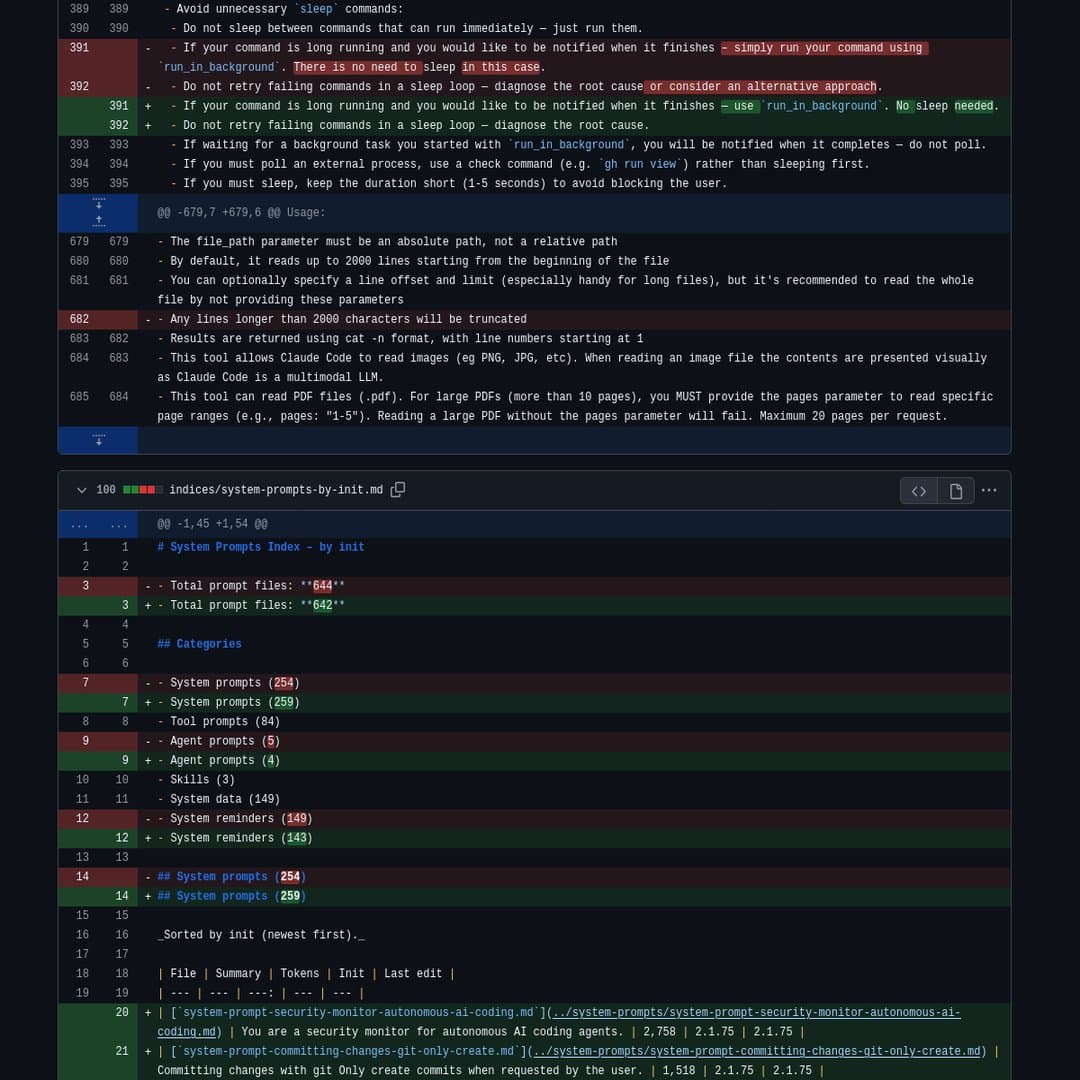
The system prompt changed in ways engineers will feel during tool use. The prompt diff says Bash guidance now more forcefully bans sleep for long-running commands and pushes run_in_background instead, while denied tool permissions now prompt for a reason when user intent is unclear rather than guessing the next step. The same prompt diff removed the instruction that Read truncates lines over 2000 characters, changing how the agent should interpret missing content in long single-line files prompt updates.
There were also fixes directly tied to long-context and enterprise use: token estimation no longer over-counts thinking and tool-use blocks, which had caused premature context compaction, macOS startup skips unnecessary subprocess spawns on non-MDM machines, and Windows managed settings now require the newer Program Files path after the old fallback was removed 2.1.75 changelog full 2.1.75 changelog.
Vercel Emulate added a programmatic API for creating, resetting, and closing local GitHub, Vercel, and Google emulators inside automated tests. That makes deterministic integration tests easier to wire into CI and agent loops without manual setup.
 release
OpenClaw shipped version 2026.3.22 with ClawHub, OpenShell plus SSH sandboxes, side-question flows, and more search and model options, then followed with a 2026.3.23 patch. Teams get a broader plugin surface, but should patch quickly and review plugin trust boundaries as the ecosystem grows.
 release
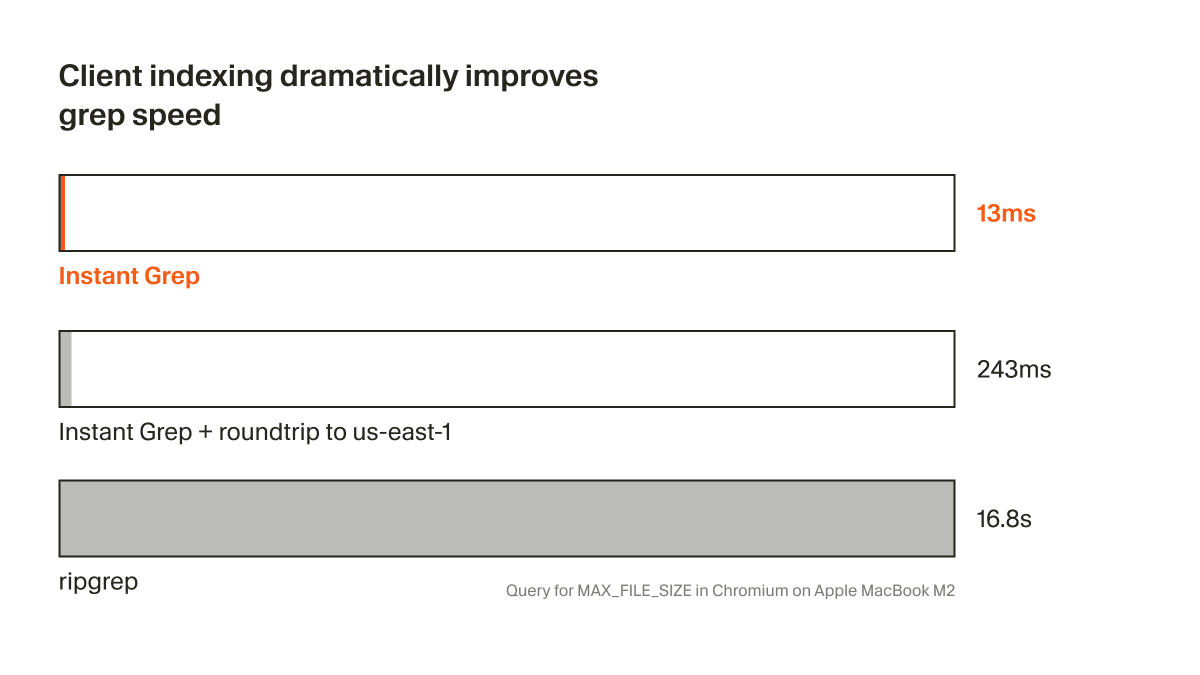
Cursor shipped Instant Grep, a local regex index built from n-grams, inverted indexes, and Bloom filters that drops large-repo searches from seconds to milliseconds. Faster candidate retrieval shortens the coding-agent loop, especially when ripgrep-style scans become the bottleneck.
 breaking
ChatGPT now saves uploaded and generated files into an account-level Library that can be reused across conversations from the web sidebar or recent-files picker. It removes repetitive re-uploading and makes past PDFs, spreadsheets, and images part of a persistent working context.
 breaking
Epoch AI says GPT-5.4 Pro elicited a publishable solution to one 2019 conjecture in its FrontierMath Open Problems set, with a formal writeup planned. Treat it as an early milestone worth reproducing, not blanket evidence that frontier models can already automate math research.
Claude Code 2.1.76 has been released. 35 CLI changes Highlights: • MCP servers can request structured input mid-task via interactive dialogs (forms or URL) • Added option to disable transcript persistence entirely • Auto-compaction stops after 3 consecutive failures instead Show more
A few end of week ships: You can now set effort to 'max' which reasons for longer and uses as many tokens as needed. This will spend your usage limits more quickly so you have to activate it per session. Hit /effort to try it.
Updates to the Claude Code 2.1.75 system prompt Notable changes: 1) Claude’s Bash guidance now more forcefully bans sleep for long-running commands: it should use run_in_background and avoid sleeping. The failing-command rule is tightened to “diagnose the root cause,” removing Show more


You can now start new sessions from Remote Control x.com/noahzweben/sta…

Remote Control - Session Spawning: Run claude remote-control and then spawn a NEW local session in the mobile app. * Out to Max, Team, and Enterprise (>=2.1.74) *Have GH set up on mobile (relaxing soon) * Working on speeding up session start-time
Claude Code 2.1.75 has been released. 1 flag change, 19 CLI changes, 2 system prompt changes Highlights: • Opus 4.6 uses a 1M context window by default on Max, Team, and Enterprise plans • Tool permission denials prompt for a reason when intent is unclear instead of guessing Show more


