LightOn’s late-interaction retriever paired with GPT-5 reached 87.59 accuracy on BrowseComp-Plus while using fewer search calls than larger baselines. It suggests deep-research quality may now hinge more on retrieval architecture than on swapping in ever larger LLMs.

get_document(id) fetch tool improved performance over the official top-5-snippet-only scaffold, suggesting retrieval quality is driving deep-research performance more than bigger generators alone.According to the primary results thread, Reason-ModernColBERT topped BrowseComp-Plus with GPT-5 at 87.59 accuracy, improving on the prior best by 7.59 points while also setting the best reported recall and calibration error in the same run. That matters because earlier bests on those metrics came from different runs, so this is not just a single-metric win.
The size delta is unusually large for a retriever result. In a companion reaction, the baseline being beaten is described as Qwen3-8B, making the winning retriever roughly 54 times smaller at 150M parameters. LightOn’s own thread adds that even its generic GTE-ModernColBERT base model outperformed Qwen3-8B, which suggests the gain is not only from reasoning fine-tuning but from the retrieval architecture itself base-vs-reasoning comparison.
The most concrete implementation detail in the primary thread is the scaffold difference. The official BrowseComp-Plus setup exposes search returning top-5 documents plus the first 512 tokens of each, while LightOn also tested a minimal variant that adds get_document(id) so the LLM can pull full documents on demand. The post says that simple change both boosted performance and reduced search calls, which implies the retriever is surfacing high-signal candidates early enough that the model can spend fewer tool invocations.
That interpretation is echoed in community discussion. In a direct reply, Jo Kristian Bergum argues the result shows “deep research is a retrieval problem, not a reasoning problem” and says the score is approaching oracle-level accuracy. A separate reaction from the late-interaction thread makes the sharper claim that dense single-vector retrievers are the real bottleneck on quality and generalization, not that late interaction is merely incrementally better.
This was not posted as a closed benchmark stunt. The main thread says the models, training code, and data are open, with links to the Hugging Face checkpoints Reason model and GTE model, plus PyLate training examples GTE training code and Reason training code. It also says the models were trained in about four hours and that PyLate keeps the workflow close to Sentence Transformers, so existing dense-retrieval pipelines can be adapted rather than rebuilt PyLate docs.
There is also some immediate systems-level optimization work around this model family. In the Sentence Transformers note, Tom Aarsen says he is adding input flattening to remove padding tokens with Flash Attention 2 and has seen about “+50% training and inference speed” in tests. Combined with the benchmark thread showing fewer search calls at higher quality, the engineering takeaway is that late-interaction retrieval is getting both algorithmic and runtime wins at the same time.
Antoine Chaffin also said in a follow-up reply that BrowseComp-Plus may be “almost solved” and that harder datasets may be needed next, which is a sign this result is pushing beyond leaderboard churn into benchmark-saturation territory.
LLM Debate Benchmark ran 1,162 side-swapped debates across 21 models and ranked Sonnet 4.6 first, ahead of GPT-5.4 high. It adds a stronger adversarial eval pattern for judge or debate systems, but you should still inspect content-block rates and judge selection when reading the leaderboard.
 release
OpenClaw shipped version 2026.3.22 with ClawHub, OpenShell plus SSH sandboxes, side-question flows, and more search and model options, then followed with a 2026.3.23 patch. Teams get a broader plugin surface, but should patch quickly and review plugin trust boundaries as the ecosystem grows.
 release
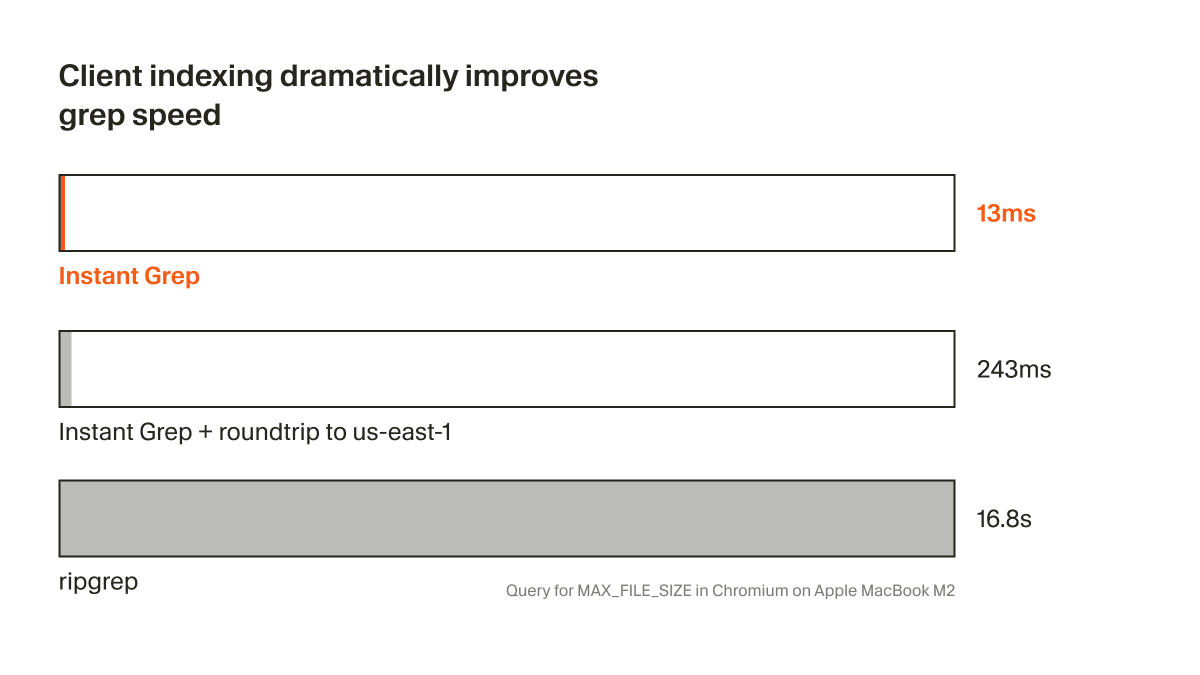
Cursor shipped Instant Grep, a local regex index built from n-grams, inverted indexes, and Bloom filters that drops large-repo searches from seconds to milliseconds. Faster candidate retrieval shortens the coding-agent loop, especially when ripgrep-style scans become the bottleneck.
 breaking
ChatGPT now saves uploaded and generated files into an account-level Library that can be reused across conversations from the web sidebar or recent-files picker. It removes repetitive re-uploading and makes past PDFs, spreadsheets, and images part of a persistent working context.
 breaking
Epoch AI says GPT-5.4 Pro elicited a publishable solution to one 2019 conjecture in its FrontierMath Open Problems set, with a formal writeup planned. Treat it as an early milestone worth reproducing, not blanket evidence that frontier models can already automate math research.
Thanks to @raphaelsrty for being my awesome PyLate co-maintainer and making all of these results possible Thanks to
This is very very nice to see, multi-vector models really seem like a class of their own here!

BrowseComp-Plus, perhaps the hardest popular deep research task, is now solved at nearly 90%... ... and all it took was a 150M model ✨ Thrilled to announce that Reason-ModernColBERT did it again and outperform all models (including models 54× bigger) on all metrics


