A developer says an autoresearch loop hill-climbed a vibecoded Rust engine to 2718 Elo after running more than 70 experiments under a 500 ms move budget. The real takeaway is the workflow: automated experiment loops can optimize code against a measurable target.

The claim is specific: the agent ran more than 70 experiments on its own, searching for code changes that improved Elo, and the best run landed at 2718 according to Deedy's results thread. He also describes the end result as "a top 50 grandmaster" and a "#311 chess engine," which gives engineers a concrete target variable rather than a vague quality claim.
The engine itself is not exotic. Deedy's technical breakdown says it uses "negamax alpha-beta tree search with pruning and iterative deepening," plus standard opening books and a transposition table to cache moves. He adds that every test used a 500 ms per-move budget and that there is "no offline computation or training element," so this was an automated experiment loop over ordinary engine code, not a training pipeline or a one-off tuned checkpoint. The most obvious next lever, by his account, would be replacing the static evaluation function with efficiently updatable NNUEs technical breakdown.
The broader takeaway is that Autoresearch looks most convincing on problems with a hard metric and a fast evaluation harness. The community reaction summarizes the pattern as the community applying it to "everything with a measurable metric," which is exactly why chess is a useful demo: Elo is legible, regression is cheap to detect, and the search space is mostly code and parameter changes.
Engineers are already testing how far that loop generalizes. Shreya Shankar's subjective tasks argues that "auto research-style search loops" can be paired with qualitative evaluators for "non-verifiable" tasks, suggesting a bridge from benchmark optimization to coding workflows where the score is fuzzier but still rankable. Another practitioner is already trying the approach with RL infrastructure, as an RL experiment puts it: "Maybe it works, maybe it doesn't." That is where this story lands for engineering teams: an agentic optimization loop appears able to improve real code when the objective is measurable and the eval cycle is short enough to run dozens of times.
Vals AI switched SWE-Bench Verified from SWE-Agent to the bash-only mini-swe-agent harness, aligning results more closely with the official benchmark setup. Top score dipped slightly to 78.8%, but the change reduces harness-specific confounds when comparing models.
 release
OpenClaw shipped version 2026.3.22 with ClawHub, OpenShell plus SSH sandboxes, side-question flows, and more search and model options, then followed with a 2026.3.23 patch. Teams get a broader plugin surface, but should patch quickly and review plugin trust boundaries as the ecosystem grows.
 release
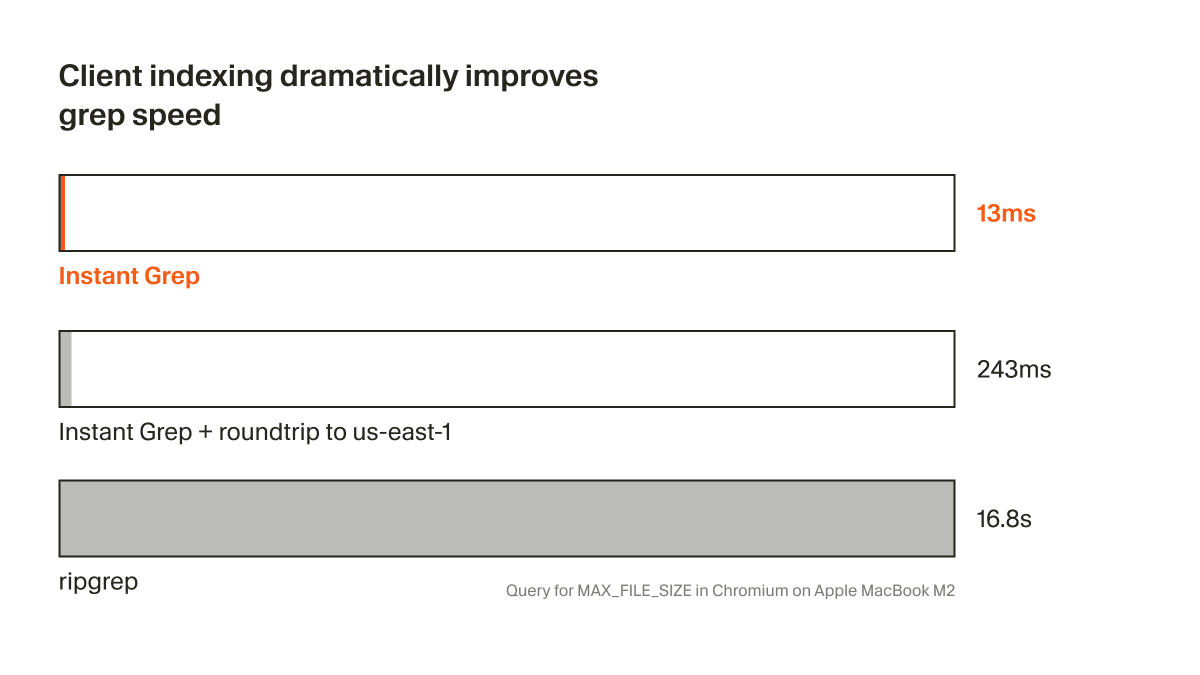
Cursor shipped Instant Grep, a local regex index built from n-grams, inverted indexes, and Bloom filters that drops large-repo searches from seconds to milliseconds. Faster candidate retrieval shortens the coding-agent loop, especially when ripgrep-style scans become the bottleneck.
 breaking
ChatGPT now saves uploaded and generated files into an account-level Library that can be reused across conversations from the web sidebar or recent-files picker. It removes repetitive re-uploading and makes past PDFs, spreadsheets, and images part of a persistent working context.
 breaking
Epoch AI says GPT-5.4 Pro elicited a publishable solution to one 2019 conjecture in its FrontierMath Open Problems set, with a formal writeup planned. Treat it as an early milestone worth reproducing, not blanket evidence that frontier models can already automate math research.
Autoresearch has been out for 2 weeks. The community is trying to apply it to everything with a measurable metric, here are some successful attempts: 🧵 (1/6)
This approach fundamentally uses a negamax alpha-beta tree search with pruning and iterative deepening. I tested everything with a 500ms per move limit. The main way to improve it would be to get rid of the static evaluation at the nodes and replace it with efficiently updatable Show more
Karpathy's Autoresearch pushed my vibecoded Rust chess engine AI from "expert" to a top 50 grandmaster, a #311 chess engine. It ran over 70 experiments on its own and tried to hill climb to the top ELO score it could, landing at 2718!
Fun article on plugging together auto research-style search loops with qualitative coding-style evaluators. I am very optimistic about this approach on non-verifiable (ie subjective) tasks

x.com/i/article/2034…