Unsloth Studio launched as an open-source web UI to run, fine-tune, compare, and export local models, with file-to-dataset workflows and sandboxed code execution. Try it if you want to move prototype training and evaluation off cloud notebooks and onto local or rented boxes.
Studio packages several pieces of the existing Unsloth stack into one local web app. In the launch thread, Unsloth describes it as a UI to "train and run LLMs" locally, search and compare models side by side, and export results to GGUF; the linked Studio docs add that exports are meant to interoperate with runtimes such as llama.cpp, vLLM, Ollama, and LM Studio.
The scope is broader than a chat frontend. Unsloth's GitHub page says Studio handles inference, fine-tuning, pretraining, live training monitoring, and multiple model formats including GGUF, safetensors, and LoRA adapters. A practitioner screenshot from Matthew Berman's post shows the beta chat surface already exposing prompts for coding, math, SVG generation, and model playground use.
The most practical workflow change is that dataset prep is now part of the UI. In Unsloth's data thread, the company says users can transform "PDFs, CSV, DOCX, TXT or any file" into structured synthetic datasets, then edit them in a visual graph-node workflow before fine-tuning. The documentation ties that flow to NVIDIA DataDesigner and says users can also start from uploaded documents or YAML configs.
Unsloth is also framing Studio as a way to move small-team fine-tuning off cloud notebooks and onto local or rented hardware. The launch materials in the main announcement and a third-party walkthrough repeat the same core claim: training for 500-plus models with optimized kernels and memory reuse, delivering faster runs without a stated accuracy tradeoff.
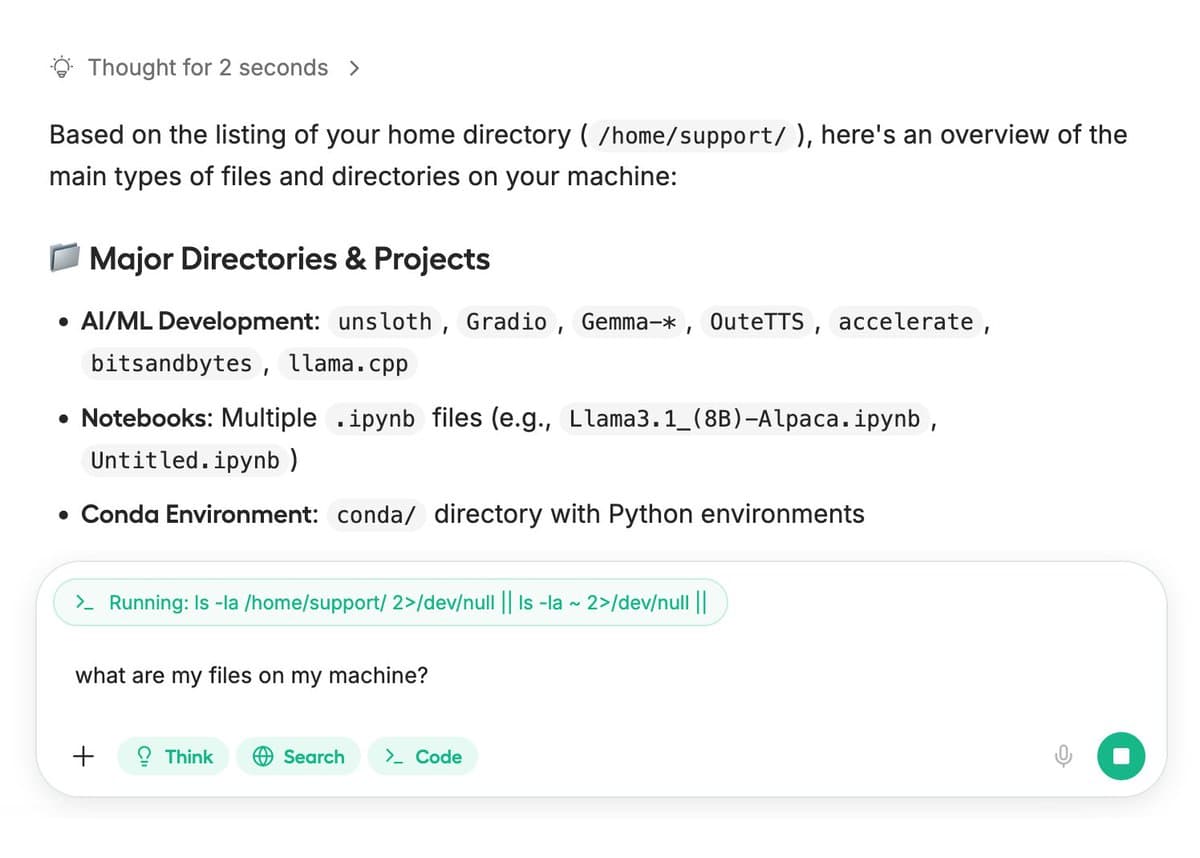
Unsloth is trying to make local inference more agentic, not just cheaper. In its feature post, the company says models can execute code in a sandbox so they can "calculate, analyze data, test code, generate files, or verify an answer with actual computation," which it argues makes outputs more reliable.
That feature sits alongside self-healing tool calling and side-by-side model comparison from the launch thread, giving Studio a built-in loop for trying a model, checking tool behavior, and exporting the one that works. The product pitch from an early reaction video post captures the developer-facing angle: one local app for running, training, comparing, and exporting hundreds of models with lower VRAM overhead.
Flash-MoE now shows SSD-streamed expert weights pushing a 397B Qwen3.5 variant onto an iPhone at 0.6 tokens per second, extending its earlier laptop demos. Treat it as a memory-tiering prototype rather than a deployable mobile serving target, because speed, heat, and context headroom remain tight.
 release
OpenClaw shipped version 2026.3.22 with ClawHub, OpenShell plus SSH sandboxes, side-question flows, and more search and model options, then followed with a 2026.3.23 patch. Teams get a broader plugin surface, but should patch quickly and review plugin trust boundaries as the ecosystem grows.
 release
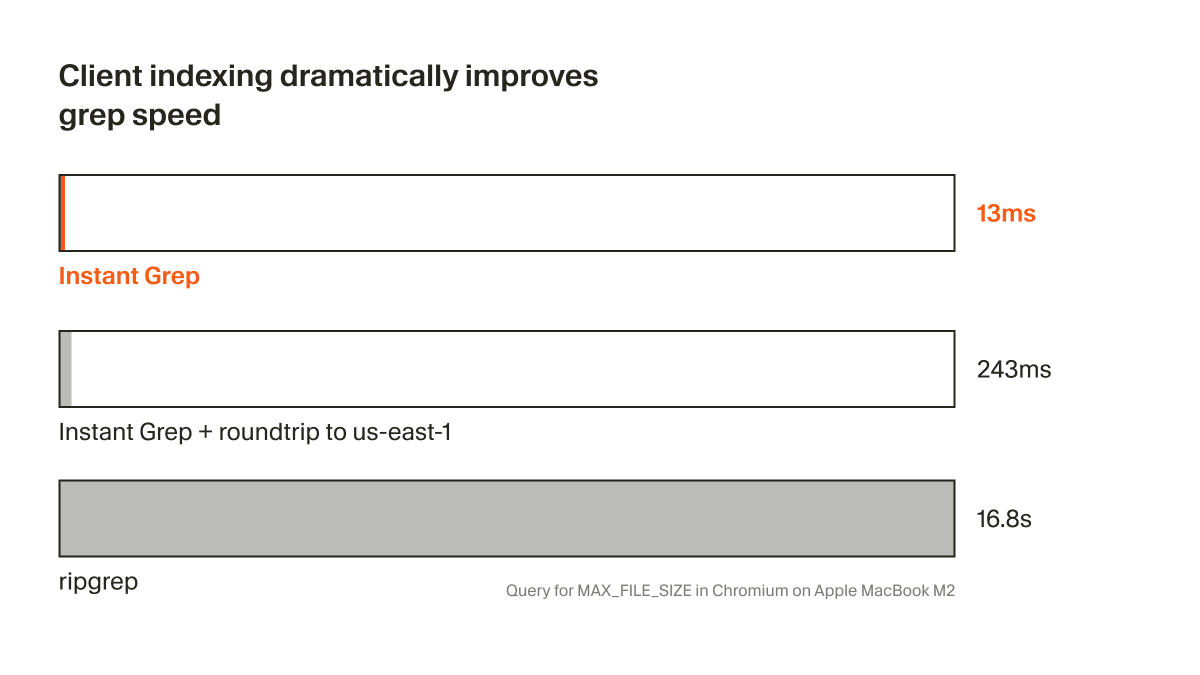
Cursor shipped Instant Grep, a local regex index built from n-grams, inverted indexes, and Bloom filters that drops large-repo searches from seconds to milliseconds. Faster candidate retrieval shortens the coding-agent loop, especially when ripgrep-style scans become the bottleneck.
 breaking
ChatGPT now saves uploaded and generated files into an account-level Library that can be reused across conversations from the web sidebar or recent-files picker. It removes repetitive re-uploading and makes past PDFs, spreadsheets, and images part of a persistent working context.
 breaking
Epoch AI says GPT-5.4 Pro elicited a publishable solution to one 2019 conjecture in its FrontierMath Open Problems set, with a formal writeup planned. Treat it as an early milestone worth reproducing, not blanket evidence that frontier models can already automate math research.
Introducing Unsloth Studio ✨ A new open-source web UI to train and run LLMs. • Run models locally on Mac, Windows, Linux • Train 500+ models 2x faster with 70% less VRAM • Supports GGUF, vision, audio, embedding models • Auto-create datasets from PDF, CSV, DOCX • Show more
Unsloth Studio allows LLMs to run code and programs in a sandbox so it can calculate, analyze data, test code, generate files, or verify an answer with actual computation. This makes answers from models more reliable and accurate.

Transform PDFs, CSV, DOCX, TXT or any file into a structured synthetic datasets via Unsloth Data Recipes. Build and edit your datasets visually via a graph-node workflow and use them for fine-tuning. Powered by @NVIDIA DataDesigner.
Well that was easy!!!


Introducing Unsloth Studio ✨ A new open-source web UI to train and run LLMs. • Run models locally on Mac, Windows, Linux • Train 500+ models 2x faster with 70% less VRAM • Supports GGUF, vision, audio, embedding models • Auto-create datasets from PDF, CSV, DOCX •