ByteDance released DeerFlow 2.0 as an open-source multi-agent system with a browser workspace, parallel tasking, and OpenAI-compatible model support. Try it if you want a reusable repo for autonomous research-and-build workflows instead of a demo stack.
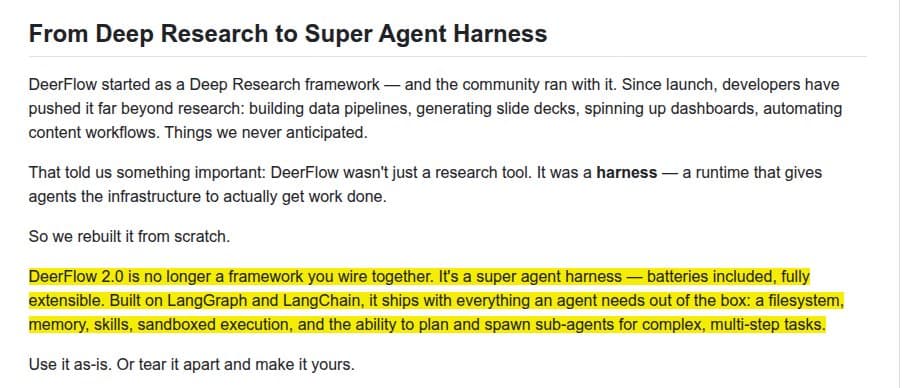
ByteDance released DeerFlow 2.0 as an open-source agent framework rather than a closed demo stack. According to the GitHub summary, it is a “complete rewrite” from 1.x, built around multi-agent workflows, long-term memory, sandbox mode, and extensible skills, with the code available through the GitHub repo.
The product pitch in the launch thread is an agent that acts more like an autonomous worker with its own browser-like computer environment. The thread says DeerFlow can research, code, build websites, create slide decks, and generate videos, and it does that by giving the main agent a workspace plus the ability to spawn smaller assistants that work simultaneously.
The technical hook is the combination of sandboxing, orchestration, and model portability. In the thread, DeerFlow “creates several smaller AI assistants to work simultaneously,” while the repo summary adds that the framework includes memory, context engineering, and integrations such as intelligent search and crawling tools.
That matters for engineers because the system is not tied to one hosted model vendor. The launch thread says DeerFlow is “model-agnostic” for any OpenAI-compatible API and “fully supports” local models via Ollama, which makes it usable as a reusable repo for autonomous research-and-build workflows across cloud or self-hosted setups.
Claude can now drive macOS apps, browser tabs, the keyboard, and the mouse from Claude Cowork and Claude Code, with permission prompts when it needs direct screen access. That makes legacy desktop workflows automatable, and Anthropic is pairing the push with more background-task support for longer agent loops.
 release
OpenClaw shipped version 2026.3.22 with ClawHub, OpenShell plus SSH sandboxes, side-question flows, and more search and model options, then followed with a 2026.3.23 patch. Teams get a broader plugin surface, but should patch quickly and review plugin trust boundaries as the ecosystem grows.
 release
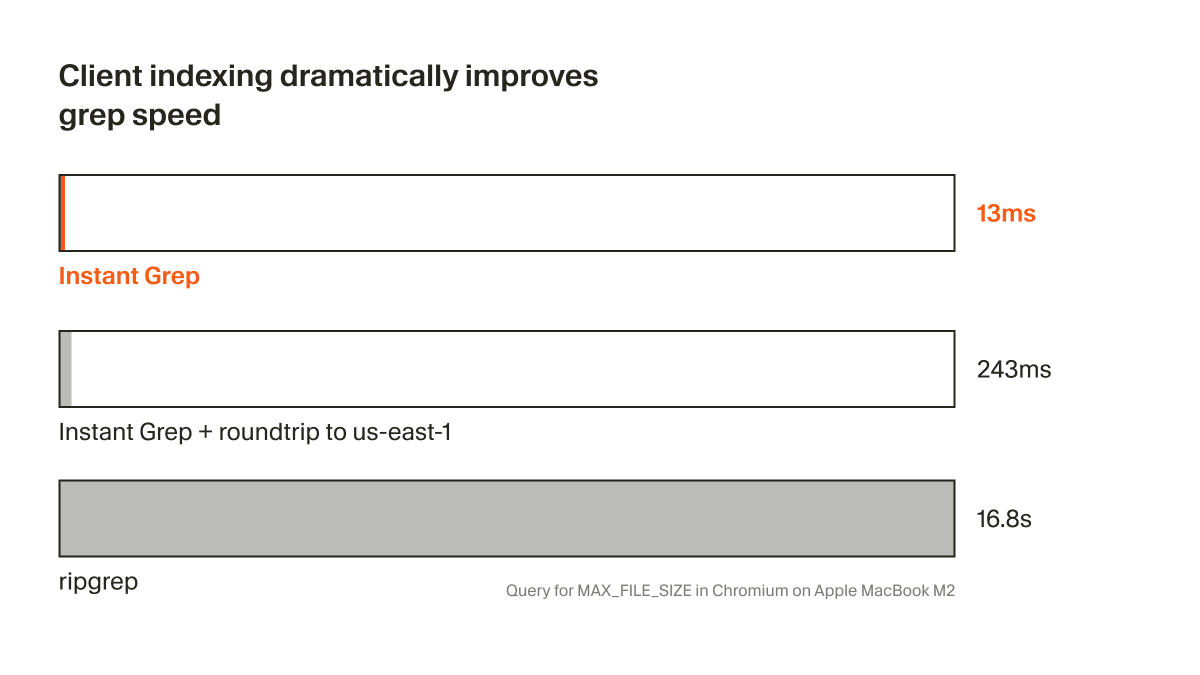
Cursor shipped Instant Grep, a local regex index built from n-grams, inverted indexes, and Bloom filters that drops large-repo searches from seconds to milliseconds. Faster candidate retrieval shortens the coding-agent loop, especially when ripgrep-style scans become the bottleneck.
 breaking
ChatGPT now saves uploaded and generated files into an account-level Library that can be reused across conversations from the web sidebar or recent-files picker. It removes repetitive re-uploading and makes past PDFs, spreadsheets, and images part of a persistent working context.
 breaking
Epoch AI says GPT-5.4 Pro elicited a publishable solution to one 2019 conjecture in its FrontierMath Open Problems set, with a formal writeup planned. Treat it as an early milestone worth reproducing, not blanket evidence that frontier models can already automate math research.
ByteDance just open sourced an AI SuperAgent that can research, code, build websites, create slide decks, and generate videos. All by itself. DeerFlow 2.0 (27K+ GitHub stars ⭐️), an AI system acting like an autonomous employee with its own computer workspace to research and Show more