Google rolled Gemini deeper into Docs, Sheets, Slides, and Drive, including spreadsheet task execution, editable slide generation, and grounded file search. Teams should test approval flows, context sourcing, and current feature limits before broad rollout.
The rollout is not a single chatbot sidebar. Google is pushing app-specific behaviors into each Workspace surface. In the early-access thread, Sheets is described as having an agent that can handle “multi step tasks almost autonomously”: a user submits a request, Gemini produces a plan, the user approves it, and the system executes while updating the sheet in real time. A supporting demo from feature recap also calls out “Fill with Gemini,” where a dragged column can be populated from web research and mailbox context.
Docs adds a tighter edit loop than the old generate-and-paste model. The thread says Gemini can co-edit “directly on the canvas,” generate a preview before insertion, and pull context from Drive, Gmail, Chat, and the web; users can also mention specific files and ask Gemini to match writing style. In Slides, the same thread says generation happens one slide at a time while analyzing nearby slides for fonts, colors, layout, and style consistency, and the output remains editable rather than flattened into static assets.
The engineering pattern across the launch is retrieval plus traceability. The early-access thread says Gemini in Drive now returns AI overviews directly in search results and answers from files with “full citations,” which matters because users can inspect where generated content came from instead of treating Workspace output as opaque synthesis. That same post says Gemini can hold multi-turn conversations across Drive, Gmail, Chat, Calendar, and the web, with sources carried through the interaction.
This also changes how content gets assembled. The feature recap describes Gemini as “connective tissue” across private emails, calendars, and Drive files, with examples like drafting a newsletter from HOA minutes and upcoming events stored in separate locations. In practice, that means the new Workspace flow is less about prompt-to-text generation and more about combining retrieval, document editing, and task execution inside the productivity stack.
The early-access details also expose the current limits. In Docs, the thread says source settings reset every session and custom Gems still need to be pasted manually. In Slides, the same post says Gemini cannot yet edit videos, tables, or custom shapes, and it cannot reference slides by number. Those constraints matter for workflow automation because they define where a human still has to route around the model.
Rollout scope is also narrower than “all Workspace users.” The launch clip says the new Docs, Sheets, Slides, and Drive experience is available today to Google AI Pro and Ultra users, while the tester thread says at least some of the new Drive-centric experience is US-only and English-only for now. For engineering teams, the most important product behavior is the approval checkpoint in Sheets and the cited retrieval layer in Drive: both are concrete control surfaces, and both should be validated before broader internal deployment.
LangSmith Fleet introduces shared agents with edit and run permissions, agent identity, human approvals, and tracing. That matters because enterprise agent rollout is shifting from single-user demos to governed, auditable deployment surfaces.
 release
OpenClaw shipped version 2026.3.22 with ClawHub, OpenShell plus SSH sandboxes, side-question flows, and more search and model options, then followed with a 2026.3.23 patch. Teams get a broader plugin surface, but should patch quickly and review plugin trust boundaries as the ecosystem grows.
 release
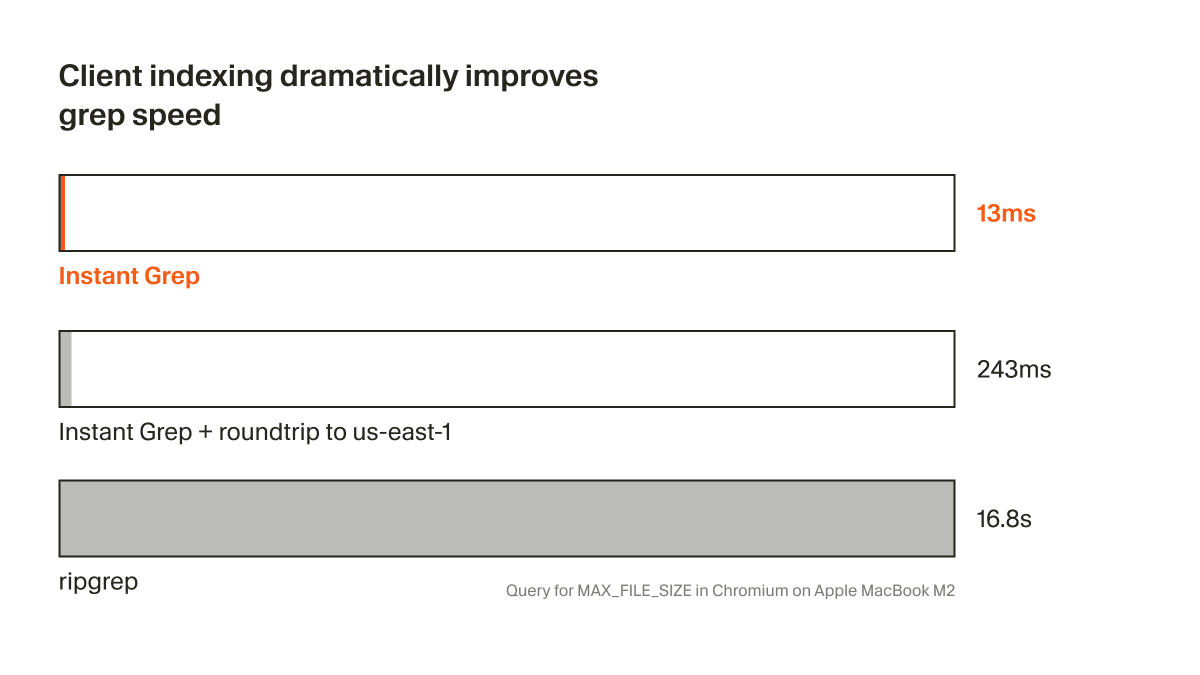
Cursor shipped Instant Grep, a local regex index built from n-grams, inverted indexes, and Bloom filters that drops large-repo searches from seconds to milliseconds. Faster candidate retrieval shortens the coding-agent loop, especially when ripgrep-style scans become the bottleneck.
 breaking
ChatGPT now saves uploaded and generated files into an account-level Library that can be reused across conversations from the web sidebar or recent-files picker. It removes repetitive re-uploading and makes past PDFs, spreadsheets, and images part of a persistent working context.
 breaking
Epoch AI says GPT-5.4 Pro elicited a publishable solution to one 2019 conjecture in its FrontierMath Open Problems set, with a formal writeup planned. Treat it as an early milestone worth reproducing, not blanket evidence that frontier models can already automate math research.
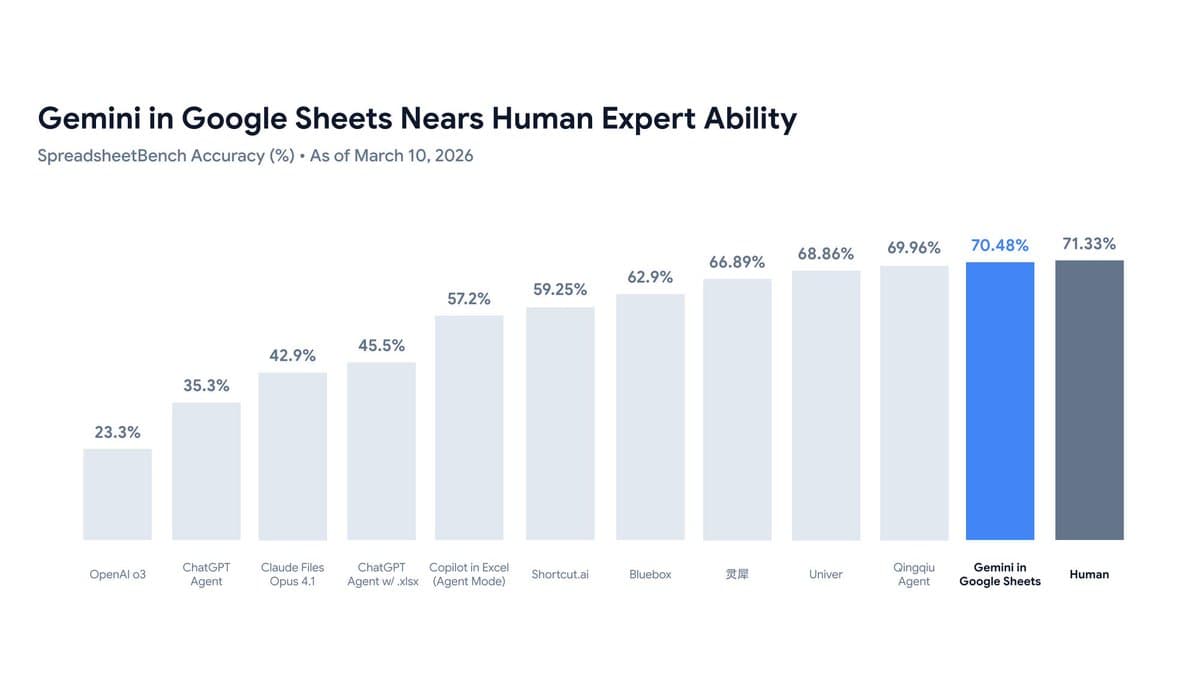
Gemini in Google Workspace just got a massive upgrade and I genuinely believe it is going to be very useful for many people. I have had early access and have been testing it for a while. Full details below 👇 Google Sheets has reached a state of the art benchmark, scoring 70.48 Show more

Gemini in Google Sheets :
Google is rolling out a new Gemini experience in Docs, Sheets, and Slides, allowing users to offload more tasks to AI. Gemini will be able to pull context from relevant sources and generate or modify the document's content. I have big hopes on this feature 👀


Introducing the new Gemini powered Docs, Sheets, Slides, and Drive experience featuring AI Overviews, fulled editable AI made slides, and new grounding sources to make writing docs context aware 📃 Available today to G1 Pro and Ultra users : )
Gemini in Slides :
Gemini in Google Drive