LangSmith Fleet introduces shared agents with edit and run permissions, agent identity, human approvals, and tracing. That matters because enterprise agent rollout is shifting from single-user demos to governed, auditable deployment surfaces.
Fleet packages several controls that usually get bolted on after an agent demo. LangSmith says teams can “build agents with natural language,” then share them with explicit permissions over who can edit, run, or clone each agent Fleet launch. The same post says authentication is handled with “agent identity,” which suggests actions can execute under a managed service identity rather than a single developer’s credentials.
The other two launch details are the ones most relevant to production rollout. LangSmith says Fleet supports “approve actions with human-in-the-loop” and “track and audit actions with tracing in LangSmith Observability” launch thread. In practice, that puts approvals and post-hoc trace review in the same product surface as agent authoring, instead of leaving governance to custom app logic. LangChain links directly to the Fleet product page from the announcement.
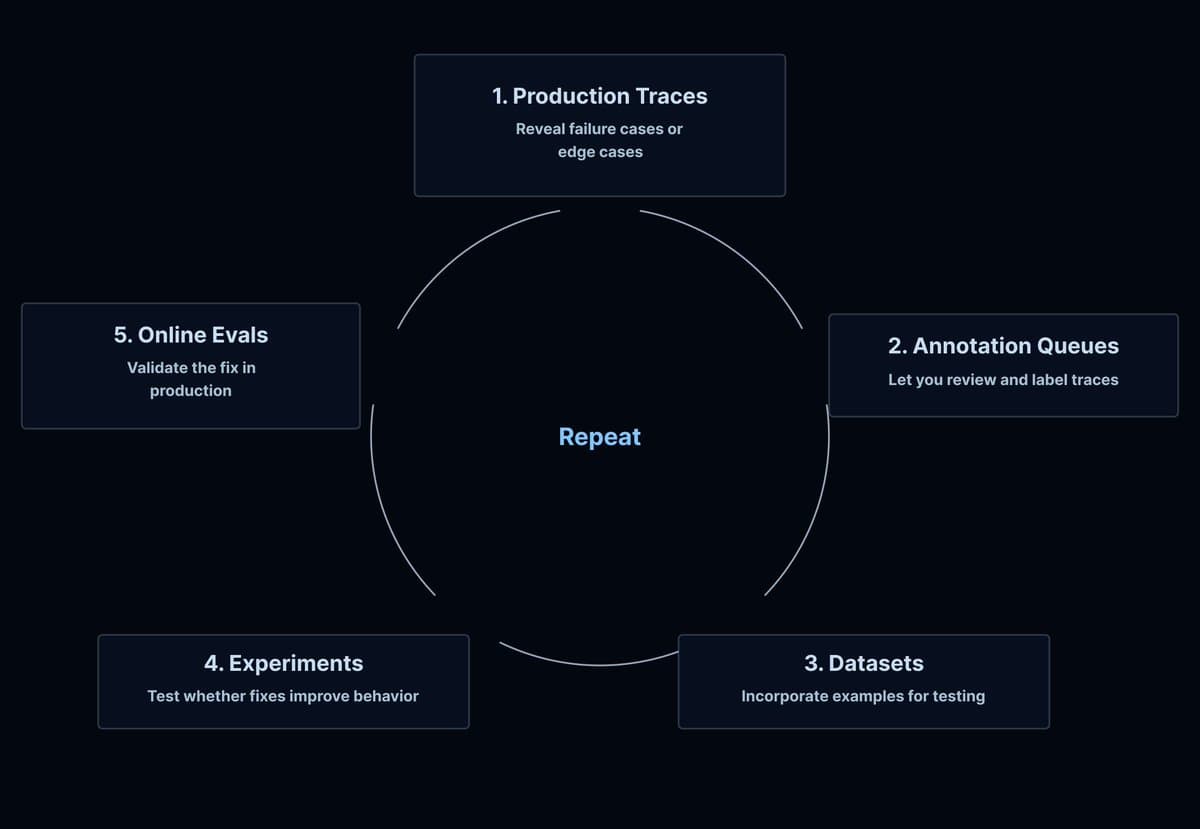
LangChain’s new guide makes the operational argument explicit: “natural language input is unbounded,” “LLMs are sensitive to subtle prompt variations,” and multi-step agent chains are “hard to anticipate in dev” guide thread. The attached
lays out a five-step loop of production traces, annotation queues, datasets, experiments, and online evals, which is a much stronger signal about intended usage than a generic launch graphic.
That framing also matches LangChain’s NVIDIA integration post with NVIDIA AI-Q and Deep Agents. The post describes enterprise search agents that connect internal data sources through NeMo Agent Toolkit tools, switch between shallow and deep research modes, and monitor traces and performance with LangSmith plus NVIDIA tooling integration details. Read together, the announcement and follow-on materials position Fleet less as a chatbot workspace and more as a governed deployment layer for teams shipping agents into enterprise systems.
PlayerZero launched an AI production engineer and claims its world model can simulate failures before release, trace incidents to exact PRs, and beat existing tools on real production test cases. If those numbers hold, the interesting shift is from code generation to debugging, testing, and observability after code ships.
 release
OpenClaw shipped version 2026.3.22 with ClawHub, OpenShell plus SSH sandboxes, side-question flows, and more search and model options, then followed with a 2026.3.23 patch. Teams get a broader plugin surface, but should patch quickly and review plugin trust boundaries as the ecosystem grows.
 release
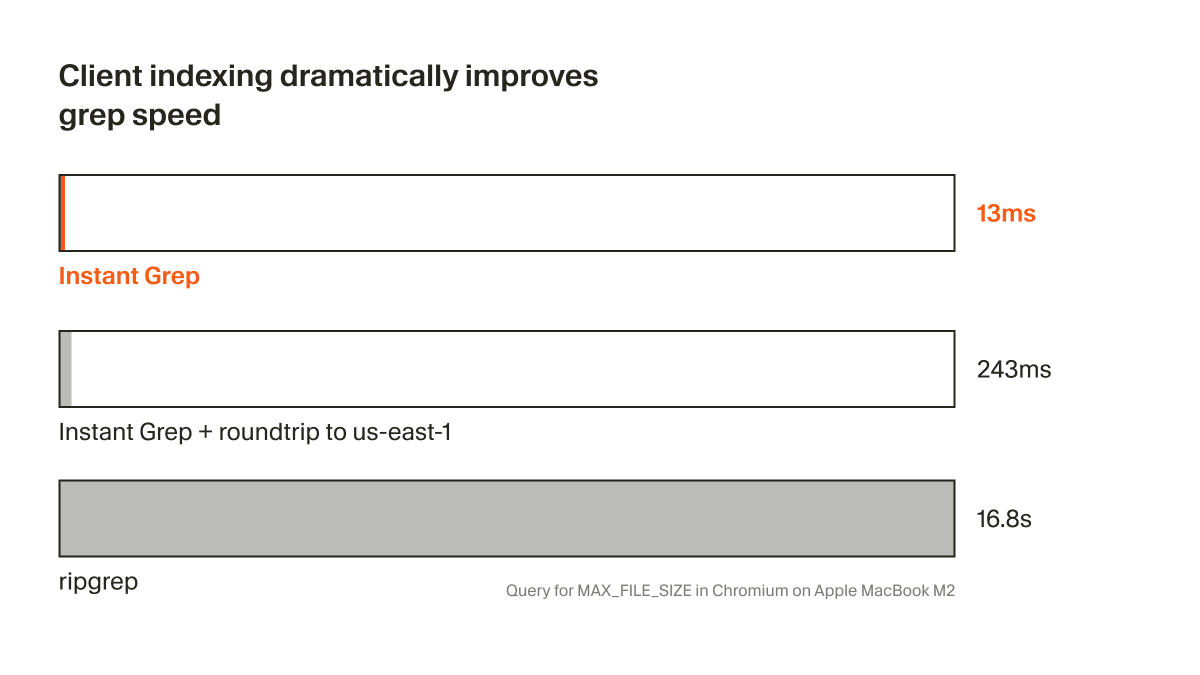
Cursor shipped Instant Grep, a local regex index built from n-grams, inverted indexes, and Bloom filters that drops large-repo searches from seconds to milliseconds. Faster candidate retrieval shortens the coding-agent loop, especially when ripgrep-style scans become the bottleneck.
 breaking
ChatGPT now saves uploaded and generated files into an account-level Library that can be reused across conversations from the web sidebar or recent-files picker. It removes repetitive re-uploading and makes past PDFs, spreadsheets, and images part of a persistent working context.
 breaking
Epoch AI says GPT-5.4 Pro elicited a publishable solution to one 2019 conjecture in its FrontierMath Open Problems set, with a formal writeup planned. Treat it as an early milestone worth reproducing, not blanket evidence that frontier models can already automate math research.
New Conceptual Guide: You don’t know what your agent will do until it’s in production 👀 With traditional software, you ship with reasonable confidence. Test coverage handles most paths. Monitoring catches errors, latency, and query issues. When something breaks, you read the Show more

LangSmith 🤝 @AbridgeHQ 🍩 donut drop!