JetBrains introduced Air, an agentic development environment where multiple agents can edit alongside you on host, in Docker, or on remote VMs. Its shared out-of-process state and checkout-free Git-server filesystem make multi-agent workflows easier to inspect and control.

JetBrains is pitching Air less as an autocomplete upgrade and more as a control plane for parallel coding agents. The launch thread says developers can run Claude, Gemini, Codex, and Junie “side-by-side with you,” while the product page at air.dev describes isolated task execution, review, and switching between concurrent jobs.
The concrete workflow change is where those agents can run. According to the architecture post, agents can edit code alongside the developer “on host, in Docker, or via Git Worktree,” and Air can also “run a swarm of agents on a remote VM” while you inspect progress from a native client. That makes Air closer to multi-workspace orchestration than a single-pane chat interface.
JetBrains says the key architectural move is that “state lives out of process.” In the thread, it describes “a synced database shared across every process” for workspace, UI, and code insight, instead of binding state tightly to one local IDE instance.
That design is what enables the remote setup: JetBrains says the file-system daemon can run on the remote machine while the native UI stays local, including on the web client. The same post claims that because interactions are represented as state changes, with conflict resolution handling collisions, Air gets “real-time collaboration for free.” A later follow-up post says this extends to “separate workspaces — one per agent,” where you can watch “cursors, files changing, shells running.”
JetBrains is using a custom client stack to make the same environment portable. In its platform post, the company says Air is “fully Kotlin Multiplatform” and targets desktop, Android, iOS, and web via WASM; another post adds that desktop rendering uses a Skia-backed canvas with Compose Multiplatform.
The more novel piece is storage. JetBrains says in the Git filesystem thread that it implemented a filesystem “on a Git server,” which Air treats like a normal filesystem even though “nothing is ever checked out.” If that holds up in practice, it could reduce the local checkout and branch-management overhead that usually comes with multi-agent work across large repos.
Claude can now drive macOS apps, browser tabs, the keyboard, and the mouse from Claude Cowork and Claude Code, with permission prompts when it needs direct screen access. That makes legacy desktop workflows automatable, and Anthropic is pairing the push with more background-task support for longer agent loops.
 release
OpenClaw shipped version 2026.3.22 with ClawHub, OpenShell plus SSH sandboxes, side-question flows, and more search and model options, then followed with a 2026.3.23 patch. Teams get a broader plugin surface, but should patch quickly and review plugin trust boundaries as the ecosystem grows.
 release
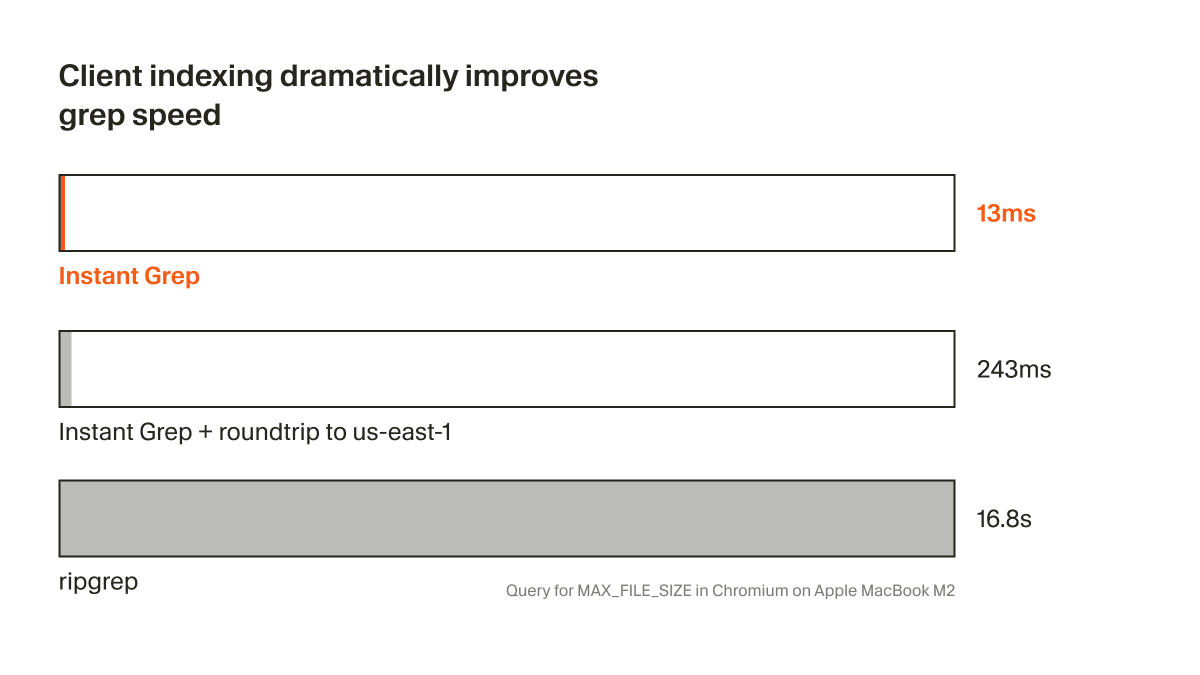
Cursor shipped Instant Grep, a local regex index built from n-grams, inverted indexes, and Bloom filters that drops large-repo searches from seconds to milliseconds. Faster candidate retrieval shortens the coding-agent loop, especially when ripgrep-style scans become the bottleneck.
 breaking
ChatGPT now saves uploaded and generated files into an account-level Library that can be reused across conversations from the web sidebar or recent-files picker. It removes repetitive re-uploading and makes past PDFs, spreadsheets, and images part of a persistent working context.
 breaking
Epoch AI says GPT-5.4 Pro elicited a publishable solution to one 2019 conjecture in its FrontierMath Open Problems set, with a formal writeup planned. Treat it as an early milestone worth reproducing, not blanket evidence that frontier models can already automate math research.
This makes true remote development possible: the file system daemon runs on the remote machine, while the native UI stays local. Same on Web. Since all interactions either modify state or are state (like the cursor), conflict-resolution gives us real-time collaboration for free.
Air lets you have agents editing code alongside you in real time — on host, in Docker, or via Git Worktree. It can also run a swarm of agents on a remote VM — and you can peek into their work from a native client. And that is in architecture!
Air is fully Kotlin Multiplatform — it can run on Desktop, Android, iOS, and even Web via WASM. The Web version is, in all likelihood, one of the most complex WASM applications ever built. You'll see it soon.
And there's more. With clean APIs between modules, who says a file system has to be a file system? We implemented one on a Git server. Air treats it as a normal file system — but nothing is ever checked out. Just a repo on a server. Like Google Docs, but for your monorepo.
Declarative UI gives us a clean split between data and presentation. And that unlocked a big architectural move — state lives out of process. All of Air's data lives in a synced database shared across every process — workspace, UI, code insight — all kept in sync constantly.