WSJ reported that OpenAI is consolidating ChatGPT, Codex, and its browser into a single desktop app to simplify heavy-use workflows. If it ships, developers would get one workspace for chat, coding, and browsing instead of today's fragmented clients.
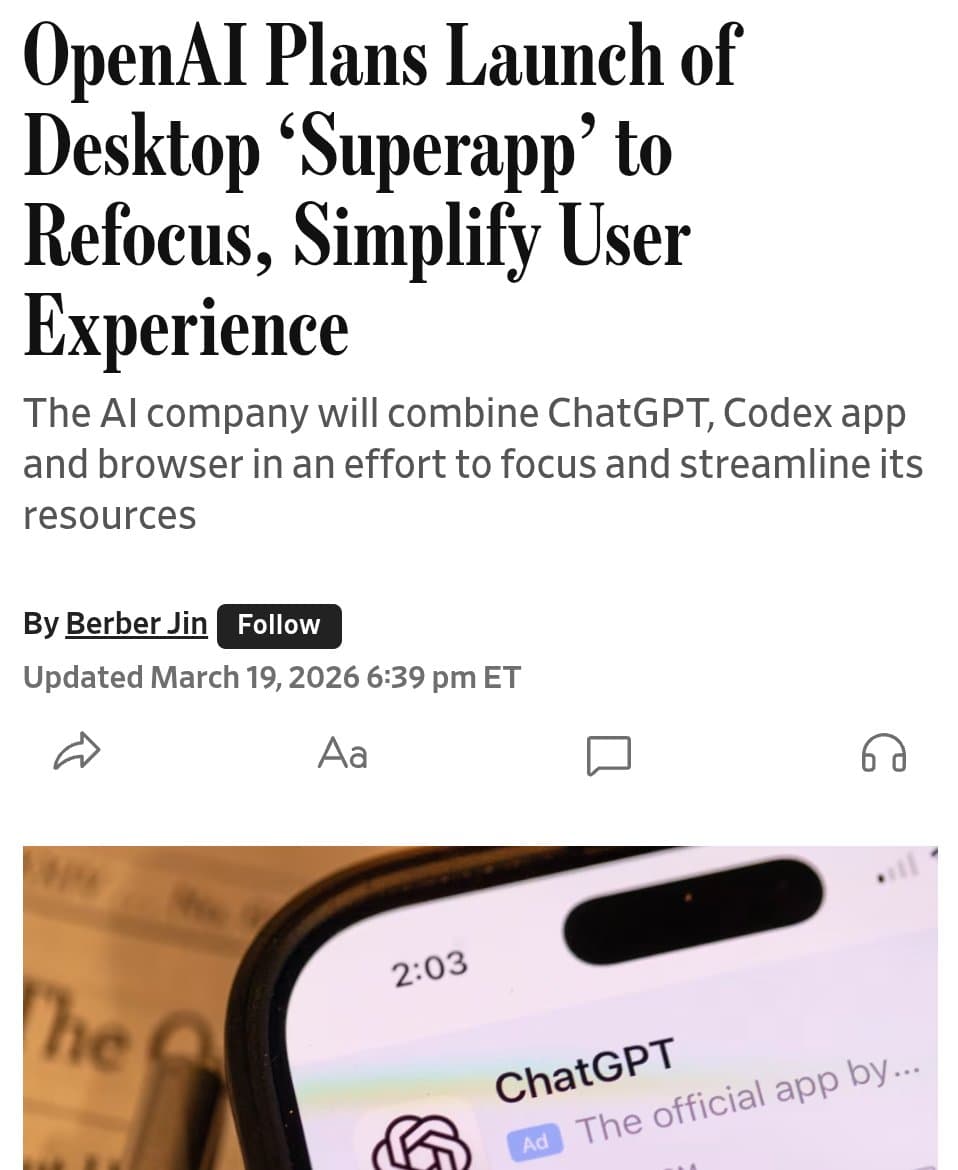
The reported product is a desktop app that would “combine ChatGPT, Codex app and browser,” according to the WSJ screenshot. That is a packaging change more than a new model launch, but it matters operationally because OpenAI’s current product surface is split across separate chat, coding, and browsing experiences.
A parallel summary from Wes Roth’s post says OpenAI is “moving to consolidate its fragmented product lineup” into a unified desktop workspace for “heavy enterprise and developer use.” Taken together, the consistent claim is not just feature bundling but a client strategy: one native app that keeps conversation, code work, and web context in the same session.
For engineers, the interesting part is workflow consolidation. The developer reaction describes the target use cases as writing, coding, research, and task automation in a single interface, which matches the reported ChatGPT-plus-Codex-plus-browser stack. If OpenAI actually merges those surfaces, it could reduce the handoff friction between asking for code, editing or running it, and pulling in browser context.
The community’s mockups also show how people already expect the product to expand beyond three icons. One edited stage image adds Sora and Prism to the same launcher expanded mockup, suggesting developers are reading this as a possible umbrella desktop shell for multiple OpenAI tools, not just a convenience wrapper. That broader interpretation is still speculation; the only confirmed reporting in this evidence set is the narrower plan to merge ChatGPT, Codex, and the browser.
Claude can now drive macOS apps, browser tabs, the keyboard, and the mouse from Claude Cowork and Claude Code, with permission prompts when it needs direct screen access. That makes legacy desktop workflows automatable, and Anthropic is pairing the push with more background-task support for longer agent loops.
 release
OpenClaw shipped version 2026.3.22 with ClawHub, OpenShell plus SSH sandboxes, side-question flows, and more search and model options, then followed with a 2026.3.23 patch. Teams get a broader plugin surface, but should patch quickly and review plugin trust boundaries as the ecosystem grows.
 release
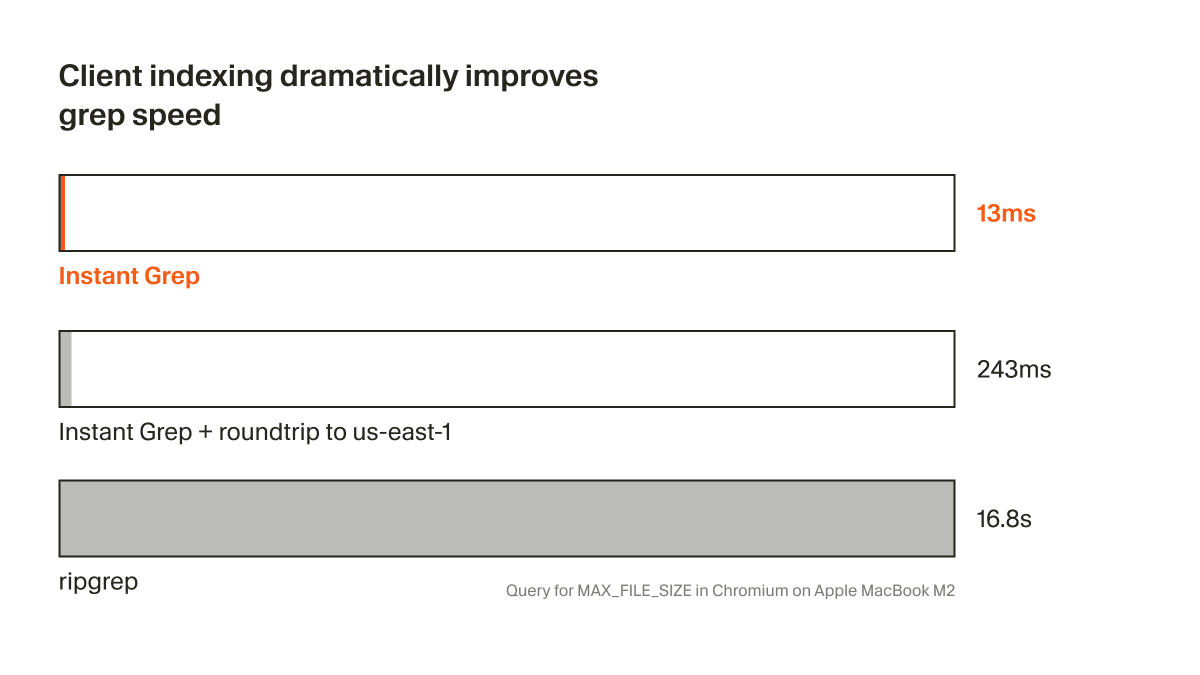
Cursor shipped Instant Grep, a local regex index built from n-grams, inverted indexes, and Bloom filters that drops large-repo searches from seconds to milliseconds. Faster candidate retrieval shortens the coding-agent loop, especially when ripgrep-style scans become the bottleneck.
 breaking
ChatGPT now saves uploaded and generated files into an account-level Library that can be reused across conversations from the web sidebar or recent-files picker. It removes repetitive re-uploading and makes past PDFs, spreadsheets, and images part of a persistent working context.
 breaking
Epoch AI says GPT-5.4 Pro elicited a publishable solution to one 2019 conjecture in its FrontierMath Open Problems set, with a formal writeup planned. Treat it as an early milestone worth reproducing, not blanket evidence that frontier models can already automate math research.
OpenAI to make a 'superapp', basically ChatGPT and Codex with browser merged into one.


OpenAI Plans Launch of Desktop ‘Superapp’ to Refocus, Simplify User Experience