Yann LeCun's AMI Labs emerged from stealth with a $1.03 billion seed round and a stated bet on world models over LLM-only systems. Treat it as a well-funded alternative research agenda rather than another chatbot company.

AMI’s core announcement is unusually simple: the company says it is building AI systems that “understand the world, have persistent memory, can reason and plan, and are controllable and safe,” and that it has raised $1.03B (~€890M) from global investors who back a world-model-centered approach launch post. The same primary material says the team is operating from day one across Paris, New York, Montreal, and Singapore launch post.
A repost stream like this retweet shows how widely the stealth exit propagated, but the concrete technical claims still come from AMI’s launch statement. Secondary posts add that the startup was co-founded by Yann LeCun alongside Alexandre LeBrun and Pascale Fung founder summary, while one team roundup also names Saining Xie as chief science officer. Claims that the round priced the company at
The engineering distinction in the launch is the data and objective. Rather than optimizing only on text, the technical description says AMI is building world models that learn “abstract representations from real-world sensor data,” filter out noise, and make predictions directly in representation space. That is a stronger claim than generic multimodality: it implies a training agenda aimed at state estimation, prediction, and longer-horizon planning instead of next-token chat behavior.
That lines up with LeCun’s public argument that intelligence needs “the ability to predict the consequences of your actions” and “the ability to plan,” as captured in a clip of his remarks with LeCun on planning. In the same thread, he is quoted arguing that “you’re not going to get this” from “LLM” or other generative-only architectures LeCun remarks. For engineers, that makes AMI less a model API launch than a heavily funded alternative research stack around memory, control, and model-based reasoning.
The most concrete application framing so far is reliability-sensitive deployment. One contextual summary places AMI’s target domains in industrial process control, automation, wearables, robotics, and healthcare, while another post says the company is explicitly trying to reduce hallucination risk in sensitive settings. The same report says healthcare work may start with partner Nabla funding summary.
That application list fits the launch language around systems that stay “controllable and safe” launch post. It also explains why AMI is emphasizing world understanding and persistent memory before product surface area. What shipped this week is a financing event and a research direction, not an SDK, API, or benchmark release.
The White House published a national AI legislative framework covering minors, infrastructure permitting, copyright, and federal preemption. Engineers building for regulated or public-sector environments should watch how these proposals shape deployment constraints.
 release
OpenClaw shipped version 2026.3.22 with ClawHub, OpenShell plus SSH sandboxes, side-question flows, and more search and model options, then followed with a 2026.3.23 patch. Teams get a broader plugin surface, but should patch quickly and review plugin trust boundaries as the ecosystem grows.
 release
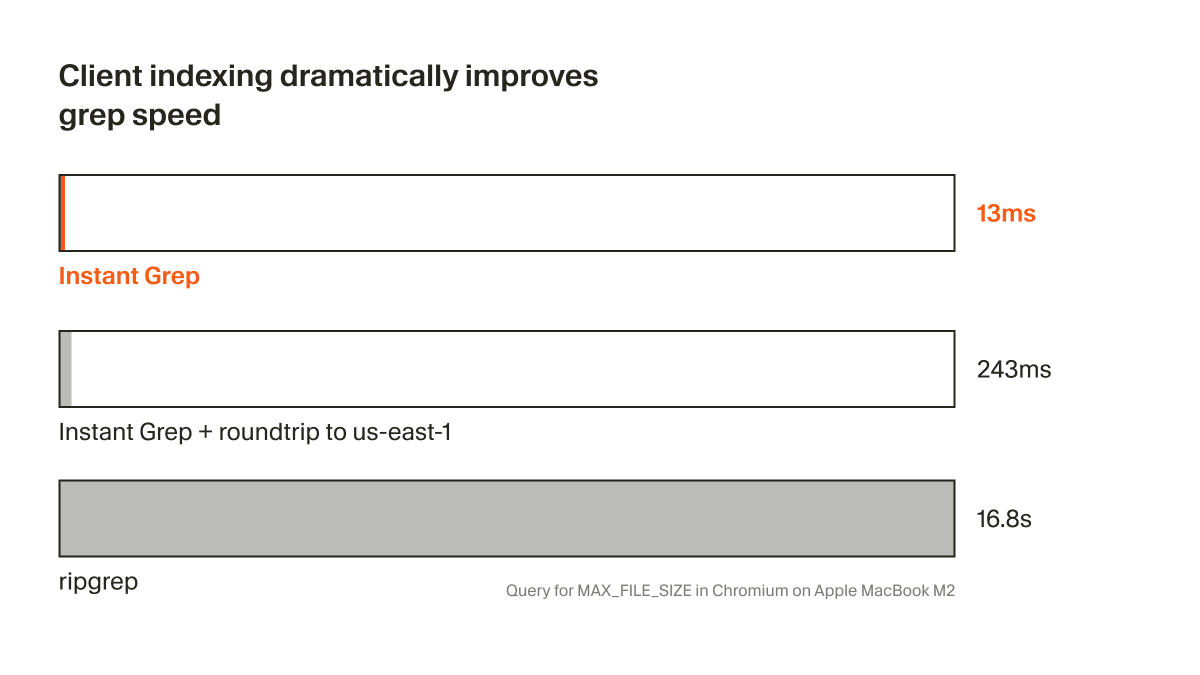
Cursor shipped Instant Grep, a local regex index built from n-grams, inverted indexes, and Bloom filters that drops large-repo searches from seconds to milliseconds. Faster candidate retrieval shortens the coding-agent loop, especially when ripgrep-style scans become the bottleneck.
 breaking
ChatGPT now saves uploaded and generated files into an account-level Library that can be reused across conversations from the web sidebar or recent-files picker. It removes repetitive re-uploading and makes past PDFs, spreadsheets, and images part of a persistent working context.
 breaking
Epoch AI says GPT-5.4 Pro elicited a publishable solution to one 2019 conjecture in its FrontierMath Open Problems set, with a formal writeup planned. Treat it as an early milestone worth reproducing, not blanket evidence that frontier models can already automate math research.
BREAKING 🚨: Advanced Machine Intelligence (AMI), founded by @ylecun raised $1.03B in a seed round. “AMI is building a new breed of AI systems that understand the world, have persistent memory, can reason and plan, and are controllable and safe.”


Advanced Machine Intelligence (AMI) is building a new breed of AI systems that understand the world, have persistent memory, can reason and plan, and are controllable and safe. We’ve raised a $1.03B (~€890M) round from global investors who believe in our vision of universally

Yann LeCun's new founded company AMI Labs secured $1.03B funding at a $3.5B valuation to develop AI “world models” that learn from real-world data instead of just text. The ambitious project could take years to commercialize but aims to overcome LLM hallucination risks, Show more
Advanced Machine Intelligence (AMI) is building a new breed of AI systems that understand the world, have persistent memory, can reason and plan, and are controllable and safe. We’ve raised a $1.03B (~€890M) round from global investors who believe in our vision of universally
AMI is working on world models that learn abstract representations from real-world sensor data, filtering out noise and making predictions directly in representation space. The goal is a new class of AI systems that understand the world, retain persistent memory, reason and Show more
Advanced Machine Intelligence (AMI) is building a new breed of AI systems that understand the world, have persistent memory, can reason and plan, and are controllable and safe. We’ve raised a $1.03B (~€890M) round from global investors who believe in our vision of universally