A solo developer wired Claude into emulators and simulators to inspect 25 Capacitor screens daily and file bugs across web, Android, and iOS. The writeup is a solid template for unattended QA, but it also shows where iOS tooling and agent reliability still crack.

Posted by azhenley
Christopher Meiklejohn, a solo developer building Zabriskie—a community app using Capacitor for cross-platform web, iOS, and Android—implements automated QA with Claude AI. Claude drives emulators/simulators, navigates 25 screens daily via Chrome DevTools Protocol (easy on Android WebView, challenging on iOS requiring accessibility API workarounds), takes screenshots, analyzes for issues, and files bug reports. Android setup took 90 minutes; iOS over 6 hours due to native dialogs and lack of CDP. Now all platforms have automated visual regression testing filing their own bugs.
The core loop is simple: Claude drives emulators and simulators, navigates the app, captures screenshots, inspects the results, and files bugs when something looks wrong. In the writeup, the app is a Capacitor codebase spanning web, Android, and iOS, and the automated run covers 25 screens on a daily schedule.
The platform split is the main engineering detail. According to the author's post, Android was the easier path because the Capacitor WebView could be controlled through Chrome DevTools Protocol, which let Claude interact with the app much more like a browser target. iOS was harder because the same CDP-style path was unavailable, so the implementation had to lean on accessibility APIs and additional handling for native UI.
Posted by azhenley
Useful as a real-world example of using Claude as an unattended QA agent for a Capacitor mobile app, plus practical notes on Android CDP, iOS accessibility limitations, and why existing tools like Appium/Maestro may still matter.
The strongest caveat is reliability under unattended execution. In the thread summary, one commenter highlighted "worktree discipline failure" as the interesting part of the experiment: when an agent runs on a schedule, mistakes surface later, not interactively. Another practitioner quoted in the discussion summary said Claude can still ignore instructions "explicitly in its memory" and then only apologize, which is a bad failure mode for hands-off QA.
Posted by azhenley
Thread discussion highlights: - ptmkenny on existing testing tools: WebdriverIO and Appium already exist for this use case... and come recommended from the Capacitor developers. - sneg55 on Android CDP vs iOS pain: The CDP approach for Android is underrated here... The iOS section is the real story though. - cmeiklejohn on Claude reliability: I sometimes ask it why it ignored what is explicitly in its memory... all it can do is apologize.
The thread also pushed back on novelty. As the discussion summary notes, commenters pointed out that "WebdriverIO and Appium already exist" for this class of mobile automation and are already recommended in the Capacitor ecosystem. That leaves the writeup as a useful real-world template for layering an LLM on top of existing device-control surfaces, not evidence that classical mobile test tooling has been displaced.
Claude can now drive macOS apps, browser tabs, the keyboard, and the mouse from Claude Cowork and Claude Code, with permission prompts when it needs direct screen access. That makes legacy desktop workflows automatable, and Anthropic is pairing the push with more background-task support for longer agent loops.
 release
OpenClaw shipped version 2026.3.22 with ClawHub, OpenShell plus SSH sandboxes, side-question flows, and more search and model options, then followed with a 2026.3.23 patch. Teams get a broader plugin surface, but should patch quickly and review plugin trust boundaries as the ecosystem grows.
 release
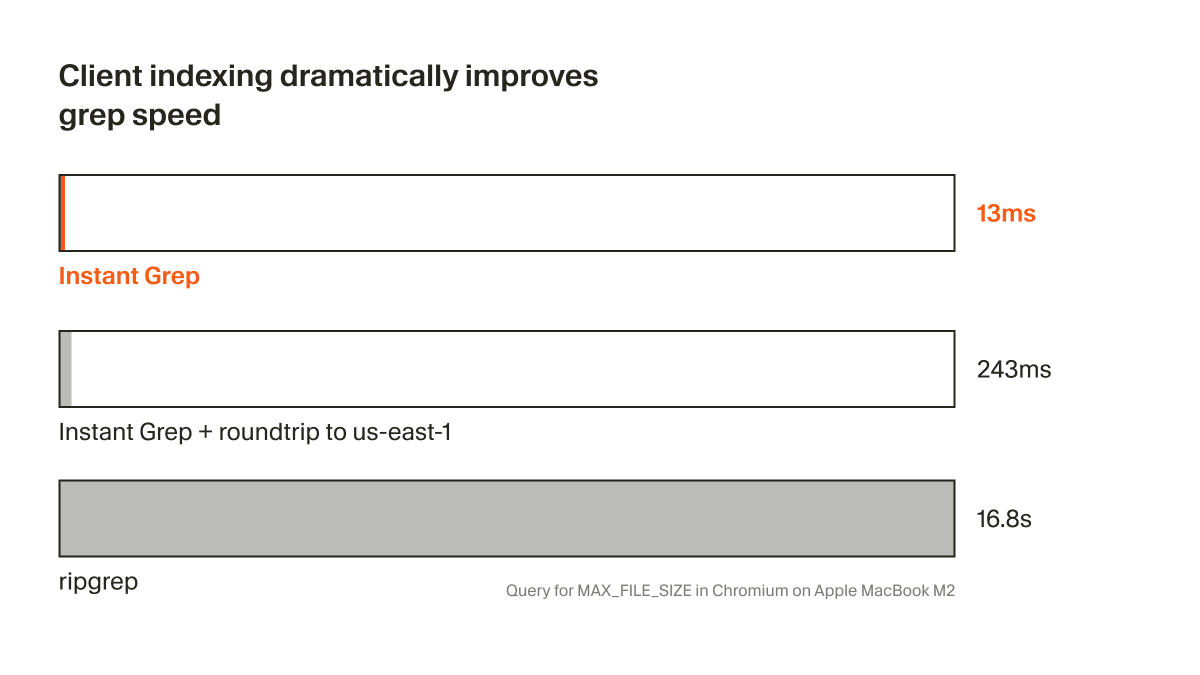
Cursor shipped Instant Grep, a local regex index built from n-grams, inverted indexes, and Bloom filters that drops large-repo searches from seconds to milliseconds. Faster candidate retrieval shortens the coding-agent loop, especially when ripgrep-style scans become the bottleneck.
 breaking
ChatGPT now saves uploaded and generated files into an account-level Library that can be reused across conversations from the web sidebar or recent-files picker. It removes repetitive re-uploading and makes past PDFs, spreadsheets, and images part of a persistent working context.
 breaking
Epoch AI says GPT-5.4 Pro elicited a publishable solution to one 2019 conjecture in its FrontierMath Open Problems set, with a formal writeup planned. Treat it as an early milestone worth reproducing, not blanket evidence that frontier models can already automate math research.