OpenAI says Codex capacity is lagging a demand spike, leaving some sessions choppy while the team adds more compute. If you depend on Codex in production workflows, plan for transient instability and keep fallback review or execution paths ready.
OpenAI has confirmed a straightforward capacity problem: demand for Codex is rising faster than the team can provision compute. In Sottiaux's first update, the capacity note says OpenAI is "adding compute as fast as we can" but that service may be "a little bit choppy for some," which frames the issue as infrastructure saturation rather than a feature rollback or isolated outage.
A few hours later, the follow-up made the bottleneck more explicit by saying the "GPU fleet is still melting" and that the team was working continuously to catch up. That wording matters for engineers operating Codex-backed workflows: the observed degradation appears tied to fleet exhaustion under demand spikes, with stability described as improving but not yet fully restored at the time of posting.
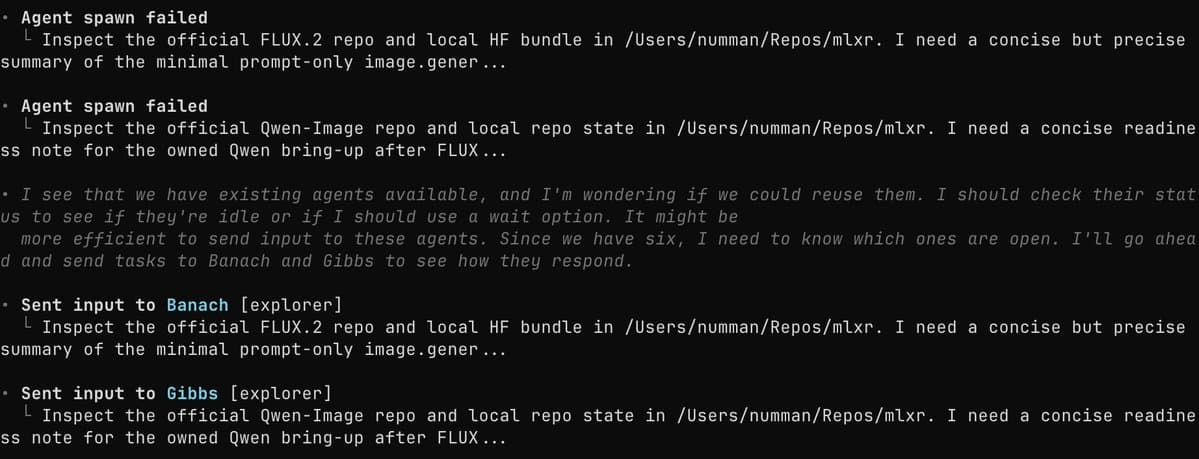
User feedback points to stress in longer, more stateful sessions. In one example, a practitioner report says Codex's multi-agent setup is "great" and "really improves efficiency," but also says the agent needs guidance on when to reuse or shut down previous agents. The attached screenshot shows repeated "Agent spawn failed" messages alongside attempts to route work to existing agents, which suggests concurrency and agent-lifecycle behavior are part of the current rough edges under load [img:0|spawn failure logs].
Other posts show how quickly users are running into visible usage ceilings. The shared screenshot shows a session at 31% of its current bucket and weekly usage at 92% for "All models," while another user described checking a weekly token budget as "sticker shock." Those are anecdotal rather than platform-wide metrics, but together they match OpenAI's own description of demand surging faster than capacity and help explain why service quality is feeling uneven in active coding sessions.
PlayerZero launched an AI production engineer and claims its world model can simulate failures before release, trace incidents to exact PRs, and beat existing tools on real production test cases. If those numbers hold, the interesting shift is from code generation to debugging, testing, and observability after code ships.
 release
OpenClaw shipped version 2026.3.22 with ClawHub, OpenShell plus SSH sandboxes, side-question flows, and more search and model options, then followed with a 2026.3.23 patch. Teams get a broader plugin surface, but should patch quickly and review plugin trust boundaries as the ecosystem grows.
 release
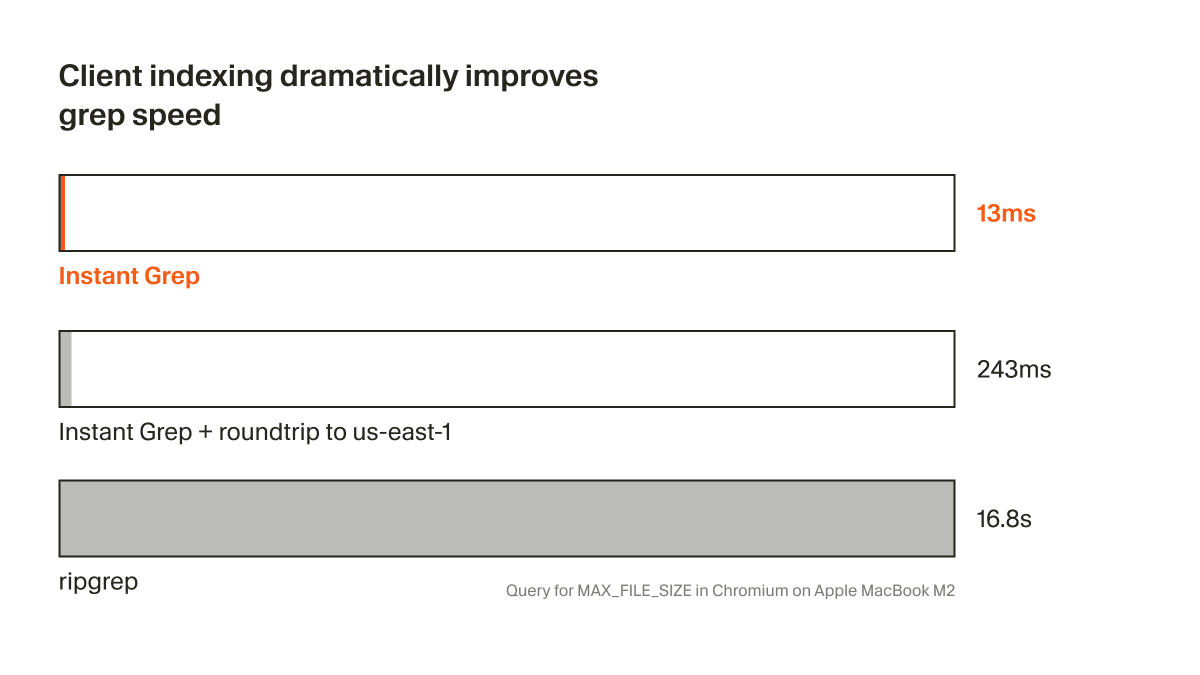
Cursor shipped Instant Grep, a local regex index built from n-grams, inverted indexes, and Bloom filters that drops large-repo searches from seconds to milliseconds. Faster candidate retrieval shortens the coding-agent loop, especially when ripgrep-style scans become the bottleneck.
 breaking
ChatGPT now saves uploaded and generated files into an account-level Library that can be reused across conversations from the web sidebar or recent-files picker. It removes repetitive re-uploading and makes past PDFs, spreadsheets, and images part of a persistent working context.
 breaking
Epoch AI says GPT-5.4 Pro elicited a publishable solution to one 2019 conjecture in its FrontierMath Open Problems set, with a formal writeup planned. Treat it as an early milestone worth reproducing, not blanket evidence that frontier models can already automate math research.
Some feedback for you @thsottiaux (and team) The multi agent set up is great in Codex, really improves efficiency But it seems some guidance needs to be given to the agent on how to re-use or shutdown previous agents This is common for every long running session I have

Not looking good for me


😬😬😬😬😬 Thursday is so far away...

Codex GPU fleet is still melting, team is working day (and night) to keep up. We’re seeing stability in sight for later this evening.