.png&w=3840&q=75&dpl=dpl_Ce9Y2GJsiHr4B9jfy6Ao1bv5x3vZ)
Midjourney Style Creator anchors 3 new looks – 16-prompt packs spread

Stay in the loop
Free daily newsletter & Telegram daily report
Executive Summary
Midjourney’s Style Creator dominates today’s traffic: Artedeingenio ships three reusable looks—Euro comics --sref 1036930486, retro dark anime OVA 1478378847, and cinematic folklore 1984331998—all tuned for panel-ready framing and narrative worldbuilding; Azed_ai adds sketchy teal‑wash 5151143380 plus a generic “character sheet sketch” prompt that’s quickly adopted across accounts for multi‑angle manga model sheets. Artedeingenio leans into Style Creator as pre‑animation infrastructure, showing full anime hero/villain sheets and pushing subscribers toward AI in character‑driven pipelines.
• Kling video stack: Kling 2.6’s Native Audio keeps character voices and prompts aligned across shots; motion-control clips range from anime sea battles to particle‑formed silhouettes, TikTok‑style livestream fakes, and a holographic Ferrari reel via Leonardo; Kling O1 on Higgsfield builds “impossible” loops as the team locks a CES 2026 booth (#16633, Jan 6–9).
• Pipelines & research: Glif’s Multi‑Angle Fashion Shoot agent turns one frame into 6‑shot contact sheets and loops; Nano Banana Pro gets a 16‑prompt thumbnail pack and JSON outfit‑swap templates; Ray3 Modify and Grok Image+NB fashion guides extend wardrobe control. FlowBlending, Dream2Flow, SpaceTimePilot, DLCM, and HGMem push toward cheaper video diffusion, path‑editable scenes, concept‑space reasoning, and hypergraph RAG as creators warn that photoreal diners and fake streams make “assume everything is fake” a 2026 baseline.
Table of Contents
🎨 Shareable looks: Style Creator srefs + character sheets
Today is dominated by Midjourney Style Creator drops and plug‑and‑play character‑sheet prompts shared across accounts—fast, consistent looks for comics, dark anime, and folklore. This is the main cross‑account story.
Artedeingenio shares Euro comics Midjourney style sref 1036930486
Midjourney sref 1036930486 (Artedeingenio): Artedeingenio surfaces --sref 1036930486 as a Midjourney style tuned to 1970s–80s European fantasy and sci‑fi comics, mixing clear-line drawing, flat yet atmospheric color and visual cues from Moebius, Richard Corben (without extreme volume) and Watchmen-era Dave Gibbons in euro comic style.
• Use for sequential art: The examples—ornate heroine portraits, a masked trenchcoat figure under a night sky, a lone robed character facing a starry moon and a seated sorceress under bats—show panel-ready framing and color discipline that map cleanly onto covers, one-shots and longer graphic-novel runs without heavy prompt tuning euro comic style.
Reusable character-sheet sketch prompt spreads across Midjourney creators
Character sheet prompt (Azed_ai): Azed_ai publishes a generic "Character sheet sketch of a [subject]" prompt that reliably produces multi-angle, expression-rich manga-style model sheets in pencil and ballpoint with soft pastels and high contrast on white backgrounds, as shown in the elf, samurai girl, schoolboy detective and teen wizard examples in prompt share.
• Community adoption: Other artists plug their own subjects into the same wording—Kangaikroto generates a monk and horse-rider sheet while crediting the prompt monk example, and additional creators post kid and mascot sheets such as the labeled Shinchan turnaround in shinchan sheet and multiple anime-style variants in elf sheet—turning this into a de facto template for fast, consistent character design.
Azed_ai’s Midjourney sref 5151143380 sets a teal sketch look
Midjourney sref 5151143380 (Azed_ai): Azed_ai rolls out --sref 5151143380, a Midjourney Style Creator reference that yields black ink–heavy sketches with teal or green washes, sparse backgrounds and a gentle, observational tone across city streets, portraits and intimate scenes in style release.
• Remixable aesthetic: The same look shows up in community replies—portraits and couple moments rendered with flat green planes and rough outlines in community remixes and a Captain America bust reinterpreted in the style in captain sheet—positioning 5151143380 as a plug-in sketch aesthetic for comics, posters and quiet story beats.
Cinematic dark folklore look captured in Midjourney sref 1984331998
Dark folklore sref 1984331998 (Artedeingenio): Artedeingenio also shares --sref 1984331998, a cinematic dark fantasy style that channels reinterpreted Japanese folklore—ronin silhouettes in red flower fields, titanic beast shadows with yellow eyes behind lone swordsmen, unsettling house-side vignettes and blood-soaked ritual spaces—while explicitly avoiding ukiyo‑e or classic anime tropes in folklore style.
• Narrative worldbuilding: The four panels (wandering swordsman, child and masked guardian, looming cat-shaped spirit, blood-drenched floor) form a cohesive visual world with consistent palette and framing, giving storytellers a ready-made visual language for ghost stories, rural horror or myth-inspired campaigns folklore style.
Retro Dark Anime OVA style lands as Midjourney sref 1478378847
Retro dark anime sref 1478378847 (Artedeingenio): A second Midjourney reference from Artedeingenio, --sref 1478378847, nails a retro dark anime OVA atmosphere with expressionist lighting—faces half in shadow, harsh red and blue directional light, glowing eyes and hyper-stylised monsters reminiscent of Vampire Hunter D: Bloodlust, Wicked City and Ninja Scroll in dark anime style.
• Horror and action focus: Across a sniper in red-lit camo, a horned armored figure with a huge sword, a pale woman with red eyes and a grinning skull entity, the pack leans into horror, sci‑fi and violent fantasy scenes that can anchor storyboards, keyframes or poster art without rebuilding the look for each prompt dark anime style.
Style Creator becomes a go-to for cartoon avatars and anime sheets
Style Creator cartoons and sheets (Artedeingenio): Beyond specific srefs, Artedeingenio keeps arguing that Midjourney’s Style Creator is a core tool for character-driven work, showing a polished cartoon portrait style for everyday avatars and interiors and promising to share the underlying style with subscribers in cartoon style.
• Pre-animation model sheets: In a separate post, they showcase another Style Creator setup that outputs full anime character model sheets—front and profile views, expression closeups and outfit details for multiple heroes and villains—describing it as ideal for anyone "thinking about creating an anime" and saying that animators should integrate AI into their workflow model sheet pack.
🎬 Gen‑video in practice: Kling 2.6 motion and cinematic shots
Multiple creators push Kling 2.6 for motion control, native‑audio tests, and intricate prompts, plus Leonardo integration. Excludes the image style feature above.
Kling 2.6 Native Audio and Voice Control tested for character scenes
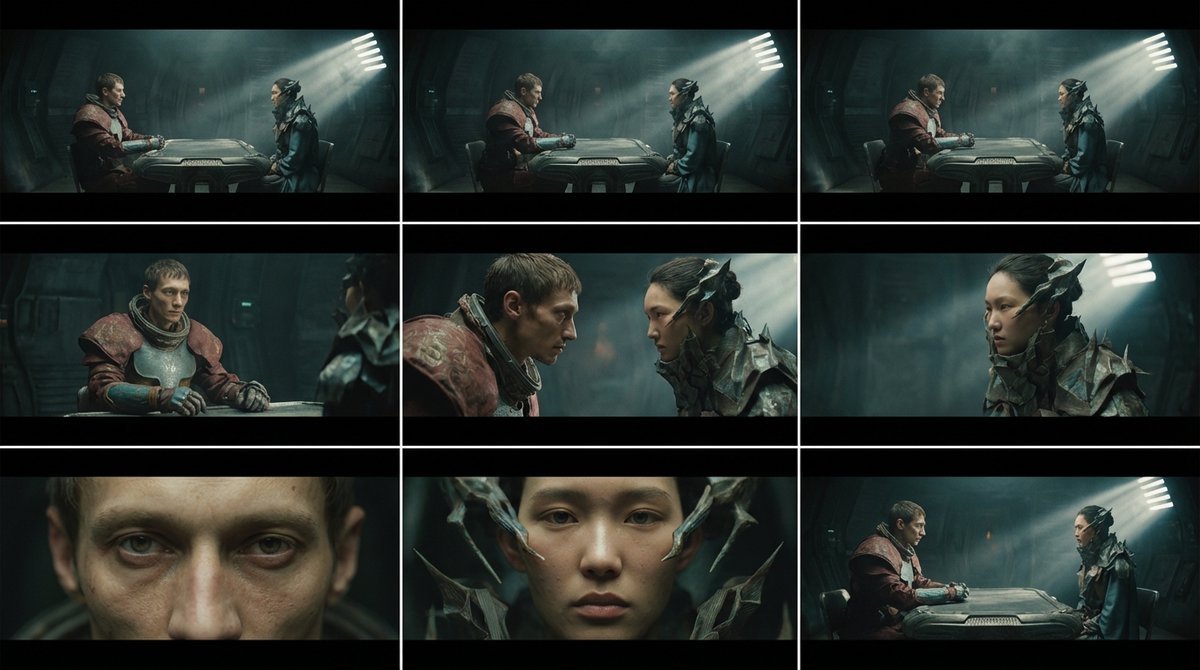
Kling 2.6 Native Audio (Kling): Creator Heydin_ai runs Kling 2.6's Native Audio and Voice Control on a cinematic anime-style character, keeping a custom voice and personality consistent across multiple shots as part of a Midjourney → Nano Banana Pro → Kling stack, following up on motion-control-howtos where Kling 2.6 was framed mainly as a camera and motion tool native audio test. The post calls this "Hollywood‑level drama" and stresses that the generated voice still follows the written prompt logic, which matters for dialogue‑driven storytelling.

A 3×3 grid of stills shows the same armored characters in a dim, metallic room under varied framing, suggesting that look and mood stay locked while only angles and expressions change between takes native audio test.
This pushes Kling further toward being an all‑in‑one performance tool—handling both picture and sound—rather than only a silent B‑roll generator.
Kling 2.6 and LeonardoAi power holographic Ferrari product reel
Kling 2.6 product shots (Kling/LeonardoAi): Azed_ai shares a full JSON-style shot spec for a Kling 2.6 video hosted on LeonardoAi, where a high‑performance black Ferrari assembles itself from holographic internals on a reflective stage, building on replicate-hosting which focused on access rather than direction Ferrari prompt spec. The config spells out a 50 mm lens, 24 fps, a 360‑degree rotating reveal, and 'hyper‑clean' stage lighting, showing how creators are now feeding production‑grade cinematography language straight into gen‑video models.

Azed later reposts the same sequence while noting that Grok Imagine and Midjourney help with ideation, with Kling reserved for the final motion pass and orbit shot, which mirrors a larger workflow pattern where one model handles style exploration and another is used for hero product cinematics Ferrari reupload.
Kling 2.6 stretches from anime sea battles to particle poetry
Kling 2.6 cinematic prompts (Kling): Artedeingenio pushes Kling 2.6 into more stylised narrative work, first with a "savage anime sea battle" where warships heave through storm waves under lightning while cannons fire and the virtual camera fights to stay level, extending the RTS‑style UI and aerial ambush experiments from rts-ui-scene into full combat scenes anime sea battle. The 10‑second clip keeps a soft cel‑shaded, hand‑drawn feel despite the violent motion and heavy spray.

In a separate test, the same creator uses an "environmental particle emergence" prompt so that existing dust, leaves, and light motes in a scene lift toward an invisible center, coalescing into a silhouetted character who steps forward as the particles dissolve, showing Kling can treat background debris as primary animation material rather than static noise particle emergence demo.

Taken together, these clips suggest Kling is now responsive not only to global style tags like "anime" or "painterly" but also to detailed beats about forces, camera struggle, and reveal timing that matter for action and poetic montage work.
Kling O1 on Higgsfield builds "impossible" looping transitions from 2 prompts
Kling O1 loops (Higgsfield/Kling): Techhalla outlines a workflow where Kling O1 and Nano Banana Pro inside Higgsfield Cinema Studio create a seamless "impossible" loop by reusing one core prompt across multiple images, then asking Kling to animate from each frame's end state into the next, turning a single futuristic cityscape description into an endlessly cycling clip impossible transition demo. The screen‑recorded demo shows a dark, neon city shot being generated, then stitched into a loop where the camera seems to glide forever without a visible start or end cut.

A follow‑up post shares how to reach the Higgsfield interface and the agent that automates the in‑between transitions, framing this as a general recipe for perfectly looping ads or mood pieces rather than a one‑off trick higgsfield agent guide, with more details on the agent page linked from that tweet Higgsfield agent page.
The method leans on Kling for temporal coherence while leaving shot design and keyframe generation to Nano Banana Pro, which aligns with a broader trend of splitting look‑development and motion into different specialised models.
Kling 2.6 Motion Control fakes TikTok-style livestreams from stills
Kling 2.6 Motion Control (Kling): A Japanese creator, boosted by the official Kling account, shows how Nano Banana Pro plus Kling 2.6 Motion Control can turn a single model image and a base video into a TikTok‑style "live stream" layout that looks like a vertical face‑cam broadcast tiktok live mockup. The description notes that once the composite streaming UI is built—model image, chat, overlays—Kling only needs to move the subject and elements inside that frame rather than inventing a whole new scene.
The experiment is framed as a fun TikTok parody, but the workflow mirrors how many editors already build static layouts in tools like Premiere or CapCut before animating, indicating that Motion Control is sliding into those practices as an animation engine rather than replacing them.
🧰 Pipelines and agents: fashion shoots, thumbnails, contact sheets
Hands‑on guides show multi‑tool pipelines—Grok+NB fashion shots, a 6‑step thumbnail factory, contact‑sheet agents, and Ray3 Modify wardrobe swaps. Excludes Kling voice tests (covered elsewhere).
Glif Multi-Angle Fashion Shoot agent turns single shots into contact sheets and loops
Multi-Angle Fashion Shoot agent (Glif): HeyGlif highlights an agent that can take a single fashion or environment shot and generate a 6-frame contact sheet of alternate angles, then synthesize in-between transitions to form a continuous looping video, all orchestrated by one agent workflow Ocean room demo.

• Contact sheet generation: The agent—exposed on Glif as the Multi-Angle Fashion Shoot tool—creates a contact sheet from a base frame while keeping styling and environment consistent, an approach described as turning one photo into a mini storyboard Agent access link and Agent overview.
• Transition synthesis: After frames are generated, the same agent can build transitions that interpolate between frames, effectively filling the gaps to create a seamless looped clip that starts and ends on the same composition Ocean room demo.
• Tutorial support: A separate tutorial link walks through how to use “contact sheet prompting” to drive both the stills and the video, framing the agent as a bridge between static fashion photography and motion design Tutorial link. The posts note that while the demo shows an ocean-themed room, the underlying skills are meant for fashion and portrait sets as well.
Free Grok Image + Nano Banana Pro guide for multi-camera fashion looks
Grok Image + Nano Banana Pro fashion guide (AI_Artworkgen): Ai_artworkgen is giving away a detailed workflow on using Grok Image to define fashion concepts and Nano Banana Pro to spin them into multiple camera shots and angles for the same outfit, framed as a free guide with included prompts for fashion creatives Fashion guide CTA; the thread bundles a long set of reference links so people can follow each stage of the pipeline end-to-end Guide link bundle and then closes with a recap and encouragement to bookmark and reshare the resource Guide wrap thread. The guide positions Grok as the layout and look generator and Nano Banana Pro as the camera and styling engine, explicitly targeting AI-driven fashion editorials rather than one-off portraits.
Ray3 Modify shows identity-preserving wardrobe swaps on a single performance
Ray3 Modify wardrobe swaps (LumaLabsAI): LumaLabsAI showcases Ray3 Modify in Dream Machine performing wardrobe swaps on a fixed performance, swapping a dancer’s red dress into a white-and-gold gown and then a blue-and-black outfit while preserving pose, timing, and identity in one continuous shot Wardrobe swap demo.

The short demo is framed as "Wardrobe swap any performance," emphasizing that the tool targets fashion and styling changes on captured footage, turning a single take into multiple looks without reshoots or complex manual rotoscoping.
Six-step Weavy + Nano Banana Pro pipeline builds MJFH × Home Alone thumbnails
MJFH × Home Alone thumbnail workflow (Ror_Fly): Ror_Fly breaks down a reusable six-step thumbnail pipeline that starts with character building in Weavy, runs outfit swaps and character sheets through Nano Banana Pro, and ends with text passes and optional Kling keyframe animation for motion, all tuned around a "MJFH x Home Alone" concept Workflow overview.

• Character and wardrobe phase: The process begins by uploading base characters and clothing references, prompting a flat-lay style, and then swapping outfits onto the characters to lock in design before any scene work Workflow overview.
• Scene and iteration phase: Creator sheets feed into scene building with multiple reference images for composition and style, then the shot iterator in Nano Banana Pro generates 9 alternate camera angles per input, followed by another pass where text layout and style are iterated in bulk Workflow overview.
• Motion add-on: Selected thumbnail frames are finally pushed into Kling O1 to create cinematic keyframe-style animations, tying the entire thumbnail design pipeline into a lightweight AIMV motion layer rather than a separate production Kling keyframe step. The same pipeline is described as reusable across projects, with a separate recap clip underscoring that it can be adapted and re-run for new concepts Workflow recap clip.
Detailed Nano Banana Pro prompt template targets realistic outfit swaps in fashion shots
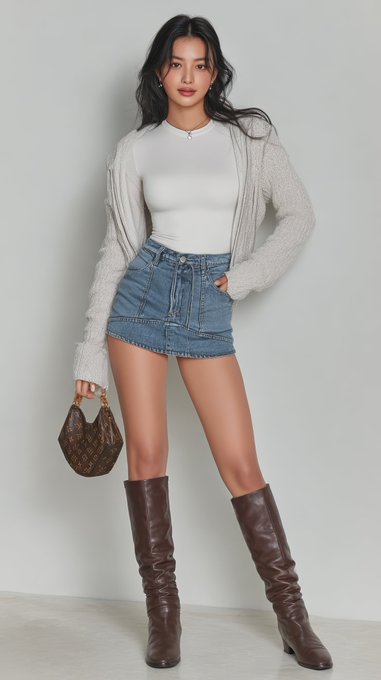
Fashion outfit swap prompt (Kangaikroto): Kangaikroto posts a long JSON-style system prompt in Indonesian for Nano Banana Pro that specifies how to change a subject’s outfit while preserving their original face, identity, pose, and studio lighting, down to camera type, lens, aperture, and negative prompts for common failures Outfit prompt JSON.
The template covers subject description, body type, new cardigan-and-jeans wardrobe, accessories, studio environment, camera settings, lighting, mood, realism level, aspect ratio, ControlNet pose and depth control, and explicit negatives like mixed outfits or deformed limbs, and is then re-shared as a reference in a follow-up tweet Prompt repost. This positions Nano Banana Pro as a controllable fashion-editorial engine when paired with structured, multi-field prompts rather than short text descriptions.
Shadow Mosaic pipeline layers Midjourney with a custom Gemini Gem
Shadow Mosaic silhouette process (AI_Artworkgen): Ai_artworkgen describes "Shadow Mosaic" as a multi-step image pipeline where silhouettes are generated and then repeatedly transformed through Midjourney and a custom Gemini Gem, using token and form extraction plus remix passes to build complex, glitchy light patterns over human figures Process overview.
The collage of six heavily processed silhouettes and profiles is credited to a layered workflow—prompting, extracting visual tokens and forms, remixing, then looping—that deliberately leans on AI’s ability to fragment and recombine light and motion, making this an explicit recipe for narrative-ready, abstract visuals rather than a single-prompt style.
Nano Banana Pro gets 16-prompt pack for bold YouTube-style thumbnails
Thumbnail prompts for Nano Banana Pro (Techhalla): Techhalla shares a set of 16 prompts aimed at generating strong, CTR-style thumbnails in Nano Banana Pro, illustrated with examples like a cheap-versus-expensive tequila comparison and a Nike sneaker-as-burger challenge, each with big text and exaggerated props Prompt pack teaser.
The thread directs people to an external guide link for the full prompt list and positions this as a ready-made factory for YouTube or Shorts creators who want to generate consistent, story-driven thumbnail layouts from structured prompt patterns rather than designing each one individually.
🎤 Voice hardware and events: Gumdrop pen rumor + EL summit
Audio continues to surface via hardware rumor and events relevant to creators. Excludes Kling’s voice control tests (covered under video).
Rumored OpenAI ‘Gumdrop’ AI pen aims to be a third core device
Gumdrop AI pen (OpenAI): OpenAI’s first hardware device, codenamed Gumdrop, is described in a translated Chinese supply‑chain report as a pen‑shaped AI companion with a microphone and camera that can sense daily environments and convert handwritten notes directly into ChatGPT uploads, according to the rumor summary. Building on audio-device which outlined a new audio model for a 2026 voice companion, this leak adds that Gumdrop targets a 2026–27 launch window, is similar in size to an iPod Shuffle, is being designed with Jony Ive to feel “simple, elegant, and fun,” and has its manufacturing order shifted from Luxshare to Foxconn, likely in Vietnam or the US, as also noted in the rumor summary.
The report frames Gumdrop as a potential “third core device” after the iPhone and MacBook for everyday AI‑first interaction, signaling serious intent around dedicated voice‑and‑sensing hardware for creatives and other users who live inside ChatGPT.
ElevenLabs sets Feb 11 London Summit and shares full SF Summit playlist
Voice summit series (ElevenLabs): ElevenLabs is promoting its next in‑person summit on 11 February 2026 in London, inviting people to register interest while positioning it as the follow‑up to its San Francisco Summit, as outlined in the summit announcement. The company links a complete YouTube playlist of SF talks, panels, and demos so prospective London attendees can sample the content and depth of discussion on AI voices and media tools in advance via the sf summit playlist and register for the new event through the london signup page.
For AI creatives and sound teams, this points to ElevenLabs treating recurring, in‑person summits as a core way to showcase workflows, case studies, and roadmap details beyond product blog posts.
Pictory AI publishes practical guide for generating AI voiceovers with TTS
Text-to-speech voiceovers (Pictory AI): Pictory AI has released a step‑by‑step tutorial on turning scripts or captions into AI voiceovers using its built‑in Text to Speech feature, covering how to open a video, choose from male or female AI voices in over 29 languages, and auto‑sync narration to scenes, as previewed in the tts teaser. The guide also walks through regenerating lines, reviewing scene timing, and balancing background music and narration levels so creators can get broadcast‑style voice tracks without external DAWs, according to the detailed tts guide.
This pushes Pictory further into scripted explainer and documentary workflows where consistent, language‑flexible narration is as central as the visuals themselves.
💼 Business signals: CES footprint, pricing gaps, subs value
Creator‑relevant business updates today skew toward event presence and cost/value notes—useful for planning 2026 tool stacks.
Gemini’s $20 plan piles on AI tools and 2 TB storage
Gemini subscription (Google): A creator lays out why the $20/month Gemini plan looks densely packed for power users—access to Google’s latest Gemini model, NotebookLM, generous Antigravity rate limits, 2 TB of cloud storage, Gemini in Workspace apps, developer tools, and 1,000 monthly AI credits are all bundled in one offer according to the value breakdown in the Gemini bundle thread.
For AI creatives, designers, and filmmakers this effectively mixes a ChatGPT‑style assistant, a dedicated research/notetaking environment, and storage you’d otherwise buy from Google One, while also including dev‑facing tools like Gemini CLI, Jules, and Code Assist for pipeline work in VS Code or terminals—plus Gemini surfaces directly in Gmail, Docs, and "Vids" for script and asset workflows as highlighted in the Gemini bundle thread.
Kling AI confirms CES 2026 booth and schedule for hands-on demos
CES presence (Kling AI): Kling AI has locked in a CES 2026 presence at the Las Vegas Convention Center’s Central Hall, booth #16633, running Jan 6–9 (PST), inviting visitors to try their latest AI‑powered storytelling tools and see how they apply across creative industries according to the event announcement in the Kling CES post.
The poster spells out a full four‑day schedule—10:00–18:00 on Jan 6, 9:00–18:00 on Jan 7–8, and 9:00–16:00 on Jan 9—and frames the booth as a place to experience the "From vision to screen" pipeline, signalling that filmmakers, designers, and branded‑content teams heading to CES can plan around Kling’s demos as a potential anchor for their 2026 video stack decisions, as shown in the Kling CES post.
Seedream 4.5 promoted as 4× cheaper Nano Banana Pro alternative on Replicate
Seedream 4.5 (Replicate/Bytedance): A post from Replicate’s account spotlights Seedream 4.5 as “soo good” for cinematic image generation while stressing it is 4× cheaper than Nano Banana Pro on their platform, directly targeting creators watching inference costs as noted in the Seedream pricing note.
The linked Seedream 4.5 page describes film‑like visuals, higher subject consistency, stronger spatial reasoning, and instruction following tuned for e‑commerce, film, gaming, and architecture use cases, which positions it as a lower‑cost but still professional tool for thumbnail artists, storyboarders, and visual developers working through Replicate’s APIs, as outlined in the model page.
🔬 Video gen methods: 3D flow, stage‑aware sampling, space‑time
Research threads focus on controllable video—object flow, stage‑aware sampling, and dynamic scene rendering—plus RAG memory and concept‑level reasoning. Mostly technique papers with demos.
FlowBlending uses stage-aware sampling to speed high-fidelity video gen
FlowBlending (research): FlowBlending proposes stage-aware multi-model sampling for video diffusion, blending different models at different sampling stages to get faster generation without sacrificing detail, according to the announcement in FlowBlending mention and the ArXiv overview in FlowBlending paper.
• Coarse-to-fine strategy: Early steps can rely on cheaper or coarser models for global motion and layout, while later steps switch to high-fidelity experts for texture and lighting—this is aimed at lowering cost per shot while keeping frames usable for production storyboards.
• Creator impact: For AI cinematography tools, this kind of sampler can turn "draft first, beauty pass later" into a single run, which matters for teams trying to iterate on sequences instead of single hero frames.
Dream2Flow turns 3D object flow into editable video paths
Dream2Flow (research): Dream2Flow demos video generation where a labeled 3D object (a car) follows editable trajectories over a real street scene, effectively turning object motion into a controllable path while preserving scene coherence, as shown in the initial showcase in Dream2Flow demo.

This kind of 3D object flow control gives filmmakers, game designers, and tool builders a more physical handle on generative scenes than frame-by-frame edits, pointing toward shot planning where paths and blocking can be tweaked after the "shoot" instead of being baked into the first render.
JavisGPT unifies audio–video understanding and generation in one MLLM
JavisGPT (multimodal LLM): JavisGPT is pitched as a unified large multimodal model for joint audio–video comprehension and generation, built around an encoder–LLM–decoder stack and a SyncFusion module that fuses spatio-temporal audio–video features, according to the summary in JavisGPT summary and the ArXiv description in JavisGPT paper.
• Three-stage training: The authors describe a pipeline of multimodal pretraining, audio–video fine-tuning, and large-scale instruction tuning to align the model with real-world tasks like sounding-video captioning, Q&A, and AV-conditioned generation.
• New AV dataset: They also introduce JavisInst-Omni, a 200,000+ dialogue corpus of audio–video–text instructions, giving AI storytellers and tool vendors a concrete resource for richer interactions than text+image alone.
For creatives, this kind of unified JAV model is a step toward tools that can both direct and synthesize the full stack of a scene—dialogue, sound design, and picture—from a single instruction interface.
SpaceTimePilot renders continuous scenes that shift across space and time
SpaceTimePilot (research): SpaceTimePilot tackles generative rendering of dynamic scenes across both space and time, showing a stylized car driving along a road that smoothly transitions between environments like desert and city while keeping trajectory and motion consistent, as described in SpaceTimePilot mention and outlined in the ArXiv entry in SpaceTimePilot paper.

The method effectively bakes a lightweight world model into the generator, so a single path through space-time can cut through multiple coherent locations; that kind of control is directly useful for location-morphing shots, dream sequences, or previz where the same action must survive radical background changes.
Dynamic Large Concept Models push reasoning into an adaptive concept space
Dynamic Large Concept Models (DLCM): DLCM introduces a hierarchical modeling approach where language is processed in a compressed concept space instead of uniform per-token computation, discovering variable-length concept units and reasoning over those, according to the summary in DLCM overview and the ArXiv discussion in DLCM paper.
• Compression-aware scaling: The authors propose a scaling law that separates token-level capacity, concept-level reasoning capacity, and compression ratio; with a reported compression ratio of 4 tokens per concept, they reallocate about one-third of inference compute toward deeper reasoning over fewer, richer units.
• Training stability tricks: A decoupled μP parametrization is used to stabilize training across different widths and compression regimes, enabling zero-shot hyperparameter transfer when changing how aggressively the model compresses.
For long-form writing, planning, and story-structuring agents, this line of work hints at models that can spend more effort on concept boundaries—scenes, beats, ideas—rather than burning the same compute on every token.
HGMem uses hypergraph memory to strengthen multi-step RAG reasoning
HGMem (RAG memory): HGMem reframes retrieval-augmented generation memory as a hypergraph instead of a flat store, turning related facts and intermediate thoughts into interconnected hyperedges to support complex multi-step reasoning, as summarized in HGMem overview and detailed in the ArXiv writeup in HGMem paper.
• From passive to active memory: Rather than treating memory as a bag of passages, HGMem lets the system build higher-order relations among items relevant to a query, which the authors report leads to stronger global sense-making on long-context benchmarks compared with standard RAG.
• Implication for long narratives: For AI assistants working over scripts, show bibles, or research dossiers, this kind of structure aims to cut down on fragmented answers and make multi-hop references (characters, plot threads, citations) survive across many steps.
📣 Authenticity check and 2026 creator mood
Discourse centers on photoreal fakes, platform guardrails, and the cultural place of AI music. Sentiment and caution pieces dominate this slice.
“Assume everything online is fake” becomes a 2026 creator baseline
Authenticity anxiety (creators): Ai_for_success bluntly tells followers to "assume everything online is fake until proven otherwise" while showing a Nano Banana Pro character driven by Kling 2.6 Motion Control, framing 2026 as the year hyper-plausible AI video becomes default rather than exception Assume fake reminder; the looping banana logo animation looks fully polished and branded, not like an experiment, which reinforces that point.

• Short‑form realism: A separate TikTok‑style stream mockup built with Nano Banana Pro and Kling 2.6 makes an AI "live broadcast" look indistinguishable from real influencer content, as shown in TikTok live example, tightening the link between consumer video formats and synthetic performance.
The mood for filmmakers and motion designers is clear: audiences are being trained to doubt even ordinary‑looking clips, which increases pressure around disclosure, watermarking, and behind‑the‑scenes proof.
Photoreal “1998” diners and pizza nights blur what’s real online
Internet trust (image realism): Azed_ai posts a Nano Banana Pro photo of two friends in a late‑night diner, complete with flash glare, timestamp, film grain, and greasy pizza, and pointedly asks "Do you still trust the internet?"—the image reads as a casual 1998 snapshot until you know it was generated Diner fake question.
The thread links into other posts where creators test whether people can tell real from AI across near‑identical pizza‑parlor scenes—"Hard to decide which one is real" as one collaborator notes while sharing side‑by‑side slices and red plastic cups Pizza realism test.
At the same time, another photographer pre‑labels his own selfie with "AI değil ha bilesiniz" ("not AI, so you know"), signalling that even mundane bathroom mirror shots now feel suspect enough to require a disclaimer Not AI selfie.
A separate Hedra Labs demo shows how quickly an old, low‑quality family photo can be "professionally" re‑lit and up‑rezzed from a single prompt, compressing the gap between documentary memory and AI‑assisted reconstruction in under 30 seconds

.
For photographers, art directors, and storytellers, these posts underline that not only can new images fake the past, but edited archives can quietly step over the line from restoration into reinvention.
“Was 2025 the last year humans beat AI?” spills into creator anxiety
AI overtaking humans (Ai_for_success): Ai_for_success openly wonders whether "2025 [was] the last year humans were able to claim they were better than AI" and asks if 2026 is when AI overtakes humans "across all fields," extending frontier‑model competition into a broader cultural fear about skills and status Better than AI question.

• Adult platforms as test case: In a related post he predicts that "AI will eat OF by the end of 2026," using OnlyFans as a concrete example where synthetic performers and AI‑driven parasocial content could outcompete human creators on volume, customization, and perceived perfection OF prediction.
The pairing of these comments frames 2026 as a year where many creatives—not only coders or corporate workers—are being invited to picture themselves replaced or outrun by AI, which colors how they talk about authenticity, audience loyalty, and what still makes human‑made work distinctive.
Grok Imagine zine cover highlights tension between freedom and feed guardrails
Portrait Prompts (Bri Guy AI): Bri_guy_ai reveals that, for the first time in 35 issues of his Portrait Prompts zine, the cover image was generated with Grok Imagine, but he asks readers to tap through instead of showing it inline because the Grok feed indexer is "overly cautious" about suggestive content and mislabeling could hurt his account standing Zine cover commentary.
He contrasts "the Grok generating" with "the Grok aggregating" and argues that while Grok Imagine can "push boundaries further" than other generators, responsible creators now have to think about how platform moderation bots will interpret thumbnails and tags, not just the art itself Zine cover commentary.
The post lands as a quiet reality check for AI illustrators and photographers: even relatively tame portrait work can trip automated filters, so navigating 2026 means balancing expressive freedom, distribution algorithms, and a growing expectation to self‑police intent.
Creators argue AI music lags images in attention and respect
AI music sentiment (ProperPrompter): ProperPrompter reflects that "ai music feels under-appreciated," noting that people will glance at an AI image for two seconds before scrolling, but songs and videos ask for sustained attention, which makes it easier for listeners to dismiss them as "slop" when there’s no strong visual anchor AI music thread.
He points out that without cover art, motion graphics, or narrative framing, even carefully crafted AI tracks struggle to hold interest long enough for their structure or sound design to land, especially compared with quick‑hit meme images AI music thread.
For composers, sound designers, and filmmakers leaning on AI scoring, the takeaway is that cultural legitimacy still tilts toward visual media, and 2026’s authenticity debate in music may be less about whether a track is "real" and more about whether audiences are willing to invest time in listening at all.
Pinterest’s AI art flood raises concerns about training on synthetic images
Platform saturation (Pinterest/OpenAI): Ai_for_success cites a report that OpenAI is "predicted to buy Pinterest" around 2026 and notes that Pinterest is "already flooded with AI images," then poses the question of whether OpenAI would "use AI generated images to train future models" if the deal happened Pinterest AI concern.
For illustrators and designers who rely on Pinterest moodboards, the concern is twofold: their boards are increasingly seeded with synthetic, non‑credited work, and any acquisition could formalize a loop where AI‑made images on a mass platform become training data for the next generation of models, compounding style homogenization and weakening the link between a visual reference and a human origin.
The post doesn’t confirm any deal mechanics, but it captures a live 2026 anxiety: major inspiration platforms might quietly shift from archives of human creativity into reservoirs of mixed or mostly synthetic output, with unclear disclosure about which is which.
📚 AI‑native releases and explainers
New AI‑made content lands with distribution links and science‑style explainers—useful references for narrative packaging and outreach.
Mind Tunnels: Extraction teaser streams in 4K on Escape.ai
Mind Tunnels: Extraction (Escape.ai): Creator Diesol is positioning Mind Tunnels as a fully AI-generated sci‑fi film, sharing a high‑resolution teaser and pointing followers to a 4K stream on Escape.ai ahead of a 2026 release window, as shown in the teaser clip and expanded in the escape teaser.

The Escape.ai project page frames it as an action‑adventure about mercenaries sealing psychic 'mind tunnels' that threaten reality, mixing narrative synopsis with credits that highlight tools like Kling AI and Veo 3 according to the escape project page; the social posts lean into the idea that fully AI‑generated films are a 2026‑era format rather than a distant experiment, which makes this a concrete reference for teams exploring AI‑native longform storytelling pipelines.
HeyGlif’s Simfluencer agent debuts with Buster Sword physics explainer
Simfluencer agent (HeyGlif): HeyGlif previews its upcoming Simfluencer agent by releasing an explainer that asks whether a normal human could realistically wield a real‑world version of Final Fantasy’s Buster Sword, combining 2D overlays with a rotating 3D model of the weapon in the simfluencer demo.

The video walks through annotated diagrams and a rendered sword model while on‑screen text such as 'Can a human wield it?' anchors the narrative, making the clip feel like a hybrid between a YouTube science channel and a TikTok‑style short; HeyGlif says the piece was created with the new Simfluencer agent and invites viewers to comment 'SIM' for early access, which signals a push toward AI‑driven hosts that can generate both the script and the visual breakdown for science‑fantasy explainers.
Hailuo AI animates Saitama vs Zenos One Punch Man battle
One Punch Man fan battle (Hailuo AI): A clip credited to Hailuo_AI shows an AI‑animated fight between Saitama and a towering multi‑limbed foe named Zenos, ending in a single decisive punch that leaves a cratered landscape, which the poster frames as evidence that AI will permeate anime production by 2026 in the hailuo anime fight.

The sequence runs well over a minute with multiple camera cuts, effects like debris plumes and shockwaves, and a final hero‑shot of Saitama standing calmly after the impact, offering anime creators and studios a concrete example of current AI‑generated action pacing and visual fidelity rather than a static concept frame.
The Future is Bright series showcases Higgsfield Cinema Studio visuals
The Future is Bright (Higgsfield Cinema Studio): Creator jamesyeung18 shares a small series of cinematic stills titled The Future is Bright, all tagged as made with Higgsfield’s Cinema Studio and built around mirrored worlds of sunset oceans and star‑field city lights in the cinema stills thread.
The images lean on strong compositional motifs like a lone figure silhouetted against a blinding horizon while the upper half of the frame shows dense clusters of night‑side 'city lights' in space, giving filmmakers and art directors a concrete sense of the kind of surreal, poster‑like key art Higgsfield’s system can output without exposing any new controls or technical details.