GLM-5 shows 40 tokens/s at 202,800 context – $1 in, $3.20 out

Stay in the loop
Free daily newsletter & Telegram daily report
Executive Summary
Zhipu’s GLM-5 is getting a concrete production-style datapoint: a Novita-backed Hugging Face run is shown at 40 tokens/sec with 202,800 context and 1.68s latency; the same table lists pricing at $1.00 input and $3.20 output per 1M tokens, useful for budgeting long-context agent loops, but it’s still a single-provider measurement rather than a standardized benchmark.
• MiniCPM-o 4.5: OpenBMB’s Hugging Face demo exposes Realtime Voice Call + Realtime Video Call UIs; “Speaking” state + interruption controls suggest low-latency streaming is becoming a default surface.
• SciSpace Agent: upgrades to query across up to 10 PDFs with citations; adds Mendeley sync that claims real-time library change detection; promo codes FOHT40/FOHT20 circulate.
• Local-first stacks: LTX-2 i2v is reported at 6–10 minutes per gen on an RTX 4070 Ti; separate threads show Claude Code pointed at a local Ollama base URL—privacy and cost claims, no official confirmation.
Across tools, the pressure is shifting from model quality to run-cost, latency, and where access/controls actually live.
While you're reading this, something just shipped.
New models, tools, and workflows drop daily. The creators who win are the ones who know first.
Last week: 47 releases tracked · 12 breaking changes flagged · 3 pricing drops caught
Top links today
- Dreamina Seedance 2.0 access page
- Ollama local model runner repo
- MiniCPM-o 4.5 Hugging Face collection
- MiniCPM-o 4.5 model card
- MiniCPM-o 4.5 streaming demo app
- Qwen3-Coder-Next model card
- Ming-flash-omni-2.0 model card
- LatentLens paper on visual tokens in LLMs
- OPUS paper on data selection for pretraining
- Code2World paper on GUI world models
- UI-Venus-1.5 technical report
- Reasoning chains reduce intrinsic dimensionality paper
- Dream Machine image-to-video product page
- Topview Board Product Hunt launch page
- Runway Series E funding announcement
Feature Spotlight
Seedance 2.0 goes mainstream: access scramble, “wrapper” warnings, and copyright-fueled realism
Seedance 2.0 isn’t just “better video” now—it’s an access + distribution moment: invite funnels, scammy wrappers, and looming global rollout concerns, while creators benchmark it against Hollywood pipelines and copyright constraints.
Today’s highest-volume storyline is Seedance 2.0, shifting from pure wow-clips into a distribution/availability story: invite routes, “exclusive access” claims, scam warnings, and creators debating how disruptive it is for mainstream film/TV and brand content. This section is Seedance-only and excludes Kling/Luma/PixVerse updates (covered elsewhere).
Jump to Seedance 2.0 goes mainstream: access scramble, “wrapper” warnings, and copyright-fueled realism topicsTable of Contents
🎬 Seedance 2.0 goes mainstream: access scramble, “wrapper” warnings, and copyright-fueled realism
Today’s highest-volume storyline is Seedance 2.0, shifting from pure wow-clips into a distribution/availability story: invite routes, “exclusive access” claims, scam warnings, and creators debating how disruptive it is for mainstream film/TV and brand content. This section is Seedance-only and excludes Kling/Luma/PixVerse updates (covered elsewhere).
Seedance 2.0 “Stitch surfing” clip fuels 5‑minute animation budget comparisons
Seedance 2.0 (ByteDance/Dreamina): A Seedance-made “Stitch surfing” animation is being framed as the kind of shot that used to require a full traditional team—now described as “5 minutes” with a prompt in the Disney cooked post, with creators extrapolating toward mainstream studio pressure in the Inflection point take. The point is less the character and more the new baseline for polished, IP-adjacent motion.

• What creatives are reacting to: fast character animation, surf/wave dynamics, and a clean “studio clip” look that reads like a finished insert, as shown in the Disney cooked post.
• Why it’s controversial: the same thread cluster links the realism jump to looser IP norms in China, per the Copyright advantage claim.
Unofficial Seedance 2.0 access sites spread, alongside “wrapper scam” warnings
Seedance 2.0 (ByteDance/Dreamina): A recurring storyline today is access-as-product: one creator claims their new site is “the only place you can try Seedance v2.0 without living in China” in the Unofficial access claim, while others warn that “wrapper”-style platforms frequently claim exclusive availability and can be scams, per the Wrapper warning. Scarcity anxiety shows up as posts about losing access altogether in the Access deleted meme.

What’s still missing: any verified, first-party statement on where Seedance 2.0 is officially usable outside China.
ChatCut becomes a Seedance 2.0 on-ramp, gated by invite codes
ChatCut + Seedance 2.0: Creators are pointing to ChatCut as a practical route to run Seedance 2.0 outputs, with one short explicitly labeled “Created in @chatcutapp” in the Otters short. Access is framed as invite-gated, with codes shared and the note that “you get 3 invites each” in the Invite codes list, alongside a how-to post in the ChatCut invite explainer.

The gating mechanism (invites/codes) is becoming part of the distribution layer, as shown on the ChatCut site via ChatCut beta site.
Seedance 2.0 “unreleased footage” parody genre expands with IP remixes
Seedance 2.0 (ByteDance/Dreamina): “Unreleased footage” is solidifying into a low-effort format: the Avengers unreleased footage post uses a quick gag (superheroes dancing) as the hook, while another creator predicts fan-made films may arrive before official adaptations, citing Seedance 2.0 in the Helldivers fan-film claim.

• Why it works on feeds: it’s instantly legible IP, short duration, and the joke is the premise.

Creators expect a “nerfed” Seedance 2.0 when broad release hits
Seedance 2.0 (ByteDance/Dreamina): Alongside access scarcity, there’s an expectation that the version most people eventually get will be more locked down than current demos, per the Nerf prediction. That claim is often tied to the same distribution gap noted in the U.S. access lag take.
No concrete policy details are provided in the tweets, but the direction of travel being argued is: wider availability will come with tighter guardrails.
Seedance 2.0 “grid as storyboard” trick: animate a whole sequence from an image board
Seedance 2.0 (ByteDance/Dreamina): A workflow claim getting repeated is that Seedance can take a grid of images and treat it like a storyboard—animating the sequence end-to-end with no manual timeline work, per the Grid storyboard claim.
If it holds up broadly, it’s a different control surface than “one prompt, one clip”: you design continuity in stills first, then ask for motion across the board. There’s no public settings breakdown in the tweet, so treat it as a reported technique rather than a documented feature.
Seedance 2.0 sports-parody template spreads: “Winter Olympics with pandas”
Seedance 2.0 (ByteDance/Dreamina): A repeatable meme format is emerging around “sports broadcast realism + absurd subject,” exemplified by a “Pandas Winter Olympics” ski-jump clip in the Pandas Olympics post. The framing is explicit: one side uses Seedance for AI UGC, the other uses it for high-production parody sports.

This format pairs well with Seedance’s current strengths—fast motion, camera tracking, and broadcast-like staging—as demonstrated in the Pandas Olympics post.
“Real or Seedance v2.0?” guessing posts keep driving engagement
Seedance 2.0 (ByteDance/Dreamina): The “real or Seedance” guessing format continues, with a clean dance clip posted as the promptless challenge in the Real or Seedance post. Related threads are bundling many examples into “megathreads,” per the Seedance examples thread.

This format functions as distribution: people repost to argue about tells (hands, motion, physics) rather than the narrative.
Seedance 2.0 prompts a counter-signal: “quality isn’t the moat, the idea is”
Creative strategy signal: Amid the wave of Seedance demos, one creator argues the jump is expected (“models are supposed to get better”) and claims “the only thing that matters is the idea” in the Quality not the moat take. It’s a pushback on tool-worship framing.

The subtext: if output quality becomes abundant, differentiation shifts toward taste, pacing, and choices—regardless of which model wins the week.
Seedance 2.0 realism still needs QC: “took a few views to notice the legs”
Seedance 2.0 (ByteDance/Dreamina): Even in clips that read as realistic, creators are flagging subtle anatomical/continuity failures that only show up on replay—one example notes it “took me a few views” to notice a child’s legs in a cart in the Artifact callout. It’s an implicit reminder that inspection passes matter when outputs are used commercially.

This is also why short-form is forgiving: the first watch sells the illusion, the second watch finds the seams.
📽️ Kling 3.0 cinematic tests + the rest of the video stack (PixVerse worlds, Luma i2v, Genie loops)
Non-Seedance video creation news: creators are stress-testing Kling 3.0 for multi-shot storytelling, atmosphere, and genre range, while other stacks (PixVerse, Luma Dream Machine, Genie) surface as alternatives for interactive worlds and 1080p illustration animation. Excludes Seedance 2.0 entirely (feature).
Kling 3.0 lands in ComfyUI Partner Nodes with multi-shot runs
ComfyUI + Kling 3.0: Kling 3.0 is now available inside ComfyUI via Partner Nodes, with ComfyUI claiming you can generate multiple shots in a single run with precise durations, according to the ComfyUI announcement.
This matters for creators who already live in node graphs (upscaling, color passes, compositing, batch runs) because it positions Kling 3.0 as a controllable step inside an existing pipeline rather than a separate web app.
Kling 3.0 mecha battle clips push scale, debris, and camera follow
Kling 3.0 (Kling AI): Creators are using mecha combat in a ruined megacity as a stress test for the things most video models still struggle with—wide shots that preserve scale, fast motion that doesn’t smear, and action that remains readable across cuts, as shown in the mecha battle clip.

The visible emphasis in the clip is on cinematic coverage (big establishing frames → closer combat beats) rather than single-shot spectacle, which makes it a useful template prompt for anyone testing whether Kling 3.0 can hold up under “action trailer” pacing.
Shotlist-style prompting for Kling 3.0: timecodes, framing, dialogue, SFX
Kling 3.0 (Kling AI): Multi-shot prompting is increasingly formatted like a mini call sheet—timecoded shots, lens/framing notes, and explicit dialogue/SFX beats—rather than a single “describe the scene” paragraph, as laid out in the multi-shot prompt example and extended in the four-shot prompt example.

• Prompt structure: Creators are specifying “Shot 1/2/3” segments with durations (e.g., 0:00–0:04), camera language (dolly/pan/close-up), and a single line of dialogue per beat, per the dialogue beat template.
The visible output focus in these examples is pacing consistency across cuts—i.e., treating the model as an editor + camera operator, not only a renderer.
A Kling 3.0 micro-horror leans on pacing over production tricks
Micro-horror workflow: A short-form horror piece (“Site 41”) is framed as proof that Kling 3.0 can be directed for pacing and story beats, not just visual novelty, as shown in the micro-horror clip.

That creative framing is echoed by the broader sentiment that technical chops matter less than story fundamentals—writing/directing/editing—as stated in the filmmaking reassessment note.
Kling 3.0 gets used for hard tonal/era transitions in one sequence
Kling 3.0 (Kling AI): A recurring creative move today is the instant historical/tonal pivot—jumping from battlefield imagery to a serene field and symbolic transformation beats—demonstrated in the war-or-peace transition.

This type of “two worlds, one clip” construction is emerging as a quick way to test prompt adherence across multiple motifs (props, wardrobe, environment, and implied narrative change) without needing dialogue or character continuity as the main constraint.
Kling 3.0 suspense tests lean on ambiguity and slow reveals
Kling 3.0 (Kling AI): Some of the strongest Kling 3.0 demos today aren’t action—they’re unsettling, under-explained shots where the camera slowly pushes in and the scene relies on mood and partial information, as shown in the unsettling shot demo.

The creative pattern here is minimal narrative information + strong framing (dark room, glowing eyes, distortion), which is a practical way to evaluate whether the model can maintain tone and composition without “busy” prompts.
PixVerse R1 frames video generation as real-time interactive worlds (720p)
PixVerse R1 (PixVerse): PixVerse is positioning PixVerse R1 around “real-time interactive worlds” at 720p, per the PixVerse R1 repost.
Even without technical detail in the tweet itself, the creative implication is a shift from rendered clips toward playable scenes—where iteration is driven by interaction and branching rather than exporting versions and re-cutting timelines.
Genie 3 “feedback loops” become a shared debugging artifact
Genie 3: A creator clip flags “strange feedback loops” when iterating with Genie 3, suggesting the system’s outputs can start influencing subsequent prompts/behavior in surprising ways, as shown in the feedback loop clip.

This is less a feature announcement than an emerging practice: publishing short “loop behavior” recordings as a way to communicate failure modes (or unexpected dynamics) that don’t show up in polished demos.
Kling 3.0 multi-cut workflow gets packaged as a repeatable trailer recipe
Kling 3.0 multi-cut workflow: A “KODAK LANCIA → Kling 3.0 Multi-cut” post frames a repeatable approach for building trailer-like sequences by chaining multiple tools—specifically calling out Weavy + Nano Banana + Kling 3.0—as described in the multi-cut workflow post.
The tweet points to prompts/workflow details in-thread, but the notable creative unit here is the “multi-cut” format itself: stylized shot-to-shot variation first, then coherence via editing rhythm rather than strict character continuity.
🧩 Where creators work now: AI studios, all-model boards, and distribution surfaces
Updates about where creative models live and how teams access them: studio UIs, collaboration boards, and integrations that change day-to-day creation (not the underlying model quality). This includes multi-model boards, AI studio UX changes, and major regional expansion moves.
Google AI Studio refresh adds Omnibar for faster jumping between chats, apps, and usage
Google AI Studio (Google): Google shipped a refreshed AI Studio homepage that surfaces past chats, “Vibe coded apps,” and project usage in one place, with a new Omnibar aimed at reducing tab-hopping during build sessions, as shown in the [homepage walkthrough](t:19|Homepage walkthrough).

For creators, the practical shift is that “where did I do that thing?” retrieval (older prompts, prototypes, and usage checks) is becoming a first-class UI path instead of a hunt through browser history, per the [navigation demo](t:19|Navigation demo).
Topview Board leans into “all models on one board” and cost positioning
Topview Board (TopviewAIhq): Following up on Topview board (collaborative prompt-and-asset workspace), the thread adds a clearer positioning around model aggregation—Seedance, Veo, Sora, Kling, Hailuo, Nano Banana, and Kontext are explicitly listed in the [model list post](t:348|Model list post), alongside the “Figma-like” real-time team workflow shown in the [product demo](t:49|Product demo).

• Model catalog as a feature: The integration pitch centers on “one board, many models,” with a public entry point via the [models page](link:309:0|Models page).
• Cost and promos: The thread claims pricing “lower than official API pricing” and shares a 20% code, as stated in the [pricing claim](t:348|Pricing claim) and the [discount post](t:350|Discount post).
Fable pushes remixable characters ahead of Showrunner 2.0
Fable Simulation (Fable): Fable is leaning harder into “TV becomes playable” positioning—showing a character (an “augmented zombie” from Ikiru Shinu) and explicitly framing characters as remixable assets rather than locked IP, according to the [Showrunner 2.0 tease](t:216|Showrunner 2.0 tease).

For creative teams, the notable surface shift is distribution: the platform is marketing not only generation, but re-use (remixing the same character into multiple variants) as the default consumption loop, per the [remix framing](t:216|Remix framing).
Firefly Boards gets shown as a photoshoot-to-previs workspace for AI video
Adobe Firefly Boards (Adobe): A creator shared a concrete “capture → board → generate” workflow: do a real-world photoshoot, drop the selects into Firefly Boards, then iterate on generated image and video variants inside the same board, as described in the [photoshoot post](t:123|Photoshoot post).
The screenshot also reveals Boards acting like pre-vis: a canvas of originals + generations with “Generate image” and “Generate video” controls visible in the UI, reinforcing Boards as the planning surface rather than a single-output generator, per the same [workflow example](t:123|Workflow example).
Kling 3.0 lands in ComfyUI via Partner Nodes with multi-shot runs
ComfyUI (ComfyUI): Kling 3.0 is now available inside ComfyUI via Partner Nodes, with the pitch that you can generate multiple shots in a single run while controlling shot durations more precisely, according to the [Partner Nodes note](t:137|Partner Nodes note).
This matters mainly as a distribution change: it moves Kling from “use their UI” into a node-graph workflow where teams can standardize templates and batch variations alongside the rest of their Comfy pipelines, per the same [integration post](t:137|Integration post).
Luma AI expands to Riyadh with a Publicis Middle East partnership
Luma AI (Luma): Luma announced it’s opening a Riyadh office and partnering with Publicis Groupe Middle East to scale AI-driven creative communications across the MENA region, as stated in the [expansion post](t:244|Expansion post) and detailed in the [press release](link:244:0|Businesswire release).
The release frames the Riyadh office as an operational hub for HUMAIN Create plus regional partnerships, with explicit emphasis on MENA rollout and “Arabic-native” AI solutions, per the same announcement.
Leonardo leans into reusable “Symbols” packs as creator assets
Leonardo (LeonardoAI): Leonardo teased “entering a new era” messaging tied to distributing reusable “Symbols” packs—asking creators to comment to receive icon assets they can use inside Leonardo, per the [Symbols promo](t:71|Symbols promo).
For day-to-day making, this is a distribution move more than a model move: asset packs (icons/symbols) get positioned as a shared baseline for consistent visual language across projects, per the same [pack drop](t:71|Pack drop).
🛠️ Agents as creative assistants: research copilots, X mining, and “agent-native computers”
Workflow-first posts where the creator value is the process: agents that research, summarize, and automate creative work (not just model demos). Compared with yesterday, there’s more emphasis on research agents (PDFs, citations) and practical X-mining automation.
SciSpace ships multi-PDF Q&A with citations plus Mendeley library sync
SciSpace Agent (SciSpace): SciSpace is being pitched as a full literature-workflow agent—today’s upgrade centers on asking one question across up to 10 PDFs and getting a synthesized answer with citations that jump to the exact spot in the source, as described in the workflow thread and shown in the multi-PDF demo.

It also adds Mendeley integration so an existing reference library can be pulled into the agent, with claims it detects newly added/deleted PDFs “in real time,” per the integration notes and the Mendeley sync clip.

• Pricing signal: the thread includes discount codes—FOHT40 for 40% off annual and FOHT20 for 20% off monthly—according to the codes post.
OpenClaw adds an “X-research” skill with natural-language queries and visible costs
OpenClaw (X-research skill): A creator shows an “X-research skill” that turns natural-language requests like “Search X for [topic]” into sourced results, while exposing rough spend—"~$0.50 for 100 tweets"—in the output, as shown in the setup screenshot.
The implementation is shared as code in the GitHub repo that describes search options (engagement sorting, time filters, caching) for repeatable social listening workflows.
A Godot game ships from “1.2B tokens on Cursor” in eight days
Cursor (vibe-coding metric): A solo dev describes building a playable Godot game prototype in 8+ days while tracking spend as “about 1.2B tokens on Cursor,” positioning tokens as a concrete production-budget unit for AI-assisted creation, per the build log.

The clip shows the workflow jumping between UI, code, and playable states, with the project framed as an autobattler-style “Mercenary Manager,” which is a useful data point for scope and iteration speed at that token scale.
Happycapy argues “agent-native computers” means cloud workspaces you open on a phone
Happycapy: Posts frame “agent-native computers” as a shift toward secure cloud workspaces where you can run multiple agents together from a browser (including mobile) without local setup, per the agent-native claim and the follow-up that calls it “a glimpse” of changing software workflows (t:218).
The tweets don’t include a technical spec (auth model, isolation boundaries, or pricing), so the main signal here is the product direction: treating the workspace as the core unit for running agents, not the desktop install.
A “vibe-coded OS” prototype appears after a 2am session
VibeOS (experiment): A creator shares waking up to an AI-assisted “entire OS” prototype they started at 2am, with the screenshot showing a desktop shell, multiple terminal windows, and a dock-like launcher, per the VibeOS post.
The explicit angle is less about shipping an OS and more about treating the UI shell + apps as a fast-iterated, prompt-driven build surface—“stop asking for permissions and collabs and just build my own,” as stated in the same post (t:88).
Tinkerer Club’s “collabs” channel becomes a dealflow surface
Tinkerer Club (collabs ops): The club’s Discord “collabs” channel is highlighted as a lightweight marketplace for automation/self-host/agent partnerships—strong enough that someone reportedly “flew to another country” after meeting a partner there, per the channel screenshot.
The screenshot shows a running list of collaboration prompts (indexing, proof-of-human threads, cofounder asks), which is the operational pattern: keep agent ideas discoverable in one place so they can be matched to builders quickly.
🧠 Copy/paste aesthetics: Midjourney SREFs + Nano Banana prompt packs that actually ship looks
Today’s prompt culture is heavy on Midjourney SREF ‘style-as-product’ posts and Nano Banana prompt formats. This category is strictly reusable prompts/styles (not tool releases or tutorials).
Midjourney SREF 3394984291 for motion-blur light painting frames
Midjourney SREF (PromptsRef): A PromptsRef drop frames --sref 3394984291 as a “Dynamic Light Blast” aesthetic—Matrix-ish bullet-time energy via heavy motion blur, light painting, and warm-vs-cool cinematic tension—positioned for sci-fi poster comps and electronic music cover art, per the Style pitch.
The full parameter and prompt breakdown is collected on the Prompt breakdown page, including example prompt structures that emphasize speed lines and light trails.
Midjourney SREF 1062086682 for Retro Pop Comic poster looks
Midjourney SREF (PromptsRef): PromptsRef’s “top SREF” post highlights --sref 1062086682 (shown with --niji 7 / --sv6) as a bold Retro Pop Comic look—Ben-Day dots, thick outlines, high-saturation color blocking—aimed at sticker/poster/album-cover aesthetics, as described in the Top Sref breakdown.
The same post includes short starter prompts (pizza with sunglasses, retro crying girl, alien skateboarding) and routes to a broader SREF library via the Sref library page.
Midjourney SREF 1549001673 for cold industrial cyberpunk frames
Midjourney SREF (PromptsRef): A PromptsRef post positions --sref 1549001673 as “cold industrial cyberpunk”—moody, high-end 3D concept-frame vibes with wet textures, metallic reflections, volumetric mist, and electric cyan lighting—per the Style framing.
The linked writeup expands on prompt structure and use-cases (mecha, hard sci-fi posters, black-tech product visuals) in the Style guide page.
Midjourney SREF 2113780714 for ink-wash gothic folklore illustration
Midjourney SREF (PromptsRef): PromptsRef calls out --sref 2113780714 as a hand-drawn-leaning blend of Japanese ink wash plus gothic folklore—high-contrast grayscale linework with “old storybook” energy—targeted at dark academia covers, tarot, and editorial illustration, according to the Style description.
Prompts and settings details live in the Prompt breakdown page, with examples focused on dense texture and narrative character framing rather than glossy renders.
Midjourney dual-SREF prompt for minimalist pizza icons with smoke trails
Midjourney prompt recipe: A shareable dual-SREF setup targets minimalist “tattoo icon” food art—floating pepperoni pizza slice with stylized smoke trails—using a weighted blend: --sref 4011871094::0.5 887867692::2 alongside --chaos 30 --ar 4:5 --exp 100, as written in the Prompt text.
The attached grid shows how the same prompt holds composition while swapping trail shapes (wavy lines vs cloud puffs), as seen in the Prompt text.
Nano Banana “natural element 3D logos” prompt pack for brand-mark renders
Nano Banana prompt pack: A reusable “natural element 3D logos” prompt format is being shared as a way to render brand marks and emblems out of organic materials (branches, driftwood, moss, crystals, flowers), with examples shown as PRADA/HERMÈS/New Balance-style marks plus an animal emblem, per the Prompt preview.
The post reads like a swap-in template: keep the material recipe and composition, then replace the target mark/wordmark for new product boards, as implied by the Prompt preview.
“Ultra-cute cartoon kitten” prompt template for pastel 3D character heads
Prompt template: A copy/paste character seed is circulating for consistent “cute mascot” heads—ultra-cute cartoon kitten, fluffy and round, soft pastel colors, oversized shiny eyes, tiny paws, playful and adorable, 3D animation, very expressive and heartwarming, high detail—as shared in the Prompt text.
The attached generations show the style bias clearly (big glossy eyes, soft gradients, paw-forward framing), making it easy to swap “kitten” for other animals while keeping the same look, as shown in the Prompt text.
🖼️ Image-making updates: Midjourney looks, Grok realism, Firefly puzzles, and product renders
Image posts today skew toward: (1) Midjourney exploration sets, (2) Grok ‘realism’ examples, and (3) Adobe Firefly engagement formats (Hidden Objects). Excludes pure SREF/prompt drops (covered separately).
Grok Imagine realism prompting: using a full JSON scene spec to force “smartphone candid” vibes
Grok Imagine (xAI): A “getting increasingly realistic” claim came with a fully structured JSON prompt that reads more like a shot spec than a sentence—photoreal classroom setting, fluorescent lighting, and a low-angle smartphone feel, according to the JSON prompt post.
The prompt structure heavily constrains failure modes (explicit “not a mirror selfie,” wardrobe/pose constraints, and a long negative prompt list), and it’s targeted at a specific look: “social-media classroom photo” with 3:4 vertical framing and “moderate depth of field,” as described in the JSON prompt post.
Freepik product-render consistency: clean studio grid across unrelated SKUs
Freepik (Freepik): A “backlog experiments” post shows a tight, consistent studio product-photography look applied across unrelated objects (open-engine Porsche, Marshall speaker, Moke-style vehicle, and a two-tone jerrycan), as shown in the render grid.
The practical takeaway is how uniform the lighting, shadows (leaf-cast patterns), and surface detail read across the set—exactly the kind of consistency you need for a product concept page or pitch deck without doing a full shoot.
Midjourney v7 exploration: stacking sref codes with profiles for cohesive character sets
Midjourney v7 (Midjourney): A creator shared a fresh “back to exploring” set using stacked style references plus a saved profile—noting parameters like --sref 310012397 1496622816 --profile h3dkhkz --v 7 in the parameter line.
The outputs in the same post read as a coherent mini-collection (consistent fuzzy 3D material, bright pastel lighting, and creature/character proportions) rather than one-off images, as shown in the parameter line.
Firefly Hidden Objects Level .008: monochrome horror line-art variant
Adobe Firefly (Adobe): Another installment, Hidden Objects | Level .008, switches to monochrome haunted-mansion line art while keeping the same engagement mechanic (find 5 items) visible at the bottom of the piece, as shown in the Level .008 image.
This is a clean proof that the “find 5 objects” loop transfers to very different styles (blueprint → horror coloring-book) without changing the post format.
Firefly Hidden Objects Level .009: blueprint puzzles as an image engagement loop
Adobe Firefly (Adobe): The Hidden Objects series continued with Level .009, using a dense steampunk/blueprint composition and a “find all 5 hidden objects” strip baked into the layout, as shown in the Level .009 image.
The format is consistent with prior levels (single image; embedded object list; built-in comment prompt), but the art direction here leans technical-diagram—useful if you want puzzle-post mechanics without “cute” aesthetics.
AI ghost-photo aesthetic: using “found footage” grain to sell horror stills
Analog horror look (AI images): A creator shared a short clip of “generating photos of ghosts with AI,” explicitly framing it as not made in 3D and leaning on grain/low-light “found footage” cues, per the ghost photos post.

It’s a reminder that “realism” for horror often comes from texture and capture artifacts, not high-res sharpness.
Virtual try-on UI reference: Even Realities’ web glasses preview with quick variants
Even Realities (Virtual try-on UX): A creator highlighted a first-time-seen “Try On” flow on a website for glasses, showing a straightforward UI with variant swatches and model toggles (e.g., “Even G2 A/B”), as captured in the try-on screenshot.
For AI creatives building commerce demos, this is a useful reference for how little UI you need to make “personalized preview” feel real: live face view, a couple of switches, and instant color changes.
📣 AI ads + influencer factories: UGC realism, creative teardown dashboards, and swipe files
Marketing-heavy creator posts: AI UGC production, ad iteration systems, and monetization playbooks. Compared with prior days, there’s more emphasis on ‘analysis automation’ (frame-by-frame labeling) and cloning influencer identities at scale.
Kling 3.0 UGC ads: single image to “authentic” 15s spot inside Leonardo
Kling 3.0 (LeonardoAI): A creator demo claims a full 15-second, hyper-realistic UGC-style ad can be generated from one still image plus one prompt, using Nano Banana Pro for the base image and Kling 3.0 for image-to-video inside Leonardo, per the UGC workflow demo.

The pitch is explicitly “No actors. No filming. Just AI,” as stated in the UGC workflow demo, with the example presented as a template for fast ad iteration rather than cinematic shots.
Meta ad teardown automation: frame-by-frame labels and kill/scale/iterate recs
Creative analytics dashboard: A thread describes a system that syncs a Meta ad account, imports every ad asset, then runs AI “frame-by-frame and word-by-word” labeling (hook type, angle, pacing, CTA, funnel stage) to surface patterns and generate “what to kill / what to scale / what to iterate” recommendations, per the Workflow description.
• Throughput claim: The same post says they generated 47 winning AI UGC ads in 30 days, anchored to their “authentic” look method in the Workflow description.
• Output format: It’s framed as replacing manual review/spreadsheets with auto-generated breakdowns and iteration lists, as laid out in the Workflow description.
AI influencer factory pitch: “$45k last month” from one synthetic lifestyle creator
AI influencer business model: One post claims $45k in a month from a single fully synthetic “AI woman” influencer—no filming days and no brand negotiations—arguing the playbook is to keep a consistent face/aesthetic and then “clone the model and scale horizontally,” as described in the Revenue and cloning claim.

The numbers aren’t independently evidenced in the tweets, but the operational details (same identity, automated outfits/backgrounds/captions, replication across accounts) are laid out directly in the Revenue and cloning claim.
DTC swipe file drop: 28 brands, 168 “winning ads” distributed via comment-to-DM
DTC swipe file (direct response ads): A marketer says they compiled a swipe file covering 28 brands and 168 winning ads, then distributes it via “comment ‘FILE’ and I’ll DM it,” as shown in the Swipe file overview.

A follow-up notes demand exceeded DMs and points people to a link “in the first comments,” according to the Distribution follow-up.
NemoVideo pitches chat-driven remakes of viral edits with a $4.19/mo entry plan
NemoVideo: A promo claims the product “reverse-engineers what’s already going viral” and rebuilds that style using your own content through chat—auto-handling subtitles, B-roll, transitions, and music—while advertising a free plan and pricing “from $4.19/month,” per the Product pitch and pricing.
The post positions this as a workflow substitute for manual short-form edit assembly, but doesn’t include side-by-side benchmarks or output breakdowns beyond the feature list in the Product pitch and pricing.
“Subscribe to AI for $20” replacement memes spread as engagement bait
Creator feed engagement meme: A recurring three-panel format escalates from “You will be replaced by AI” to “AI will create a new country of Nobel winners” and lands on “Subscribe to AI for $20 to find out,” as shown in the Three-panel meme.
A related variant targets white-collar anxiety by pairing “my newsletter is only $20/month” with a hostile punchline, as depicted in the Newsletter punchline comic.
🖥️ Local-first creation: running models on your machine (Ollama brains, LTX-2 video on consumer GPUs)
Compute posts focused on practical local execution (privacy + no API bills). Today’s tweets include explicit step-by-step framing for local coding agents and local image-to-video generation times on consumer GPUs.
Point Claude Code at a local Ollama model via base URL (no API bills)
Claude Code (Anthropic) + Ollama: A step-by-step thread claims you can run the Claude Code workflow against a fully local “brain” by installing Ollama, then setting Claude’s base URL so tool-calls hit your machine instead of Anthropic; the thread explicitly frames this as “no API costs” and “fully private,” with Ollama running as a background service on Mac/Windows per the Run Claude Code local and the Ollama install step.
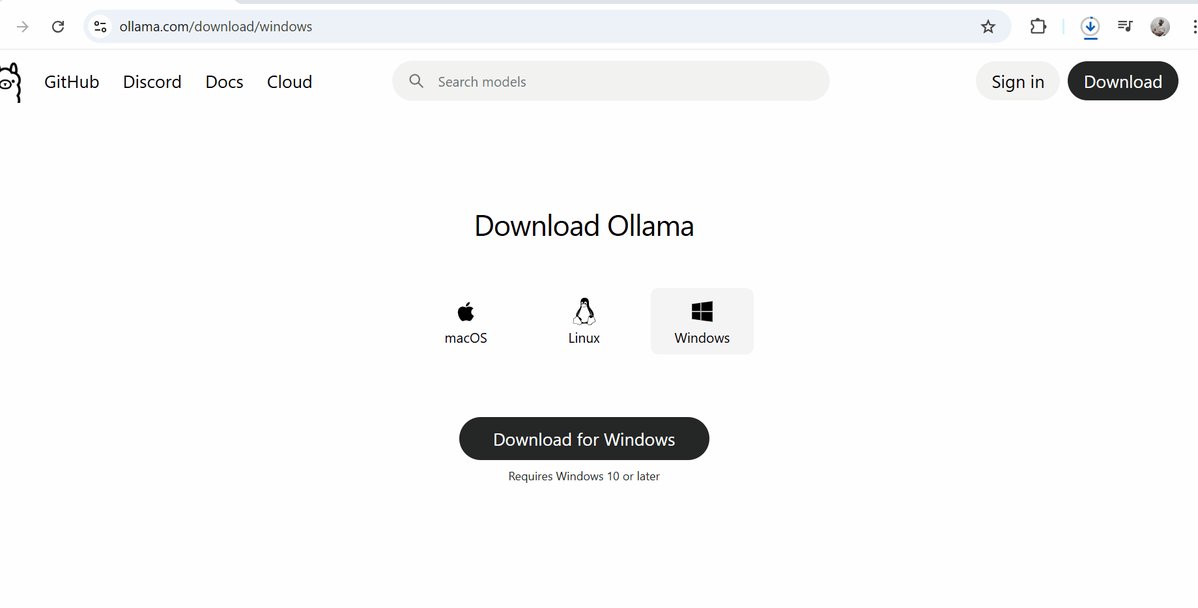
• Local endpoint wiring: The walkthrough highlights the key move as “connect Claude to your computer” by setting the base URL, as described in the Base URL step.
• Starting in a project folder: It then shows launching Claude from a repo directory and letting it read/change local files, per the Start Claude locally and the Local file edits claim.
The posts don’t include an official Anthropic confirmation; treat it as a community recipe until you validate the exact Claude Code build + endpoint behavior in your setup.
LTX-2 local image-to-video: Nano Banana Pro stills → ComfyUI animation
LTX-2 (open source): A creator walkthrough argues you can generate short videos locally on consumer hardware by chaining Nano Banana Pro for still image prompts into LTX-2 image-to-video inside ComfyUI; the thread positions it as a repeatable local loop (generate stills, reuse as references, animate each frame), as shown in the Local LTX-2 walkthrough.

• Workflow shape: Generate a main character still, iterate more stills using prior images as references, then run ComfyUI’s LTX-2 i2v workflow to animate; the post also claims “dialogues included,” per the Local LTX-2 walkthrough.
• Packaging: A follow-up points to a downloadable repo/tutorial path to “install it and you’re good to go,” as described in the Repo install note.
No VRAM requirements are listed in the tweets; it’s presented as a “works on my PC” recipe rather than a spec’d release.
LTX-2 local throughput datapoint: 6–10 minutes per gen on RTX 4070 Ti
Local video throughput (LTX-2): One concrete timing datapoint lands in the LTX-2 local workflow thread—generation times reported at roughly 6–10 minutes per clip on an RTX 4070 Ti, framed as “nothing too crazy” for consumer hardware in the 4070 Ti timing claim.
The same thread suggests repeating this per-shot using stills as references, which makes that 6–10 minute figure a planning number for multi-shot sequences when staying fully offline, per the surrounding context in the Local LTX-2 walkthrough.
Ollama “local brain” sizing: qwen3-coder:30b vs 2B–7B coder models
Ollama: The same “Claude Code locally” thread includes a practical model-sizing rule of thumb for creators running local coding agents: use a larger coder model like qwen3-coder:30b on strong machines, or drop to smaller options like gemma:2b or qwen2.5-coder:7b when hardware is limited, as spelled out in the Model sizing guidance.

This is less about benchmarks and more about picking a “good enough” local model so your agent loop stays responsive without cloud costs.
👨💻 Coding agents & extraction tools: open coder competition and ‘Claude Code killers’
Builder-side tooling that creatives use to ship apps, pipelines, and automation: open coder model drops, coding CLIs, and extraction libraries. Compared with yesterday, there’s more chatter around Qwen coder variants and strong open inference (GLM-5 throughput).
GLM-5 speed datapoint: 40 t/s on Hugging Face via Novita
GLM-5 (Zhipu / ZAI): A practical inference datapoint is circulating showing GLM-5 hitting 40 tokens/sec when run “on Hugging Face through Novita,” as stated in the 40 t/s note; the same screenshot also lists 202,800 context, 1.68s latency, and price lines of $1.00 input / $3.20 output per 1M tokens, which is the kind of detail creators use to sanity-check agent runtimes and long-context tooling budgets, as shown in the 40 t/s note.
Treat it as a single-vendor measurement (not a standardized benchmark), but it’s still a useful “what might production feel like?” number for people shipping creative automation and pipeline code.
MiniCPM-o 4.5 gets a streaming Hugging Face demo with realtime voice/video calls
MiniCPM-o 4.5 (OpenBMB): A streaming demo app for MiniCPM-o 4.5 is live on Hugging Face, with UI entry points for Realtime Voice Call and Realtime Video Call, per the demo app post and the linked Hugging Face Space. The screenshot shows an assistant state labeled “Speaking” plus interruption controls, framing it less like a text chatbot and more like a realtime assistant surface creators can prototype against, as shown in the demo app post.
It’s a small but concrete step toward testing low-latency voice-first creative helpers (direction, note-taking, on-the-fly scripting) without building a full streaming front end from scratch.
🧱 3D + AI hybrid pipelines: assets, motion, and ‘AI as DLSS for detail’
Posts where AI is used to build or enhance 3D/animation pipelines rather than generate flat clips: museum digitization, hybrid CG finishing, and AI-assisted character animation workflows.
Hybrid CG/AI finishing: using AI as a micro-detail pass for faces, hair, and cloth
Hybrid CG + AI finishing: A recurring production idea gets stated bluntly as “AI is like DLSS for deformations”—use your 3D/CG sim and animation for the big motion, then let AI add back high-frequency detail (face micro-movement, hair breakup, cloth wrinkles) on top, as argued in the DLSS for deformations analogy.
This frames AI less as a full-shot generator and more as a finishing layer that can rescue “dead” deformation detail after retargeting, cleanup, or heavy compression; it’s also a pragmatic way to keep deterministic 3D blocking while still getting richer surface motion in finals.
Meshy shows the same Image-to-3D pipeline working for games and museums
Meshy (MeshyAI): Meshy positions Image-to-3D as a practical asset pipeline for both entertainment and cultural heritage—pitching “game assets and character animations” as the everyday use case while also highlighting a museum workflow that turns artifact photos into high-fidelity digital twins that can be 3D printed and viewed in AR, per the museum and game-assets workflow.
Even though this isn’t a new model drop, it’s a concrete template: photo capture → 3D reconstruction → downstream outputs (print replicas, AR overlays, or game-ready assets) without requiring a full manual modeling pass for every object.
A hybrid character pipeline: 2D concept to 3D look to animated performance
Character pipeline (Anima_Labs): A creator shares a compact hybrid stack for character work—Midjourney for the 2D concept, Nano Banana Pro for a 3D/texture pass, Kling 2.6 for animation, and Topaz for upscaling—explicitly framed as a way to iterate on facial emotion and high-detail props like a cybernetic glove, as described in the tool stack credits.

This is a useful division of labor: concept art first, then a 3D-ish material/volume pass to stabilize surfaces, then motion—so your animation inherits more consistent “objectness” than a purely 2D-to-video route.
🔬 Research radar that hits creators soon: multimodal giants, UI agents, and interpretability tools
A dense research day: multiple Hugging Face paper drops plus DeepMind research-agent framing. This category tracks papers and technical reports with near-term creative tool implications (multimodal, UI navigation agents, interpretability).
Gemini Deep Think papers outline agentic workflows for research-level math/physics/CS
Gemini Deep Think (Google DeepMind): DeepMind shared two new papers positioning agentic workflows (generate candidates, verify, revise, loop) as the practical path for using Gemini Deep Think as a research collaborator, according to the announcement and the accompanying [blog post](link:25:0|DeepMind blog post).
The core recipe is explicit iteration: a generator proposes solutions, a verifier flags “critically flawed” vs “minor fixes,” and a reviser patches and re-checks, as visualized in the [workflow diagram](t:25|workflow diagram).
Ming-flash-omni-2.0 drops on Hugging Face as a 100B MoE open multimodal model
Ming-flash-omni-2.0 (inclusionAI): inclusionAI’s Ming-flash-omni-2.0 was posted to Hugging Face as a multimodal MoE model described as 100B total parameters with ~6B active, per the [release post](t:101|release post) and the [model card](link:101:0|model card).
The shared table positions it against other “omni” and specialist MLLMs across OCR, grounding, speech, and image gen/edit benchmarks, as shown in the [benchmark screenshot](t:101|benchmark screenshot).
UI-Venus-1.5 reports strong Android and web navigation benchmark results
UI-Venus-1.5 (technical report): A new report positions UI-Venus-1.5 as a unified GUI agent trained via mid-training + online RL + model merging, with benchmark numbers called out for Android/web navigation, per the [report post](t:133|report post) and the [paper page](link:133:0|paper page).
• Navigation scores shown: the shared figure lists AndroidWorld at 77.6 and VenusBench-Mobile at 21.5 for UI-Venus-1.5, as shown in the [benchmark chart](t:133|benchmark chart).
The tweet thread doesn’t include demos, but the benchmarks are framed as evidence the model can both “ground” and navigate across mobile/web tasks.
Code2World models UI transitions by generating the next screen as renderable code
Code2World (paper): Code2World frames a “GUI world model” as renderable code generation: given the current GUI and an action (like a click), it generates code that renders the predicted next UI, as shown in the [paper post](t:131|paper post) and summarized on the [paper page](link:131:0|paper page).
For creators building interactive stories or UI-heavy experiences, the notable idea is treating product flows like a simulatable world state—illustrated in the [current→code→next GUI example](t:131|current to next GUI example).
LatentLens shows a practical way to “name” visual tokens inside multimodal LLMs
LatentLens (paper): LatentLens proposes an interpretability method that maps internal visual tokens to “most similar” contextualized text representations (rather than static embeddings), aiming to make vision-language model internals more legible, as introduced in the [paper post](t:92|paper post) and summarized on the [paper page](link:92:0|paper page).
One highlighted phenomenon is the “mid-layer leap,” where a visual token entering the LLM can align with later semantic layers early—see the [diagrammed pipeline](t:92|diagrammed pipeline) for how they retrieve top-k textual descriptions per token.
Olaf-World learns reusable action representations from unlabeled video
Olaf-World / SeqΔ-REPA (paper): A HuggingPapers share frames Olaf-World as learning “transferable actions from unlabeled video,” introducing SeqΔ-REPA as the alignment method for latent actions to observable changes, per the [paper mention](t:191|paper mention).
For creator tooling, the near-term implication is better action priors for agents that learn from raw footage (UI recordings, gameplay, screen captures), though today’s tweet doesn’t include results or demos.
OPUS argues data selection should match the optimizer’s update geometry
OPUS (paper): OPUS introduces “optimizer-induced projected utility selection,” claiming better pretraining efficiency by scoring/choosing data in a way that aligns with the optimizer’s effective update space (e.g., AdamW/Muon), per the [paper post](t:119|paper post) and the [paper page](link:119:0|paper page).
The headline claim shown in the shared figure is higher average performance at fewer tokens (an “8x efficiency” annotation appears on the plot), as shown in the [performance chart](t:119|performance chart).
Prism proposes block-sparse attention to accelerate long-context prefill
Prism (paper): A HuggingPapers share describes Prism as “spectral-aware block-sparse attention,” positioned as a training-free way to speed up long-context LLM pre-filling, per the [paper mention](t:224|paper mention).
The tweet text doesn’t include a chart or concrete speed number here, so the exact gains and constraints are still unclear from today’s feed.
Paper argues good reasoning chains shrink the effective search space
Effective Reasoning Chains Reduce Intrinsic Dimensionality (paper): A new paper page argues that better-structured reasoning chains can reduce a task’s intrinsic dimensionality (a framing for efficiency/learnability), as linked in the [paper share](t:184|paper share) and summarized on the [paper page](link:184:0|paper page).
There aren’t concrete creator-facing implementations in the tweet, but the claim is pointed at “reasoning efficiency” as something you can change by how the chain is constructed.
🎧 AI music & sound for storytellers: joke-songs, music-video generators, and promptable rhythm
Audio today is lighter but still creator-relevant: AI song generation as meme format plus builders shipping music-video generation tooling. Excludes Seedance ‘rap/music video’ claims (feature).
Rendergeist music-video generator adds a storyboard prompt panel and ships another full demo
Rendergeist (bennash): Following up on Rendergeist (prompt-to-music-video app), the builder shared a third full-length output “Bubble Burst” and said they’re tightening results via opinionated system prompts plus style presets in the Bubble Burst demo.

• Storyboard prompting: The app now has a “Storyboard panel” where you provide a Story Prompt, Lyrics to guide the outline, and cinematography styles; those inputs generate a storyboard of prompts, as described in the Storyboard panel description.
• Text-to-rap summarization as output: Separately, the same creator posted a “short hip-hop music video” summarizing a long trending article in the hip-hop summary video, reinforcing the app’s use as a “turn any text into a music-video artifact” pipeline.
The “10 minutes ago” AI joke-song meme: turn a fresh moment into a track
AI joke-song format: A fast meme template is circulating where someone generates a full novelty song about something that happened minutes earlier—here framed as “an AI song about his fart from 10 minutes ago,” with on-screen lyrics and a cut to showing the result to another person in the fart song clip.
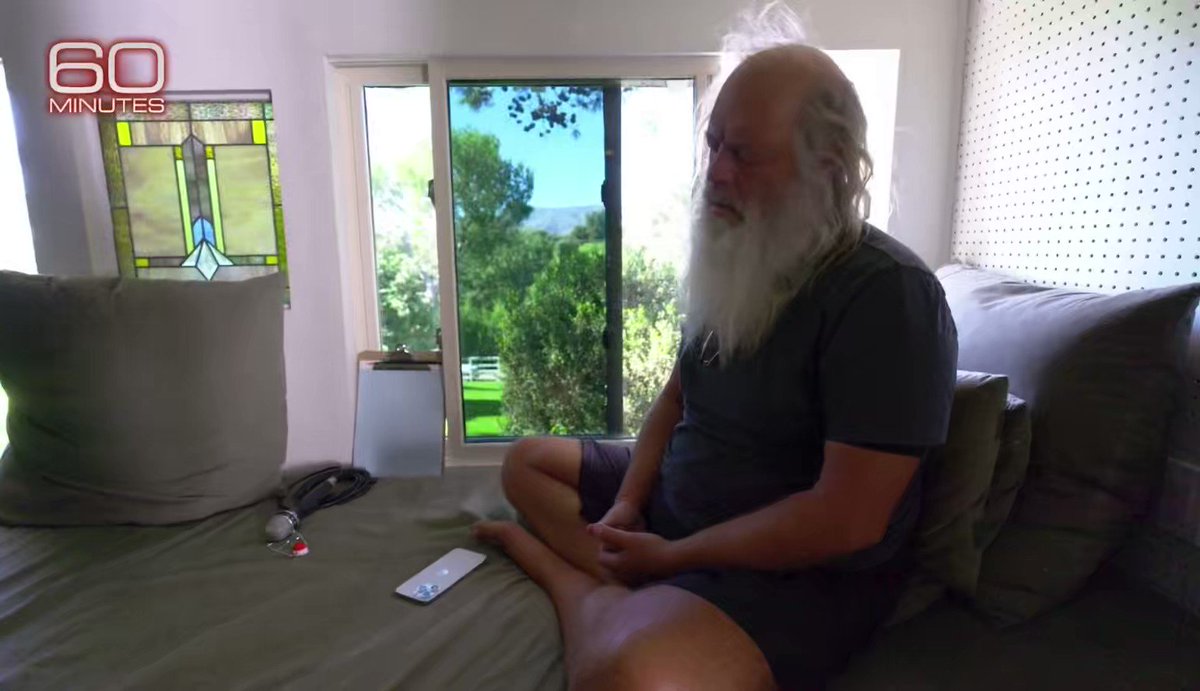
For storytellers, the practical takeaway is the pacing: short premise → immediate chorus → captions-as-punchline, which makes it shareable even when the underlying music model/tool isn’t the point.
🛡️ Consent, copyright, and Hollywood guardrails: the rules are catching up to the tools
Policy and trust themes surfaced in creator circles today: platform consent enforcement for synthetic intimacy, plus industry negotiations and coalition demands around training data transparency and compensation. Excludes Seedance access/scam discourse (feature).
X consent enforcement becomes a practical constraint for synthetic intimacy
X (policy enforcement signal): A creator reports deleting a post after concluding it would likely violate X’s rules on non-consensual intimate media, explicitly noting that synthetic/AI intimate content still hinges on permission and can trigger suspension, as described in the Deletion and consent note.
This reads less like abstract policy and more like an operational constraint for AI character work (especially any “suggestive” edits involving real-person likeness), with the screenshot in Deletion and consent note spelling out consent and labeling expectations as the core risk.
AI shifts from tool debate to contract language in Hollywood
DGA negotiations (Hollywood labor): A new op-ed frames AI as moving from experimentation into contractual guardrails—highlighting David Cronenberg calling AI “Photoshop for film” and claiming Christopher Nolan is involved in shaping AI terms for the 2026 DGA contract, as summarized in the Cronenberg and Nolan op-ed card and expanded in the Op-ed article.
• Why it matters for creatives: The framing in Cronenberg and Nolan op-ed card is that the fight is shifting to control/benefit/allocation (authorship, compensation, permitted uses), not whether AI exists in the pipeline.
Some specifics (what’s actually being negotiated, enforcement mechanisms) are still secondhand here—no primary DGA doc is shown in the tweets.
Academy leadership pushes “principles first” AI adoption stance
Janet Yang / Creators Coalition (Academy signal): A circulating summary claims Academy President Janet Yang is urging Hollywood to slow AI adoption until baseline principles are set—calling out transparency on training data, creator compensation, job protections, and guardrails, with “more than 500 signatories” cited in the Janet Yang principles call.
The post positions this as a trust-and-rights response to AI pipeline normalization—i.e., governance questions (data sources, consent, pay) need answers before tools become default in production, per the Janet Yang principles call.
De-aging talk shifts to performance rights as the scarce asset
De-aging and performance rights: A creator predicts “A-listers will become immortal with AI,” arguing studios can keep reusing a star’s younger performance/body indefinitely (e.g., “Troy 2 with Brad Pitt driving the performance”), as stated in the De-aging immortality claim.
The underlying implication is that “who owns the face/body/performance” becomes a central moat in film IP—separate from any single model’s video quality, per the De-aging immortality claim.
📅 Creator calendar: Product Hunt wins, community meetups, and festival circuit signals
Time-bound items that matter for creator attention and distribution—launch rankings, meetups, and festival mentions. Today is lighter, but there are a few concrete scheduling/discovery hooks.
ECHOES announces Official Selection at KFFSS Kursaal Film Festival (San Sebastián 2026)
ECHOES (festival circuit): A filmmaker announced that ECHOES is part of the Official Selection for KFFSS Kursaal Film Festival in San Sebastián 2026, positioning it as a legitimacy marker for AI-enabled work on the festival circuit, according to the Selection announcement.

This is distinct from earlier KFFSS-related selections (different title/project); the only on-record artifact in the post today is the selection slate video shared with the Selection announcement.
Tinkerer Club posts its Product Hunt #1 screenshot (457 upvotes shown)
Tinkerer Club (Kitze): Following up on PH #1 (Product Hunt win), the team shared a “Yesterday’s Top Products” screenshot showing #1 placement and 457 upvotes for “The private club for ppl who automate, self-host, and use AI,” as captured in the Leaderboard post.
The post is being used as lightweight social proof for the community’s momentum, with the numbers and rank visible directly in the image shared in the Leaderboard post.
A spatial agent interface gets a live demo at ClawCon Vienna
ClawCon Vienna (community event): A creator reported demoing a “spatial agent interface” live at ClawCon Vienna, framing it as an in-the-wild proof point for agent UX moving beyond screenshots, according to the ClawCon demo recap.
No public artifact (slides/video) is included in the post, so the visible signal today is primarily that the concept was shown to an in-person room, as described in the ClawCon demo recap.
Chroma Awards London posts point to a denser offline AI-creative scene
Chroma Awards (London): An attendee post highlights running into “familiar faces” at the Chroma Awards in London, suggesting repeat in-person overlap among AI/creative practitioners, as reflected in the Attendance note.
The tweet doesn’t include showreels, winners, or categories—today’s useful signal is the social density and continuity implied by the Attendance note.
A creator shares “first recording” in a new podcast studio setup
Podcast studio build (creator infra): A creator posted “First recording in the new podcast studio” and shared photos of the physical setup (lighting/signage + decor), as shown in the Studio post.
This is a small but concrete distribution signal: more AI-creator media is getting produced with dedicated spaces (and presumably more regular release cadence), based on the setup documented in the Studio post.
🏁 What shipped (or screened): indie apps, festival selections, and creator milestones
Finished works and shipped products from creators using AI in production—apps, films, and public milestones. This is for releases/showcases, not tool capability demos.
HexaX launches on iOS for $0.99, credited to Claude Code and Phaser
HexaX (AI-assisted indie game): HexaX is announced as live on iOS for $0.99, with the creator explicitly crediting Claude Code and Phaser in the release post, as written in the HexaX release note. The App Store page is linked directly in the App Store listing, positioning this as a shipped, paid product rather than a tool demo.
This is a clean “prompt-to-shipping” datapoint: a small commercial release with a public attribution chain (assistant + engine).
NAKID argues AI is becoming contractual craft in filmmaking, not a side tool
NAKID Pictures (film industry framing): NAKID published a film-industry op-ed positioning AI as “craft, not replacement,” anchored on David Cronenberg’s “Photoshop for film” analogy and Christopher Nolan’s role in 2026 DGA negotiations, as previewed in the Op-ed preview graphic and linked via the Op-ed.
• What’s concrete here: The piece frames AI’s move from experimental usage into negotiated guardrails (“union table”), and treats authorship/benefit/control as the core questions—see the Op-ed for the full argument.
It’s an opinionated artifact, but it’s also a signal: labor + credit language is being discussed as production infrastructure, not theory.
A solo creator frames “four shipped iOS games” as the new baseline
AIandDesign (iOS indie shipping): A creator reports going from zero to four shipped games on the Apple iOS App Store since Jan 1, framing it as a proof-of-velocity moment for AI-assisted building, as stated in the Four games shipped post. A follow-up note argues the admin side can be harder than building—specifically that “setting up that account and submitting apps is legitimately harder than creating the apps,” per the App submission friction comment.
The posts don’t list tools for all four games, but they function as a public milestone that shipped output (not demos) is now the status signal, not “cool prototypes.”
xAI posts a 30-month progress montage and “What’s next?” tease
xAI (xAI): xAI marked its 30 months since formation with a fast-cut montage and a “WHAT’S NEXT?” tease, emphasizing team velocity and ambition in the 30 months montage.

For creative practitioners, this lands less as a feature drop and more as a lab-brand beat: it’s a reminder that model capabilities, access, and creator-facing tools can swing quickly based on where a lab puts its attention next.
While you're reading this, something just shipped.
New models, tools, and workflows drop daily. The creators who win are the ones who know first.
Last week: 47 releases tracked · 12 breaking changes flagged · 3 pricing drops caught


