Kling 2.6 Motion Control anchors still‑to‑motion pipelines – 3‑app stacks spread

Stay in the loop
Free daily newsletter & Telegram daily report
Executive Summary
Kling 2.6 Motion Control shifts from novelty tests to identity infrastructure: creators now pitch it as an “any person image” motion tracer for AI influencers, showing static portraits inheriting full‑body performance, camera movement, and lip sync from source clips; Kling’s account amplifies gender‑swap and martial‑arts demos that hold pose and camera stability. Turkish filmmaker Ozan Sihay details an end‑to‑end short‑film workflow where Nano Banana Pro stills, Kling‑driven acting traces, ElevenLabs voice changes, Epidemic Sound’s AI Studio, and Premiere finishing turn solo performances into multi‑character scenes; Vadoo AI markets a Nano Banana → Kling path that converts single photos into nodding, smiling video portraits.
• AI narrative and multi‑character direction: Diesol’s 611‑second The Cleaner: Swan Song trailer extends his Rome series with full AI grading in DaVinci Resolve; David M. Comfort’s Le Chat Noir builds Paris‑1968 noir; techhalla demos one‑actor multi‑character blocking plus a Pawn Stars parody made in minutes, feeding claims that 2026 is the year of AI narrative film.
• Reusable styles and character bibles: New Midjourney srefs codify retro kids’ editorials, neon‑streak sports/cars, engraved city silhouettes, and blueprint character sheets with color‑swappable palettes; Nano Banana Pro adds band‑sliced fashion portraits and 3D‑print bust illusions, while a three‑sref Midjourney blend ports cleanly into Grok Imagine, signaling cross‑model look portability.
• Research, tools, and ecosystem signals: Work on zero‑shot video reasoning, InsertAnywhere’s 4D object insertion, Spatia’s spatial‑memory video, DiT360 panoramas, and Mindscape‑Aware RAG underscores geometry‑ and hierarchy‑aware backbones; Pictory’s AI Studio pushes character‑consistent imagery with prompt‑to‑video on its roadmap; creators lean on NotebookLM mindmaps and CapCut audio cleanup as layoffs stats, holiday promos, and trailer‑contest deadlines sharpen 2026 adoption pressure and tool‑stack choices.
While you're reading this, something just shipped.
New models, tools, and workflows drop daily. The creators who win are the ones who know first.
Last week: 47 releases tracked · 12 breaking changes flagged · 3 pricing drops caught
Top links today
Feature Spotlight
Kling 2.6 Motion Control: identity trace and long‑form pipelines
Creators prove Kling 2.6 can fully trace motion onto any face/body, powering AI‑influencer workflows and multi‑minute shorts; early user tests say it outclasses Runway/WAN on fidelity and control.
Cross‑account buzz today centers on Kling 2.6’s Motion Control used in full shorts and creator tests; new angle vs yesterday is “any person image” motion‑trace claims, head‑to‑heads vs WAN/Runway, and still‑to‑motion pipelines.
Jump to Kling 2.6 Motion Control: identity trace and long‑form pipelines topicsTable of Contents
🎬 Kling 2.6 Motion Control: identity trace and long‑form pipelines
Cross‑account buzz today centers on Kling 2.6’s Motion Control used in full shorts and creator tests; new angle vs yesterday is “any person image” motion‑trace claims, head‑to‑heads vs WAN/Runway, and still‑to‑motion pipelines.
Kling 2.6 Motion Control pitched as “any person image” motion tracer for AI influencers
Kling 2.6 Motion Control (Kling): A Japanese creator claims Kling 2.6 can fully trace source video motion onto any person image, calling it indispensable tech for AI influencer‑driven businesses, and Kling’s official account amplifies the demo, which shows a woman’s still image morphing into a male influencer while perfectly inheriting the original performance JP identity comment; other creators highlight the same release with high‑energy martial arts clips and comments like “Kling 2.6 motion is crazy,” reinforcing a perception that its pose and camera tracking are unusually stable for character swaps Motion praise.

This combination of arbitrary‑identity tracing and convincing body language positions Motion Control as a backbone tool for synthetic influencers, virtual spokespeople, and brand avatars built from static photos rather than full 3D rigs.
“Zamansız” short shows solo creator pipeline with Nano Banana stills and Kling 2.6 Motion Control
ZAMANSIZ workflow (Ozan Sihay): Turkish filmmaker Ozan Sihay breaks down a full AI short‑film pipeline where scene and character stills are generated in Nano Banana Pro, then animated into moving shots with Kling 2.6 Motion Control using his own performance for both roles, including body movement and lip sync Workflow breakdown; he layers in ElevenLabs’ voice changer for character voices, Epidemic Sound’s AI Studio for music and foley, and finishes edit and color in Premiere Pro, framing the film as a personal “training ground” rather than a commercial project Poster repost.

The same maker also posts a short comedic clip (“Son dayı bükücü”) explicitly tagged as made with Kling Video 2.6 Motion Control, again driven by his own acting performance Uncle bender clip, which underlines how a single creator can now prototype both moody narrative pieces and meme‑scale sketches by swapping live‑action takes into stylized AI characters.
Vadoo AI, Nano Banana Pro and Kling 2.6 form a still‑to‑motion pipeline for stylized characters
Still‑to‑motion stacks (Vadoo, Nano Banana, Kling): Vadoo AI showcases a workflow where a single still portrait “walks into Vadoo and walks out in motion,” describing a stack that sends the image through Nano Banana and then Kling 2.6 Motion Control to yield a smooth, nodding, smiling video of the same person from a static frame Vadoo pipeline; separate posts tie Nano Banana Pro and Kling 2.6 together explicitly—one shows a rotating banana teaser labeled “Nano-banana Pro + Kling 2.6 motion” Banana pairing, while others credit Nano Banana Pro for character consistency, Midjourney for environments, and Kling for animation in dance and character clips NB pro comboDance motion test.

For illustrators and character designers, these examples frame Kling 2.6 less as an isolated video model and more as the motion engine inside larger pipelines that start from curated stills (NB Pro, Midjourney) and end in stylized, on‑model animated shots for shorts, social content, and possibly game intros.
🎞️ AI narrative films and directing workflows (excludes Kling)
New long‑form drops and directing tips: a Rome‑set AI short, a Paris ’68 noir, multi‑character control, and full post in DaVinci Resolve. Excludes Kling, which is today’s feature.
The Cleaner: Swan Song pushes Rome-set AI short and Resolve workflow
The Cleaner: Swan Song (Diesol): Diesol released his longest fully AI narrative short to date, a Rome‑set follow‑up to "The Cleaner" with a 611‑second trailer and an original score by Emmy‑winning composer Matt Pav, framing it as "going out with a bang into 2026" in the Rome thriller post.

He notes this is the first time he handled the entire post‑production of a fully gen‑AI film—editing and color grading—inside DaVinci Resolve, recommending 4K big‑screen viewing in the Resolve workflow note; replies confirm that several composite shots were used to stitch AI elements together for complex moments, as Diesol acknowledges in the composite discussion. Other creators describe this and similar works as "banger films" closing out 2025 and tie it to the view that 2026 "will be the year of AI narrative film" in the 2026 outlook and film praise, positioning Swan Song as a reference project for long‑form AI direction and grading workflows.
Le Chat Noir debuts as AI-shot Paris 1968 spy noir
Le Chat Noir (DavidmComfort): David M. Comfort unveiled "Le Chat Noir," a Paris‑1968 AI short in which a desperate mother must trade a Gestapo list from 1944 for her son’s safety during the May riots, outlining a mix of espionage thriller and intimate family drama in the story overview.

Comfort emphasizes a 1960s Kodachrome look with sharp orange‑and‑teal color psychology—warm café amber against cold blue police lights—and a camera language that swings from wide Seine vistas to claustrophobic macro details like flickering lighters and stamped documents to convey ticking‑clock tension in the visual design thread. He is pushing a 4K YouTube release as the canonical version, positioning the film as a case study in high‑contrast period noir built from AI imagery, with the full‑resolution cut linked in the YouTube 4K cut and re‑promoted in the 4K reminder.
Techhalla demos workflow to drive multi-character AI performances
Multi‑character AI blocking workflow (techhalla): A separate techhalla thread spotlights a workflow that lets a single creator "control what multiple characters say and do" in an AI video, pitching the idea that the user becomes the only on‑set actor while the system handles character mapping and dialogue in the workflow teaser.
The demo shows multiple on‑screen personas whose lines and actions are orchestrated from one performance, implying a pipeline that re‑targets a performer’s motion and lip sync to different characters; this kind of setup maps directly onto ensemble dialogue scenes, sketch comedy, or animated talk‑show formats where filmmakers want precise story beats without managing a live cast.
Pawn Stars AI parody shows TV-style sketches made in minutes
Pawn Stars AI parody (techhalla): Techhalla shared a short "Pawn Stars AI version" sketch where an AI‑generated Rick Harrison examines an item, offers $50, and the AI Old Man bluntly replies "No deal," closely mirroring the timing and framing of the TV show in the parody clip.
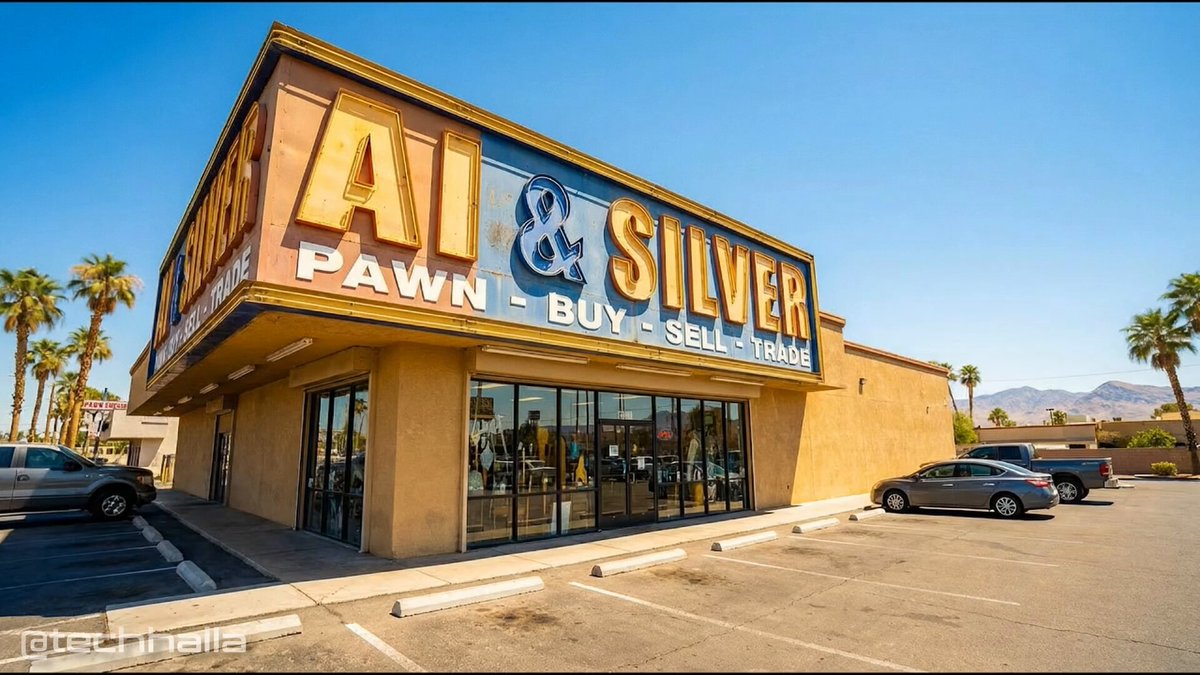
Techhalla later comments that creators have "gotten used to" being able to produce videos like this with AI in minutes and says "2026 is gonna be" intense for this kind of content volume in the 2026 comment, using the clip as evidence that recognizable TV‑style parodies are now within reach for solo storytellers and small teams without traditional production crews.
🖼️ Reusable looks: srefs, neon streaks, and physicalized styles
Fresh Midjourney srefs and NB Pro aesthetics useful for designers: neon streak portraits/cars, cross‑hatched silhouettes, retro kids’ editorial vibes, plus a studio portrait turned multi‑color 3D print.
Neon streak Midjourney sref 5275917331 unifies cars, portraits and sports shots
Midjourney sref 5275917331 (Azed_ai): Azed_ai introduces a new Midjourney style reference --sref 5275917331 built around horizontal neon light streaks and saturated gradients applied consistently across portraits, cars and sports imagery, giving designers a reusable lookbook-ready aesthetic Style launch. The shared gallery shows a muscle car sliding through pink–blue light trails, a feathered headdress portrait, a football player under dual-tone stadium lights, and a close-up neon-lit face with rainbow bars, all sharing the same motion-blur bands and color language Style launch and Alt gallery.
A follow-up test applies the same sref to a Captain America-style character, confirming that the streaked lighting and color blocking carry over onto existing IP-style designs, which signals that artists can drop this into hero shots, album covers, or key art while keeping a single, recognizable visual signature across different subjects Captain test.
Retro editorial kids’ cartoon sref 2939400077 standardizes friendly character art
Midjourney sref 2939400077 (Artedeingenio): A second Midjourney style reference from Artedeingenio, --sref 2939400077, focuses on a modern editorial retro children’s illustration look, with chunky shapes, soft textures, and slightly grungy print-style overlays Style post. The example sheet shows a chibi Flash-inspired hero streaking across a teal background, a deadpan vampire lounging on a sofa, a smiling child astronaut framed in a circular cutout, and a Viking kid with paper-doll edges, all sharing the same muted palette, halftone-like noise, and sticker-book outlines Style post.
The style is framed as suitable for picture books, educational apps, and merchandise, so teams that want consistent, kid-safe mascots or cast lineups can anchor on this sref instead of hand-tuning prompts for each new character.
Cross-hatched city-inside silhouette sref 4442541877 nails engraved neo-noir look
Midjourney sref 4442541877 (Artedeingenio): Artedeingenio surfaces a Midjourney style reference --sref 4442541877 that renders characters as dense cross-hatched silhouettes filled with glowing cityscapes or machinery, evoking etched prints and vintage engraving Style gallery. The shared set includes a woman whose hair and neck dissolve into skyscraper scaffolding, a noir detective whose head interior is an oil refinery lit orange, a Batman mask stuffed with vertical urban structures, and a biomechanical Venom profile with internal pipes and a molten mouth Style gallery.
The common thread is tight line work, warm internal glows, and strong figure–ground separation, which gives creatives a ready-made recipe for book covers, posters, or concept art where a character literally contains a world, history, or vice within their silhouette.
Nano Banana Pro powers surreal band-sliced portrait and fashion aesthetic
Band-sliced Nano Banana Pro aesthetic (fofrAI): Fofr showcases a Nano Banana Pro look where garments and even bodies are sliced into floating horizontal bands separated by thick black gaps, creating a surreal, physically impossible fashion-photo style Interior slices. One set places a reader in an armchair with their blazer and skirt broken into stacked segments while a record player spins nearby; another shows a woman near a window whose dress becomes levitating ribbons of rust and olive fabric Interior slices.
A second pair of images extends the same aesthetic outdoors: a woman on a cobblestone street appears cut into layered dress segments while holding a book, and a mossy forest scene shows multiple figures partially sliced apart, confirming that this is a reproducible NB Pro visual grammar rather than a one-off trick Street and forest. For AI fashion, editorial, or album art projects, this gives a distinctive, recognizable way to hint at dislocation or memory gaps while staying visually clean.
Three-sref Midjourney style ports cleanly into Grok Imagine for consistent visuals
Cross-model style port (Artedeingenio): Artedeingenio reports building a custom style in Midjourney by combining three different srefs and then successfully reproducing that same aesthetic inside Grok Imagine, pointing to growing portability of "look" recipes across image and video models Grok-compatible style. The short clip shows a flowing abstract artwork with consistent color blocking and texture as it zooms and reframes, and the creator notes that “it works beautifully in Grok Imagine” and will be documented for subscribers Grok-compatible style.

For creatives who maintain house styles or branded visuals, this suggests that carefully engineered sref blends no longer have to stay locked to one generator; the same underlying visual logic can often be re-expressed in another model with the right prompt tuning, keeping campaigns or worlds coherent even when switching tools.
Studio portrait becomes multi-color 3D-printed bust style with visible supports
ASM 3D print aesthetic (fofrAI): In another visual experiment, fofr takes a studio portrait of a woman in a grey knit sweater and reimagines it as a multi-color 3D-printed bust held in someone’s hand, complete with intricate support lattices around the neck and shoulders 3D print look. The generated bust keeps her blue eyes and hair shape but translates skin, hair and clothing into layered plastic-like color zones, while tan support scaffolding wraps around under the chin and around the sweater edge, as if straight from an FDM printer 3D print look.
The result effectively "physicalizes" a portrait into a fake but convincing consumer 3D print, giving product designers or storytellers a style they can use for mock packaging shots, speculative merch, or narrative beats where a character exists as a collectible figure.
🌍 Character bibles and blueprint sheets
Promptable concept‑sheet workflows for worldbuilding: annotated front/back/side turns, accessory callouts, and labeled kits in blueprint/glow styles—handy for merch and production guides.
Reusable concept‑sheet prompt gives artists blueprint‑style character bibles
Concept sheet prompt (Azed_ai): Azed shares a reusable text prompt that generates blueprint-style character concept sheets with front, back and side views, labeled close-ups and design notes, aimed at building consistent character bibles from a single instruction, as shown in the prompt share; examples cover sci‑fi aliens, a Victorian clockwork butler, a forest witch apprentice and a cyberpunk street samurai in glowing blueprint palettes. The focus is on consistent character bibles.
• Worldbuilding support: Emphasizes annotated props (jars, foliage, weapons) and clothing breakdowns that can double as merch or production guides, visible across the forest witch and street samurai sheets in the prompt share. These details anchor story and production.
• Style control: Prompt exposes [color1] and [color2] slots so artists can swap glow trim and base line colors while keeping layout and annotations identical, which helps keep palettes stable across casts of characters prompt share. Palette swaps stay under control.
• Distribution: A retweet from the same account resurfaces the prompt and points followers to attached "ATLs" (example images) for further inspiration, signalling intent for this to be a shared, reusable workflow rather than a one-off post retweet boost. This drives more prompt reuse.
The prompt packages a lightweight but production-minded pattern. It turns one-off character renders into reusable bibles that art, animation and merchandising teams can align around.
🛠️ Post and pre‑pro: audio fixes, AI Studio, and mindmaps
Practical pipeline upgrades: CapCut voice isolation to clean Grok Imagine clips, Pictory’s AI Studio for images/characters (video soon), and NotebookLM Mindmaps for organizing research and even codebases.
Pictory’s new AI Studio links custom images, characters, and future video
AI Studio (Pictory): Pictory introduces AI Studio as an expansion from script‑to‑video into full AI media creation, letting users prompt for custom, license‑free images and consistent characters today, with prompt‑to‑video clips "coming soon" according to the overview post and feature breakdown AI Studio overview and AI Studio blog. A legal explainer case study with Sandra M. Emerson shows the existing product already turns short scripts into sub‑60‑second educational videos for law clients, suggesting AI Studio’s image and character control will plug directly into practical marketing workflows rather than serving as a standalone toy legal explainer case and Pictory app.

• Custom images and styles: The blog describes text‑to‑image with style controls (cinematic, corporate, etc.), aimed at replacing generic stock art in script‑driven videos AI Studio blog.
• Character consistency: AI Studio can keep the same faces and outfits across multiple images, and the roadmap extends that consistency into future AI video clips, which targets brand mascots and recurring presenters AI Studio blog.
• Prompt‑to‑video roadmap: Pictory positions upcoming "prompt to video" as a way to generate standalone clips from text, reusing the same characters built with AI Studio instead of treating image and video pipelines as separate silos AI Studio overview.
NotebookLM Mindmaps help creators learn fast and even map codebases
NotebookLM mindmaps (Google): AI creator @ai_for_success calls Google NotebookLM "easily the best Google AI product" and highlights its Mindmap view as a way to make learning "incredibly easy" by auto‑extracting topics and connections from source documents rather than scrolling through long notes NotebookLM praise. In the shared demo, NotebookLM ingests a document and generates a graph with nodes like "User Interface" and "API Structure", and the author notes they even export an entire codebase into a single file to let NotebookLM visually map out modules and relationships instead of manually sketching architectures.

CapCut workflow cleans Grok Imagine’s noisy audio
Grok Imagine audio cleanup (CapCut): Creator Oscar (Artedeingenio) describes using CapCut’s voice isolation to strip Grok Imagine’s baked‑in music and noise, apply an "Old Hollywood" voice filter, then layer separate SFX, presenting it as a fix for the sound artifacts many users complain about in Grok‑generated clips audio workflow explainer. This turns CapCut into a lightweight post‑production step that can standardize voices across multiple animations and make AI shorts feel closer to a polished game or film intro rather than raw model output.

📚 Video reasoning, 4D insertion, panoramas, and context‑aware RAG
Mostly video/vision research and datasets today: zero‑shot video reasoning claims, spatial memory for vids, object insertion via 4D geometry, panoramic generation code, and hierarchical context for RAG.
“Video models are zero‑shot learners and reasoners” paper fuels emergent‑reasoning claims
Video zero-shot reasoning (research): A new paper claims that general video models can act as zero-shot learners and reasoners, handling tasks like physics prediction, counting and temporal ordering without task-specific fine-tuning, according to shares in the paper praise and followup share. The work frames video as a dense carrier of dynamics and causality. That point matters for story tools.
For creatives, the claim suggests future video backbones could check continuity, infer cause-and-effect in scenes, or answer editing questions directly from raw cuts, reducing the need for bespoke per-task training and moving toward one foundation model supervising many aspects of visual narrative.
InsertAnywhere uses 4D scene geometry for realistic video object insertion
InsertAnywhere object insertion (research): InsertAnywhere combines 4D scene geometry with diffusion models to insert new objects—like a synthetic car driving beside a real one—into existing videos with closely matched lighting and perspective, as demonstrated in the car insertion clip. The composites read as in-camera plates.

The method reconstructs a 4D representation of the scene (space plus time) and conditions a generative model on that structure so inserted elements respect occlusion, trajectories and shadows rather than floating unnaturally. For filmmakers and VFX teams, it hints at lighter-weight set extensions and re-staging of props in live-action plates, with geometry-aware control instead of frame-by-frame paint or full 3D re-rendering.
Mindscape‑Aware RAG adds hierarchical global context to long‑doc retrieval
Mindscape-Aware RAG (research): HuggingPapers highlighted Mindscape-Aware RAG, which equips retrieval-augmented generation systems with an explicit global “mind map” of the corpus so models reason over hierarchical context instead of only flat chunks, as summarized in the rag concept. It is aimed at long-form work.
The method builds a multi-level representation (chapters, sections, themes, document clusters) and keeps that structure in memory during retrieval and generation, giving the LLM a sense of where each passage sits in the whole. For script writers, legal or lore-heavy projects, that kind of global context can stabilize character arcs, rule systems, or argument threads across many pages rather than relying on narrow sliding windows alone.
Spatia links video generation to an updatable 3D spatial memory
Spatia video model (research): The Spatia project demonstrates “video generation with updatable spatial memory,” where a 3D room reconstruction guides long camera paths that keep layout and objects consistent, as shown in the Spatia demo. The scenes feel like a persistent set.

By attaching an explicit spatial memory module to a diffusion video generator, Spatia can update objects or camera paths in the same underlying space instead of redrawing scenes shot by shot. That helps continuity across shots; for directors, previs artists and game or virtual-production teams, it points to workflows where a single generated environment can support many angles, re-lighting passes and insert shots without losing spatial logic.
Insta360’s DiT360 code release targets high‑fidelity panoramic generation
DiT360 panoramic generator (Insta360 Research Team): Insta360’s research group open-sourced DiT360, a high-fidelity panoramic image generator that uses hybrid training on both perspective and 360° data to boost realism and geometric continuity, with training code, models and dataset pointers in the GitHub repo. The big focus is edge continuity.
The project emphasizes perceptual quality and precise multi-scale distortion handling for tasks like panoramic inpainting and outpainting, plus a polished Matterport3D-derived dataset for training and eval. For virtual production, VR and environment concept teams, DiT360 provides a reproducible baseline for 360° background generation and editing instead of relying on opaque, closed models.
Meta’s RPG dataset standardizes 22k research‑plan tasks for LLMs
RPG research‑plan dataset (Meta): Meta released RPG, a 22k-example research-plan-generation dataset on Hugging Face spanning machine learning, arXiv and PubMed questions, as highlighted in the dataset intro. It focuses on long-horizon scientific planning.
The dataset pairs complex scientific prompts with multi-step expert research plans and model self-reflections, giving model and tool builders a benchmark for structured planning quality rather than single-sentence answers; for AI storytellers, it is a ready-made source of realistic research chains and experiment flows to plug into narrative or assistant agents.
📣 Calls, contests, and seasonal promos for creators
Community activations: Infinite Films × NoSpoon contest final‑hours push with highlighted entries; a Higgsfield holiday deal countdown. Useful for exposure and tool discounts.
NoSpoon × Infinite Films trailer contest hits final hours push
Infinite Films trailer contest (NoSpoon Studios & Infinite Films): The NoSpoon × Infinite Films AI Movie Trailer Competition is in its final hours. Organizers stress a hard deadline of 11:59 pm PST and “only a few hours left” for submissions, according to reminders in the deadline reminder and late push. NoSpoon is also using its feed to spotlight standout entries—from Wilfred Lee’s GOWONU lore expansion to Motion Drive’s and Lady’s more poetic trailers—framing them as model examples for late entrants in the Lady entry praise and Wilfred entry praise.

The contest requires all clips to be created inside No Spoon Studios, with several creators confirming they built entire worlds like the parasitic tower "GOWONU" specifically for this brief, as shown in the GOWONU trailer post. Posts from NoSpoon describe these entries as “truly poetic and stunning” while thanking creators by name and hinting that worlds like GOWONU will continue evolving into 2026 in the Lady entry praise and Wilfred entry praise.
Higgsfield runs 3‑day holiday promo on Nano Banana and WAN plans
Holiday promo (Higgsfield): Higgsfield is running a time‑limited Christmas offer on its AI video generator subscriptions. The company is pushing a “3 DAYS LEFT!!!” countdown that highlights access to features like Endless Nano Banana Pro and Wan 2.6 on discounted tiers, as stated in the holiday countdown and detailed on the pricing page. The promo centers on unlimited video generation and access to the latest features for creators, with the Ultimate and Creator plans described as offering the strongest benefits for heavy AI filmmakers and motion designers in the pricing page.
🗣️ Creator sentiment: use the tools or get left behind
Today’s discourse leans pragmatic: calls to adopt AI, normalization by 2026, and job‑market anxiety via layoff stats—framing why creatives lean into AI rather than resist it.
2026 framed as the year AI fades into the background
AI normalization (multi‑creator): Commentators describe a near‑term shift where AI stops being a debate and simply becomes background infrastructure, with one creator saying that 2025 was "the genie is out of the bottle" while in 2026 "The conversation doesn't even take place. AI is here and a part of everyday life" genie comment. Another post reports AI devs claiming "2026 will be even crazier than 2025" and accepting that prediction as credible based on current momentum devs 2026 remark. For filmmakers, Diesol phrases it even more specifically, stating that "2026 will be the year of AI narrative film," tying this normalization directly to long‑form storytelling workflows rather than quick clips narrative film claim. Together these takes position 2026 not as the beginning of AI adoption, but as the point where arguing about whether to use it in creative work stops being a meaningful question.
Creators urged to stop doing work AI can handle
Adoption pressure (ai_for_success): A recurring theme from creator‑focused account ai_for_success is blunt: stop manually doing tasks AI can already handle, and stop complaining about others who do use it, because that gap compounds over time stop doing work. In a separate post, they split people into "those who use AI" and "those who complain about others using AI," adding the punchline "Guess who is winning" to frame adoption as a competitive edge rather than an aesthetic choice two types line. The sentiment targets freelancers and small teams who still rely on manual workflows, reinforcing that in 2026, opting out of AI is increasingly framed as opting out of progress in creative work.
Layoffs.fyi’s 122,549 tech cuts sharpen AI-era job anxiety
Job insecurity (Layoffs.fyi): A creator‑economy account cites Layoffs.fyi showing 122,549 tech employees laid off across 257 companies in 2025, then asks followers whether they expect 2026 to be better or worse layoffs stat.
This post explicitly juxtaposes those figures with AI adoption discussions, following up on ai layoffs which highlighted analysis that AI could erase roughly half of entry‑level white‑collar roles; the new screenshot also notes 71,981 government layoffs and 182,528 total federal departures in 2025, underscoring that churn is not limited to big tech layoffs stat. By circulating a live tracker link to Layoffs.fyi and asking for 2026 predictions rather than comfort, the thread frames getting fluent with AI tools as one of the few levers individual creatives and technologists feel they still control in a contracting job market, even though it does not claim AI caused these specific cuts layoffs tracker.
Pro‑AI artists push back on ‘AI derangement’ critics
Backlash to AI backlash (multi‑creator): Several creators vent about what one calls "AI derangement syndrome"—critics who assume any polished work must be AI and accuse artists of lying—arguing that these people "don't have the ability to model the thought processes of other people" and fall back on calling everything a fraud derangement rant. Another long‑time AI visual artist says that if anti‑AI commentators "spent any genuine time in our space," they would see most non‑shilling users are multidisciplinary creatives with arts backgrounds who treat AI as a tool, not a replacement for the work of turning an idea into an experience tool not replacement.
Spanish creator Oscar (@Artedeingenio) shares a poll asking if someone who "hates AI" can be intelligent, then highlights a reply mocking him "for being Spanish" as another example of low‑effort dismissal rather than critique spanish insult; when asked what the commenter meant, he bluntly paraphrases it as an insult toward Spaniards spanish reply. The thread collectively sketches a culture divide: on one side, practitioners who anchor their identity in craft and see AI as part of the toolbox; on the other, outside commentators who, in these creators’ view, refuse to update their mental model of what modern art and production look like.
Artists weigh Midjourney vs Nano Banana vs GPT‑Image as core tools
Tool selection (multi‑creator): Conversations among AI artists and designers focus less on whether to use AI and more on which tools to pay for and pair; one creator argues that "artists use and prefer Midjourney" while "everyone else prefers Nano Banana Pro and GPT‑Image," framing these as two distinct ways to generate art that can also be combined in a single workflow artists vs tools. Another asks followers which two AI tools they would subscribe to in 2026 if forced to choose, calling it "a tough decision," which implicitly acknowledges subscription fatigue as well as how central these tools have become to creative practice two tools question. In reply, ai_for_success says "Hopefully ChatGPT," treating a strong general‑purpose assistant as a baseline choice alongside specialized visual models chatgpt reply. This cluster of posts portrays 2026 as a period of consolidation for creatives: AI is assumed, but the open question is which small stack of models and apps becomes each artist’s core kit.
While you're reading this, something just shipped.
New models, tools, and workflows drop daily. The creators who win are the ones who know first.
Last week: 47 releases tracked · 12 breaking changes flagged · 3 pricing drops caught


