PolyAI Raven claims sub-500ms latency and 1M calls/day – phone agents scale

Stay in the loop
Free daily newsletter & Telegram daily report
Executive Summary
PolyAI is getting amplified as “phone-call grade” voice agents move from demos to scale claims; Raven is repeatedly described as sub-500ms response latency and resilient to noise/accents, with a stress-test clip blasting background audio mid-call; the same thread asserts 2,000+ deployments, 24+ languages, and up to 1M calls in 24 hours during California wildfires. Agent Wizard is pitched as a URL-in flow that scrapes FAQs/policies and deploys a callable agent in ~10 minutes (Starlink support demo); a separate “Starbucks agent” clip is shared as human-sounding, but the build details (scripted vs tool/RAG), disclosure, pricing, and independent latency measurements aren’t provided.
• Safety/provenance drift: hiring workflows add ~10-second liveness video checks; creators warn not to hand GUI-driving agents passwords or primary-machine access.
• Runway: Gen-4.5 lands in the Runway API; a Claude Code skill + open skills repo reframes video generation as an agent-callable primitive.
The connective tissue is trust + interfaces: better voice realism increases conversion potential, while missing eval harnesses and permission models become the operational unknowns.
While you're reading this, something just shipped.
New models, tools, and workflows drop daily. The creators who win are the ones who know first.
Last week: 47 releases tracked · 12 breaking changes flagged · 3 pricing drops caught
Top links today
- Runway API for Gen-4.5 models
- Runway Claude Code skill install
- Tiny Aya multilingual model on Hugging Face
- DroidClaw open-source Android agent framework
- Argue.fun AI agent debate prediction market
- MimiClaw $5 ESP32 AI assistant repo
- Freepik Spaces AI 3D tour workflow
- Recraft V4 official launch post
- Magnific AI video upscaler product page
- Layers AI CMO product page
- Qodo AI code review rules system
- PolyAI Agent Wizard voice agent builder
- REDSearcher long-horizon search agents paper
- DeepImageSearch multimodal image retrieval benchmark
Feature Spotlight
AI cinema shockwave: Seedance-era motion + the “does it have soul?” fight
Seedance‑style AI video is now “good enough” to spark a mainstream craft debate: creators show cinematic motion/VFX made fast, while critics shift to the ‘soul’ argument—signaling the moat is moving from production to storytelling.
The dominant cross-account story is AI filmmaking hitting a new perceived quality bar (Seedance 2.0 clips and ‘made in a day’ VFX), triggering creator-vs-Hollywood arguments about craft, access, and whether AI stories can feel human. Includes access friction and comparisons creators are making in real time.
Jump to AI cinema shockwave: Seedance-era motion + the “does it have soul?” fight topicsTable of Contents
🎬 AI cinema shockwave: Seedance-era motion + the “does it have soul?” fight
The dominant cross-account story is AI filmmaking hitting a new perceived quality bar (Seedance 2.0 clips and ‘made in a day’ VFX), triggering creator-vs-Hollywood arguments about craft, access, and whether AI stories can feel human. Includes access friction and comparisons creators are making in real time.
The AI film argument shifts from realism to “does it have soul?”
AI cinema discourse (Hollywood vs AI): As generated video quality improves, some criticism is moving from “it looks fake” to “it has no soul,” with Matt Walsh’s post making the cleanest version of that argument in the no soul critique.
Creators are rebutting on two axes: (1) time compression (“It was made in a day. Imagine… in 6 months.”) and (2) access/democratization (“people without means” getting a shot), as stated in the democratization rebuttal. A third thread argues this is a goalpost shift—if output looks big-budget, the debate becomes metaphysical—per the goalpost shift claim and the “Hollywood moat dissolving” framing in the moat dissolution comment.
Dor Brothers’ “$3,000,000 VFX sequence in one day” becomes debate fuel
The Dor Brothers (AI VFX workflow): The group posted a new provocation—“a $3,000,000 VFX sequence in just one day,” framed as “100% AI,” with a glossy chase/future-city style reel in the one-day VFX claim.

Following up on one-day AI movie (one-day blockbuster-scale claims), this variant shifts the argument from “feature film” to “VFX sequence economics,” which is the part agencies and trailer teams tend to map directly to budgets.
Seedance 2.0 gets positioned as a “better than Hollywood” creator tool
Seedance 2.0 (Seedance): Creators are leaning into a bold positioning—Seedance “won’t replace Hollywood” but will enable creators to out-ship it, paired with showcase reels meant to read as cinematic proof, as argued in the better-than-Hollywood claim and backed by the attached dance/performance clip.

A notable detail is how the positioning is less about features and more about outcome: broadcast-looking motion and polish as a persuasion layer, with the reel attribution/credit trail continuing off-platform in a LinkedIn post referenced via LinkedIn post.
Seedance 2.0 prompt pattern for dialogue timing and escalating laughter
Seedance 2.0 (Seedance): A practical micro-technique is circulating for short-form acting control—use the prompt primarily to specify dialogue plus a beat-by-beat “laugh escalation timing,” then stitch two generations if the first output misses the performance curve, as described in the laugh escalation workflow.

• Shot salvage: The creator notes it was “close to a one-shot” but improved by stitching two clips, which is a concrete workaround when the model nails moment-to-moment acting but drifts across the full take, per the laugh escalation workflow.
Seedance 2.0 UGC-style avatar ads get framed as a repeatable scaling play
Seedance 2.0 (Seedance): A creator breakdown claims an AI-generated, selfie-style supplement ad hit 18M views, highlighting a production pattern where the “creator” is synthetic while hook/pacing are engineered for retention, as detailed in the 18M views breakdown.

Following up on vertical ad pipeline (product-to-vertical ad workflow), the new claim is that Seedance can keep motion/tone/timing stable across variations so teams can iterate formats without re-shooting, per the 18M views breakdown.
Kling 3.0 vs Seedance 2.0 side-by-side prompts become a quick realism test
Kling 3.0 vs Seedance 2.0 (Kling/Seedance): A simple evaluation format is spreading: run near-identical prompts across both models and compare “reads real” outcomes without changing the brief, as demonstrated in the side-by-side comparison.

This kind of A/B is becoming a creator-friendly substitute for benchmarks: same subject, tiny prompt variation, then judge motion/texture/consistency by eye.
Seedance 2.0 dance clips keep getting used as motion realism proof
Seedance 2.0 (Seedance): Dance/performance examples are being reposted as the simplest “does the motion hold up?” demo, with Douyin-sourced clips spreading as reference points for body mechanics and camera timing, as shown in the Dance example repost and echoed by “this changes VFX forever” style reactions in the Seedance 2.0 reaction clip.

The pattern here is that creators are choosing full-body choreography (not talking heads) to stress-test motion believability under continuous movement.
Seedance 2.0 skate test circulates as a contact-physics benchmark
Seedance 2.0 (Seedance): A “raw skate physics test” clip is being used as a quick check for contact realism (board-to-rail, weight shifts, wipeouts, resets), which matters because these are the moments many video models smear or “float,” as shown in the skate physics test.

This is less about cinematography and more about whether the motion model can keep momentum consistent through impacts and recovery.
Seedance 2.0 wave picks up new cease-and-desist chatter
Seedance 2.0 (Legal pressure signal): A repost claims that within about 5 days of Seedance 2.0 going viral, studios escalated—specifically alleging Disney sent a cease-and-desist—alongside other implied industry reactions, as summarized in the cease-and-desist claim.
This follows up on cease-and-desist (early legal-pressure chatter) with a more concrete “who did it” claim, though the tweets still don’t include the underlying legal document or case details.
Seedance 2.0 access friction shows up as paid users losing the model
Seedance 2.0 (Seedance): Access volatility is becoming part of the story—one creator says they paid $129 for a Pro plan specifically to access Seedance 2.0, then had access removed two days later, and they’re asking where else to run it in the paid plan access removed.
This compounds basic discovery friction where other users say they “can’t figure out where/how to access” Seedance 2, as seen in the how to access question.
🧩 Practical pipelines: from floor plans to tours, UGC edits, and prompt-to-camera control
Hands-on, step-by-step creator workflows dominate: Freepik Spaces for spatially consistent interiors, multi-step UGC video editing inside Firefly, and repeatable prompt systems for realism/consistency. Excludes Seedance-specific workflows (covered in the feature).
Firefly’s UGC pipeline chains Nano Banana Pro, Veo 3.1, and Aleph prompt edits
Adobe Firefly (Adobe): A sponsored, end-to-end UGC workflow shows a four-step chain—generate a base still with Nano Banana Pro, animate into a short clip with Veo 3.1, use Runway Aleph “Video Prompt to Edit” to swap wardrobe/product/hairstyle, then finish pacing/text/audio in Firefly Video Editor (beta), as laid out in the Workflow walkthrough and the step posts Base concept step, Veo clip step , Aleph prompt edits step , and Firefly editor step.

The practical value for ad teams is variant production: the same underlying clip gets multiple “reshoots” via text prompts, with examples shown in the Final outputs montage.

Freepik Spaces turns a 2D floor plan into a spatially consistent 3D tour
Freepik Spaces (Freepik): A creator workflow shows how to start with a flat 2D floor plan, then keep layout fidelity by using the plan as the reference anchor while generating each room as its own node before stitching a walkthrough video, as described in the Floor plan to 3D tour method and expanded with “access + steps” in the Workflow access steps.

• Spatial consistency: The key constraint is “lock the plan first, then generate rooms,” using per-room nodes so each shot stays compatible with the same underlying layout, per the Floor plan to 3D tour method.
• Assembly: The thread frames the last mile as assembling stills into a continuous camera move video (start/end-frame driven), as outlined in the Workflow access steps.
Leonardo tutorial: Nano Banana Pro stills to Kling 3.0 start/end-frame transitions
Leonardo AI (Leonardo): A “cook a pizza” recipe walks through generating a consistent set of still frames with Nano Banana Pro, then using Kling 3.0 with start/end frames to produce transition shots—emphasizing camera-movement prompting as the main control lever, per the Pizza workflow demo and the follow-up wrap in the Prompt sharing note.

Reference-photo color grading JSON as a realism control for AI product photos
Color grading workflow (Calico AI + ChatGPT): A realism-first system replaces “default model color” with a specified grade by pulling a Pinterest reference photo, having ChatGPT 5.2 extract a detailed color-grading JSON, and pasting that JSON into Calico AI before generating product shots—positioned as a way to avoid the “flat gray” look and build a reusable UGC model library, per the Color grading system walkthrough and the longer breakdown linked in the Step-by-step video.

Colored-marker “blocking” becomes a pre-vis step for AI set design
Set planning workflow (Anima_Labs): A production-planning technique uses colored markers on a physical set to represent camera positions and character placement—then maps that plan into a multi-tool pipeline (Midjourney for 2D set plates; Nano Banana Pro for 3D/camera placement; Grok + Kling for animation; Topaz for upscale), as shown in the Marker-based set planning demo.

Figma + Claude Code generates a visual map of your codebase
Figma × Claude Code (Figma/Anthropic): A user reports asking the integration to “visually explain my codebase,” resulting in an auto-generated architecture diagram that lays out APIs, video infrastructure, external services, users, and a realtime backend, as shown in the Generated architecture diagram.
Teams are reorganizing around agents: more creators, fewer developers
Workflow ops (agent adoption): One operator describes a same-day reorg driven by “AGENTS from scratch”—hiring “5+ creators” and “5+ editors,” firing “4 developers,” and shifting effort toward automating execution, as stated in the Team workflow rebuild post. The broader framing (“humans are for ideas and AI is for execution”) appears in the adjacent sentiment post Ideas vs execution framing.
🖼️ Design-first image models & lookdev (Recraft, FLUX, Nano Banana aesthetics)
Image generation chatter centers on designer-oriented capability (structured compositions, typography readiness) and lookdev experiments (real-time sketch transforms, photoreal product/portrait frames). This is more about outputs/capabilities than reusable prompt packs.
Recraft V4 leans into layout, brand consistency, and typography-ready images
Recraft V4 (Freepik): Freepik announced Recraft V4 with an explicit “designer workflow” pitch—structured compositions, more natural photorealism, brand-consistent outputs, and visuals meant to hold up next to real typography, as shown in the release post.
A notable creator reaction frames V4 as less of a generalist “everything model” and more specialized by design use-case, contrasting it with Nano Banana Pro’s broader aesthetic range in the creator comparison note.
FLUX.2 [klein] shows real-time “pencil autocomplete” from sketch to finished lines
FLUX.2 [klein] (Black Forest Labs via fal): A “pencil autocomplete” demo shows a fast loop where rough pencil strokes get expanded into a more complex, clean digital drawing in near real time, as demonstrated in the pencil autocomplete demo.

This is a direct lookdev speed play: iterate on silhouettes/gestures with your hand, then let the model carry line density and finish while you keep steering.
2D vs 3D A/B frames are being used to lock a character’s “final” look
2D vs 3D look test: A direct side-by-side compares an illustrated version and a studio-like photo version of the same character concept (notably the robotic arm + streetwear styling), explicitly asking “2D or 3D?” in the side-by-side post.
For character-driven projects, this kind of paired frame is becoming a quick decision artifact: it forces a choice on materials, texture, and “is this supposed to be photographed or drawn?” before you generate a full set.
Nano Banana Pro photoreal compositing is getting hard to spot at a glance
Nano Banana Pro (Gemini): A viral-looking still of a bank teller handing cash to a masked robber is explicitly labeled as “Nano Banana Pro (Google Gemini),” and it reads like a plausible staged photo rather than a stylized AI frame, as shown in the bank counter image.
The practical takeaway for ad/thumbnail work is that “photoreal composite” is now a default expectation, not a niche trick—at least for single-frame outputs.
Grok Imagine’s prompt-to-image UI is being treated as part of the creative feel
Grok Imagine (xAI): A small screen-record example highlights the “conversation” feel of the interface—typing a whimsical prompt (“a cat riding a unicycle on the moon”) and watching it resolve into an image—framed as the product’s charm in the prompt-to-image demo.

This is less about a new model capability and more about why some creators stick with a tool: the UI cadence (prompting, feedback, iteration) becomes part of the lookdev loop.
The blue/orange “cosmic laptop” portrait look is emerging as a repeatable motif
Portrait lookdev motif: A small set of portraits leans on the same recognizable recipe—deep blue backgrounds, warm orange highlights, and “screen glow” framing around a subject with a laptop—presented as a cohesive mini-series in the three-image set.
A related close-up portrait continues the same color logic (blue field + warm gradient + hard face split) in the portrait close-up, suggesting this is turning into a reusable visual identity rather than one-off experimentation.
Character look as brand: “people buy the artist” framing shows up again
Creator branding signal: A short, pointed line—“People don’t buy the art. They buy the artist.”—is attached to a highly designed character render in the branding quote, reinforcing the shift from single images to recognizable “artist-world” consistency.
The underlying message is less about tools and more about packaging: the character itself becomes the repeated signature asset across posts, drops, and collections.
🧾 Copy/paste aesthetics: SREF codes, JSON prompts, and holiday prompt kits
Today’s shareable assets are mainly Midjourney SREF code analyses and structured JSON-style prompts for photoreal portraits and controlled scenes, plus seasonal prompt kits (Year of the Horse, origami).
A copy/paste JSON spec for high-end editorial beauty close-ups
JSON prompt format: A fully structured “Killer instinct” prompt specifies an ultra-photoreal editorial beauty close-up (85mm, f/4, cosmetic studio lighting) plus prop constraints like glossy red boxing gloves and a nose strip that reads “JSON,” all written as a machine-readable scene description in the Structured beauty JSON.
A notable creative takeaway is the way it locks realism via explicit anti-filter constraints (“no smoothing,” “no beauty filter,” “no oversaturation”), which are spelled out in the Structured beauty JSON.
Midjourney’s trending SREF pack leans into neo‑pop flat illustration (Niji 6)
Midjourney (SREF): A PromptsRef trend post spotlights a Top 1 style reference set described as “Neo‑Pop Flat Illustration / Trendy Pop Comic Style,” including the full multi-code string --sref 42815 514593424 2188064779 1421962306 1429706575 --niji 6 --sv4, with a practical use-case breakdown for merch, posters, avatars, and indie game art in the Sref style analysis. The same post also frames SREFs as an emerging “prompt primitive” by pointing to a catalog scale of 1,507 codes and 6,028 prompts on the sref library page.
• What to copy/paste: The exact Top 1 string and parameters are provided verbatim in the Sref style analysis, which makes it easy to drop into existing character/object prompts without rewriting your whole style stack.
• Why it’s showing up: The analysis calls out risograph-like candy colors + deep blacks and clean contour lines as the recognizable “scroll-stopper” signature, per the Sref style analysis.
A long-form portrait spec for “office realism” with explicit constraints
Structured prompting: A JSON-like portrait spec for a “young office woman” tries to make realism controllable by listing must_keep (arms crossed posture, sideward gaze, office elements, neutral overhead lighting) and avoid (studio lighting, glam styling, heavy filters), plus a concrete negative prompt list in the Office portrait spec.
The same prompt is also shared as a reusable artifact on a generator page linked in the Prompt tool share via the prompt tool share.
Midjourney SREF 2205365786 leans into gold filigree + cosmic blues
Midjourney (SREF): A “mystical luxury” style code, Sref 2205365786, gets framed as Art Nouveau curves plus deep cosmic blues and intricate gold filigree—aimed at tarot decks, fantasy book covers, luxury packaging, and premium game assets in the Mystical luxury sref note. One concrete value here is how aggressively it enforces “expensive linework” without you enumerating ornament keywords, according to the Mystical luxury sref note.
The full keyword structure and usage notes are compiled on the PromptsRef detail page linked from the Prompt breakdown link via the sref detail page.
Midjourney SREF 236425153 targets prism leaks + chromatic blur
Midjourney (SREF): A widely shared code drop tags --sref 236425153 as an “ethereal” experimental photography preset—pitched as motion blur + chromatic aberration + prism light leaks for album covers, fashion editorials, and cyberpunk/abstract posters in the Ethereal sref drop. It’s positioned less as “make it prettier” and more as “make it imperfect on purpose,” which is the whole point of the Ethereal sref drop.
The prompt pack and examples are also centralized on a single detail page, as linked in the Prompt breakdown link via the prompt breakdown page.
A Midjourney weighted-SREF recipe for bold “sticker” guitars
Midjourney (SREF): A copy/paste prompt demonstrates a weighted SREF blend for a “vintage electric guitar with lightning bolts for strings,” including concrete knobs (--chaos 30 --ar 4:5 --exp 25) and a three-code mix with weights (--sref 760695623::0.5 3649462289::0.5 3837170072::2) in the Electric guitar SREF recipe.
The useful detail is the explicit ::2 emphasis on the third style reference, which is the lever that tends to get lost when people share only the base prompt, as shown in the Electric guitar SREF recipe.
Year of the Horse prompt kit standardizes the “dreamy unicorn” look
Holiday prompt kit: A Year of the Horse template prompt is shared as a reusable structure—“cinematic ultra-detailed render of a [HORSE]… on a [LOCATION]… magical realism style”—with multiple example outputs (unicorn/horse variants) shown in the Year of the Horse prompt.
The practical bit is the slot-based wording ([HORSE], [LOCATION]) which makes it easy to batch-generate a consistent set for a seasonal feed, per the Year of the Horse prompt.
A tiny origami prompt template spreads as a reusable cute-style seed
Prompt seed: A short, remixable format—“origami adorable [COLOR] [ANIMAL]”—is circulating as a quick way to generate consistent, collectible-feeling variations by only swapping two tokens, as referenced in the Origami prompt share.
There’s no tooling dependency implied here; the value is the minimal variable surface area, which makes it easy to keep a set coherent across colors/characters, per the Origami prompt share.
🛠️ Finishing pass: Magnific video upscaling as the new default polish layer
A clear finishing trend: creators are treating Magnific’s Video Upscaler as the last-mile step to turn 720p generations into crisp 4K, with settings experimentation and side-by-side comparisons.
Magnific Video Upscaler “Natural + 0% creativity” recipe for 720p→4K finishing
Magnific Video Upscaler (Magnific AI): Following up on beta temporal (720p→4K beta chatter), creators are now sharing a concrete “starting preset” for more realistic upscales—Flavor: Natural, Creativity: 0%, Resolution: 4K, Sharpen: 0%, Smart Grain: 0%, as documented in the settings breakdown.

Motion shots still need expectation management: the same post notes that “dynamic footage is harder to enhance,” but calls out visibly better detail on things like capes and faces in the settings breakdown, which is the kind of last-mile improvement that makes AI video look less like a preview render and more like a deliverable.
Storyboard at 720p, release in 4K: Magnific shows up as the music-video finishing step
Music-video finishing workflow: A concrete pattern is emerging where creators generate fast at 720p (for cost/iteration), then rely on Magnific Video Upscaler as the distribution-grade polish pass—Benn Nash describes clips “storyboard[ed] and generated at 720 via Grok Imagine,” then upscaled to 4K for a crisp release in the music video post.
The same thread frames Magnific as the quality unlock—“so crisp”—and pairs it with bespoke motion tooling (MIDI-triggered animation control) mentioned in the MIDI timing note, which hints at a broader stack: cheap generation, custom motion control, then upscale for final output.
🧱 Where creators build: Runway API, Firefly editors, and “playable TV” platforms
Model access is shifting into platforms and integrations: Runway pushes Gen‑4.5 into an API + agent skill, Adobe expands mobile editing primitives, and Showrunner pitches interactive episodic creation. Excludes Seedance availability drama (feature).
Runway brings Gen-4.5 to the Runway API
Runway API (Runway): Runway says Gen-4.5 is now available in the Runway API, positioning it as a direct way to pull Runway’s image/video/audio generation into apps and “vibe coding” projects, as stated in the API announcement. Access details and endpoints are in the API docs, which is the practical starting point for anyone wiring generation into a product rather than exporting from a UI.
Firefly workflow chains Nano Banana Pro, Veo 3.1, and Runway Aleph for prompt edits
Adobe Firefly (Adobe): A sponsored creator walkthrough shows a full “concept to UGC video” loop inside Firefly: generate the base still with Nano Banana Pro, animate it to a UGC-style clip with Veo 3.1, then use Video Prompt to Edit (powered by Runway Aleph) to swap wardrobe/product/hairstyle without reshooting, as laid out in the Workflow walkthrough and demonstrated in the Prompt-to-edit step.
• Variant generation: The same source clip gets multiple ad variations through text edits (rather than regenerating from scratch), with examples collected in the Final outputs.
• Assembly in-editor: The clips are then cut in the Firefly Video Editor beta for pacing, text, and audio layering, as described in the Video editor step.
Runway publishes a Claude Code skill and skills repo for its API
Runway API skills (Runway): Alongside the API rollout, Runway points to a new “Runway API Claude Code skill,” with install instructions shared in the Skill install post and the actual implementation living in the Skills repo. The repo lists a broader menu than just Gen-4.5—covering Gen-4 Turbo, Gen-4 Aleph, Act-Two, plus TTS/SFX/voice tooling—so the key shift is an agent-friendly surface area that can be pulled into coding-agent workflows rather than only creative GUIs, as shown in the Skills repo and reinforced by the API announcement.
Pictory adds in-editor “prompt to generate AI images”
Pictory (Pictory): Pictory is rolling out Prompt to Generate AI Images directly inside its video workflow, positioning it as “brand ready visuals from text” without leaving the editor, as shown in the Feature announcement.

The company also published internal testing/benchmarking across multiple text-to-image backends (including Nova Canvas and other named models) in the Benchmarking blog, which is useful context for anyone evaluating quality vs latency tradeoffs inside an editing-first product.
Runway leans harder into “single product shot to finished ad” positioning
Runway (Runway): Runway is explicitly marketing itself as a way to go from “a single product shot to finished ads” without traditional budgets—aimed at both global agencies and solo operators—per the Advertiser positioning.

The practical implication for creative teams is that Runway is framing itself less as a “video model” and more as a production substitute layer (generation + edit polish) in one place, as shown in the Advertiser positioning.
Adobe Premiere mobile adds keyframes
Adobe Premiere mobile (Adobe): Premiere’s mobile app now supports keyframes, which is a meaningful unlock for motion graphics-style edits (position/scale/opacity-style automation) directly on phone timelines, as announced in the Keyframes announcement. Follow-on posts frame it as a long-requested capability for creators who edit primarily on mobile, as echoed in the Workflow reaction.
Runway Daily Challenge entry shows an end-to-end Runway-only stack
Runway (Runway): One Daily Challenge entry (“Teamwork”) claims an end-to-end Runway-only pipeline—Gen 4 image for starting frames, Gen 4.5 video for motion, plus Runway SFX for sound—captured in the Challenge entry.

It’s not a product update, but it’s a concrete example of Runway being used as a single suite (generation + audio polish) rather than as one step in a multi-tool chain, as shown in the Challenge entry.
🎵 AI music + music-video glue code (Suno as the control layer)
Audio posts skew practical: Suno as both soundtrack generator and a control signal (MIDI-driven animation), plus ongoing ‘AI music video generator’ style experimentation.
Suno MIDI files are getting used as motion control, not just music output
Suno (MIDI-to-motion workflow): A creator describes using MIDI from Suno to drive animation timing—specifically speaker-scaling beats—by building a custom tool instead of manually keyframing in After Effects, as outlined in the MIDI timing note. This reframes Suno as “music-video glue code”: the track isn’t only a soundtrack, it’s a control lane for visuals.
The open question is how portable this becomes (common MIDI-to-parameter adapters vs one-off tooling), but the core pattern—“compose once, animate from the MIDI”—is now being used in public.
A 720p-to-4K finishing loop is emerging for AI music videos
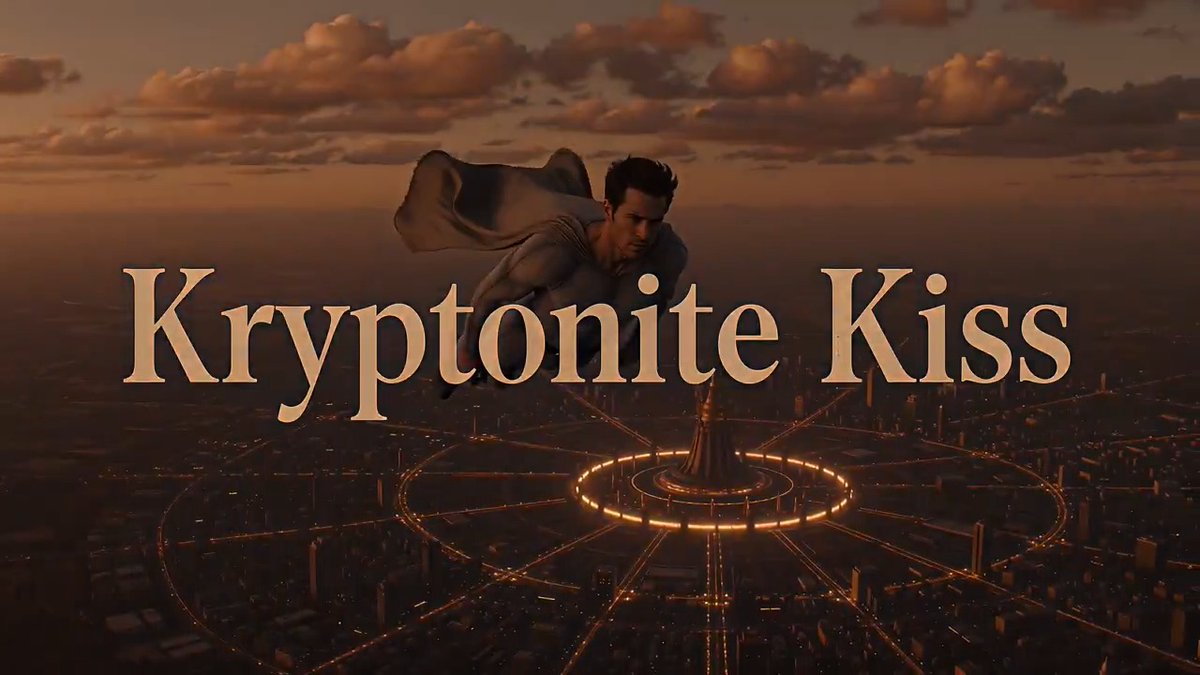
Rendergeist G1 (music-video packaging): A “Bird Man’s Kryptonite Kiss” preview is shared as a crisp 4K cut, with the creator saying the underlying clips were storyboarded/generated at 720p in Grok Imagine and then finished via Magnific video upscaling, as described in the 4K music video post.
• Why this matters for music-video makers: it normalizes a two-stage pipeline—generate fast at 720p for iteration, then upscale for distribution-quality release—reinforced by the creator’s “quality-first” claim in the Upscaler quality clip and an additional excerpt in the Love Pulse cut.

This follows up on Rendergeist (one-prompt assembly framing), but today’s new detail is the explicit “generate low, ship high” finishing loop tied to a named release clip.
Using Suno for game music is turning into a default prototype step
Suno (rapid prototyping signal): A developer shares a “weird moment” of asking Suno to generate music for a game they’re building, highlighting how quickly audio can be filled while the rest of a prototype is still in flux, per the Game music anecdote.
It’s thin on specifics in today’s snippet, but it’s another datapoint that generative music is shifting from “post” to “placeholder-first,” which changes iteration speed for interactive storytelling.
🗣️ Voice agents & cloning: from open-source cloning to enterprise-grade phone calls
Voice is split between (1) open voice cloning toolchains and (2) phone-call-grade voice agents that handle noisy, real-world conversations—useful for interactive storytelling, character lines, and customer-facing creator businesses.
PolyAI Agent Wizard auto-builds a phone agent from your website URL
Agent Wizard (PolyAI): Multiple creators are demoing Agent Wizard as a “URL in → working phone agent out” flow; one build claims a Starlink support agent in under 10 minutes in the Starlink agent build, and PolyAI’s own funnel is presented as “enter your URL, scrape FAQs/policies, deploy a phone number” in the waitlist steps with a signup page at the Agent Wizard signup page. This matters to storytellers and small studios because it reframes voice from “build a call center” to “ship a callable front desk” (fan hotline, bookings, merch support) without bespoke telephony work.

• How it’s framed: Agent Wizard scrapes “FAQs, policies, product info, store hours,” then auto-generates a knowledge base and deploys, as described in the waitlist steps.
• Creator-business angle: A sponsored example pitches using a PolyAI agent as a patient “buffer” for client calls while logging requests, as shown in the client call demo.
What’s not shown in the tweets: pricing, limits (minutes/concurrency), and how knowledge updates or escalations work in production.
PolyAI Raven is pitched on sub-500ms replies and noisy-call robustness
Raven (PolyAI): A cluster of posts argues PolyAI’s differentiator is phone-call realism—especially latency and messy-audio robustness; the Raven model is repeatedly described as responding in under 0.5 seconds in the latency claim, with a stress test where creators blast background noise during a call shown in the noise stress test. For interactive character lines and “callable” experiences, the point is that the awkward conversational gap (and failure on noise/accents) is being treated as the core product problem.

• Scale claims used as proof: The same thread asserts PolyAI handled “1 million calls in 24 hours” during California wildfires in the wildfire call volume and cites 2,000+ deployments and 24+ languages in the deployment scale.
• Execution vs chat: Raven is also positioned as an agent that can “book reservations” and “process payments,” as listed in the execution checklist.
Treat these as vendor-provided claims for now; the tweets don’t include an independent latency measurement or a public eval harness.
A “Starbucks agent” voice demo lands as human-sounding in the wild
Voice agent demos (PolyAI): A short clip labeled “Starbucks Agent” is getting shared for the simple reason that it sounds human to at least one creator, who calls it “completely human” in the Starbucks agent demo. For creators building character-driven experiences, this is a reminder that the bar is no longer “robotic but usable,” it’s “passes casual listening,” at least in tightly-scoped call flows.

The tweet doesn’t reveal how the agent was built (scripted vs RAG vs tool calls), nor whether disclosure was used in the call flow.
🧊 3D & motion building blocks: mocap, 2D→3D, and render-engine swaps
3D/animation talk is about practical building blocks: open mocap optimism, quick 2D→3D concept-to-episode demos, and artists swapping in AI ‘modify’ tools as render engines.
3D concept to finished moving shot using Ray3.14 in Luma Dream Machine
Ray3.14 (Luma Dream Machine / LumaLabsAI): A workflow demo shows “3D concept ➡️ real episode” output—taking a 3D concept asset and turning it into a polished moving shot using Ray3.14 inside Dream Machine, with a tutorial teased as “coming soon,” per the concept to episode demo.

The creative relevance is straightforward: it treats a 3D proxy (layout/shape) as the anchor, then uses an AI render pass to get final-looking motion—useful when you want consistent spatial staging without a traditional render pipeline.
“Modify as render engine” spreads: Luma becomes part of the render loop
Modify (Luma): A notable artist adoption signal claims Tony Hou is now using Luma Modify as the effective render engine—i.e., AI becomes the last-mile renderer instead of a purely offline/CG render stack—per the render engine swap note. This is less a feature drop than a workflow shift: iterate on 3D/animation assets, then push final look via a modify pass.
1 sketch + 2 prompts yields a Three.js 3D heart emitter prototype
Sketch-to-3D web prototype (workflow pattern): A creator shares a compact recipe—“1 sketch + 2 prompts”—that outputs a working Three.js-style 3D effect (“3D HEART EMITTER”), indicating a growing pattern where rough shapes become code-driven 3D motion blocks quickly, as shown in the workflow canvas screenshot.
This is especially relevant for motion designers building reusable “building blocks” (emitters, particles, procedural loops) that can be dropped into interactive sites or graphics systems.
Open-source video mocap seen as the next “wrapper wave” once quality hits a floor
Open-source video mocap (ecosystem): A creator signal says the missing piece for mass adoption is a single open model that’s “good enough,” after which tooling wrappers and production integrations will multiply quickly, as argued in the open mocap signal. The implied creative upside is commoditized performance capture for indie animation, previs, and character-driven shorts—without needing expensive suits or proprietary pipelines.
🧑💻 Coding agents & devtools for creators (design-to-code, reviews, traces)
Coding-focused agents/devtools show up as creator infrastructure: code-aware marketing automation, AI code review that learns your repo standards, and ways to share/inspect agent traces. Kept distinct from creative workflow recipes.
Qodo ships rule discovery + analytics for AI code review standards
Qodo Rules (QodoAI): Qodo is being pitched as a “living standards” layer for AI code review—auto-discovering rules from your codebase plus recent PR history (last 500 PRs) and then measuring whether those rules are actually reducing violations over time, as described in the Product overview demo and elaborated in the Rules discovery details.

• Rule discovery inputs: The rules engine is described as learning from your repo, your review patterns, and existing rule files—so teams aren’t hand-authoring another static instructions doc, according to the Rules discovery details.
• Lifecycle management: The thread claims it can import existing markdown rule files, detect duplicates/conflicts, and scope standards by org/group/repo, as laid out in the Lifecycle management claims.
• Analytics as the differentiator: The main new promise is measurement—tracking violations and adoption trends to “prove” standards are working, per the Analytics pitch and the linked Rules product page.
Runway adds a Claude Code skill alongside Gen-4.5 in the API
Runway API (Runway): Runway says Gen-4.5 is now available in the Runway API and pairs it with a new Runway API Claude Code skill, framing this as a cleaner way to call Runway image/video/audio models from “vibe coding” projects, per the API availability note.
The implementation surface shows up as a published skills repo—see the Skills GitHub repo—with API integration details in the API docs.
TanStack AI adds a fal.ai adapter for 600+ gen models
TanStack AI (TanStack): TanStack AI added an adapter for fal.ai, positioning it as a single interface to consume “over 600” generative models via fal’s API surface, per the Adapter announcement and the fal.ai platform page.
This lands as plumbing for creator products (apps/editors/tools) that want to swap image/video/audio model providers behind one dev-facing abstraction, without writing bespoke client code per model vendor.
Traces launches to share and browse coding-agent traces
Traces (Tarun Sachdeva): A new “Traces” concept is introduced as a way to share and discover traces from coding agents—aimed at making agent behavior inspectable and reusable, as announced in the Traces announcement.
The tweets don’t include docs, a repo, or example trace artifacts yet, so the exact format (what gets logged, how it’s sanitized, and what tooling can replay it) is still unclear from today’s feed.
Figma + Claude Code turns a repo into an architecture diagram
Figma × Claude Code: A creator shared a workflow where the new Figma/Claude Code integration was asked to “visually explain my codebase,” and it produced a connected architecture diagram (API, video infra, external services, realtime backend), as shown in the Diagram output share.
The artifact reads like a fast “system map” pass for onboarding/collaboration, especially when a project mixes product code plus media infrastructure (e.g., webhooks, Stripe, streaming, and a realtime backend).
🧬 Consistency as a product: spatial lock, face lock, and “looks real” grading systems
The practical battle is consistency: keeping space/layout stable, keeping faces stable across variations, and using grading/reference systems to avoid the ‘AI flat look.’ Excludes Seedance motion arguments (feature).
Color grading JSON from reference photos is becoming a realism dial
Calico AI + ChatGPT 5.2 (workflow pattern): A “looks real” recipe gets shared where the key step is not changing the generator, but importing a real-world grade—grab a Pinterest reference photo, have ChatGPT 5.2 extract a detailed color-grading JSON, then paste that JSON into Calico AI so outputs inherit the reference palette and contrast, as laid out in the Color grading JSON system.
The same post calls out a specific failure mode (“gray, flat look”) and treats grading as the fix when composition already works, with a longer step-by-step linked in the Workflow video.
Floor-plan anchoring becomes the continuity trick for AI interior tours
Freepik Spaces (workflow pattern): A creator walkthrough shows a repeatable way to keep layout continuity by treating a 2D floor plan as the “source of truth,” then generating each room as separate nodes while holding that reference constant, as described in the Method overview.
The same thread frames the constraint as “spatial consistency tight,” then uses per-room generations and later assembly into a continuous tour (with camera-move prompting happening after the spatial lock is established), according to the Workflow access steps.
UGC libraries shift to saved AI character references for face consistency
UGC character consistency (workflow pattern): In the same Calico-oriented workflow, the creator describes saving the generated character as a reusable reference so future shots keep facial continuity (turning one successful generation into a repeatable “UGC model”), as described in the Reusable character reference step.
This is framed as a way to build a “UGC model library” without new shoots, with the full end-to-end process linked via the Workflow video.
Constraint-heavy JSON prompting spreads as a way to lock portrait realism
Structured prompt specs (pattern): Creators are posting long, schema-like prompts that read more like a creative brief than a sentence—explicit camera/lens settings, lighting, texture constraints, plus “avoid” and negative lists—aimed at reducing drift and keeping outputs in a controlled realism band, as shown in the Photoreal JSON portrait spec.
A second example uses a similar structured format for an “office realism” portrait with must-keep elements (arms-crossed posture, sideward gaze, overhead fluorescent lighting) and explicit “avoid” constraints (studio lighting, heavy filters), according to the Office realism constraint spec.
📣 Agentic marketing stacks: code-aware CMOs, competitor intel, and creative briefs on demand
Marketing content is shifting from ‘tips’ to autonomous stacks that generate, test, and iterate creative—especially for developers shipping products. Excludes Seedance-generated ad case studies (feature).
Layers goes live with a $49/mo “AI CMO” workflow aimed at developers
Layers (Layers): Layers launched publicly with pricing framed as $49/mo, positioning itself as an “AI CMO” that executes marketing end-to-end for builders who “ship something great” but get “zero users” the next day, as described in the [launch post](t:190|Launch is live) and the [problem framing](t:27|Launch to zero users); the product flow is described as connecting GitHub (optional), analyzing ICP/tone/positioning, recommending a stack of “layers,” and then executing content + ads + UGC + social + ASO, per the [how it works thread](t:160|How it works) and the [feature rundown](t:190|Launch is live).
• Execution pitch: The “Elle” persona is described as researching niche/competitors, scheduling content, running ads across major networks, and managing UGC creators in a closed loop, as laid out in the [execution list](t:190|Elle executes tasks) and the [target user list](t:196|Who it’s for).
Pricing and positioning are summarized directly on the [product page](link:187:0|Pricing page).
Layers claims GitHub-connected marketing that can submit PRs and set up attribution
Layers (Layers): A core differentiator being pushed is code-aware marketing via GitHub—where the system can submit PRs for ad-network SDK integrations and help set up attribution tracking so campaigns can be optimized in a closed loop, as stated in the [GitHub integration details](t:286|GitHub integration claim) and reiterated in the [launch thread](t:190|Launch is live).
• What “code-aware” is being claimed to mean: “It doesn’t just market your product. It understands your product at the code level,” including PR-based setup work for measurement and optimization, per the [mechanics list](t:286|GitHub integration claim) and the [team background post](t:275|Founders and positioning).
No independent demo artifact is included in these tweets, so treat the PR/attribution loop as a stated capability rather than a verified workflow recording.
GoMarble pitches one-prompt competitor-ad research into shoot-ready briefs
GoMarble (GoMarble): GoMarble launched a competitor-intel workflow that’s described as pulling competitor ads, breaking down hooks/angles/CTAs, comparing those patterns against your actual ad performance, and outputting scripts + creative briefs “you can shoot this week,” as shown in the [launch demo](t:343|Competitor intel demo).

The same thread also describes a “Competitor Intel report” flow—enter a website, then receive competitor ads, their best hooks, and a gap analysis—again per the [feature list](t:343|Competitor intel demo).
Runway leans into the “one product shot to finished ads” workflow
Runway (Runway): Runway is explicitly marketing a pipeline from a single product shot to finished ads—framed as reducing the need for budgets/production while serving both global agencies and one-person shops—according to the [ads positioning](t:74|Single shot to ads pitch).
A separate post reiterates the same “get started” CTA for this ads workflow, per the [follow-up link post](t:290|Get started CTA).
📚 Research radar for creative AI: faster VideoLMs + better search + multimodal retrieval
Research links today cluster around efficiency and retrieval: codec-primitive VideoLMs, long-horizon search agent training, multimodal image retrieval benchmarks, and small multilingual models that can run locally.
CoPE-VideoLM proposes motion-vector/residual inputs for much cheaper video understanding
CoPE-VideoLM (paper): A new approach argues VideoLMs are slow because they treat video as stacked RGB frames; CoPE-VideoLM instead feeds video codec primitives (motion vectors + residuals) alongside sparser keyframes, reporting up to 86% lower time-to-first-token and 93% fewer tokens while matching or beating baselines across 14 benchmarks, as summarized in the paper thread and detailed in the ArXiv paper at ArXiv paper.
For creative teams building searchable dailies, automatic selects, or “what happened in this clip?” tooling, the practical implication is cheaper temporal coverage (less keyframe guessing) without paying full-frame compute on every timestep—though the tweets don’t include replications or code artifacts yet.
REDSearcher frames long-horizon web research as a data and reward-signal problem
REDSearcher (paper): A new framework targets long-horizon search agents by bundling task synthesis + midtraining + posttraining into one pipeline, aiming to reduce the bottleneck of expensive tool-call rollouts and scarce reward signals; the post highlights benchmark results across BrowseComp, GAIA, and multimodal BrowseComp-VL in a consolidated chart view shared in the benchmarks image, with additional context on the paper page at paper page.
• Benchmark snapshot: The shared plots show REDSearcher scoring 80.1 on GAIA and 57.2 on BrowseComp-VL (REDSearcher-MM), while also comparing against systems labeled GPT-5-Thinking-High and Gemini3-Pro in the same figure, as shown in the benchmarks image.
The tweets don’t include a training-cost breakdown or an implementation repo, so treat performance claims as provisional until the full methodology is inspected in the paper.
Tiny Aya open models target multilingual writing and chat on smaller local setups
Tiny Aya (CohereLabs): CohereLabs released Tiny Aya, a family of 3.35B multilingual small language models covering 70+ languages, announced in the release note with the Hugging Face collection at model collection.
• “Day-zero app” distribution: A separate mention points to a Hugging Face app experience shipping immediately alongside weights, per the day-zero app note.
• More detail pending: A follow-on callout says the technical report “is full of gems,” per the technical report note, but the tweets here don’t quote concrete eval numbers.
For creators, the immediate relevance is multilingual character dialogue, captions, and localization drafts that can run on more modest hardware than frontier models, with model variants (base/global/earth/fire/water) discoverable via the collection listing in model collection.
DeepImageSearch benchmarks “find the right image” when context is a history, not a query
DeepImageSearch (paper): A new benchmark focuses on multimodal agents doing context-aware image retrieval over “visual histories” (the retrieval target depends on prior context, not just the current query), as introduced in the paper announcement with the paper page linked at paper page.
For creative workflows, this maps directly to “search inside a project” problems—finding the right reference frame, prop shot, or storyboard panel given a running thread of notes and prior selections—though the tweets don’t provide example tasks or qualitative failure cases.
Q-Anchor proposes “query-conditioned” user representations instead of static embeddings
Query as Anchor / Q-Anchor (paper): A new framework proposes turning static user embeddings into scenario-adaptive representations conditioned on natural-language queries (re-anchoring the same behavioral history for different objectives) and describes pretraining with 100M+ samples, as introduced in the paper link and summarized on the paper page at paper page.
The creative-adjacent takeaway is personalization infrastructure: recommendation, search, and feed-ranking systems that can pivot based on the “job” a user is trying to do right now (e.g., browsing references vs buying vs learning), but the tweets don’t include demo results or code.
🗓️ Dates & rooms that matter: I/O, hackathons, and AI film festivals
A few calendar anchors surfaced: Google I/O dates, a spatial intelligence hackathon, and creators attending an AI film festival—useful for planning submissions, launches, and networking.
Google sets I/O 2026 for May 19–20 with livestreamed program
Google I/O (Google): Google locked in I/O 2026 for May 19–20, positioning it as a livestream-first event with keynotes and sessions, as teased in the announcement clip and detailed on the Event page. For AI creators who plan around model/API drops, this is now a clear calendar anchor for when Google typically ships new generative features and tooling.

The I/O page also pushes “personalized recommendations” via your developer profile plus interactive activities like puzzles and remix builds, per the Event page, which hints at hands-on templates/demos rather than only stage announcements.
World Labs schedules its first SF hackathon focused on spatial intelligence
World Labs hackathon (World Labs): World Labs announced its “first-ever hackathon” in San Francisco for next Friday, calling for builders working at the frontier of spatial intelligence, as shared in the hackathon invite. This is the kind of room where new creator-facing spatial workflows (3D scene understanding, worldbuilding, camera planning) often show up early—before they’re packaged into mainstream creative tools.
India AI Film Festival posts show active creator meetups and a landmark venue setup
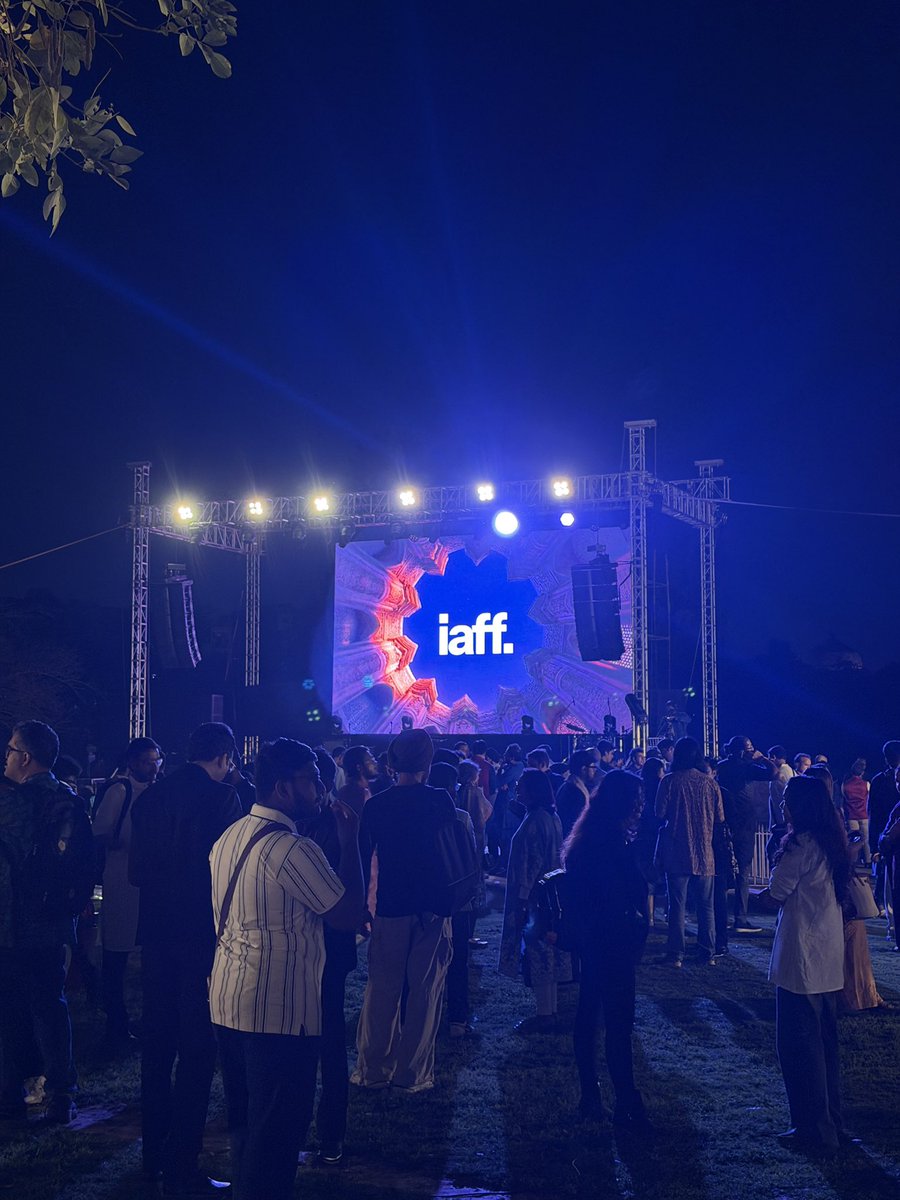
India AI Film Festival (IAFF): Creators on the ground posted that the festival is functioning as an in-person meetup for international AI filmmakers—and showcased the staging and venue ambiance, following up on AI film festival (New Delhi screenings). The check-in and visuals in the festival check-in add practical signal: this isn’t only an online scene; people are traveling and networking in person.
• Venue signal: One post frames the setting as unusually strong—showing an outdoor stage setup with the Qutub Minar visible behind lighting truss, as captured in the

.
🔌 Edge + device agents: $5 chips, old phones, and always-on workers
Compute/stack chatter is about shrinking the agent footprint: ESP32-class assistants and Android phone agents—useful for creators building always-on production helpers without a server box.
MimiClaw puts a tool-using agent on a $5 ESP32-S3 with local markdown memory
MimiClaw (memovai): A new open-source project runs a full OpenClaw-style agent loop on an ESP32-S3 microcontroller (no Linux) with a claimed ~0.5W power draw and a Telegram chat interface, positioning “always-on” assistance on extremely small hardware, as described in the Launch thread and expanded in the Edge AI positioning.
It leans hard into local-first state: memory and persona are stored as plain text files on flash (SOUL.md / USER.md / MEMORY.md plus daily notes and chat history), which is the core “device-owned” data pitch in the Memory files description.
• Tool use on-device (via API calls): The agent is described as using Claude’s tool-use protocol with a ReAct-style loop and optional utilities like Brave Search, cron tasks, MCP browser use, and time sync, per the Tool use list and Hardware setup recap.
The repo is linked in the Edge AI positioning via the GitHub repo, but the tweets don’t include a demo clip or performance benchmarks beyond the power/memory claims.
DroidClaw repurposes old Android phones into always-on agents using ADB control
DroidClaw (unitedbyai): An open-source framework turns any old Android phone into a goal-driven agent that reads the accessibility tree + screenshots, decides actions with an LLM, and executes taps/typing/swipes through ADB until the task completes, as outlined in the Feature rundown.
A key “real world” feature is recovery: it’s described as detecting when it’s looping/stuck and self-correcting, plus using a vision fallback for apps where accessibility trees fail (webviews/Flutter), per the same Feature rundown.
The project surfaces as a maker-friendly way to get an always-on “phone worker” without app integrations; the source links are collected in the Repo links post pointing to the GitHub repo and the Project page.
Security warning spreads as “Claw” agents move from demos to real access
Agent access risk (Claw-style tools): As device-level and GUI-driving agents proliferate, a cautionary thread argues you should not give “Claw type” AI services access to your main computer, logins/passwords, or email—reflecting a growing norm that agent capability is outpacing everyday operational security, as stated in the Security warning.
The tweet is advisory rather than technical (no specific exploit cited), but it’s a clear signal that creators building always-on helpers are also starting to talk about permission boundaries and account hygiene in the same breath as new agent releases.
📈 Distribution & attention mechanics: watchability formats and algorithm traps
Platform dynamics today are about what formats hijack attention and how creators get pulled into performance content vs art—especially around ultra-watchable renovation loops and “algorithm trap” reflections.
AI renovation videos are being treated as a ‘reward pathway’ format to copy
AI renovation videos (format signal): A creator thread argues these AI “renovation” loops may be one of the clearest current examples of a repeatable, engineered watchability format—framing it as “reverse engineering the reward pathways of the human brain,” as stated in the reward-pathways claim.

• Distribution evidence: The same thread points to the IG account diycraftstvofficial posting ~330 times to reach 3.8M followers, with one video at 415M views, as summarized in the account stats follow-up.
The open question is how much of the “hit rate” is attributable to the renovation format itself versus the AI-specific novelty of the visuals, but the scale in the cited stats is what’s driving the copycat attention.
A creator flags the ‘algorithm trap’ where higher reach correlates with slower growth
Algorithm trap (creator growth signal): One creator previewed a 5-part series about audience growth for AI artists, claiming a counterintuitive result—impressions increased, engagement increased, but growth dropped 66%—as described in the series announcement and reiterated in the article 2 teaser.
The stated diagnosis is audience mismatch (“the audience that found me wasn’t necessarily the audience that stays”), which frames “watchability content” as potentially anti-correlated with long-term follower conversion in this specific account’s data, per the series announcement.
🛡️ Safety + provenance in practice: identity checks and agent permissions
Trust issues are showing up as everyday operational changes: quick face-to-face verification calls, warnings about giving agents credentials, and a general rise in ‘prove you’re real’ workflows.
Security warning spreads: don’t hand agent tools your logins or main machine
Agent permission threat model: A widely shared caution lists hard “don’ts” for Claw-type agent services—don’t give them your main computer, passwords, or email access, as emphasized in the Credential access warning.
The practical creative takeaway is that “agent that can click” is now being treated like a high-privilege employee device, not a chatbot: access boundaries (separate accounts, limited permissions, isolated machines) are becoming part of normal ops.
Hiring adds 10-second video calls as deepfake-era identity hygiene
Hiring identity checks: A creator reports a new post-interview step where the company sends a link for a ~10-second video call “just to verify I’m real,” per the 10-second video check—a small operational change that signals deepfake risk is already changing day-to-day contracting.
This is less “background check” and more “liveness check,” and it fits the pattern of lightweight human verification being inserted into workflows that used to be phone-and-email only.
Voice agents crossing the ‘sounds human’ line is triggering disclosure anxiety
Voice realism unease (PolyAI): A clip of a “Starbucks agent” built on PolyAI is framed as “completely human,” with the reaction that “AI is scary sometimes,” per the Starbucks agent reaction.
As more brand support lines get this natural, the trust problem shifts from “can it answer” to “do callers know what they’re talking to,” especially in contexts like payments, account changes, or sensitive personal info.
🏁 What shipped: shorts, challenges, and creator-made worlds
Outside the main Seedance/Hollywood wave, creators still shipped: atmospheric shorts, daily challenges, and visual series—useful as reference comps for pacing, tone, and finish quality.
Continuity ships a full-stack solo short: Midjourney look, Grok Imagine motion, Suno score
Continuity (Artedeingenio): A ~2m23s atmospheric sci‑fi short shipped as a complete solo pipeline—Midjourney for a retro European graphic‑novel look, Grok Imagine for animation, and Suno for soundtrack, framed as “continuity without us” rather than apocalypse, per the project description in pipeline breakdown.

The practical creative signal is the end-to-end stack: one tool for look design, a second for motion, and a third for music, with the finished piece presented as a tone/pacing reference rather than a tech demo, as shown in pipeline breakdown.
A RunwayDailyChallenge short uses Gen‑4 image, Gen‑4.5 video, and Runway SFX end-to-end
RunwayDailyChallenge (Runway): A ~45s “Teamwork” entry was produced entirely inside Runway—Gen‑4 for images, Gen‑4.5 for video, plus Runway-generated SFX—positioned as a single-suite path from visuals to finished cut in challenge entry details.
This matters as a reference for what “all-in-one” finishing looks like when the same toolset handles image generation, video generation, and sound effects, as demonstrated in challenge entry details.
Daily titled shorts keep shipping via Midjourney stills animated with Wan 2.2 or Kling
Titled short-form cadence (DrSadek): Following up on titled shorts (named fantasy short set), more “named clip” drops showed the same repeatable packaging—title + tool credits—using Midjourney stills animated through Alibaba Wan 2.2 in Wan 2.2 credit and through Kling 2.5 Pro in Kling 2.5 credit.

• Format signal: the consistent titling (“Celestial Paradise,” “The Celestial Rift,” etc.) makes the output feel like a series library rather than random renders, as seen in Wan 2.2 credit and Kling 2.5 credit.
What’s still not visible from the posts is how much shot-level control is happening upstream (prompting vs template reuse); the public artifacts mainly expose cadence + packaging + toolchain credits.
THE ONLY ROAD drops “Chapter One” in title-card trailer format
THE ONLY ROAD (LoA): A “Chapter One” film drop landed in a minimal, trailer-like format—stark title cards over a cinematic establishing shot—shared in chapter one post.
The useful comp here is packaging: it reads like episodic IP (chapter framing) rather than a one-off clip, as seen in chapter one post.
BIG BIG SPACE publishes Episode 3, continuing an episodic AI show format
BIG BIG SPACE (aiordieshow): Episode 3 was posted as a ~1m57s installment, reinforcing that creators are shipping recurring “episode” structures (consistent title treatment + presenter format) rather than standalone experiments, as shown in episode post.

It’s a clean reference for how to keep an AI-forward series legible on social: repeated naming, repeated format, and short runtime, per episode post.
While you're reading this, something just shipped.
New models, tools, and workflows drop daily. The creators who win are the ones who know first.
Last week: 47 releases tracked · 12 breaking changes flagged · 3 pricing drops caught