Higgsfield Vibe‑Motion triggers boycott – $20 for 7+ minute promo claim

Stay in the loop
Free daily newsletter & Telegram daily report
Executive Summary
Higgsfield’s Vibe‑Motion launch—pitched as real-time motion design with on-canvas parameter control—collided with a creator-led ethics backlash; filmmaker Dustin Hollywood posted an alleged sponsorship email offering $20 for a “dedicated 7+ minute” video tied to “ENDED 20 more creative jobs” messaging; the same screenshot calls the release “SORA 2 PRO by OpenAI x Higgsfield,” but partnership terms aren’t shown. Threads add unverified allegations of commissioning creators to use copyrighted IP for marketing, recirculate allegedly offensive promo examples, and escalate into a boycott + tip pipeline (dustin@nakid.online) plus public investor callouts.
• Runway/Video controls: Runway added Motion Sketch for Gen‑4.5 image-to-video; draw what should move on the first frame instead of pure text direction.
• ByteDance/Agents: UI‑TARS‑desktop claims 100% local desktop automation; repo snapshot cites ~24.6k stars and ~2.4k forks.
• Freepik/Pricing: posts claim Freepik generations are ~70% cheaper than Midjourney at the same subscription; no pricing table or standardized cost-per-image benchmark included.
Across the feed, distribution tactics are becoming product surface: “paid shill” fatigue, ad retargeting complaints after a single reply, and creator credentialing (Firefly ambassadors) all compete with raw capability claims.
While you're reading this, something just shipped.
New models, tools, and workflows drop daily. The creators who win are the ones who know first.
Last week: 47 releases tracked · 12 breaking changes flagged · 3 pricing drops caught
Top links today
- DeepEval open-source LLM evaluation toolkit
- DeepEval GitHub repository
- Claude-Mem persistent memory for Claude Code
- Runway Motion Sketch for Gen-4.5 I2V
- Higgsfield Vibe-Motion real-time motion design
- Openclaw personal wikibase and agent tooling
- fal MiniMax Speech 2.8 API page
- NVIDIA Qwen3-VL model on Hugging Face
- FSVideo fast latent video diffusion paper
- SWE-Universe verifiable coding environments paper
- Green-VLA vision-language-action robotics paper
- Vision-DeepResearch multimodal deep research paper
- Freepik multi-model generation pricing update
- Luma Dream Brief $1M competition details
- Alchemy Stream app for creator video
Feature Spotlight
Higgsfield backlash & creator ethics: “ended jobs” marketing meets organized pushback
Creators are coordinating against Higgsfield after “ENDED creative jobs” marketing + reports of $20 sponsorship offers and alleged IP-steering. It’s a test of how much leverage creators have over AI tool brands (and their investors).
Today’s loudest creator story is a wave of backlash against Higgsfield’s messaging and behavior—claims of anti-artist marketing, exploitative sponsorship offers, and IP/commissioning allegations. This category focuses on trust, labor, and governance signals (and excludes non-Higgsfield tool launches covered elsewhere).
Jump to Higgsfield backlash & creator ethics: “ended jobs” marketing meets organized pushback topicsTable of Contents
🧯 Higgsfield backlash & creator ethics: “ended jobs” marketing meets organized pushback
Today’s loudest creator story is a wave of backlash against Higgsfield’s messaging and behavior—claims of anti-artist marketing, exploitative sponsorship offers, and IP/commissioning allegations. This category focuses on trust, labor, and governance signals (and excludes non-Higgsfield tool launches covered elsewhere).
Screenshoted offer: $20 for a 7+ minute Higgsfield sponsorship
Creator sponsorship economics (Higgsfield AI): Filmmaker Dustin Hollywood says Higgsfield offered $20 for a “dedicated 7+ minute video” with a deadline, framing it as how the company values creative labor; the claim is backed by an email screenshot in the Offer email screenshots post, which also ties the offer to Higgsfield’s “ENDED 20 more creative jobs” messaging.
• Branding detail: The same email calls the release “SORA 2 PRO by OpenAI x Higgsfield,” per the Offer email screenshots image, which creators interpret as reputational cover even though the underlying partnership terms are not shown.
The thread also alleges prior “edgy” campaigns crossed lines (including content mocking disabled kids), positioning this as a repeated behavior pattern rather than a one‑off.
Allegation: Higgsfield asks creators to use copyrighted IP
IP risk and liability shifting (Higgsfield AI): Dustin Hollywood claims Higgsfield is “commissioning people to specifically steal IP” for marketing and argues the company attempts to push risk onto artists/influencers; a screenshot of replies asserting the same allegation appears in the Commissioning allegation screenshot post.
The practical consequence for filmmakers is legal exposure: when promotional briefs imply “use X character/IP,” the creator publishing the output can become the visible target, while the platform remains insulated—an accusation repeatedly made in the thread.
Higgsfield launches Vibe‑Motion with “ended 20 creative jobs” marketing
Higgsfield Vibe‑Motion (Higgsfield AI): Higgsfield announced Vibe‑Motion as a real‑time motion design generator—“one prompt” to create motion graphics with live on‑canvas parameter control—shown in the Vibe‑Motion launch demo; the same marketing cycle is also framed with the line “ENDED 20 more creative jobs,” as captured in the Backlash screenshots thread, which becomes a focal point for creator pushback.

The near‑term relevance for filmmakers and designers is less about the feature list than about distribution risk: multiple posts treat the “ended jobs” framing as a signal of how the company intends to grow (creator partnerships, sponsorships, and social promotion), not only what the tool can do.
Boycott stance hardens; creators request anonymous tips for reporting
Boycott and reporting pipeline (Higgsfield AI): Dustin Hollywood states a hard boycott position—“If you support @higgsfield_ai you’re dead to me”—and asks for anonymous information sent to dustin@nakid.online, as written in the Boycott and tip request post; he reiterates he’s preparing a story for NAKID and invites submissions in the Story tip request follow‑up.
This matters to working creators because it formalizes an accountability channel (tips, documentation, publication intent) instead of staying at the level of vague “bad vibes” complaints.
Creators start naming Higgsfield investors in accountability posts
Investor accountability (Higgsfield AI): Dustin Hollywood escalated criticism by directly naming firms he says back Higgsfield—calling for public answers and framing continued capital as “endorsement,” with a list that includes Accel and Menlo Ventures in the Investor callout list post.
It’s a governance signal for creatives: the argument is that platform behavior and creator‑labor norms are being set upstream by who funds and tolerates the growth strategy, not only by what features ship.
A “no free labor” stance spreads in the Higgsfield backlash
Creator leverage pattern: In response to Higgsfield controversy, Dustin Hollywood argues that AI toolmakers are “1000% dependent on creators” and frames unpaid promos as long‑run self‑harm for artists, pushing a hard “do nothing for free” stance in the Creator leverage post; he extends the idea into a broader “data extraction” critique in the Extraction framing thread.
This is less about any single tool feature and more about renegotiating the default deal: free distribution and “credits” versus cash, control, and rights.
Creators circulate alleged offensive promo examples tied to Higgsfield
Content norms and reputational spillover (Higgsfield AI): A running list of allegedly offensive outputs and jokes associated with Higgsfield promotion recirculated, including racist/sexual content examples described in the Offensive examples list post; separately, another creator alleges Higgsfield-linked influencer posts depicted violent scenarios and says they were blocked after calling it out in the Influencer content complaint thread.
The key signal for working storytellers is that “shock” marketing can attach to everyone distributing the tool, not only to the company account.
NAKID shares DM rejecting Higgsfield outreach
Creator org response (NAKID x Higgsfield AI): NAKIDpictures posted a DM screenshot showing Higgsfield reaching out for support/quotes around a “Nano Banana free for everyone across X” pitch, and NAKID replying: “Your company is dead to us. Do not ever contact us again,” as shown in the DM rejection screenshot post.
The relevance for working creatives is that it documents how creator‑platform relationships are being negotiated in public—via receipts, not vague claims.
Creator churn signal: “stopped using Higgsfield” and moved tools
Tool switching under ethics pressure (Higgsfield AI): QualitativAi says they stopped using Higgsfield due to “tactics and antics,” adding they felt they lost nothing because an alternative stack (Freepik) was “far superior,” as stated in the Switched away comment post.
It’s small‑n anecdotal, but it’s one of the few posts today that frames backlash as actual product churn rather than only discourse.
Engagement with Higgsfield reportedly triggers heavy sponsored feed targeting
Ad saturation symptom (Higgsfield AI): Artedeingenio reports that replying to a Higgsfield post led to a timeline dominated by sponsored Higgsfield posts, describing it as immediate feed pollution in the Sponsored feed complaint post.
This is a distribution signal. It suggests paid amplification is part of the go‑to‑market loop, and that creators who interact publicly may get pulled into repeated promo impressions even when they are критical.
🎬 Video creation upgrades: sketching motion, model comparisons, and realism pushes
Practical video-gen capability posts today: Runway’s Motion Sketch for Gen‑4.5, multi-model creator tests, and realism-oriented Sora prompting. Excludes Higgsfield-related discourse (covered in the feature).
A ‘Dark Ghibli’ look test animated with Veo 3.1 in Runway
Veo 3.1 in Runway (Google/Runway): Artedeingenio said they built a “Dark Ghibli” style in Midjourney and chose Veo 3.1 in Runway to animate it, sharing a ~2-minute mood short and noting they’ll distribute the style recipe to subscribers next, per the short film post.

The practical signal: this is stylized narrative (not photoreal) being treated like a repeatable look package—style discovery first, then animation tool selection.
FSVideo highlights the “speed” axis for video diffusion models
FSVideo (research): _akhaliq shared “FSVideo,” described as a fast speed video diffusion model in a highly-compressed latent space, with a ~20-second visual overview clip in the paper share.

For creators, the practical angle is the same one that keeps recurring in tool selection: decode speed changes iteration cadence, even when final quality is comparable.
Genie 3 outputs are being presented as ‘playable worlds’ music videos
Genie 3 (Google): ClaireSilver12 posted a ~43-second “music video” montage of AI-made playable games/navigable 3D environments built with Genie 3, framing it as a direct response to claims that AI-made work is pointless, per the montage post.

This is less about a single scene and more about showcasing breadth—many coherent spaces, fast cuts, one aesthetic thread.
Grok + Genie clips are being edited into music-video formats
Grok + Genie (workflow): Following up on Music-video edit (Grok+Genie montage format), bennash released “Mind Virus,” a ~3:44 music-video cut explicitly made by combining Grok and Genie clips, as shown in the music video post.

This is “clip-first, edit-later” production: generate multiple short segments, then let editing create structure and momentum.
Kling 2.6 is getting pushed on high-energy POV shots
Kling 2.6 (Kling AI): Artedeingenio framed Kling 2.6 as already capable for “stunning shots” while waiting on Kling 3.0, sharing an extreme-sports POV clip (BMX jump over a canyon) as the visual proof point in the POV demo.

The creative relevance is camera intensity: fast motion, big parallax, and a single continuous beat where artifacts are easiest to notice.
Runway Story Panels are being used as a visual previs board for AI shots
Story Panels (Runway): Creators are using Runway Story Panels as a grid-based previs surface—laying out multiple candidate shots/variations of the same scene before committing to a generation path, as shown in the panel grid exploration.
The same pattern shows up when people combine Grok outputs with paneling—“Grok + Story Panels”—to explore a consistent art direction across shots, as referenced in the workflow mention.
‘Grok is among the top video models’ remains a live creator take
Grok Imagine (xAI): A recurring creator take is that Grok is now “among the top” AI video models, with a ~10-second demo clip used as the backing example in the quality hot take.

This is still sentiment more than a benchmark—no comparative eval artifact is posted here—but it’s a clear signal that “Grok as a serious video option” is spreading beyond novelty clips.
Runway AI Summit signals game-film convergence with an EA strategy speaker
Runway AI Summit 2026 (Runway): Runway announced Mihir Vaidya, Chief Strategy Officer at Electronic Arts, as a featured speaker for its one-day Summit in New York on March 31, per the speaker announcement.

Runway’s event page lists early-bird in-person tickets at $350 and frames the agenda as cross-industry AI workflow discussion, as described on the event page.
Creators are publicly asking for full-length AI films, not shorts
Longform AI film appetite: awesome_visuals posted an ~87-second teaser and explicitly said they’re ready to watch a full AI movie, using the clip’s “new wave” framing as the pitch in the teaser post.

It’s a clean audience signal: some creators want feature-length continuity and pacing, not only weekly short-form experiments.
Runway web app briefly shows a client-side load error
Runway web app (Runway): A shared link to the Runway app reported an “Unexpected Application Error” related to loading a CSS chunk, which would block access to browser workflows until resolved, as captured in the Runway web app.
No incident note is included in the tweets, so scope and duration aren’t clear.
🖼️ Image makers in production mode: realtime edits, Firefly formats, and lookdev tests
Image generation talk centered on creator-grade outputs: realtime restyling while keeping structure, Firefly-driven formats (AI‑SPY), and photoreal/illustrative lookdev shares. Excludes raw prompt dumps and SREF code drops (those are in Prompts & Style Recipes).
A full “AI paper cut-out storybook video” workflow gets documented end-to-end
Paper cut-out storybook workflow (creator pipeline): After 3 months of iteration, a complete end-to-end workflow for making AI “paper cut-out storybook” videos (tools, prompt templates, and production decisions) was published as a long walkthrough, according to the Full workflow walkthrough and the follow-up post in Written guide link.

A draft/pinned version of the guide is also shown in the Guide draft screenshot.
Firefly AI‑SPY pushes to Levels .007 and .008 with denser object lists
Adobe Firefly (Adobe): Following up on AI‑SPY—the hidden-object image format—AI‑SPY Level .007 and Level .008 landed with explicit “find list” overlays (counts like “Frog 2” and “Gold thimbles 2”), per the Level 007 find list and Level 008 find list.
• Format signal: The posts keep the same loop—dense scene + checklist + versioned “Level .00X”—which makes it easy to ship as a series, as shown in the Level 007 find list and Level 008 find list.
Creators flag Grok Imagine’s sci‑fi transformations as a quality jump
Grok Imagine (xAI): A recurring creator note today was how aggressively Grok Imagine “transforms” inputs under certain styles—especially science fiction—while still landing outputs the creator likes, as shown in the Sci-fi transformation clip.

The claim is qualitative (no benchmark artifact in the tweets), but it’s a clean signal that people are using Grok Imagine as a fast lookdev “style amplifier,” per the Sci-fi transformation clip.
One character, many skins: Nano Banana Pro outfit variants paired with animation
Nano Banana Pro (Freepik): A “many skins from one character” workflow is being used as a practical lookdev trick—generate costume variants from a single base character, then animate the set using Kling 2.5 via Hedra, as shown in the Skins reel demo.

The creator credits Nano Banana Pro for the wardrobe generation layer and calls out the multi-tool stack (including Suno for music), per the Skins reel demo.
Before/after transformation comps get treated like a reusable production template
Before/after comparison format (image prompting pattern): A photoreal “fitness transformation” split image was shared alongside a deeply specified prompt-brief (identity lock, matched framing, lighting differences, and explicit negative prompts), as shown in the Before and after image.
The notable move is treating the prompt as a production spec for consistent comparisons (same camera height, alignment, background), per the Before and after image.
Leonardo AI gets used for character sheets: full-body, face close-up, palette
Leonardo AI (Leonardo): A “character sheet” style output—full body render, face close-up, hand detail, and a color palette—was shared as a compact lookdev package, as shown in the Character sheet images.
The post frames the result as ready-to-use visual development rather than a single hero image, per the Character sheet images.
Adobe Firefly Ambassador acceptances get shared as a creator milestone
Adobe Firefly (Adobe): Posts show creators being accepted into an Adobe Firefly Ambassador Program, including an inbox-style acceptance screen, as shown in the Ambassador invite screenshot and reinforced by the congrats post in Congrats note.
The visible signal is distribution/credentialing rather than a new model feature, per the Ambassador invite screenshot.
Mixed-media “photo to sketch” edits show up as a repeatable finishing pass
Mixed-media image edit (prompted retouch pattern): A “blueprint to moment” prompt describes selectively converting parts of a photo into a loose black-ink architectural sketch while keeping other regions photoreal, as shown in the Photo-sketch blend.
The example reads like a finishing/branding pass (sketch overlay + white brush blending) rather than a full regeneration, per the Photo-sketch blend.
A “less polished, more hand-drawn” look becomes an explicit preference statement
Aesthetic direction (image lookdev): A recurring positioning move is explicit fatigue with the “over‑polished AI look,” paired with a preference for gritty ink / indie-comic texture as a deliberate art direction choice, per the Anti-polish framing.
This is mostly rhetoric in today’s tweets (no controlled comparisons attached), but it signals what kind of image outputs people are trying to standardize in their pipelines, per the Anti-polish framing.
A low-res-to-sharp jump clip becomes shorthand for “compute equals detail”
Upscaling/clarity perception: A short meme clip dramatizes a low-resolution face snapping into a high-detail version under the caption “This is what RAM is for,” as shown in the Sharpness jump clip.

It’s not a tool announcement, but it matches a broader creator obsession with “detail recovery” as a visible quality bar, per the Sharpness jump clip.
🧪 Prompts & style recipes you can paste today (SREFs, JSON specs, ad posters)
High-density prompt culture day: Midjourney SREF aesthetics, structured JSON prompt specs for photoreal scenes, and copy-paste poster/branding prompts. This is intentionally “ready-to-run,” not general tool news.
“From blueprint to moment” mixed-media prompt: ink sketch emerging from photo
Image editing prompt (Mixed media): A concise recipe blends photoreal structure with architectural ink redraw—“transform selected parts … into a hand-drawn sketch … keep the lower structure photorealistic … blend with soft white brush strokes,” as written in the Prompt text.
The sample output shows the “drawing emerges from reality” transition working in a single frame (sketch head/upper body, photo lower body), matching the technique described in the Prompt text.
Midjourney --sref 59342432 for indigo Ukiyo-e packaging/editorial looks
Midjourney (SREF 59342432): A monochrome indigo Ukiyo-e recipe (Hokusai-adjacent) is being packaged as a repeatable look for premium brand visuals—deep Prussian blues, flat illustration, and lots of negative space, as described in the Indigo style post.
The post suggests adding keywords like “seigaiha waves” and “indigo dye aesthetic” to push authentic patterning, and the longer breakdown sits on the Style breakdown page.
Midjourney --sref 1330912747 for urban noir ink + red/black indie-comic texture
Midjourney (SREF 1330912747): PromptsRef frames this as an antidote to overly polished outputs—bold ink lines, gritty texture, and stark red/black contrast aimed at poster and cover work, per the Style write-up.
Their own positioning calls out common targets (album covers, dark urban posters, attitude-heavy character design), with the canonical reference page living at the Style detail page.
Midjourney --sref 4461417250 “Modern Freehand Ink Flow” with red/orange accents
Midjourney (SREF 4461417250): A style analysis thread breaks down a high-contrast ink-wash-meets-manga look—dry brush texture, aggressive motion energy, and selective warm accents (reds/oranges) for focal points, as explained in the Style analysis.
The same post includes prompt inspiration (ink wash painting, splatter art, negative space, monochrome with red accents), with the broader library context living on the SREF library site.
Midjourney retro vector palm-sunset prompt with weighted SREF blend
Midjourney (Weighted SREF blend): A copy-paste prompt for retro vector sunset posters is shared with explicit weights—“2D illustration, retro vector drawing of a single palm tree silhouetted against a massive striped sunset … --sref 88505241::0.5 1661553740::2,” as written in the Prompt drop.
The included grid shows how the blend steers multiple near-neighbor variants (composition + palette shifts) without changing the base concept, as evidenced in the Prompt drop.
Vending-machine duo portrait JSON prompt with strict realism + camera rules
Structured prompt schema (Photoreal scene): A long JSON-style prompt locks a two-person “late-night vending machine” portrait with explicit constraints: no mirror-selfie artifacts, smartphone candid framing, cool overhead + vending LED mix, deep focus, and a detailed negative prompt list, per the Full JSON prompt.
The same prompt is shared as a reusable artifact via the Prompt share page, keeping the “must keep / avoid” constraint block intact.
Classroom chalkboard portrait JSON prompt focused on candid realism constraints
Structured prompt schema (Candid classroom portrait): Another long JSON prompt fixes the shot around an over-the-shoulder turn at a chalkboard—neutral fluorescent lighting, moderate depth-of-field, smudged chalkboard texture, and “avoid readable text / brand logos / extra people,” as detailed in the Full JSON prompt.
A shareable version of the same prompt is posted at the Prompt share page, preserving the constraints and negative-prompt sections.
Midjourney --sref 1502059545 for minimal doodle-style line icons
Midjourney (SREF 1502059545): A minimal “doodle line art” style reference is shared as a baseline—useful for quick icon-like sketches (burger, car, lamb, crown) without adding rendering noise, as shown in the SREF note.
The post is sparse on modifiers beyond “just the most basic sref,” which makes the code itself the main reusable element, per the SREF note.
Midjourney Niji 6 --sref 3242561498 “Candy Dreamscape” pastel cyber-watercolor
Midjourney (Niji 6 SREF 3242561498): A “Candy Dreamscape” recipe is pitched as a consistent pastel + light-aura style—soft cyberpunk hues, misty transitions, and warm/ethereal illustration energy—shared with the exact code in the SREF callout.
The longer reference page for the same code is linked as the Style detail page, including the “children’s book / cozy game asset” positioning from the original post.
“Raw output” prompt-challenge posts as a reverse-engineering practice
Prompt culture (Reverse-engineering loop): A recurring format is to post a favored “raw output” and ask others to reconstruct the shot (“how would you attempt to create a similar shot?”), turning comments into a crowdsourced prompt teardown, as shown in the Prompt-challenge post.
It’s not a prompt drop by itself; it’s a distribution pattern for extracting workable prompt structure from a single target frame, per the framing in the Prompt-challenge post.
🧩 Creator automation: local desktop agents, OpenClaw life-ops, and UGC factories
Workflow posts leaned toward ‘systems that run the studio’: OpenClaw as personal ops glue, local desktop automation agents, and agentic pipelines for generating UGC at scale. Excludes pure coding/eval frameworks (kept in Coding Agents & Dev Tools).
UI-TARS-desktop ships as a fully local desktop automation agent stack
UI-TARS-desktop (ByteDance): A new open-source desktop automation agent is being shared as running 100% locally (offline) while controlling normal desktop apps—opening files, browsing sites, and executing UI-driven tasks—per the demo in Local agent demo and the GitHub repo linked in GitHub repo. It’s already showing strong pull (the repo snapshot in GitHub repo cites ~24.6k stars and ~2.4k forks), which matters if you want an “agent computer” without shipping prompts/screens to a cloud vendor.

Where the signal is strongest is the “any app” claim: it’s positioned less like a single-purpose macro tool and more like a general UI operator you can wrap into a creator pipeline (render queue babysitting, asset exports, uploading, metadata entry), as described in Local agent demo.
Linah AI UGC engine pitches n8n + Airtable control for unlimited outputs
Linah AI (UGC factory pattern): A builder describes recreating an AI-UGC “engine” using Linah AI + n8n + Airtable to avoid per-video pricing, positioning it for bulk creative testing (50–200 videos/week) without $8–$12/output fees, as laid out in UGC engine breakdown.

• Control surface: Airtable acts like an operator console (pick angle → approve script → generate → upload), per the on-screen walkthrough in UGC engine breakdown.
• Scale claims: The pitch includes “40+ creator personas,” hook auto-generation (8–12s), and long-form testimonial variants, all described in UGC engine breakdown.
It’s a concrete example of “agents run the studio” economics: the differentiator isn’t model quality, it’s throughput and approval workflow, as argued in UGC engine breakdown.
OpenClaw turns your blog/pod/bio into a browsable personal Wikipedia
OpenClaw: A practical “life ops” pattern is circulating: feed OpenClaw your long-form footprint (blog, podcast, bio, and lots of stray artifacts) and it outputs a Wikibase-style site where your preferences/projects become browsable articles—see the examples in Wikibase workflow, including a “Coffee” page and longer “Tech Opinions/Startup Philosophy” entries.
The value to creators is that it reframes personal knowledge management as a queryable encyclopedia you can hand to agents (“read my canon, then write/update X”), instead of a pile of notes—an approach explicitly described in Wikibase workflow (including the tongue-in-cheek scale claim of feeding in “1938413 other things”).
Doctor-style AI pages grow via curiosity hooks, then monetize later
Doctor-style AI pages (growth pattern): A repeatable format is being pitched for health-adjacent short videos: lead with curiosity soft-openers (“most people don’t realize this”), use a calm/relatable avatar, keep it educational, and delay monetization until after saves/shares—explicitly framed as “no real doctors” and an AI-scaled production loop in Growth recipe clip.

The concrete claim is the revenue range: “$90k–$150k/month” pages built on this cadence, as stated in Growth recipe clip.
Lotus positions an “AI doctor” as 24/7 care with real clinicians
Lotus (agentic care service claim): A thread asserts Lotus has launched an “AI doctor” that can “diagnose and prescribe,” emphasizing real licensed clinicians, real referrals, and real prescriptions, with the scale claim that 100M Americans lack primary care access—details are stated directly in Service launch claim.
What’s notable for creator-operators is the packaging: it’s presented less as a chatbot and more as an end-to-end agentic service with compliance/fulfillment implied, per the positioning in Service launch claim.
OpenClaw hardware demo adds a speaker and a “parenting skill” module
OpenClaw (hardware): A physical OpenClaw setup is shown being extended with a speaker and a named “parenting skill,” framed as a modular way to give a home agent new interaction surfaces beyond text, as demonstrated in Hardware skill demo.

The creative relevance is less the specific skill and more the pattern: skills as swappable capabilities that can be paired with physical I/O (audio prompts, alerts, routines), as implied by the build in Hardware skill demo.
Trupeer pitches “Cursor for docs” via screen recording to SOPs
Trupeer (documentation automation): A “Cursor for docs” framing is being shared—record your screen, then generate how-to guides/SOPs—called out in Docs tooling shout, with the product positioning spelled out on the docs page referenced in Docs page.
For creator studios, this lands as a way to turn messy internal process into reusable operator playbooks (editing handoffs, publishing checklists, client workflows) while keeping the input as “what I did” rather than “what I typed,” matching the pitch in Docs page.
Tinkerer Club runs daily challenges around multi-agent OpenClaw setups
Tinkerer Club (community ops cadence): Following up on Daily challenges—the earlier “daily challenges” idea—today’s post claims there are 2 daily challenges in the Discord, including one explicitly about multiple agent setup for OpenClaw, as shown in Daily challenges post.
This is a concrete community mechanism for turning agent orchestration from a one-off weekend build into an everyday practice loop, consistent with the “ask your OpenClaw” posture in Ask your OpenClaw.
“Proximity agent” meme: distance-triggered automations as a pattern
Proximity-triggered agents (pattern meme): A joke frames a “proximity agent” that “nukes my calendar when we’re within 100 meters,” capturing a real automation idea: agents that react to presence/location signals instead of prompts, as written in Proximity agent joke.
Even as a gag, it points at a legit studio-ops direction: context sensors (GPS/BLE) becoming triggers for scheduling, notifications, and safety rails in personal-agent stacks, as implied by Proximity agent joke.
Creators ask X to surface AI builders more aggressively in feeds
X timeline curation (discovery request): A creator asks X’s algorithm to preferentially show posts from “AI community builders, researchers, filmmakers, engineers, artists, vibe coders,” framed as wanting more of those accounts in the timeline, per Timeline curation request.
For tool-heavy creators, this is effectively a distribution request: better discovery for agent/workflow builders without having to manually curate lists, as described in Timeline curation request.
🧰 Coding agents & dev tools: persistent memory, eval suites, and agent-loop fixes
Developer-side tooling showed up heavily: persistent memory for Claude Code, local-first LLM evaluation, and open frameworks aimed at reducing agent loops. Kept separate from creator automation pipelines.
DeepEval pushes local-first LLM testing with RAG + agent metrics
DeepEval (Confident AI): A new wave of posts positions DeepEval as a practical eval harness for production LLM apps—answer relevancy, hallucination checks, G-Eval for custom rubrics, plus RAG and agent/tool correctness—while emphasizing that core metrics can run 100% locally so data doesn’t leave your machine, as described in the DeepEval overview and expanded in the Repo details.

• What’s concretely useful: The thread claims you can evaluate end-to-end or component-level with “zero code changes” by tracing calls via an @observe decorator, as shown in the Tracing demo.
• Ops signal: It frames “continuous evaluation” as the pro baseline (“most teams ship… and pray”) in the Testing culture point, and cites 12.2k GitHub stars plus Apache-2.0 licensing in the Repo details and the linked GitHub repo.
SWE-Universe claims 807k multilingual, verifiable SWE tasks for agent evaluation scale
SWE-Universe (benchmark/paper): A shared chart claims 807,693 “real-world verifiable” software-engineering instances (multilingual), dwarfing older SWE-Bench-scale datasets, per the SWE-Universe share.
The immediate creator/dev-tool angle is eval throughput: larger, verifiable task pools tend to support more stable regression testing and leaderboard churn tracking, but the tweet doesn’t include methodology details beyond the scale comparison shown in the chart.
Non-technical vibe coders report “gaslit” behavior from coding agents
Coding-agent reliability: A recurring complaint from non-technical users is that agents confidently promise fixes (“I understand… will fix right away”) and then the bug remains, which reads like “gaslighting” to newcomers—an adoption risk called out in the Gaslit complaint.
The post frames this less as model capability and more as UX expectation management: technical users anticipate partial success; consumers often interpret confident language as completion.
“One desk runs 100 agents” becomes a shorthand for the new productivity gap
Agent orchestration gap: A post contrasts “managing 100 coding agents with your voice” versus still “copy-pasting PDFs to get the format right,” using it as a shorthand for where the productivity frontier is moving, per the Desk gap post.
A follow-up frames survivability as being either a “top engineer” or an engineer with product sense in the Survival criteria, implying that orchestration + taste is the leverage point, not syntax speed.
GPT Codex promotion triggers “paid shill” suspicion and backlash noise
GPT Codex promo trust: A thread complains that it’s becoming easy to spot “paid shills” promoting the new GPT Codex app and that the vibe is exhausting, as argued in the Shill fatigue post.

The same timeline includes a parody “testimonial” about switching to Codex as a multi-agent command center in the Codex parody, which reads as a signal that distribution tactics—not just features—are now part of how builders evaluate new agent tooling.
Naval’s take: vibe coding shifts work toward PM and model tuning
Vibe coding as a job shift: Naval’s one-liner argues “vibe coding is the new product management” and that “training and tuning models is the new coding,” as stated in the Role shift quote.
It’s a clean articulation of where effort moves when codegen is cheap: spec-writing, iteration steering, and model behavior shaping become the differentiators.
🧊 3D & interactive assets: multi-view to 3D, character skins, and game-ish worlds
3D-related content clustered around turning images into usable assets and variants: multi-view reconstruction improvements, fast character skinning, and AI-made navigable environments. Excludes pure “world model” video tours (covered under Video).
Meshy improves Multi-View Image to 3D reconstruction from multiple photos
Meshy (MeshyAI): Meshy is pushing an upgrade to Multi-View Image to 3D, explicitly positioning it as a structural-accuracy boost when you upload multiple angles of the same object, according to the Multi-view 3D update note.
For asset builders, the practical implication is tighter geometry from real reference sets (front/side/back) rather than trying to “average” a single hero shot—especially useful when you need consistency across rotations for game props or product-like objects.
Genie 3 outputs are being packaged as navigable 3D world reels
Genie 3 (Google): A creator montage frames Genie 3 outputs less as clips and more as playable / navigable 3D environments, edited into an (AI) music-video format, as shown in Playable worlds montage.
For interactive-first creators, the notable piece is the presentation: quick cuts between worlds imply a “world library” mindset (many small spaces you can move through) rather than a single long cinematic render.
One character, many skins: Nano Banana Pro costume swaps then Kling animation
Anima_Labs workflow: A repeatable “skin factory” pattern is laid out as Nano Banana Pro generates costume variants from a single character design, then Kling 2.5 animates those looks via Hedra, with Suno used for the music layer, as described in Skins workflow post.
This reads like a pragmatic way to build a roster of consistent character variants (alt outfits/rarities) before you commit to longer shots, since the “skin change” happens upstream of motion.
Procedural mercenary rosters and loot-like affixes resurface as an AI-friendly game loop
DannyLimanseta concept: A prototype-style showcase highlights randomly generated mercenaries paired with Diablo II-style equipment affixes and rarities, pitched as the core loop for an autobattler where you hire/manage a band, per the Mercenary affix demo.

The key creative signal is how well this loop fits AI asset stacks: if portraits, gear variants, and rarity tiers can be generated and then “locked” into a deterministic ruleset, you get large combinatorial variety without hand-authoring every unit.
Creators are judging image-to-3D tools on texture survival, not only geometry
Image→3D conversion quality: A small but telling creator criterion is being stated directly: some styles keep their textures “very well preserved” after being converted to 3D, as noted in Texture preservation note.
That pushes evaluation beyond “does the mesh look right” toward “does the surface language survive,” which matters if the end use is stylized assets (where texture carries the look) rather than purely photoreal scans.
🎵 Music & sound stack: local music models, soundtrack glue, and audio features
Audio posts were fewer but useful: a local open-source music model claim, plus ongoing creator pipelines pairing video with generated music. Voice-only TTS news is minimal today.
ACE-Step-v1.5 (2B) positions itself as a local, open-source Suno alternative
ACE-Step-v1.5 (community): A new open-source music model, ACE-Step-v1.5 (2B), is being framed as something you can run locally on consumer GPUs, with the bolder claim that it can beat Suno on quality, as described in the Local model claim. The same conversation also gets treated as a “true free Suno alternative” angle when paired with simplified runners, as hinted in the One-click run post.
Evidence is thin in the tweets (no samples/benchmarks attached), but the practical implication for creators is obvious: local music generation means predictable costs and offline iteration if the quality holds up.
MiniMax Speech 2.8 ships on fal with inline sound tags and emotion control
MiniMax Speech 2.8 (fal): fal says MiniMax Speech 2.8 is now available on its platform with “studio-grade audio,” support for in-text sound tags, and more flexible emotion control, as announced in the fal availability post.
No demos are attached in the tweets, but the feature list is directly relevant for creators doing narration-heavy shorts or character dialogue passes where you want explicit nonverbal cues (laughs, breaths, etc.) embedded in the script, not faked in edit.
A “1 click” runner tries to make ACE-Step local music easy to launch
ACE-Step runner (community): A separate thread claims you can run ACE-Step-v1.5 “on your computer, with 1 click,” explicitly pitching it as a practical way to try a free Suno alternative without a build-from-source setup, per the One-click run post.
This matters less as a model story and more as a distribution story: local music tools tend to stall at installation friction, and wrappers/runners are what turn “cool repo” into “thing you can actually use.”
Grok + Genie clips are being packaged as full music videos, not just tests
Grok + Genie (xAI/Google): A longer-form “Mind Virus” drop is explicitly framed as a music video assembled from Grok and Genie clips, per the Music video post.
The pattern is the product: instead of publishing single shots, creators are compiling many short generations into a coherent edit unit (music-video structure), which makes iteration look like filmmaking rather than model demos.
AI microfilm workflow keeps human-grade music licensing in the loop
Epidemic Sound (Epidemic Sound): The “Ludicium” microfilm write-up credits Nano Banana (images) plus Kling (video), then a DaVinci Resolve edit—while keeping music as a traditional licensed layer via Epidemic Sound, per the Microfilm workflow credit.
In follow-ups, the creator notes that stylized aesthetics buy more tolerance than strict realism, and that some content constraints push fixes into other tools, as described in the Workflow notes and Kling gen modes. The sound takeaway is straightforward: even in AI-forward pipelines, the final “film feel” often rides on music selection that clears rights cleanly.
Suno keeps showing up as the soundtrack layer in character-reel pipelines
Suno (Suno): A character “many skins from one design” reel credits Suno AI for music while the visuals come from Nano Banana Pro (costume generation) and Kling 2.5 animation via Hedra, as laid out in the Skins workflow credit.
The useful creative read: even when the visual stack changes tool-to-tool, creators are treating the music layer as a consistent, swappable finishing step that makes the reel feel like a piece rather than a test clip.
💸 Pricing shocks & access: cheaper generations, domain costs, and subscription mechanics
Meaningful access economics today: Freepik’s cost-per-generation shift, .ai domain price increases, and paid community pricing signals. Excludes minor coupon spam.
Freepik pitches a 70% lower cost-per-gen than Midjourney on the same plan
Freepik (Freepik): A widely shared claim says Freepik has made AI generation ~70% cheaper than Midjourney while keeping the same subscription price—positioned as “more generations” rather than a temporary promo, as stated in the Cost comparison claim.

The thread frames this as a practical advantage for high-volume creators (more iteration per month) but doesn’t include an official pricing table or a standardized “cost per image” benchmark—so the “70%” figure is being treated as a headline claim rather than an independently verifiable metric in these tweets, per the Cost comparison claim.
Freepik’s Variation tool workflow: angle/frame variants, then auto-animated sequences
Freepik Variation (Freepik): A practical walkthrough shows a simple pipeline—open Tools → Variation, upload a source image, generate multiple angle/frame versions, and then stitch those outputs into an animated sequence, as described in the Variation steps and shown in the Sequence video demo.

• What it’s used for: fast packaging of “one image → many shots” for reels and product/scene explorations, consistent with the positioning in the Cost comparison claim.
This is being shared as an access/economics play because the workflow’s value scales with iteration volume—more variations per subscription month matters more than marginal quality deltas.
Tinkerer Club price jumps to $299/$399, with a move toward annual subscription
Tinkerer Club (Kitze): A pricing update post says the membership price moved up to $299, then a “final price” of $399, followed by a planned conversion into a yearly subscription, as stated in the Pricing change note.
The tweet frames this as demand-driven (“madness doesn’t stop”) rather than a limited-time promotion, per the Pricing change note.
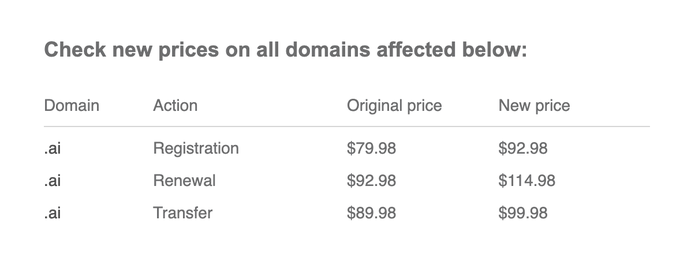
.ai domain prices rise again, with renewals now $114.98 in one posted table
.ai domains (Anguilla ccTLD): A posted price table shows increases across the board—registration moving from $79.98 → $92.98, renewal from $92.98 → $114.98, and transfer from $89.98 → $99.98, as shown in the Price change table.
The same post notes that .ai registration revenue flows to Anguilla’s treasury and cites ~$32–$39M annually as recent scale, per the Price change table.
Creator flags subscription payouts as not adding up
Subscription payouts (platform economics): A creator post raises a straightforward concern—“the numbers don’t add up”—and asks if others have noticed something off with subscription payouts, as stated in the Payout mismatch question.
No platform, screenshot, or breakdown is included in the tweet itself, so the signal here is early creator suspicion rather than a documented accounting discrepancy, per the Payout mismatch question.
🧭 Where creators build: Runway panels, Firefly programs, and distribution surfaces
Platform surface area matters today: Runway’s storyboarding UI, Firefly’s ambassador program, and creator distribution via apps/streams. Excludes major pricing changes (tracked separately).
Runway Story Panels becomes a hands-on pre-vis grid for AI shots
Runway Story Panels (Runway): Creators are actively using Story Panels as a planning UI—assembling multi-frame grids to iterate on sequence, lighting, and VFX beats, as shown in the Story Panels grid post and echoed by a Grok-to-Runway workflow in the Grok plus panels example.
• Cross-tool blocking: One pattern is generating candidate frames elsewhere (e.g., Grok) and then arranging/iterating them inside Panels for cohesion, with results shared in the Grok plus panels example.
• What it’s being used for: The shared boards skew toward cinematic sequencing (character close-ups → wide shield shot → detail inserts), visible in the Story Panels grid post and a second Panels output in the Portal frame shot.
Adobe Firefly Ambassador Program acceptances circulate as a creator milestone
Adobe Firefly Ambassador Program (Adobe): Multiple creators posted acceptance congratulations and a “contributor” invite screenshot, framing the Ambassador program as a visible credential and potential distribution surface for Firefly-native work—see the acceptance UI capture in the Contributor invite screenshot and creator congratulations in the Congratulatory post plus Chrissie acceptance note.
• What’s concrete today: The posts don’t detail deliverables or perks, but they do show the program operating as a public badge (acceptance messages + peer amplification) via the Contributor invite screenshot.
Runway AI Summit 2026 adds EA’s Chief Strategy Officer to lineup
Runway AI Summit 2026 (Runway): Runway announced Mihir Vaidya (Chief Strategy Officer, Electronic Arts) as a featured speaker for its New York event on March 31, per the Speaker announcement clip; the event page lists early bird in-person tickets at $350, as shown on the Summit page.
• Why creatives noticed: The speaker choice reads as a games-and-film convergence signal—EA strategy leadership showing up on a generative video platform’s stage, per the Speaker announcement clip.
Alchemy Stream pushes Apple TV and Roku as a home for creator exclusives
Alchemy Stream (AlchemyStream): A creator promo positions the Alchemy Stream app as an exclusive distribution surface on Apple TV and Roku, with a call to watch a newest episode “only” in-app per the Platform promo clip.

• Packaging signal: The pitch is framed as a multi-creator catalog (“incredible videos by me and other creators”), suggesting an attempt to pull AI-video audiences into a dedicated TV-style app, as stated in the Platform promo clip.
X polls now support images
X polls (X): A creator noted that X now allows sharing images inside polls, per the Images in polls note, which changes how AI artists can run style/model preference questions (visual A/B without linking out).
The tweet doesn’t include rollout details (who gets it first, limits, or formats), but it’s a clear new poll surface per the Images in polls note.
📣 Creator reach & reputation: algorithm shifts, sponsored feed spillover, and community norms
Distribution itself is part of the story today: complaints about sponsored saturation, shill signaling, and calls to support creators amid low impressions. Excludes tool-ethics specifics for Higgsfield (feature).
Codex promotion discourse shifts to “who’s paid?” instead of “what shipped?”
Codex (OpenAI): Following up on Codex app launch (macOS agent command center), the loudest distribution signal today is trust fatigue—Kitze says it’s “exhausting” to see “paid shill” behavior around “the new gpt codex,” as shown in Shill accusation clip.
Another strand is meme-driven amplification that blurs reality and promo—ProperPrompter posts a parody “Sydney Sweeney” quote endorsing Codex, alongside a Codex icon image in Codex parody quote.
The net effect is reputational: the conversation becomes sponsor detection, not product capability, per Shill accusation clip.
Reply-once retargeting on X is becoming a creator pain point
X ads (X): A recurring complaint is that a single interaction can flip your feed into a sustained sponsored stream—Artedeingenio says one reply turned their timeline into “sponsored Higgsfield posts,” even though they dislike the brand, as described in Sponsored feed complaint.
That matters for AI creators because discovery and sentiment can get distorted fast; the feed starts reflecting ad targeting behavior, not your actual interests.
What’s missing is any user-visible control explaining why the targeting happened or how long it persists, beyond muting/blocking tactics implied by the complaint in Sponsored feed complaint.
“Leave a kind comment” is being framed as distribution infrastructure
Creator support practice: With many accounts reporting weak reach, icreatelife is amplifying a norm that support should look like visible engagement—comments and reposts—because it “costs nothing” and helps people struggling with low impressions, as echoed in Support AI creators RT.
This lands as a community-level tactic: instead of optimizing prompts, optimize each other’s distribution.
It also frames engagement as reputational labor, not fandom, according to Support AI creators RT.
AI creators are explicitly asking X to retune their timelines
Timeline curation (X): Some creators are now directly instructing X to route more posts from “AI community builders,” “AI filmmakers,” and “vibe coders” into their feeds, framing these accounts as “pioneers,” as requested in Algorithm curation ask.
This is less about one tool and more about distribution: creators want the platform to behave like an interest graph for AI making, not a general news feed.
The post also hints at a social dynamic where being seen by “the right cluster” is treated as part of the craft, per Algorithm curation ask.
X adds images to polls, opening a new feedback format for AI visuals
X polls (X): X now allows images attached to polls, according to Poll images announcement.
This expands a lightweight way to test creative direction (model choice, style choice, keyframe pick) using native platform mechanics rather than external forms.
The post is positioned as a creator-format change, not an AI tool feature, as stated in Poll images announcement.
“The gap between future and past” becomes a social story about work identity
Work identity (agents): Moritzkremb contrasts “managing 100 coding agents with their voice” against “copy-pasting PDFs” as a status marker for the AI era, as written in Two desks comparison.
A shorter version frames survivability as “top engineer” or “engineer with product sense,” per Product-sense survival post.
For creative teams, this lands as reputational pressure: being seen as “agent-native” becomes part of the story you tell about output and speed, as implied by Two desks comparison.
Creators are treating platform differences as a strategic constraint
Platform reach (Instagram vs X): Chrisfirst frames social distribution as bifurcated—“Instagram and X are truly two different worlds,” in the context of announcing a VidCon speaking slot in VidCon announcement and restating the contrast in Platform split comment.
This reads as an operational reality for AI creatives: the same work can perform differently depending on platform-native formats and audience expectations.
No specific algorithm change is claimed; it’s a field observation anchored in Platform split comment.
Firefly Ambassador posts highlight platform-backed creator credentialing
Adobe Firefly (Adobe): Multiple creators post acceptance into an Adobe Firefly Ambassador program, framing it as recognition for consistent output and community support, as announced in Ambassador congratulations and shown in a UI screenshot in Ambassador inbox screenshot.
The surrounding commentary explicitly ties growth to “value of content” and visible support from peers, per Ambassador congratulations.
This positions ambassador programs as a distribution lever: credibility plus platform adjacency, as reinforced in Firefly ambassador note.
Subscription payout opacity is becoming a creator topic on X
Creator payouts (X subscriptions): Artedeingenio raises a concern that “subscription payouts don’t add up,” explicitly flagging mismatched numbers in Payout mismatch suspicion.
This matters to AI creators because subscriptions are one of the few native monetization paths that scale with audience trust, not brand deals.
There’s no supporting breakdown in the tweet itself; it reads as an early warning signal rather than a documented discrepancy, per Payout mismatch suspicion.
A creator stream app is pitching Apple TV and Roku as the surface
Alchemy Stream (AlchemyStream): BLVCKLIGHTai promotes an exclusive episode of “What’s Inside?!” distributed through the Alchemy Stream app on Apple TV and Roku, as shown in Apple TV Roku promo.
This is a reach story, not a tool story: it’s framing living-room platforms as the endpoint for AI-adjacent creator video, according to Apple TV Roku promo.
No viewership or payout terms are shared in the post; the claim is distribution surface and exclusivity, per Apple TV Roku promo.
📅 Events, contests, and hiring calls creators can act on
Actionable calendar items: competitions, summits, hiring for tutorial creators, and industry panels discussing deployed AI storytelling systems.
Luma Dream Brief ties the $1M prize to winning a Cannes Gold Lion
Luma Dream Brief (Luma AI): Following up on Luma contest, the $1,000,000 payout is described as conditional—your spot is produced and submitted to Cannes, and the money triggers if it wins a Gold Lion, as explained on the competition page in competition details. The public-facing framing is still “no client, no approvals,” with the submission deadline called out as March 22, 2026 in the deadline recap.

• What you actually submit: A Luma-made commercial featuring a fictional “Luma-branded” product (per the competition page in competition details), which is a tighter constraint than “make any ad you want.”
• Creative direction signal: Luma’s promos are pushing “unmakeable” ideas (example: “models on motorcycles”) to sell the no-approvals angle, as shown in the promo creative.
Runway AI Summit adds EA strategy chief Mihir Vaidya as a speaker (March 31, NYC)
Runway AI Summit 2026 (Runway): Runway announced Mihir Vaidya (Chief Strategy Officer, Electronic Arts) as the next speaker for its March 31 New York summit in the speaker announcement, with tickets and the broader lineup listed on the event site in summit page. Early-bird in-person pricing is shown as $350 on that page, alongside other named speakers across film, media, and compute.
• Why creatives care: The speaker mix (games + film + tool vendors) makes the summit read like “production workflow” positioning, not a pure model-research event, as signaled by the summit page.
Sundance AI filmmaking panel spotlights deployed interactive storytelling and IP tooling
Sundance 2026 (AI filmmaking panel): A recap claims the Sundance panel on AI filmmaking emphasized working systems over theory, including a demo of “Whispers,” an interactive murder mystery where viewers ask questions and the story adapts in-character, as described in the panel recap. It also cites studio-facing IP protection frameworks being built for AI-generated content and workflow integration discussion, all tied to named companies in that same recap.
• Interactive narrative detail: The recap points to Pickford’s work on audience-in-the-loop storytelling, with more context available on the linked project site in Pickford page.
This is a second-order signal (it’s a recap, not official minutes), but it’s unusually specific about what was demonstrated and who did it in the panel recap.
The Dor Brothers post a hiring call for pro AI workflow tutorial creators
The Dor Brothers (Course production): The Dor Brothers posted a hiring call for professional tutorial video creators to produce high-quality AI workflow tutorials, explicitly requiring prior tutorial-based portfolio work in the hiring post. It’s framed as project-based with potential ongoing work, with inquiries directed to office@thedorbrothers.com per the same post.

The ask is oriented around making “complex workflows clear,” which maps directly to creators who can document multi-tool pipelines end-to-end, as described in the hiring post.
Chrisfirst announces a VidCon speaking slot in Anaheim
VidCon (Creator industry event): Chrisfirst says he’ll be speaking at VidCon in Anaheim later this year, per the VidCon note. The post frames it as a platform crossover moment (“Instagram and X are two different worlds”), which is often where AI-native creators test distribution formats outside the AI bubble, as implied in the platform contrast.
📚 Research radar (creator-relevant): faster video diffusion, VLA robots, and multimodal eval scale
Research mentions are mostly system-level (video diffusion speed, multimodal deep research, and large-scale SWE evaluation). No wet-lab or biology items are included.
FSVideo proposes speeding video diffusion with a highly compressed latent space
FSVideo (research): A new paper claims a “fast speed video diffusion model in a highly-compressed latent space,” framing it as a direct path to cheaper/faster iteration for video generation workloads, as teased in the FSVideo paper share.
The creator-relevant angle is runtime economics: if the compression holds quality, it shifts what’s practical for previz, shot exploration, and long-form iteration where current diffusion pipelines bottleneck on cost and wall-clock time, per the framing in FSVideo paper share.
SWE-Universe claims 807k multilingual verifiable SWE tasks
SWE-Universe (research): A new benchmark/dataset pitch claims “Scale real-world verifiable environments to millions,” with a chart showing 807,693 multilingual verifiable SWE instances for SWE-Universe versus far smaller prior sets, as shown in the dataset scale post.
This matters for agentic coding progress because eval scale and verification are becoming the gating factor for measuring real improvements; the tweet’s comparison framing (SWE-Bench to SWE-Universe) is visible in the dataset scale post.
Vision-DeepResearch pushes multimodal models toward deeper research behavior
Vision-DeepResearch (research): A new paper pitches “incentivizing DeepResearch capability in multimodal large language models,” implying training/eval setups that reward longer-horizon evidence gathering across images + text, as described in the paper thread.

For creative teams, the practical implication is research-backed story development and reference digging: it’s a bid to make vision+language systems behave less like reactive chat and more like a structured researcher, at least according to the positioning in paper thread.
Green-VLA stages VLA training for more generalist robot behavior
Green-VLA (research): The Green-VLA paper proposes a staged vision-language-action setup with a unified action interface and reinforcement-learning refinement aimed at longer-horizon consistency and recovery, according to the paper card and its linked Hugging Face paper.
This sits adjacent to creator tooling today, but it’s part of the same “multimodal systems that act” trajectory—useful context for anyone tracking where embodied capture, interactive installations, or robotics-on-set prototypes might be heading, per the scope outlined in paper card.
NVIDIA drops an MLPerf-tuned Qwen3-VL variant on Hugging Face
Qwen3-VL (NVIDIA): NVIDIA is claimed to have released an “MLPerf-tuned Qwen3-VL” on Hugging Face—a 235B-parameter vision-language model—positioned as a performance-oriented variant (mentioning NVFP), per the release mention.
The immediate creator relevance is availability: big VLMs increasingly show up as off-the-shelf components for image understanding, shot logging, and reference labeling workflows, though the tweet provides no independent benchmarks or deployment details beyond the claim in release mention.
Gemini app boosts how scientific citations are shown in responses
Gemini (Google): Gemini’s app experience is described as getting a scientific-citation upgrade—when you ask for scientific sources, it will surface citations more clearly—per the citations update.
For creators writing research-backed scripts (health, science explainers, doc-style narration), this is a workflow/UI change: it’s less about “having sources” and more about making them visible and checkable in the output, as stated in citations update.
MIT spotlights generative AI for building libraries of theoretical materials
Materials research (MIT): MIT highlights the use of generative AI to create libraries of theoretical materials, framed as a way to accelerate discovery and analysis in materials science, per the MIT highlight.
This is a “non-creative” research domain, but it’s a useful signal for creators watching cross-pollination: the same generative techniques driving image/video tools keep expanding into simulation-like libraries and large design spaces, as implied by the MIT highlight.
🛠️ Reliability & UX pain: broken pages, agent misfires, and “gaslighting” failure modes
A smaller but important cluster: creators hit real reliability problems (broken links/pages) and users complain about agent behavior that feels confident but incorrect. Excludes pricing changes and ethics controversies.
Non-technical vibe coders report agents that sound confident but don’t fix issues
Coding agents UX: A recurring consumer-facing complaint is that coding agents respond with high-confidence intent (“I understand the issue and will fix this right away”) but the bug remains, which users describe as feeling “gaslit,” as reported in the Gaslighting complaint and reiterated in the Non-technical users note. This matters to creative teams because it’s a trust failure mode: when outputs look authoritative but don’t correspond to observable changes, review cycles and client feedback loops get noisier.
The tweets don’t name a single vendor; they frame it as a broad vibe-coding pattern affecting non-technical users most, per the Gaslighting complaint.
Runway app link returns an “Unexpected Application Error” page
Runway (RunwayML): A shared Runway entry-point at app.runwayml.com is returning an “Unexpected Application Error” that references a CSS chunk failing to load, according to the Runway app error page preview of the Runway app page. This is the kind of reliability break that matters for creators because it can block access to features mid-iteration (especially when a new workflow is being circulated via links on X).
The tweets don’t indicate whether it’s regional, account-specific, or a transient deploy issue; the only concrete signal is the error page text surfaced in the Runway app error page.
The “PDF copy‑paste desk” becomes a shorthand for who’s stuck
Creative ops friction: A post contrasts two desks—one “managing 100 coding agents with their voice,” another “still copy-pasting PDFs just to get the format right,” framing the operational gap as the real differentiator right now, as stated in the Desk comparison and paired with a blunt survivability claim in the Engineer or product sense. For creatives, the concrete point is that mundane formatting and handoff work is still absorbing time even as agentic workflows accelerate elsewhere.
No specific tool is credited for the “100 agents” claim in the tweets; it’s used as a comparative benchmark in the Desk comparison.
Adobe Animate updates get re-explained on X after Reddit posts spark confusion
Adobe Animate (Adobe): A product/community signal shows a maintainer cross-posting an Adobe Animate update from Reddit to X “given the conversations on X,” implying confusion or rumor-driven interpretation required extra clarification, as described in the Animate update cross-post. For motion designers, this type of comms friction can slow adoption of new features because reliable “what changed” narratives get fragmented across platforms.
The tweet doesn’t include the full changelog details—only the meta-signal that clarification was needed in the Animate update cross-post.
📈 Short-form growth & ad creative: UGC engines, marketplace playbooks, and hook theory
Marketing-focused creator posts: how AI-made UGC is being scaled, hook writing patterns, and marketplace building tips in the AI era. Kept separate from hands-on agent/tool pipelines.
Airtable + n8n pipeline pitched as an unlimited AI UGC engine
Linah AI UGC engine (demirdjiantwins): A creator describes building an in-house UGC system using Linah AI + n8n + Airtable to avoid $8–$12 per-video pricing; the claim is unlimited outputs with 40+ creator personas, auto-generated 8–12 second hooks, testimonials, and bulk generation routed through an Airtable “control hub,” as laid out in the UGC engine breakdown.
• Economics angle: The thread frames per-video pricing as the blocker for creative testing at 50–200 videos/week, with the alternative being “unlimited volume” once the workflow is wired up, per the UGC engine breakdown.
Doctor-style AI health pages lean on curiosity hooks, not credentials
Doctor-style AI pages (growth pattern): A creator claims $90k–$150k/month “doctor-style” pages grow by triggering curiosity with soft openers like “most people don’t realize this,” using a calm, relatable avatar and educational tone; the pitch is that AI can handle faces, scripts, timing, and scale while monetization comes later, after saves/shares accumulate, as described in the Hook formula post.
• Creative constraints: The post explicitly frames it as “no real doctors” and “not salesy,” with the conversion tactic being delayed until after engagement, per the Hook formula post.
a16z says marketplace fundamentals stay, but AI changes operations and pricing
Marketplaces (a16z): An a16z post argues the “laws of physics” for marketplaces still hold (LTV/CAC, GMV retention, contribution margin), but AI changes execution by acting like an ops team for vetting/matching and enabling more reliable instant pricing where uncertainty blocks transactions, as summarized in the Marketplace tips screenshot.
• Category selection: The guidance emphasizes AI-native marketplaces with high coordination costs (vetting, documentation, complex matching) rather than one-click commodity purchases, per the Marketplace tips screenshot.
• Distribution bet: It calls out ChatGPT and Claude “app stores” as worth investing in early (even with small traffic today), framing them as potential inbound channels rather than existential threats, as written in the Marketplace tips screenshot.
Usage-based plus outcome-based pricing gets framed as the agent monetization move
Agent monetization (pricing pattern): A post argues consumer companies can charge for both (1) usage and (2) outcomes delivered by agents—using “swiping and making matches for you” as the example—while claiming “0 downside” if it doesn’t hurt the existing base, according to the Pricing model note.
Pictory pushes text-to-video for fast internal training content
Pictory (text to video): Pictory’s pitch is that learning & development teams can turn scripts into videos quickly via an AI “text to video” flow, with the product surface shown in the Text to video pitch and more detail on the Product page.
Zeely AI leans into the “likes don’t equal sales” ad-creative critique
Zeely AI (positioning): A retweeted claim frames “I made my ad in Canva” as a reason ads get likes rather than sales, and positions Zeely AI as producing “scroll-stopping ads that convert,” as stated in the Ad conversion pitch.
🏁 What shipped: microfilms, visuals, and playable-world montages
Finished outputs and shareable drops: micro films, mood reels, and creator experiments meant to be watched—not just tested. Excludes tool capability announcements (covered in tool categories).
“VIRUS 19” ships as a quick playable-concept clip
VIRUS 19 (bennash): A short “concept-to-gameplay” clip presents a simple playable premise—infecting a dinner party—packaged like a trailer beat rather than a prototype screen recording, as shown in the Game clip post.

The post reads like a repeatable format for AI-made games: title card → mechanic glimpse → quick cutout, per the Game clip post.
“It Was Always Watching” drops as an atmospheric short with a full cut
It Was Always Watching (awesome_visuals): A moody short-form piece was released with a pointer to the full version, positioning it as a “watchable” drop rather than a tool demo, as indicated in the Release post and reiterated in the Full version pointer.
The posts don’t include an embedded clip in-line today, so the visible artifact here is the packaging: title-first, then a single link-out, per the Release post.
“Judgment Day” key art shows Runway Workflows character detail
Runway Workflows (iamneubert): A two-image “Judgment Day” key-art set featuring a white/gold cyborg wielding a massive hammer was posted as a finished visual drop, explicitly credited as generated with Runway Workflows in the Judgment Day post.
The images are presented like a poster + detail board (face/weapon/back), which is a common packaging pattern for pitching AI film concepts quickly, per the Judgment Day post.
A “full AI movie” teaser leans on face-morph spectacle
Longform appetite (awesome_visuals): A near-90 second teaser framed as “ready to watch a Full AI movie” uses a human-to-metallic face morph as the hook, as shown in the Teaser clip post.
The creative signal is about format expectation—teaser language, a slogan card, then VFX-as-proof—more than any single tool choice, per the Teaser clip post.
A mercenary autobattler concept showcases randomized loot identity
Autobattler concept (DannyLimanseta): A short demo shows “customisable mercenaries” with Diablo II-style affixes and rarity tiers cycling rapidly—effectively a pitch for procedural character cards + loot identity, as shown in the Mercenary UI demo.
The value here is presentation: it communicates progression systems (tiers, names, stats) in seconds, which is exactly what sells a gameplay loop in a teaser, per the Mercenary UI demo.
Kling 2.6 gets shown off via an extreme-sports set piece
Kling 2.6 (Artedeingenio): An extreme-sports canyon jump shot was posted as an example of what Kling 2.6 can produce right now, framed as “stunning shots” while waiting for Kling 3.0, as stated in the Extreme sports clip.
The creative intent is clear: first-person adrenaline + high-speed motion, which is one of the quickest ways to expose motion artifacts and camera coherence, per the Extreme sports clip.
Runway Story Panels show up as shareable storyboard collages
Runway Story Panels (alillian): A multi-panel storyboard-style collage featuring an astronaut surrounded by glowing particle shields was posted as a stand-alone visual artifact, emphasizing iteration across angles and beats, as shown in the Story panels collage.
Even without motion, this format reads like previsualization deliverables—coverage, continuity, and effects staging—per the Story panels collage.
A “paper boat unfolds itself” clip lands as a micro-VFX beat
Genie (bennash): A short clip shows a folded paper boat dropping into water and unfolding into a larger boat, packaged as a single visual gag that’s easy to remix into ads or story beats, as shown in the Origami boat clip.

The post frames it as “childhood trick, now it works,” which is a useful creative lens for micro-magic beats inside longer sequences, per the Origami boat clip.
A “tactical knife” micro-shot tests Grok’s product-style realism
Grok (0xInk_): A short clip centered on a hand deploying a tactical folding knife was posted as a micro-shot—tight framing, tactile motion, and consumer-video cadence—per the Knife clip post.

It’s a good example of a small, self-contained beat that can slot into ads, action inserts, or prop reveals without requiring scene context, as implied by the Knife clip post.
A short “Accelerate” motion graphic lands as a Grok Imagine drop
Grok Imagine (Mr_AllenT): A short “Accelerate” motion-graphic style clip was posted and explicitly credited as animated with Grok Imagine, as shown in the Accelerate post.

The result reads like a reusable bumper/transition asset for reels—title card energy, fast abstract motion, then resolve—per the Accelerate post.
While you're reading this, something just shipped.
New models, tools, and workflows drop daily. The creators who win are the ones who know first.
Last week: 47 releases tracked · 12 breaking changes flagged · 3 pricing drops caught