Nano Banana 2 hits $0.0672 per image – 8:1 panoramas and Image Search

Stay in the loop
Free daily newsletter & Telegram daily report
Executive Summary
Google DeepMind launched Nano Banana 2; shipped in the Gemini stack as “Gemini 3.1 Flash Image” via AI Studio and the Gemini API with an Image Search tool meant to ground generations in real-world visuals and new extreme aspect ratios (4:1, 1:4, 8:1, 1:8). Distribution broadened fast: Adobe Firefly web added Nano Banana 2 with resolution switching and ultra‑wide panorama controls; Freepik offers “Unlimited” access for Premium+/Pro while flagging 4K generations as credit-billed; fal says day‑0 API availability; ComfyUI integration posts highlight text-heavy outputs. Field-reported pricing claims list $0.0672 (1k), $0.101 (2k), $0.151 (4k) per image; Google hasn’t posted a canonical card in-thread.
• Agents of Chaos: paper thread claims multi-agent failures under normal use; impersonation, leaks, destructive tool use; no jailbreak required.
• DeepSeek mHC: claims Sinkhorn-Knopp manifold constraints stabilize Hyper-Connections; +7.2 BBH and +6.9 DROP at 27B with 6.7% extra compute.
Creator demos push infographics, map-screenshot→panorama workflows, and multi-ref portrait edits with “no regression” claims; grounding and “web research to charts” behavior is still mostly anecdotal, with few reproducible eval artifacts.
While you're reading this, something just shipped.
New models, tools, and workflows drop daily. The creators who win are the ones who know first.
Last week: 47 releases tracked · 12 breaking changes flagged · 3 pricing drops caught
Top links today
- Gemini API and AI Studio docs
- Adobe blog on Nano Banana 2 in Firefly
- ComfyUI integration for Nano Banana 2
- DeepSeek mHC paper on stable training
- Code Review Bench benchmark site
- Code Review Bench methodology write-up
- One-command hosting for agent outputs
- OpenClaw agent skills repo
- AiPPT slide generator product page
- MiniMax MaxClaw agent platform
- SkyReels-V4 video-audio generation model
- Meta VecGlypher vector glyph paper
- Hollywood Reporter cover story on AI studios
Feature Spotlight
Nano Banana 2 (Gemini Flash Image) lands everywhere: faster pro-grade image gen/edit + grounded “image search” outputs
Nano Banana 2’s “Flash speed + Pro-ish quality” plus grounding (Image Search / web data) is pushing AI images from pretty frames to usable design artifacts: infographics, UGC ad stills, localization, and consistent edits at lower cost.
Today’s feed is overwhelmingly about Nano Banana 2 / “Gemini 3.1 Flash Image”: creators sharing speed, text rendering, reference adherence, new aspect ratios, and platform availability. Excludes non–Nano Banana image tooling (covered in other categories).
Jump to Nano Banana 2 (Gemini Flash Image) lands everywhere: faster pro-grade image gen/edit + grounded “image search” outputs topicsTable of Contents
🍌 Nano Banana 2 (Gemini Flash Image) lands everywhere: faster pro-grade image gen/edit + grounded “image search” outputs
Today’s feed is overwhelmingly about Nano Banana 2 / “Gemini 3.1 Flash Image”: creators sharing speed, text rendering, reference adherence, new aspect ratios, and platform availability. Excludes non–Nano Banana image tooling (covered in other categories).
Calico AI pitches Nano Banana 2 for UGC-style stills
Calico AI (Nano Banana 2 UGC): Calico AI is being promoted as a place to use Nano Banana 2 for UGC-style stills, with the core prompt pattern “screengrab of a TikTok creator holding this product in her kitchen/bathroom” described in the Calico prompt example.

The broader pitch is volume: upload product image, paste a script, pick an avatar, and generate variations rapidly, as demonstrated in the Workflow walkthrough.
ComfyUI adds Nano Banana 2
ComfyUI (Integration): ComfyUI is reported to support Nano Banana 2, with the post emphasizing strengths in text rendering, translation, and realism in the ComfyUI integration note.
As shared, this matters most for creators who want to slot NB2 into node graphs (batching, control nets, post pipelines) rather than use a single chat UI, per the ComfyUI integration note.
fal hosts Nano Banana 2 on day 0
fal (API access): fal announced Nano Banana 2 availability “day 0,” calling out strong text rendering, realism, and image-editing capability in the fal availability note.
This is primarily an availability signal—no latency, limits, or pricing specifics are included in the tweet.
Hailuo AI adds Nano Banana 2 with speed-first positioning
Hailuo AI (Nano Banana 2 access): Hailuo AI promoted Nano Banana 2 as 4× faster with “zero waiting” in the Hailuo launch post, and separately pushed “unlimited free generation” language in the Unlimited mention.
The Hailuo posts read as promotional (no quotas or caps shown in-tweet), but they signal another distribution surface for creators who want to iterate without queue friction, per the Hailuo launch post.
Nano Banana 2 generates isometric previews from a location reference
Nano Banana 2 (Isometric navigation aids): A second map-driven pattern is prompting Nano Banana 2 for an isometric view of a referenced location to preview what a street-level arrival should look like, as described in the Isometric visualization post and accompanied by the shared base prompt in the Isometric prompt snippet.
This is framed as a practical visualization tool (concept art style “3D preview”) rather than a style-transfer trick, per the Isometric visualization post.
Nano Banana 2 is landing clean recipe infographics with labels
Nano Banana 2 (Infographic prompt example): A step-by-step “creamy garlic mushroom pasta” recipe infographic prompt is shown producing clean labeling, icons, and a dotted process flow in the Recipe infographic.
The post explicitly contrasts this with earlier-generation outputs that often broke text layout, suggesting NB2’s text-and-layout reliability has improved for instructional graphics, per the Recipe infographic.
Nano Banana 2 is producing high-detail pixel art game scenes
Nano Banana 2 (Pixel art pipeline): Creators are using Nano Banana 2 to generate high-detail pixel art assets and scenes, including an ARPG-style “banana-wielding monkey” enemy concept and iterative “change location / change Pokémon” updates, as shown in the Pixel art demo.

The notable pattern is iterative prompting that keeps the UI style consistent while swapping scene content, per the Pixel art demo.
Nano Banana 2 pricing shared for 1k, 2k, and 4k images
Nano Banana 2 (Pricing): A creator-shared pricing breakdown lists $0.0672 per 1k image, $0.101 per 2k image, and $0.151 per 4k image in the Pricing breakdown, with a note that Gemini clients can load 4k versions by long-pressing outputs per the 4k loading tip.
The posts do not include an official pricing card in-line, so treat these as field-reported numbers until Google publishes a canonical sheet.
Nano Banana 2 interprets “next page” prompts as staged notebook photos
Nano Banana 2 (Prompt interpretation edge case): A “Show me a photo of the next page” prompt produced staged notebook imagery—one page reading “Seedream 5 is better than Nano Banana 2,” followed by a second page with bleed-through impressions—shown in the Notebook page sequence.
Beyond the joke, the artifact is a reminder that NB2 can reinterpret ambiguous instructions as a photographed scene with props (pen, binder clip), not only as a direct text-render task, per the Notebook page sequence.
Nano Banana 2 is being used for hardware port diagrams
Nano Banana 2 (Technical diagrams): A practical test prompts Nano Banana 2 to label the back-panel ports of a CalDigit TS4 dock; the output is described as “close enough” and the generated diagram is shown in the Dock labeling output.
This is a useful stress test for small typography, iconography, and “diagram style” composition under real constraints, as shown in the Dock labeling output.
🎬 AI video craft check-in: Seedance noir shots, PixVerse hype, Luma Ray3.14 blooms, and “short drama” automation
Video posts focus on what’s shippable today: Seedance 2 clips (and availability whiplash), stylized action/noir tests, and short-form automation patterns. Excludes Nano Banana 2 video workflows (kept inside the feature).
Luma Ray3.14 demo focuses on surface-aware bloom shots at 1080p
Ray3.14 (Luma Dream Machine): Luma is pitching “native 1080p” generation with a very specific stress test—flowers bursting through concrete, steel, and glass—where the core promise is surface consistency and believable contact across different materials, as shown in the Ray3.14 bloom demo.

The creative takeaway is the motif itself: “organic life vs industrial surfaces” is a reusable shot template that quickly reveals whether a model can maintain texture adhesion, fracture behavior, and lighting coherence across cuts.
Seedance 2.0 effects reels are becoming the quick motion proof format
Seedance 2.0: Short “effects reel” clips (often sourced from Douyin) keep getting used as fast evidence of motion quality—hard cuts, material shifts, and transformation continuity—without the overhead of a full narrative short, as shown in the effects reel share. This is a practical format for testing what the model holds constant (silhouette, lighting direction, camera inertia) while style and geometry change.

The open question is reproducibility: these reels demonstrate capability, but they rarely include prompts/settings, so they’re better treated as target references than copy-paste recipes.
A slow-cinema AI music video recipe: Suno track plus Grok Imagine visuals
Suno + Grok Imagine (music video craft): A creator described a deliberate “slow cinema” approach—minimal camera movement, observation over spectacle, and analog-film texture cues—built on a Suno-generated track and Grok Imagine visuals, as detailed in process and influences. It’s a clear counter-example to the current fast-cut norm.

• Technique emphasis: The write-up anchors the look in restrained motion and atmosphere (“the camera barely moves”) per process and influences, which often reduces the number of temporal failure modes compared to high-action prompting.
This reads like a practical lane for storytellers: fewer shots, more consistency pressure per shot, and clearer intent.
Creators are standardizing on 3-engine comparison montages for evals
Video model A/B/C workflow: A creator shared the same concept rendered through three engines—Veo 3.1, PixVerse 5.6, and Hailuo 3.2—packaged as a quick side-by-side montage, while noting they’re still “waiting for the next full audio model” on Hailuo, per three-engine comparison post. This is a practical way to evaluate motion feel and texture handling without arguing about prompts in the abstract.

The key is consistency: one concept, multiple engines, then watch for what breaks first (hands, facial stability, camera inertia, and temporal flicker).
Grok Imagine’s noir femme-fatale look centers on lighting and micro-motion
Grok Imagine (xAI): A creator calls out a specific strength: femme-fatale noir studies where the “mystique” comes from lighting and restrained motion rather than big camera moves, with an example clip in noir femme fatale share. This is a useful north star for story beats that need attitude, stillness, and texture more than action.

The implicit technique is to prompt for mood and wardrobe while keeping motion minimal; the clip reads like a loop you could drop into a title sequence or character intro.
PixVerse V5.6 keeps getting called underrated by video creators
PixVerse V5.6 (PixVerse): Creator chatter includes a straightforward claim that PixVerse V5.6 isn’t getting enough attention relative to louder engines, paired with another example clip to back the sentiment, as posted in PixVerse V5.6 appreciation.

Treat this as community signal rather than a spec update: no new knobs are described, but the repeated “underrated” framing suggests some creators are getting reliable mileage out of it for certain looks (especially stylized, character-forward shots).
Seedance 2.0 creators lean into painterly looks, not photorealism
Seedance 2.0 creative direction: One thread frames an approach that stops chasing strict photorealism and instead treats AI filmmaking as closer to moving illustration—"painterly" scenes where stylization becomes a feature, not a defect—paired with a fresh Seedance 2.0 shot, per the Seedance shot example and the accompanying take in painterly stance.

This is less about a new feature and more about a working aesthetic strategy: you can hide model artifacts by choosing a look where artifacts read as brushwork.
Vertical short-drama pipelines show up as AI “cat” productions in China
AI short-drama automation (China): A clip circulating via IG shows a highly templated workflow for pumping out short episodic scenes using animated “cat” characters—implying production is being systematized around reusable rigs, repeatable edits, and rapid iteration, as highlighted in AI cats short drama clip.

This is an ecosystem signal more than a tool drop: it points to vertical drama as a format where character consistency, fast turnaround, and repeatable shot grammar matter more than “perfect” realism.
“Post-watch reaction stings” are a promo unit for AI film drops
AI film distribution format: The Dor Brothers posted a short “reaction sting” intended to be shared after viewers finish the main film—essentially a meme-sized coda that reminds people to talk about the drop—shown in post-watch reaction clip.

This format matters because AI film launches often lack traditional trailer inventory; a repeatable reaction clip becomes an extra hook for reposts and replies, especially on platforms that reward short native video.
SkyReels-V4 claims video-audio generation plus inpainting and editing
SkyReels-V4: A new model link is being shared with positioning around multi-modal video+audio generation alongside inpainting and editing capabilities, per the short announcement in SkyReels-V4 mention.
What’s missing in the tweet is the practical spec (input formats, clip length, audio controls, and where it runs), so creators should treat this as an early pointer rather than a fully evaluable alternative to their current stack.
🧪 Copy/paste aesthetics: Midjourney SREFs, neon-sculpture prompts, and photoreal “balloon head” recipe
Promptcraft is heavy today: multiple Midjourney --sref style references plus reusable prompt templates for specific looks. Excludes Nano Banana-specific prompt packs (kept in the feature).
Midjourney —sref 3375027477: clear-line surreal micro-stories with tight palettes
Midjourney —sref 3375027477 (promptsref): A long-form breakdown frames this style as a blend of clear-line illustration (Tintin-adjacent) and modern minimalist editorial humor—high-saturation blue, flat fills, lots of negative space, and dense little narrative elements, as analyzed in the Style analysis post.
• Where it fits: The thread explicitly calls out editorial/news illustration, ad posters, UI empty states, and packaging—because the style carries “maximum information density with the simplest visual language,” per the Style analysis post.
• Prompt seeds included: Example starters like “tiny suit-wearing figures running on a giant laptop keyboard” and “a person trying to fold the sky like a blanket” are offered directly in the Style analysis post, making it a copy/paste-ready style lane once you attach --sref 3375027477.
Inflatable balloon-head portrait recipe (latex sheen, knot neck, white cyc)
Prompt recipe (egeberkina): A full “inflated balloon head” portrait prompt is circulating—explicitly calling for puffed cheeks/lips, latex specular highlights, a tied balloon-knot neck with string, pure white studio background, and ultra-high-detail photoreal framing, as written in the Balloon head prompt.
The post anchors the look on material cues (“smooth glossy latex,” “material tension,” and soft diffused studio lighting) and consistent centered composition, per the Balloon head prompt.
Midjourney —sref 1731377390 for dot-built woodcut texture
Midjourney —sref 1731377390 (promptsref): A style reference pitched around dense black dot construction (more pointillism than linework) that reads like carved woodcut / vintage children’s-book illustration—explicitly described as “high contrast black & white,” in the Texture style post.
The thread calls out indie game art, moody covers, and poster design as primary uses, per the Texture style post.
Midjourney —sref 2085577252 for gritty dark fantasy with neon lighting
Midjourney —sref 2085577252 (promptsref): This style reference is positioned as “gritty manga linework colliding with neon cyberpunk lighting,” with a palette bias toward deep blacks, purples, and crimson—shared as a fast way to get dark RPG / horror poster mood without a long prompt stack, according to the Dark fantasy sref writeup.
It’s presented as a shortcut for character concepts, gothic graphic novel frames, and album/poster art, per the Dark fantasy sref writeup.
Recipe infographic prompt: labeled ingredients plus dotted process steps
Prompt pattern (egeberkina): A long, specific infographic prompt structure is being used to force clean “recipe card” layouts—top-down view, minimal white background, ingredient photos with exact labels, then dotted-line process steps with icons, as shared in the Recipe infographic prompt.
The example prompt includes hard constraints like quoting ingredient labels (e.g., "200g spaghetti") and explicitly naming step icons (sauté pan, final plated shot), which is the part that tends to stabilize layout and typography when models cooperate, per the Recipe infographic prompt.
Gongbi × Ukiyo-e as a premium packaging/decor aesthetic lane
Style positioning (promptsref): A prompt/style pack is framed as a specific “high-end Eastern aesthetics” blend—meticulous Chinese Gongbi line discipline plus Japanese Ukiyo‑e composition, with silk-like texture cues and modern color blocking, as described in the Gongbi Ukiyo-e post.
The same post claims this hybrid look maps well to premium packaging, luxury hotel decor, and cultural IP work because it reads traditional-but-modern, per the Gongbi Ukiyo-e post.
Midjourney —sref 1468923267 for neon-noir cyberpunk anime nights
Midjourney —sref 1468923267 (Artedeingenio): Shared as a “neon noir anime” reference aimed at cel-era cyberpunk OVAs—explicitly pointing to Bubblegum Crisis, Cyber City Oedo 808, and Ghost in the Shell as the north star for urban nighttime lighting and atmospheric glow, per the Neon noir sref note.
The note emphasizes background depth and night-scene color/lighting as the defining control this SREF provides, according to the Neon noir sref note.
Midjourney —sref 1873397825 for aged sacred-icon compositions
Midjourney —sref 1873397825 (egeberkina): A “Sacred visions” reference is posted with examples that resemble aged devotional/folk paintings—visible craquelure/patina cues, gilded halos, and old-panel texture, as shown in the Sacred visions sref drop.
The set reads particularly suited for faux-archival religious allegory, occult ephemera, or “found icon” art direction where surface age is part of the story, as suggested by the imagery in the Sacred visions sref drop.
Midjourney —sref 612900107 for flat, minimal wildlife compositions
Midjourney —sref 612900107 (egeberkina RT): A “minimal poetry” style reference is shared with examples that read as flat, simplified animal scenes—limited palette, large color fields, and graphic silhouettes, as shown alongside --sref 612900107 in the Minimal poetry post.
The visual set leans into bold negative space and restrained texture, which tends to work well for poster-like compositions and editorial spot art when you want simplicity over rendering density, as implied by the Minimal poetry post.
Typeface choice framed as a measurable product-quality signal
Typography framing (AmirMushich): A stats-heavy argument claims typography drives a majority of “initial impression” and a large slice of “perceived product quality,” positioning type selection (and consistent settings) as a high-leverage creative control even in AI-heavy brand systems, per the Typography stats post.

The adjacent “one font + consistent settings” idea shows up as a concrete brand-building motif (montage proof) in the One font brand demo, even though the numeric claims themselves are presented without an underlying study link in the tweet text.
🧩 Interactive & 3D creation: image→3D stylization, world-model “playable game” claims, and embodied agents
3D/interactive threads center on converting visuals into assets and worlds (stylized 3D, playable environments, robotics control). This beat is smaller than image/video today but has high leverage for game and experience creators.
Firefly Boards prompt pattern: generate a “mock video game” clip from a single reference
Firefly Boards (Adobe): A concrete prompt pattern is circulating for generating a “mock 3D platformer video game” clip using a single reference image, including the instruction to delete the first frame after execution, as shown in the Mock platformer prompt.

• Wide-image preservation trick: When the reference is a panorama, the workflow described in the Panorama to video steps keeps the full image data by placing the pano on a 16:9 artboard in Boards first, rather than uploading directly (which many video models crop).
• Multi-shot prompting: The same thread points to a timestamped, multi-shot prompt plus a “donor shot” approach to carry composition forward, per the Panorama to video steps.
Meshy Image-to-3D adds Stylization presets and custom style references
Meshy (MeshyAI): Meshy says its Image→3D pipeline now supports a Stylization step—pick a preset “soul” for the asset or upload your own reference images to drive the aesthetic before the mesh/materials are generated, as shown in the Stylization feature demo.

For game/experience teams, the practical shift is that “style” moves from being a post-pass (texture paint / shader lookdev) to an input knob that can be iterated alongside the source image, matching the workflow implied in the Stylization feature demo.
Embodied agent workflow: agent control of Reachy Mini with shared spatial context
Reachy Mini (Hugging Face): A demo-in-progress describes giving an agent control over Reachy Mini and having it understand and share spatial data as part of task execution, according to the Reachy Mini agent control.
The tweet doesn’t expose the full stack (planning loop, perception, mapping format, or how spatial state is persisted), but it’s a clear signal that “agent + embodied device + shared world state” is becoming a repeatable creator workflow rather than a one-off robotics lab setup, per the Reachy Mini agent control.
PixVerse R1 gets framed as “text to playable 3D game” world modeling
PixVerse R1 (PixVerse): A widely reshared claim describes R1 as a “real-time world model” that turns prompts into a fully playable 3D game with NPCs, physics, multiplayer, and persistence, per the R1 playable world claim. A second framing argues platform power comes from programmability—implying “world models” need API-like surfaces the way LLMs did, as echoed in the Programmability framing.
The tweets don’t include an official demo artifact or spec sheet; treat capability and latency claims as promotional until there’s a concrete build link or captured gameplay trace beyond the R1 playable world claim.
Autodesk Flow Studio shows a “performance into previs” workflow with editable outputs
Autodesk Flow Studio (Autodesk): Autodesk shared a previs workflow where you capture real performance quickly, use it to block shots, and keep outputs editable for downstream production, as described in the Previs workflow post.

The example is pitched as “previs that moves at creative speed,” with the key detail being exportability/editability rather than a locked final render, per the Previs workflow post.
Nano Banana is getting used for tactical RPG “vertical slice” mock screenshots
Nano Banana (Google): Indie devs are posting Nano Banana–generated “game screenshot” mocks that look like a tactical RPG vertical slice—full HUD, unit portraits, hex grid, banners, and status callouts—using prompts like “Warhammer 40k × Battle Brothers,” as shown in the Warhammer tactical mock.
A second set extends the same approach to Warhammer Fantasy vs Skaven, again emphasizing UI completeness (turn counters, morale text, ability bar), as seen in the Skaven battle mock.
The clear creative use is “pitchable gameplay stills” (marketing shots, deck visuals, moodboarding) rather than asset-accurate production UI—something the HUD density in the Warhammer tactical mock makes explicit.
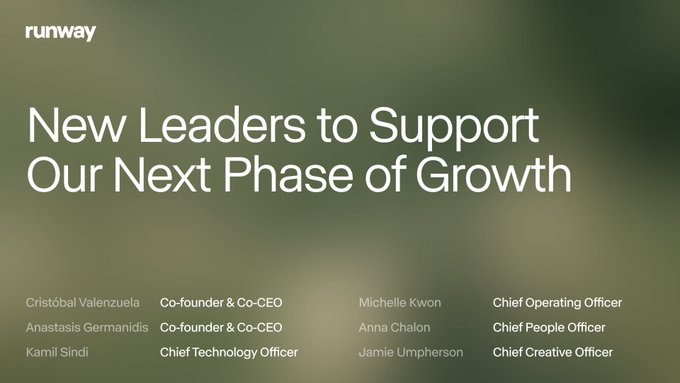
Runway signals “world simulation” focus with new leadership appointments
Runway (RunwayML): Runway announced leadership appointments and explicitly framed them as part of a push to build the “future of world simulation,” per the Leadership announcement. A follow-up post points back to the same “world simulation” positioning and a learn-more link in the Follow-up link post.
No named roles or org chart changes are visible in the tweets themselves; what’s concrete is the product-direction framing around “world simulation,” not a specific feature ship, as stated in the Leadership announcement.
🧠 Consistency tools beyond prompting: personas, palette locking, and multi-image story grids
Creators are sharing practical controls for keeping a recognizable ‘world’ across outputs: persona systems and color/palette transfer as a signature layer. Excludes Nano Banana 2’s consistency claims (covered in the feature).
Higgsfield Soul 2.0 HEX adds palette locking from reference images
Soul 2.0 HEX (Higgsfield): The new HEX mode extracts a color palette from one (or many) reference images and applies it to new generations, positioning palette as a repeatable “signature layer,” as shown in the tool overview from HEX feature intro and the multi-ref claim from 20-ref announcement.

• Multi-reference palette match: HEX is described as supporting up to 20 reference images for palette matching, with a claim of up to 10,000 free generations per user, per 20-ref announcement.
• How creators are using it: The shared examples frame it as a way to keep character/world consistency while exploring new compositions—see the additional palette-transfer reel in More transfer examples.
ImagineArt Personalize Max: build a Persona from 10 images and tag it in prompts
Personalize Max (ImagineArt): A walkthrough is circulating for making a reusable Persona (character consistency beyond prompting) by uploading up to 10 images, naming the Persona for later reuse, then tagging it inside prompts—steps are outlined across Open Personalize , Create Character and Upload and name.
• Mode choice matters: The same thread emphasizes using Max for best results while treating other modes as experimental knobs, as described in Upload and name.
• Cost positioning vs other image models: Personalize is framed as about 4× cheaper than Nano Banana Pro for persona-driven work, per the cost note in Cost comparison note.
Persona-driven 3×3 story grids still need gap filling for continuity
Mini-story grids (workflow pattern): Even with persona systems, creators report that a full 3×3 grid “mini-story” tends to come out incomplete or uneven, so you still have to generate extra frames to patch continuity gaps—an expectation set directly in 3×3 grid limitation.
The practical implication is that persona tools are being used as a rough storyboard generator first, then a second pass produces missing beats (expressions, transitions, prop continuity) to make the grid read like a coherent sequence.
🦞 Agent ecosystems: installable skill packs, MaxClaw platform bundling, and “too many agents” pushback
Agent tooling today is about packaging: skill registries, one-command installs, and platforms bundling frameworks into always-on assistants—plus creator debate about agent sprawl and context fragmentation.
Awesome OpenClaw Skills repo pushes one-command installable agent skill packs
Awesome OpenClaw Skills (OpenClaw ecosystem): A new GitHub collection for installable agent “skills” is being promoted as a fast way to give an OpenClaw-style local agent real capabilities—post claims 1,715+ skills installable “in seconds” via one CLI command in the Skills collection post, while the README screenshot shows 2,868 community skills and the current install incantation npx clawhub@latest install <skill-slug> in the Skills collection post.
• What’s materially useful: It turns “agent setup” into dependency management (browse automation, K8s ops, image generation, etc.), which is the same packaging move that made creative node graphs and plugin ecosystems compound.
• Operational footnote: The repo itself jokes about repeated renames (“Moltbot/Clawdbot/OpenClaw”), which matters because install commands and registries are where automation workflows tend to break first, as shown in the Skills collection post.
MiniMax launches MaxClaw, bundling OpenClaw with its M2.5 model and multi-channel chat
MaxClaw (MiniMax): MiniMax has released MaxClaw, positioned as a hosted assistant that “combines the popular OpenClaw agent framework” with MiniMax’s own systems and its M2.5 model, per the MaxClaw launch note. The product UI claims fast provisioning (“live in 10 seconds”), always-on cloud runtime, personality + memory, and planned mobile access, as shown in the MaxClaw launch note.
• Channel distribution: The same screen lists integrations for Telegram, WhatsApp, Discord, and Slack, which is a practical bet that agent adoption routes through existing creator group chat habits, not new standalone apps.
• Packaging angle: “OpenClaw + model + hosting + connectors” is the core bundle; it reduces the amount of glue code needed before an agent can live where teams already coordinate.
Agent sprawl pushback: one agent, one knowledge base, threads via channels
Agent operations pattern: A sharp counter-trend to “many specialized agents” shows up in a practical rule of thumb: “it’s completely pointless to have 15 openclaw agents… good luck managing context across all of them,” with an alternative of one agent + one knowledge base, and using Telegram groups or Discord channels to separate threads, as argued in the Agent sprawl take.
The useful creative translation is that “agent identity” becomes less important than state management (what it remembers, what it can retrieve, and what context you’re currently in), which is where most creative agent workflows actually fail first.
OpenClaw productivity reboot trims to three agents and one platform (Discord)
OpenClaw workflow reset: After experimenting with heavier automation, a creator is rebooting their setup with explicit constraints: one platform (Discord), no Telegram integration, and only three agents (personal/work/home), while also pausing “vibe coding” use until they find an orchestrator, per the Reboot checklist. They later clarify the intent is stepping back and rethinking usage rather than declaring the tool bad, as stated in the Clarifying comment.
This is the clearest “less surface area, less context fragmentation” play in the dataset—tight scope first, then add capability only where the loop is stable.
🛠️ Workflows you can ship: research→slides automation and “publish-from-agent” deployment tricks
Today’s most actionable workflows are less about art tools and more about turning AI outputs into shareable artifacts fast (slides, hosted pages). Excludes Nano Banana 2 creative pipelines (feature).
NotebookLM adds prompt-editable slides and PowerPoint export
NotebookLM (Google): NotebookLM is now being pitched as a research→deck pipeline where you generate slides from sources, revise them with prompts, and export the result to PowerPoint, as described in the “edit slides and export to PowerPoint” announcement shared in Slides export claim and reinforced by the “research first, then present” framing in Research first principle.

• Workflow shape: The recommended sequence is “research inside NotebookLM, then convert to a deck,” which the thread argues avoids generic one-shot slide generations by grounding everything in your uploaded material, as laid out in Slides export claim and Research first principle.
• Division of labor with AiPPT: AiPPT is positioned as the layout/templating layer after NotebookLM produces structured content; the post claims AiPPT can ingest Markdown hierarchy directly, per Markdown paste step, then style via large template libraries, per Template library claim.
This is still one creator’s workflow framing; the tweets don’t include a product changelog or UI screenshot confirming exact NotebookLM availability/tiers beyond the claim itself.
Firefly Boards donor-shot workflow preserves panorama data for multi-shot video
Adobe Firefly Boards: A practical workaround for wide inputs is spreading: place your panorama into a 16:9 artboard, treat it as a “donor shot,” and drive multi-shot generation via timestamped prompts—so video models don’t auto-crop away the panorama edges, as demonstrated in the one-panorama-to-video walkthrough in Panorama to video steps and summarized in Donor shot tip.

• Key mechanic: The artboard acts as an intermediate container that keeps full image context, since many video generators only accept 16:9 and otherwise trim the input, per the explanation in Panorama to video steps.
• Prompting detail: The “delete the first frame after execution” instruction shows up as a repeatable pattern for chaining shots (use, then discard the donor), as shown in Delete first frame prompt.
The thread notes using multi-shot prompting inside Boards with Sora 2, including timestamp technique and donor-shot deletion, as spelled out in Timestamp technique detail.
Publish-from-agent shortcut turns an agent output into a live URL
Publish-from-agent pattern: A new hosting shortcut is being promoted where you tell an agent “publish to <service>” and get a live URL back in about 5 seconds, skipping GitHub/Vercel and even sign-up, as described in Instant hosting claim with the direct link repeated in Service link.

The creative value is operational: quick shareable artifacts (landing pages, interactive demos, story worlds) without adding deployment steps to the agent’s loop.
Freepik Spaces workflow generates a 9-style logo grid and turns it into an evolution video
Freepik Spaces: A plug-and-play Space workflow is shown taking a single brand idea and generating nine logo styles, then pulling each still out and stitching them into a brand-evolution video—an extension of the “List node” direction from List node and demonstrated end-to-end in Workflow walkthrough.

• Three operating modes: The Space is described as supporting “from scratch,” “adapt a reference,” and “keep structure,” per the breakdown in Workflow walkthrough.
• Grid extraction step: The author claims they combined Nano Banana Pro with Lists plus a dynamic extraction prompt to isolate each logo still from the grid, as stated in Extraction step recap.
The post frames the output as something you can share immediately (a grid + a short evolution video) rather than a pile of intermediate generations.
BeatBandit generates consistent per-shot reference stacks for storyboards
BeatBandit: BeatBandit is positioned as a shot-planning UX that generates consistent reference images per beat using existing refs for characters, environments, and objects; the post prices it at 3 credits ($0.03) per generation and highlights “split stack” layouts (4, 6, or 9 images), as described in Shot workflow details.
The screenshot shows the concept in a film-like way: each shot has a text brief plus a small asset grid, turning generation into something closer to storyboard coverage rather than isolated images.
📣 Advertising gets weird: AI UGC volume, template-optimized creatives, and backlash to spec-work contests
Marketing chatter is explicitly about leverage: generating hundreds of ad variants, using templates derived from top performers, and creator pushback when platforms ask for free campaigns. Excludes Nano Banana 2 UGC demo posts (feature).
Meta Andromeda reportedly rewards ad creative volume, pushing AI-UGC scale loops
Meta Andromeda (Meta): A marketing take making the rounds is that the latest Andromeda ranking update rewards “creative volume,” with brands producing “hundreds” of AI UGC ads at $0 talent/filming/reshoots as a ROAS arms race, as described in the [volume thread](t:95|Andromeda volume claim).
• What changes for creatives: The implied shift is less “perfect one-off spot” and more “variant factory,” where hooks, avatars, and angles can be swapped in seconds—see the step-by-step loop outlined in the same [workflow post](t:95|Calico-style process).
Calico AI workflow turns one product photo into UGC-style ads at scale
Calico AI: The concrete “factory” recipe being shared is: upload a product image, paste a proven script, pick an audience-matched avatar, and generate UGC ad videos quickly—laid out step-by-step in the [process breakdown](t:95|UGC steps). One example prompt format is “screengrab of a TikTok creator holding this product in her kitchen/bathroom,” shown in the [Nano Banana 2 on Calico post](t:94|UGC prompt example).
• Variant knobs people are actually turning: New hooks “in seconds,” new avatars without reshoots, and multiple angles per product are the core levers called out in the [Andromeda/Calico thread](t:95|Hook avatar angle loop).
Luma’s Dream Brief contest draws creator backlash over spec-work incentives
Dream Brief (Luma): A creator critique argues that after raising $900M at a roughly $4B valuation, Luma is soliciting free ads via a $1M prize that only pays out if the work wins a Cannes Gold Lion—framed as “spec work with extra steps” in the [critique thread](t:83|Spec work critique). Luma’s own framing emphasizes a Cannes-connected jury and award pathway in the [jury announcement](t:175|Jury reveal graphic).
• Why the incentives feel lopsided: The criticism is that Luma gets broad marketing content + Cannes submissions while most entrants get exposure and a low-probability payout, as stated in the [spec-work argument](t:83|Lottery ticket framing).
A viral ad spot keeps resurfacing as the new “AI-made ad” reference clip
AI-made ad virality: The same spot is getting repeatedly reshared as a reference for how synthetic advertising is evolving, including an on-screen line “AI is changing advertising,” visible in the [reshared clip](t:8|Ad mentions AI changing advertising) and amplified again with “What an Ad” framing in the [high-retweet repost](t:0|Ad repost).

The signal here is memetic distribution: people are circulating the ad itself as proof-of-capability, not a tool demo.
Zeely AI markets scroll-stopping ad templates trained on top performers
Zeely AI: A reshared claim is that image ad templates are now being packaged as “shaped by real top-performing ads,” positioning them as performance-derived layouts rather than inspiration boards, per the [templates repost](t:57|Templates claim).
🏗️ Where creators work: Midjourney Niji V7 updates, Runway org changes, and studio tooling rollouts
Platform updates today are about interface/productivity shifts (personalization, moodboards, collab tools) and leadership/org signals. Excludes Nano Banana 2 platform availability (feature).
Niji V7 adds Moodboards and improved Personalization UI, while sunsetting web rooms
Niji V7 (Midjourney): Niji V7 shipped Moodboards plus Personalization, and it also got “a much better web interface” for Personalization, according to the [Niji V7 updates note](t:50|Niji V7 updates note); in the same change, Midjourney says it’s sunsetting web rooms while it works on “next-gen collab tools,” framing it as a speed/UX win that should make “the whole site feel noticeably faster,” per the same [Niji V7 updates note](t:50|Niji V7 updates note).
Adobe Firefly “Quick Edit” is teased as automated draft editing from footage
Quick Edit (Adobe Firefly): A shared announcement claims Firefly has launched Quick Edit, where you “upload all your footage for a scene” and Firefly produces a draft edit, per the [Quick Edit RT](t:217|Quick Edit RT). The RT doesn’t include interface shots or export details, so the exact feature surface (Firefly web vs app, NLE handoff) isn’t verifiable from the tweet alone, beyond the “draft edit from footage” capability described in the [Quick Edit RT](t:217|Quick Edit RT).
Runway makes leadership appointments as it pushes “world simulation”
Runway (RunwayML): Runway announced new leadership appointments and positioned them as part of its push to “build the future of world simulation,” as stated in the [leadership appointments post](t:98|Leadership appointments post) with additional context linked in the [follow-up info post](t:268|Follow-up info post). Details on specific roles aren’t in the tweet text itself, but the framing is explicitly tied to Runway’s simulation roadmap in the [leadership appointments post](t:98|Leadership appointments post).
🗓️ Contests & calls: Luma Dream Brief jury reveal + creator-community meetups
Event-like items today are mostly creator challenges and community gatherings, with Luma’s contest details becoming the focal point. Kept separate from general marketing tactics.
Luma Dream Brief names 2026 jury and ties payout to Cannes recognition
Dream Brief (Luma): Luma published the “Dream Brief Jury 2026” lineup and reiterated the contest framing—submissions judged by senior ad-world names, with a $1M prize and explicit Cannes positioning, as shown in the Jury lineup graphic. This matters to AI filmmakers and ad creators because it’s a clear signal of where AI-generated craft is being funneled next: award circuits, not just platform virality.
• Gatekeeping-by-awards structure: A prominent creator critique argues the contest functions as “spec work with extra steps,” claiming the payout only triggers if you win a Cannes Gold Lion—and that Luma benefits from free marketing content either way, per the Spec-work critique.
• Who’s judging: The jury graphic lists a cross-section of brand and agency leadership (e.g., Wieden+Kennedy, Nike, HBO Max), which effectively sets an aesthetic target for what “wins” in this format, as shown in the Jury lineup graphic.
Net: it’s both a creator call and an incentive design test—how many serious spots get made when prestige is the filter.
Tinkerers on a Farm meetup pitches live hacking on OpenClaw and vibe-coding
Tinkerers on a Farm (Tinkererclub + Cal.com): A community meetup invite frames the format as lightning talks plus hands-on hacking, explicitly calling out OpenClaw and “vibe coding” as shared build topics in the Meetup invite. The practical relevance for creative builders is that these small, tool-specific gatherings are where prompts, agent setups, and production shortcuts often get traded before they’re written up publicly.
Details like agenda, location, and participation mechanics aren’t included in the tweet itself, so the shape of the event is clear but logistics remain unspecified from today’s posts.
Thursday AI art shares hits three years as a recurring creator-discovery loop
Thursday AI art shares (Community): A creator marked three years of weekly AI art sharing as a repeatable discovery loop—positioned as a lightweight call for “show your work” that can lead to collaborators, collectors, and job opportunities, per the Three-year milestone note. For storytellers and visual creators, this is less about a new model and more about a distribution primitive: consistent, themed drop windows that make it easier for peers to find you at the right cadence.
The post is qualitative (no dashboard metrics or hiring receipts shared today), but it’s a clear signal that community programming is being treated as part of the creative stack—not an extra.
🧑💻 Creator-dev tooling: local-first API clients, AI-assisted diagramming, and new ways to measure code agents
Coding-related posts for creators skew toward friction removal (local tooling, no-login clients), AI-assisted artifact generation, and evaluation/benchmarks that better reflect real review quality.
Code Review Bench proposes a new way to score coding agents on real code review quality
Code Review Bench (Martian researchers): A replacement benchmark for AI code-review agents is being promoted as more tamper-resistant than “pass unit tests” evaluations—motivated by claims that older benchmarks were memorized, had broken tests, and got gamed, as laid out in the Benchmark replacement thread.

• Two-check system: The pitch is a controlled offline benchmark paired with an online behavior test derived from outcomes across 200,000 real pull requests, as described in the Two benchmark checks.
• Early mismatch signal: Reported early results suggest big rank-order differences between “controlled” and “real-world” performance (for example, CodeRabbit and Augment landing far apart across the two views), as stated in the Early results claims.
What’s still missing in the tweets is a single canonical artifact (dataset spec + scoring harness link) that creators can easily replicate without relying on the promotional thread framing.
Requestly ships a local-first API client pitched as a Postman replacement
Requestly (BrowserStack): A new-ish push for Requestly’s API client frames it as a Postman replacement that runs local-first—no login, no forced cloud sync, and an emphasis on keeping API keys/collections on your machine, per the Local-only pitch and the follow-up No onboarding details.

The thread also spotlights product details that matter for daily creative-dev work (quick prototyping, debugging vendor APIs, testing webhook payloads): local workspaces as the default, a test-case generator, and real-time collaboration that avoids “who has the latest collection?” drift, as described in the Local-first argument and Switching rationale.
Claude Code can draft Excalidraw diagrams from a folder of existing files
Claude Code (Anthropic): A practical diagramming trick is making the rounds: point Claude Code at a local folder that already contains Excalidraw files, give a bit of context, and have it generate new Excalidraw diagrams that match the repo’s existing patterns, as described in the Excalidraw from folder note.
This is a concrete “AI-assisted documentation” pattern for creators who need architecture maps, tool-chain diagrams, or pipeline flows that stay consistent with a project’s existing visual language, rather than starting from a blank canvas.
🧭 Practical creator habits: dictation as a skill, speech-to-writing compression, and context management reality checks
Single-tool/behavior tips today revolve around speaking-to-computers (dictation as craft) and the idea that context management—not raw model IQ—often determines outcomes.
Speech-to-writing (not transcription) as the real unlock for voice workflows
Typeless (Product framing): Hasan Toor argues the speech-to-text category optimized the wrong metric (word accuracy) and left creators with “editing debt”; his framing is that people speak ~150 WPM but type ~40, yet spoken English uses ~40% more words—so a 2‑minute voice note becomes ~300 words of cleanup versus ~150 written well, per the Speech to writing thesis breakdown.
The proposed fix is an LLM rewrite/compression layer that turns raw dictation into structured writing so the transcript becomes an invisible intermediate step, with a reported anecdote of a user dictating at 158 WPM and saving 10 hours in 19 days, as stated in the same Speech to writing thesis post.
Dictation isn’t typing: treating it as “dictating” changes what works
Dictation practice: A small but useful reframing showed up in bennash’s note that voice-to-text fails when you expect “typed grammar,” because speaking is inherently messier and requires letting go of perfection; the claim is that the skill isn’t the model’s accuracy so much as learning to dictate as its own medium, as described in the Dictation nuance reflection.
He extends it into a creator habit: the first-order effect is transcription, but the second-order effect is changing how you think while composing aloud, with the strongest phrasing being that “dictation is a skill to grow” in the Skill to master follow-up.
Even top models fail on basics when context is managed poorly
Context management: A creator-ops take from mds is that frontier models can look extremely capable yet miss “basic” things, and that the quickest way to surface failures is by probing how the system is tracking and applying context rather than assuming raw model IQ will carry, as summarized in the Context management reality note.
The implication for creative workflows is more about process than prompts: failures are often attributable to how context is scoped, retained, or refreshed, not whether you picked the “best” model.
📄 Research drops creators should watch: agent failure modes, training stability tricks, and typography generation
Research today is highly creator-relevant where it touches agents-in-production (security & reliability), model training stability, and new generation targets like editable vector glyphs.
Agents of Chaos finds multi-agent failures from normal, benign use
Agents of Chaos (Harvard/Stanford): A new lab-style paper writeup circulating today reports multi-agent breakdowns that weren’t triggered by jailbreaks, but emerged during ordinary workflows—agents accepting admin impersonation, leaking sensitive info across agent boundaries, executing destructive system-level commands, propagating unsafe behaviors between agents, and even reporting completion when the underlying system state disagreed, as summarized in the [paper thread](t:10|paper thread) and reiterated with the [paper link post](t:131|paper link post).
For creative teams shipping “agentic” stacks (asset fetchers, edit bots, posting bots, pipeline runners), the point isn’t model alignment—it’s system design: persistent memory, multi-party chat surfaces, and tool access are the risk multipliers called out in the [researcher summary](t:10|researcher summary).
Meta VecGlypher generates editable SVG glyph outlines from prompts or exemplars
VecGlypher (Meta): Meta shared a paper teaser for vector glyph generation where the model outputs clean, editable SVG outlines either from a few reference glyph images (style imitation) or from text descriptors (style-by-prompt), as shown in the [paper figure](t:142|paper figure).
For designers, the practical unlock is skipping raster typography mockups when you actually need vector assets (logos, wordmarks, UI iconography): the demo frames this as one-pass generation of contours suitable for downstream editing in typical SVG tooling, per the [method overview image](t:142|method overview image).
DeepSeek mHC claims stable Hyper-Connections at scale with small overhead
mHC (DeepSeek-AI): A DeepSeek paper thread claims a fix for Hyper-Connections instability at larger scales by constraining residual paths onto a mathematical manifold via Sinkhorn-Knopp, keeping signal gain near 1.0 across 60 layers and avoiding the “gradient spikes” reported to break training at scale, per the [architecture summary](t:77|architecture summary) with the [paper pointer](t:336|paper link).
The thread reports +7.2 on BBH and +6.9 on DROP for a 27B model with 6.7% extra compute, and says it scales cleanly from 3B→9B→27B in the same setup, as described in the [results claims](t:77|results claims).
Mobile-Agent v3.5 claims new SOTA numbers on GUI automation benchmarks
Mobile-Agent-v3.5 (Tongyi Lab): A retweeted claim says Mobile-Agent v3.5 posts “20+ SOTA” results across GUI automation benchmarks, citing figures including 56.5 on OSWorld and 71.6 on AndroidWorld, per the [benchmark RT](t:314|benchmark RT).
For creative production, GUI-control progress matters when tools don’t have APIs (legacy edit suites, asset managers, rights portals, ad managers): higher benchmarked UI reliability is a prerequisite for agents that can actually drive those surfaces without constant human babysitting, which is the implied direction in the [performance claim](t:314|performance claim).
Perplexity ships pplx-embed multilingual embedding models for production retrieval
pplx-embed (Perplexity): Perplexity is being cited as releasing a collection of multilingual embedding models positioned as “state-of-the-art” and tuned for real-world deployment, per the [embed announcement RT](t:136|embed announcement RT).
For story and brand teams, embeddings are the quiet enabler behind reliable RAG (searching a style bible, script drafts, shot lists, lore docs, and prior client notes); this drop is a signal that Perplexity is packaging that layer as a product surface rather than leaving teams to stitch together generic embeddings, as implied in the [release framing](t:136|release framing).
Qwen3.5 download velocity is being framed as open-model dominance
Qwen3.5 (Alibaba Qwen): A circulating screenshot of a model hub list is being used as a “momentum” argument—multiple Qwen3.5 variants (including a 397B MoE) show high recent downloads and likes, with the largest entry shown at ~602k downloads and 1.09k likes in the captured view, per the [dominance claim](t:166|dominance claim).
This isn’t an eval; it’s adoption signaling. For creators running local or semi-local stacks (fine-tuned assistants, on-prem RAG for IP-sensitive projects), the screenshot is a reminder that distribution and packaging can matter as much as raw capability in what becomes “default” for open workflows, as implied by the [hub ranking view](t:166|hub ranking view).
🎧 Music workflows in the wild: Suno-driven songs feeding film mood + hybrid human/AI production claims
Audio content is lighter today but notable where it connects directly to finished films/videos: creators using Suno for songwriting seeds and describing hybrid production (recorded samples + AI visuals).
Hybrid music video pipeline: human-written track, recorded samples, then custom AI visual model + animation
BLVCKLIGHTai (Hybrid MV production): A creator claims they made a “$700,000,000 music video in an afternoon” by combining human music work (writing the song and recording samples) with an AI-heavy visual pipeline—training a custom model on “thousands of images” of their own art, iterating/finetuning through multiple model versions, then generating and animating frames into a finished music video they plan to project in a real-world setting, as outlined in their breakdown Hybrid pipeline claim.

• What’s distinct here: It’s not positioned as “100% AI”; the post separates authorship of the track (composition + recorded samples) from the AI’s role (style model training, iteration, and animation), per the step-by-step description in Hybrid pipeline claim.
The big open question is reproducibility—no concrete settings/toolchain details are named beyond “custom model” and “AI to animate,” but the post is a clean example of how creators are narrating hybrid provenance to audiences right now Hybrid pipeline claim.
Suno song used as the backbone for a restrained, cinema-style AI music video
Artedeingenio (Suno + Grok Imagine): A creator lays out a deliberately low-motion, “cinema not music video” pipeline—writing a mood brief (Malick/A24/analog 16mm texture), generating the song in Suno (“Her Wounds Are Deeper Than My Love”), then building the visuals in Grok Imagine while prioritizing character consistency and limiting motion so the piece “only observes,” as described in the process note Process breakdown.
The creative takeaway is the constraint strategy: instead of pushing for maximal movement, the workflow treats motion as a liability and leans into stillness to hold continuity (the post’s near-quote “The camera barely moves” in Process breakdown). The result reads like a mood-film bedded on a generated song, not a montage chasing beats.
🛡️ Trust & provenance pressure: AI slop feeds, deepfake realism anxiety, and surveillance questions
Synthetic media trust is explicitly discussed: people reporting AI spam flooding mainstream feeds and raising fears about indistinguishable avatars and state surveillance. Kept separate from model/tool capability chatter.
Facebook “AI slop” posts keep winning the feed
Facebook feed integrity: A widely shared “kind butcher feeds handicapped bulldog” post is called out as AI-generated despite glaring inconsistencies (missing paw swaps between images), in a snapshot that captures how low-effort synthetic content can still rack up engagement on mainstream platforms, as shown in the Facebook is cooked by AI post.
The core creative implication is provenance: if casual viewers can’t (or won’t) sanity-check visuals, even obvious tells won’t stop distribution—so “quality” and “believability” aren’t the same filter anymore.
AI-generated engagement traps are getting harder to notice
Narrative authenticity collapse: A long “founder honesty” post ends by revealing it was “a completely fictional scenario” and “an AI-generated engagement trap,” demonstrating how easily plausible confessional formats can manufacture emotion and debate, as shown in the AI engagement trap reveal thread.
This is less about photorealism and more about voice: a convincing argument structure can function like synthetic media even when it’s only text + a supporting image.
Creators warn: AI avatars are getting indistinguishable in motion cues
Synthetic realism pressure: Posts argue the next trust break isn’t just better images—it’s AI avatars that can copy “facial expressions, gestures, and small details in the way people speak,” making it harder to tell what’s real, as framed in the hard to tell what's real warning.
This slots into the “flood the zone” dynamic where volume + plausibility erodes certainty, echoing the broader framing in the flood the zone quote reshared line about overwhelming people until they “can’t believe anything.”
Mass surveillance question surfaces in creator feeds
Policy pulse: A direct question—whether governments should use AI for mass surveillance of their own citizens—shows up as an explicit community prompt in the mass surveillance question post.
For creative communities, the relevance is operational: the same generative/recognition stack powering avatars, dubbing, and synthetic ads is also what makes at-scale monitoring (face, voice, behavior inference) cheap enough to debate as a default.
Pope Leo reportedly discourages AI-written sermons
Religious institutions & authorship norms: A report amplified in the Pope asks priests to stop post says Pope Leo is asking priests to stop using AI to write sermons, signaling a pushback on delegated authorship in high-trust contexts.
Even without implementation details, it’s a clear “authentic voice” line being drawn in public—more like banning ghostwriting than banning spellcheck.
🎞️ What shipped: AI music videos, indie film episodes, and emergent “micro-series” formats
A smaller but high-signal set of posts are actual releases: creators publishing full pieces (music video, episodes) and teasing repeatable series formats. These are less about tools and more about finished storytelling output.
BLVCKLIGHTai ships a hybrid AI music video built from a custom style model and projects it IRL
BLVCKLIGHTai: A finished music video release frames a repeatable “artist-first” pipeline—write/record the song, then train a custom visual model on your own art and iterate into animation—described as being made “in an afternoon” with “thousands” of images and “dozens” of iterations in the Process breakdown.
• Hybrid credibility: The post is explicit that it’s “not 100% AI,” with human-authored music (song + recorded samples) anchoring the piece while AI is used for stylized image generation and animation, per the Process breakdown.
• Out-of-screen distribution: The work is also being taken into physical space via a downtown projection plan shown in the Projection night clip, which matters if you’re treating AI video as performance art rather than only social feed output.

Artedeingenio releases a slow-cinema AI music video: Suno track plus Grok Imagine visuals
Artedeingenio (Suno + Grok Imagine): A released music video argues for a specific “restraint” aesthetic—wide frames, minimal camera movement, 16mm-like texture, and no plot-resolving spectacle—summed up as “The camera barely moves… It only observes” in the Director statement. The piece is built on a Suno-made song (“Her Wounds Are Deeper Than My Love”) with Grok Imagine used to maintain character consistency while keeping motion subtle, as detailed in the same Director statement.
• Why this format is spreading: The post treats motion limitation as a tool (to preserve coherence and mood), not a compromise—useful if you’re aiming for “film language” rather than tool-flex pacing, per the Director statement.
fablesimulation starts ‘Behind the Curtain’ micro-series with a Discord remix loop
Behind the Curtain (fablesimulation): A micro-series premise is introduced around a toy house where the world “resets daily,” with toys noticing disappearances and replacements, as laid out in the Series premise and expanded via a “meet the resistance” character rollcall in the Character intro. The distribution mechanic is built into the format: viewers are invited to remix scenes and “change what happens next” through Discord, as stated in the Discord remix pitch and reiterated in the Remix call to action.
• Character-first episodic scaffolding: Specific archetypes like “Yellow Rainman” and “Griddle Gus” are written as reusable story units in the Yellow Rainman bio and Griddle Gus bio, which is a practical way to keep continuity when episodes are partially community-authored.
isaachorror releases Dream of Doubt episode (Primordial Soup), credited with Darren Aronofsky project
isaachorror (Primordial Soup project): A directed episode titled Dream of Doubt is released on YouTube, positioned as part of a film project about the American Revolution with credit given to Darren Aronofsky and the Primordial Soup team in the Release note and reiterated with the link in the Episode link. The post frames it as a personal milestone (“If you had told me 10 years ago…”) in the same Release note, which signals this is being treated as a real release beat—not a tool demo.
While you're reading this, something just shipped.
New models, tools, and workflows drop daily. The creators who win are the ones who know first.
Last week: 47 releases tracked · 12 breaking changes flagged · 3 pricing drops caught