
OpenAI charts $20B+ ARR and ~1.9GW compute – claims cents per 1M tokens

Stay in the loop
Free daily newsletter & Telegram daily report
Executive Summary
OpenAI published a “business that scales with intelligence” memo tying revenue to infrastructure; charts show ARR moving $2B (2023) → $6B (2024) → $20B+ (2025E) while compute rises 0.2GW → 0.6GW → ~1.9GW; the post frames earlier reliance on a single compute provider as a hard ceiling, then pitches a multi-provider portfolio split between premium training and cheaper serving. It also floats serving costs trending toward “cents per 1M tokens,” but there’s no third-party verification or SKU-level disclosure.
• Memory wall: threads argue inference is now bandwidth/capacity-limited; model size ~19×/2 years vs memory per accelerator ~1.9×; over ~20 years, compute ~60,000× vs DRAM bandwidth ~100×.
• Prompt caching paper: reports ~45–80% cost cuts and ~13–31% faster TTFT by caching stable prefixes; warns full-chat caching can misfire when tool outputs vary.
The throughline is economics-first agent scaling: cheaper serving, tighter memory hierarchies, and more explicit “what persists” layers (KBs, caches) becoming the real product differentiators.
Top links today
- Agent-as-a-Judge survey paper
- JudgeFlow workflow optimization paper
- Prompt caching eval for agentic tasks
- Agentic RAG vs enhanced RAG study
- Dr Zero self-evolving search agents paper
- ExpSeek uncertainty-triggered web agent paper
- Intrinsic self-critique improves LLM planning
- Prompt politeness impact on LLM accuracy
- Microsoft report on global AI adoption
- beads_rust minimal Beads port in Rust
- Google AI Edge on-device model docs
- LiteRT browser-based on-device inference docs
Feature Spotlight
Claude Cowork adds persistent “Knowledge Bases” and a new customization layer
Anthropic is building a persistent memory primitive (“Knowledge Bases”) for Claude Cowork, plus a broader “Customize” surface (Skills/Connectors/Commands) and voice support. This shifts Claude from per-chat context to an auto-maintained, topic-scoped memory system that should reduce re-explaining and improve long-running coworker-style workflows.
Multiple leaks point to Claude Cowork gaining auto-managed, topic-specific persistent memory (“Knowledge Bases”), alongside an upcoming “Customize” area for Skills/Connectors/Commands and voice mode, with Cowork and Chat converging into a single default UI.
Jump to Claude Cowork adds persistent “Knowledge Bases” and a new customization layer topicsTable of Contents
🧠 Claude Cowork adds persistent “Knowledge Bases” and a new customization layer
Multiple leaks point to Claude Cowork gaining auto-managed, topic-specific persistent memory (“Knowledge Bases”), alongside an upcoming “Customize” area for Skills/Connectors/Commands and voice mode, with Cowork and Chat converging into a single default UI.
Claude Cowork may add Knowledge Bases as persistent, auto-updating memory
Claude Cowork (Anthropic): Leaked UI/internal instructions suggest Anthropic is building Knowledge Bases—persistent, topic-scoped repositories that Claude should proactively consult and incrementally update with “preferences, decisions, facts, lessons learned,” as described in the KB leak thread and expanded in the Feature leak article. This matters because it turns “memory” into an explicit, maintainable artifact instead of relying on ever-growing chat logs.

The open question is how this will be exposed for control/audit (history, diffs, export) vs being a mostly automatic layer.
Claude Desktop may merge Cowork and Chat into one default interface
Claude Desktop (Anthropic): The Cowork UI is reportedly being merged into Chat and becoming the default desktop experience, per the KB leak thread and the Feature leak article. That’s a product surface change: “agent mode” becomes the normal interaction model rather than a separate workflow.
If this ships, teams will likely need clearer per-task boundaries (what persists vs what stays local) because the UI no longer signals that distinction.
Claude Code may add customizable Commands inside a new Customize hub
Claude Code (Anthropic): A leak shows Anthropic working on a Commands feature alongside a new Customize area that groups Skills and Connectors, per the Commands leak screenshot and the Commands scoop. This matters because it implies a first-class “workflow primitive” (named commands) rather than only freeform prompting.
What’s not clear yet: whether Commands are just saved prompts, tool macros, or something with stricter execution semantics.
Claude Desktop appears to be adding voice mode for Cowork
Claude Desktop (Anthropic): Screenshots show a Voice button and “Voice mode active” tooltip inside the Claude desktop UI (with Sonnet 4.5 selected), per the Voice toggle screenshot and echoed by broader voice-mode chatter in the Voice mode timing note. This signals voice as a control plane for desktop agents, not just chat.
No API details appear in these posts, so it’s unclear whether this is true full-duplex/interruptible voice or a stitched STT↔LLM↔TTS loop.
Claude Cowork is now available to Pro and Max users
Claude Cowork (Anthropic): Cowork is now available to Pro and Max users, according to the Availability announcement. This extends the earlier Pro rollout—following up on Pro rollout (Cowork expands to Pro)—by explicitly naming Max access as well.
The posts don’t mention regional gating, admin controls, or pricing changes for this step.
Windows users keep asking for Claude Cowork support
Claude Cowork (Anthropic): The Windows gap remains a live adoption pain point, with users directly asking for Cowork on Windows in the Windows request and reinforcing that they can’t use it in the Windows user reply. This matters operationally because desktop-agent workflows often need OS parity to standardize setups across teams.
No official Windows timeline appears in these tweets.
⚡ Codex speed war: OpenAI × Cerebras tok/s claims and skepticism
The OpenAI–Cerebras partnership narrative continues, with big tok/s claims for agentic coding and pushback about feasibility (context window, quantization, and what “full Codex” would really mean at those speeds).
OpenAI×Cerebras tok/s claims put “very fast Codex” into an agent UX frame
Codex throughput (OpenAI×Cerebras): A circulating claim says the OpenAI–Cerebras partnership could enable GPT-5.3-Codex agentic coding at ~2,000 tokens/sec, contrasted with ~100 tok/s for “Opus 4.5 in Claude Code,” per the Throughput claim; this is framed as unlocking “so much possible,” rather than just a benchmark win.
The same speed storyline is reinforced by a separate “very fast Codex coming” teaser shown in the Teaser screenshot, but neither post provides a concrete config (context length, quantization, or serving stack) that would let teams map tok/s to end-to-end agent latency.
Skepticism grows around what “2,000 tok/s Codex” would actually mean in practice
Feasibility questions (Codex×Cerebras): A pointed skeptical take argues “full codex at these speeds with 272k token context window seems unlikely,” citing Cerebras constraints around context window, model size capability, and quantized serving in the Feasibility pushback.
This is less about whether Cerebras can hit high throughput in general, and more about whether the specific Codex experience people rely on (long-context repo work, non-trivial tool traces, and quality parity) can be preserved at the quoted tok/s.
🌐 Browser automation tooling: agent-browser v0.6.0 and web-agent workflows
Vercel’s agent-browser continues shipping practical automation features (recording, CDP persistence, proxies), plus community tools that build “research pages” by orchestrating browsing + generation.
agent-browser v0.6.0 adds built-in video recording for automation runs
agent-browser (Vercel): v0.6.0 introduces first-class video recording (start/stop/restart), turning flaky or failing browser-agent runs into shareable artifacts for debugging and regression review, as listed in the v0.6.0 release thread and detailed in the GitHub release notes.

This lands in the “practical observability” bucket for web agents: once you can attach a recording to a failing run, it becomes much easier to reproduce selector issues, timing races, and environment drift without relying on logs alone.
agent-browser v0.6.0 adds persistent CDP sessions via connect command
agent-browser (Vercel): v0.6.0 adds persistent Chrome DevTools Protocol sessions via a new connect command, so you can attach once and reuse the same browser session across commands—called out in the v0.6.0 release thread and expanded in the GitHub release notes.
This matters for long-running agent workflows where repeated browser startup and re-auth steps create both latency and new failure modes (session loss, inconsistent state, re-consent screens).
agent-browser v0.6.0 adds computed styles extraction for more reliable UI automation
agent-browser (Vercel): v0.6.0 adds computed CSS extraction (get styles), which can make downstream automation logic less brittle by checking layout/state (visibility, display, positioning) instead of relying only on DOM structure, as announced in the v0.6.0 release thread and described in the GitHub release notes.
A user endorsement also frames the project as unusually “agent-friendly” among browser automation tools, according to the Agentic browser tooling praise.
agent-browser v0.6.0 adds proxy support and richer network request visibility
agent-browser (Vercel): v0.6.0 adds --proxy support (including auth) plus clearer network request introspection that shows method/URL/type, per the v0.6.0 release thread and the GitHub release notes.
Proxy support is the operational unlock for running the same browser-agent workflows inside corporate networks and test environments where direct egress is blocked, while better request visibility helps triage “it clicked but nothing happened” failures that are really 4xx/5xx or blocked resources.
HyperPages open-sources a web research page builder that assembles cited articles
HyperPages (community tool): a new open-source “research page builder” turns a topic into a structured article by searching the web, collecting sources, generating sections, and supporting interactive editing, as shown in the HyperPages demo.

This is the browser-agent pattern packaged as a product surface: browse → cite → synthesize → edit, which is distinct from pure chat-based “deep research” because the output is an artifact you can iterate on rather than a one-shot answer.
🧭 Workflow patterns: AGENTS.md hygiene, control-flow discipline, and context scoping
Practitioner guidance is converging on “less but sharper” agent instruction files, and on using deterministic control flow + scoped contexts to avoid long-horizon agent failures and token waste.
AGENTS.md cleanup: refactor into a minimal root file plus linked subdocs
AGENTS.md hygiene: A concrete refactor prompt is circulating to fix bloated/contradictory AGENTS.md files—start by finding contradictions, keep only repo-wide essentials in the root, and push everything else into linked, task-scoped docs to reduce “instruction budget” burn, as shown in the Cleanup prompt screenshot and expanded in the AGENTS.md guide.
• Refactor steps: The suggested flow is “find contradictions → extract essentials → group the rest → create a docs/ structure → flag redundant/vague rules,” per the Cleanup prompt screenshot.
• Practical rule of thumb: The root file should contain only invariants (project description, package manager, non-standard build/typecheck commands, always-relevant constraints), with everything else behind links so it’s not paid for on every agent call, as described in the AGENTS.md guide.
Stop using prompts as control flow; use structured output and real branching
Control-flow discipline: A recurring agent reliability tip is to avoid “prompt-based branching” entirely—if you already know the workflow, ask for structured output and route execution with normal code/conditionals, as argued in the Control flow note. This keeps long-running agents from drifting into accidental policy/format changes and makes retries and logging deterministic.
Task-Decoupled Planning: isolate subtask context to prevent plan entanglement
Task-Decoupled Planning (TDP): A training-free planning template proposes splitting a job into a DAG of sub-goals and running planner/executor loops with scoped context per sub-task, so local replans don’t pollute unrelated work—see the TDP thread and the TDP thread.
• Why it maps to practice: The paper’s core claim is that long-horizon agents fail less from “no planning” than from entangled execution histories; TDP’s “Supervisor → Planner/Executor with scoped context” directly suggests how to structure repo work (one subtask context window at a time) per the TDP thread.
• Efficiency angle: The post claims large token cuts (up to 82% vs a Plan-and-Act baseline) alongside quality gains on several benchmarks, as reported in the TDP thread.
“Model selector is a lie”: harness prompts and tools co-evolve with each model
Harness/model co-evolution: A practitioner argument is that models are “non-fungible” inside harnesses—switching the backend model often means retuning prompts, tool descriptions, and auto-context logic, so a simple “model selector” UI hides real integration work, as stated in the Non-fungible models post.
• Operational implication: The thread frames “fewer choices” as a way to focus optimization energy on one model+harness combo (instead of trying to stay compatible with everything), per the Non-fungible models post.
Encode conventions as lint rules, not prompt text, to keep agents consistent
Convention enforcement pattern: Instead of growing agent instruction files with stylistic preferences, one workflow is to have the AI write (or extend) ESLint rules and enforce them with pre-commit hooks, so every agent and human is constrained by the same executable checks, as described in the ESLint rule approach. This shifts “style alignment” from tokens to tooling and makes drift visible in CI output.
🧩 Skills ecosystem: portable skill packs, installers, and repo conventions
The “skills” ecosystem keeps maturing: more repos shipping reusable skill packs, more installers, and more discussion about standard directories that multiple harnesses can consume.
OpenSkills v1.5.0 pushes skills packaging toward a CLI “installer” norm
OpenSkills (nummanali): OpenSkills v1.5.0 positions itself as a “universal skills loader” with a more installer-like workflow—"Use with npx directly" and "read multiple skills in one call," plus “better Windows support,” as described in the release pointer at Release pointer and the linked GitHub repo. The same thread also frames skills as operationally useful for headless environments (VPS/CI/teams) in Adoption note.
Net: skills distribution is converging on package-manager ergonomics (install/update/read), not manual copy/paste docs.
Google Antigravity signals first-class support for agent skills
Google Antigravity (Google): Antigravity is now marketing “Agent skills” as an available capability, as shown in Antigravity skill support.
Even without technical details in the tweet, the positioning is notable: it treats skills as a product surface (not just internal prompt files), which reinforces skills-as-portable-units across tools.
Tailwind v4 needs explicit pinning in agent runs to avoid accidental v3 installs
Tailwind (ecosystem): A practical dependency pitfall surfaced: Codex (and similar coding agents) may install Tailwind v3 by default unless you explicitly specify Tailwind v4, per Tailwind warning.
The implication is that “skills” and setup scripts increasingly need explicit version pins (not just package names) to keep agent-generated scaffolds from silently drifting to older defaults.
The .claude/skills folder is emerging as a cross-tool pickup point
Skills directory convention: Following up on Directory fragmentation (skills path fragmentation), one practitioner reports they now keep agent skills in .claude/skills specifically because “other tools pick it up,” as noted in Folder convention note.
This is a small but concrete sign that repo-local conventions are becoming the portability layer (even when the underlying harnesses differ), which matters for teams trying to share skills across multiple agent clients.
A “create new static website” skill packages Astro + Tailwind v4 setup
“Create new static website” skill (regenrek): A new bootstrap skill targets fast static-site scaffolding using Astro plus Shadcn/Tailwind v4, with Cloudflare deploy wired through Alchemy, as described in Astro skill drop and implemented in the Skill file.
This is another data point that “skills” are becoming a concrete portability layer for repo setup and standardized project starts (framework + UI kit + deploy target).
A reusable “Redesign my landingpage” skill lands in agent-skills
“Redesign my landingpage” skill (regenrek): A new skill was added to the agent-skills repo to automate landing-page redesign work, announced in Skill drop with the implementation source in the GitHub repo.
The included examples lean into agent-friendly UX guidance (attention hooks, headline framing, layout cues), suggesting teams are starting to codify “product/design taste” as shareable skill packs rather than ad-hoc prompts.
Demand grows for a “one hub” UI that can orchestrate multiple paid model clients
Multi-subscription orchestration: A user asks for a “multi agent app/repo with a user friendly UI” that can run multiple paid subscriptions (Gemini, Codex, Claude Code) from a single control plane, including task management, skills, and sub-agents, potentially hosted on a Raspberry Pi, as described in Hub request.
This frames “skills portability” as only half the problem; the other half is a unified operator surface that can route work across different vendor clients without constant harness switching.
🗂️ Agent ops & local-first tooling: Beads ports, multi-harness runners, and dashboards
Teams are hardening “agent ops” primitives: local-first task ledgers (Beads), harness-agnostic configs, and UIs/statuslines for managing many concurrent agents.
beads_rust freezes “classic Beads” as a fast Rust port
beads_rust / br (Dicklesworthstone): A Rust port of Steve Yegge’s Beads aims to “freeze” the pre–Gas Town architecture (hybrid SQLite + JSONL-in-git) for users whose agent workflows depend on the old storage/data-plane choices, as laid out in the Project announcement and the GitHub repo. The author positions br as a separate CLI from the original bd to avoid asking upstream to maintain legacy modes.
• Performance claim: The author says br is ~8× faster than bd, attributing it partly to a clean-room rewrite, as described in the Speed note.
• Protocol framing: Yegge explicitly endorses the port and reiterates that “Beads is an interface/protocol, not a single implementation,” in the Yegge endorsement.
What’s not in the tweets yet is a stable versioning/compatibility story for br relative to upstream Beads’ evolving “Gas Town” API surface.
ntm orchestration demo runs 10 Claude Codes plus 5 Codex instances
ntm (Dicklesworthstone): A dogfooding report shows ntm being used as an orchestration layer by creating an ntm “skill” for Claude Code and then delegating a new project across 10 Claude Code agents plus 5 Codex instances, as described in the Multi-agent setup note.

The clip is less about model capability and more about the ops surface area: how you feed tasks in, track progress, and keep many concurrent agents pointed at the same work ledger.
Beads “bd Issues” pitch: stop using Markdown TODOs for agent work queues
Beads (bd Issues): A feature comparison making the rounds argues that Markdown TODOs are a poor substrate for multi-agent work because they lack dependency structure, queryability, and machine-readable status; the argument is summarized in the Feature comparison table.
The table calls out agent-facing advantages like SQL-backed queries and JSON output (vs fragile parsing), plus automatic “ready work” detection—positioning Beads as a local-first work ledger for agents rather than another human-only checklist.
dotagents centralizes harness setups under ~/.agents
dotagents (iannuttall): A small CLI utility standardizes “where agent configs live” by running multiple harness clients from ~/.agents or .agents, meant to reduce the friction of bouncing between tools, as described in the dotagents announcement and the GitHub repo.
This lands squarely in the emerging ops layer for agent work: keep one canonical directory for skills/config/prompt assets, then let different harness front-ends attach to it.
Amp adds “activity bubbles” usage view in settings
Amp (Sourcegraph): Amp shipped a new “activity bubbles” visualization surfaced via the settings page, as announced in the Feature shipped note and accessible through the Settings page.
This is a straightforward ops UX move: making personal agent usage observable without digging through raw logs.
Beads daemon embeds SQLite as WebAssembly via wazero
Beads daemon (Beads): A doc snippet highlights that the Beads daemon uses ncruces/go-sqlite3, embedding SQLite as WebAssembly via the wazero runtime—framed as a security-positive choice with explicit tradeoffs, per the Daemon storage note and the Daemon summary doc.
This is one of those implementation details that matters once you start running Beads as always-on local infra (daemonized) instead of a single-user CLI.
peky 0.0.34 adds a repo+agent status topbar
peky (regenrek): peky v0.0.34 adds a TUI topbar that surfaces project directory, git branch, and Codex/Claude Code status, per the Release note and the GitHub repo.
The tweet positions peky as a lightweight “many-agents cockpit” UI—status visibility first, before orchestration complexity.
🧱 Cursor and long-run agent builds: 3M+ LOC browser follow-ups
Cursor’s week-long “build a browser” run continues to reverberate, with follow-up evidence about what works (it compiles now) and what still breaks (rendering bugs), which is useful for calibrating agentic codegen claims.
Cursor’s browser project reportedly compiles now, with build steps added
Fastrender browser (Cursor demo project): A follow-up report says the previously shared browser code now compiles after fixes, with build instructions added to the README; the author successfully built it on macOS and shared proof screenshots in the Build now works thread, with extra context in the Build notes gist.
This turns the demo from “cool video” into something engineers can actually attempt to reproduce locally, which is the minimum bar for treating an agentic codegen artifact as more than a one-off recording.
Cursor’s 3M+ LOC browser demo becomes a shorthand for agentic scale
Cursor (Anysphere): The week-long “build a web browser” run in Cursor—shown with a counter hitting ~3.6M lines and a working UI—kept getting reposted as a reference point for what “agentic coding at scale” looks like in practice, even before you ask whether the output is maintainable or correct, as shown in the Browser build demo.

The repeated framing matters because it’s increasingly used as an argument about capability (“agents can produce huge systems fast”), but the demo itself mostly evidences throughput—subsequent follow-ups are where buildability and correctness start to show up.
The compiled browser still shows obvious rendering bugs in real pages
Fastrender browser (Cursor demo project): The same field report that it compiles also shows that “runs” isn’t “correct”: screenshots include a mostly-rendered Google homepage with an unstyled search button plus a stray oversized UI element, and a personal site where an image asset duplicates repeatedly, as documented in the Rendering screenshots.
These are the kinds of failures that matter for calibrating agentic claims: DOM/CSS/layout edge cases and asset handling show up quickly once you leave the happy-path demo.
Agent codegen needs buildability and correctness metrics, not LOC
Evaluation hygiene: The browser demo’s headline number (“3M+ lines”) is compelling, but the follow-up evidence suggests LOC alone badly overstates real progress; buildability and real-page behavior are the gating signals, with the contrast between the LOC counter demo and the Rendering issues making the point.
In practice, the more actionable checklist is: “does it compile, does it run, does it pass minimal rendering/regression tests, and can contributors modify it without regressions”—and the demo is starting to be judged on those dimensions rather than sheer output volume.
🏗️ Infra signals: revenue/compute scaling and the memory wall
Infra talk is focusing on two constraints: (1) compute and revenue scaling in frontier labs, and (2) memory bandwidth/capacity becoming the dominant bottleneck for LLM inference and training.
OpenAI reports $20B+ ARR alongside ~3×/year compute growth to ~1.9GW
OpenAI (Strategy/metrics): OpenAI is publicly tying revenue scale to infrastructure scale—showing annualized revenue growing from $2B (2023) → $6B (2024) → $20B+ (2025E) and compute from 0.2GW → 0.6GW → ~1.9GW over the same window, as shown in the Compute and revenue chart and explained in the OpenAI blog post.
The operational signal for infra teams is that OpenAI frames prior dependence on a single compute provider as a “hard ceiling,” and claims it now manages compute as a multi-provider portfolio (mixing premium training hardware with cheaper serving), per the Metrics recap and the Flywheel quote. Serving cost is described as trending toward “cents per 1M tokens,” which is the threshold that makes routine agentic usage economically viable.
• Product + monetization tie-in: the same post links stronger models → better products → broader adoption → revenue → more compute, with WAU/DAU at “all-time highs” according to the Flywheel quote.
What’s missing here is any third-party verification of the cost-per-1M-tokens claim; the charts at least pin the “compute × revenue” narrative to concrete numbers.
Hardware “memory wall” framing: bandwidth/capacity lag is now the inference bottleneck
Memory wall (Inference hardware): A widely shared framing argues LLMs have moved from compute-limited to memory/bandwidth-limited scaling—model size growing ~19× every 2 years vs memory per accelerator ~1.9×, and over ~20 years peak compute rising ~60,000× while DRAM bandwidth rose ~100× and interconnect ~30×, per the Memory wall thread.
The core engineering implication is that decoder-style LLM inference has low arithmetic intensity, so bandwidth dominates cost/latency, even when weights “fit”; moving weights/activations/KV cache between devices becomes the runtime driver, as described in the Memory wall thread. This also explains why “more GPUs” often doesn’t linearly fix throughput without architectural changes (KV management, offload strategies, speculative decoding, caching, etc.).
This is an infra constraint story more than a model story: it pressures everything from cluster topology and interconnect choices to serving stack design (prefill/decode split, KV reuse, paging, and memory hierarchy work).
Demis Hassabis: Chinese frontier models are “months” behind; US moat “melting”
DeepMind (Competition pressure): Demis Hassabis says China’s AI models are now only “a matter of months” behind U.S./Western capabilities and that the U.S. “moat is melting,” according to the Quote recap and the CNBC interview.
He also draws a line between “catching up” and “breakthroughs,” arguing China still lacks evidence of architecture-level innovation on par with the original Transformer—at least “for now,” as described in the Quote recap. For infra and strategy folks, this is a direct competitive signal: performance parity can arrive without identical access to the most advanced chips (CNBC references DeepSeek-like efficiency), tightening timelines for product differentiation and supply-chain advantage.
AMD’s Lisa Su: AI compute could rise 100× in 4–5 years; users 1B→5B
AMD (Demand trajectory): AMD CEO Lisa Su is quoted projecting another 100× AI compute increase over the next 4–5 years, alongside growth in “AI active users” from ~1B to ~5B, per the Compute and users forecast.
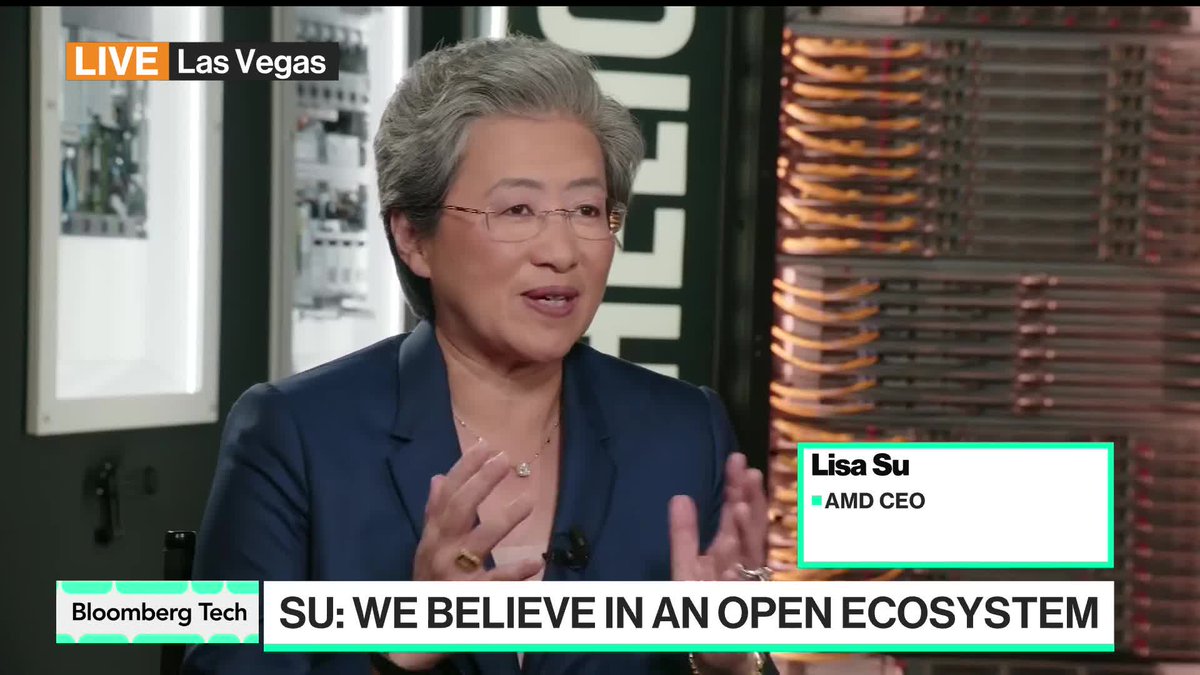
A second clip frames AI progress as moving in “weeks” rather than years, per the Pace quote. For infra planning, the takeaway is less about a specific SKU and more about the implied pace of capacity buildout and the knock-on constraints (power delivery, memory bandwidth, and inference efficiency) that determine whether that demand can actually be served.
🔌 MCP and connector surface area: personal data, messages, and tool access
MCP continues to expand into “your digital life” integrations (messages/contacts/reminders) and into practical developer workflows (yeeting real conversations into coding agents).
iMCP turns macOS personal data apps into an MCP server for agents
iMCP (mattt): A macOS app that runs an MCP server over your “digital life” surfaces—Messages, Contacts, Reminders, Calendar, Maps/location, and Weather—so agents can fetch real conversation history and act with your local context, as shown in the [iMessage-to-agent workflow note](t:122|Usage callout) and detailed in the [GitHub repo](link:122:0|GitHub repo).
This matters because it’s a concrete, developer-usable bridge between MCP clients and personal data that otherwise sits behind native app silos (and it’s local to macOS, which changes privacy and latency assumptions versus cloud connectors).
Using iMessage threads as agent context via MCP
Workflow pattern: People are treating real chat history as “drop-in context” for coding agents—pulling an iMessage thread and then feeding it into Claude/Codex-style workflows—because it preserves nuance that gets lost when someone re-summarizes requirements from memory, as illustrated by the [“yeet this into a coding agent” example](t:122|Workflow example).
In practice, MCP-backed message export shifts context management from “copy/paste + cleanup” toward a repeatable retrieval primitive (message history by participant + time window), which can be audited and re-run when requirements change.
iMCP PR adds Claude Code and Amp install instructions
iMCP (mattt): A new documentation PR adds explicit setup steps for using iMCP from Claude Code and Amp, aiming to reduce the “it works but nobody knows how to wire it up” friction for MCP in day-to-day agent workflows, as described in the [PR note](t:521|Install instructions PR) and implemented in the [PR diff](link:521:0|GitHub PR).
For teams standardizing on MCP, this is the kind of small doc work that typically determines whether an integration becomes repeatable across engineers or stays a one-person local hack.
📏 Benchmarks & eval signals: GPT-5.2 math proofs and “independent” solutions
Math capability claims continue, with discussion shifting from “did it solve it” to “did it find an independent approach” and “how much human scaffolding was required.”
GPT-5.2 Pro finds an independent-style proof for an Erdős problem
GPT-5.2 Pro (OpenAI): A new report claims GPT-5.2 Pro generated a proof for an Erdős problem that already has a known proof in the literature, but via a “rather different” route—so it’s being framed as an independent approach rather than a novel theorem, as described in the Erdős proof update. The same thread-of-reaction highlights that third-party mathematician commentary characterized it as “slightly different from the standard methods,” according to the Tao comment recap.
The operational significance for evals is less “did it solve it?” and more “can it re-derive nontrivial arguments with a different proof path,” which is a stronger signal than just reproducing the canonical literature proof verbatim.
Erdős proof follow-up shifts focus to novelty and scaffolding
Erdős proofs (evaluation hygiene): Following up on Erdős proofs (GPT-5.2 Pro solving Erdős problems), a separate update notes that “a prior proof was found,” while still emphasizing the model’s proof path differed from that prior work, as stated in the Prior proof note. The same post also underlines that these results are “not solving these autonomously,” describing them as human-prompted and “often iterating using Lean,” per the Prior proof note.
This framing is turning into an eval norm: track (1) novelty vs re-derivation, and (2) the amount of formal-method/tool scaffolding needed for success.
Debate grows over what “different proofs” should count as
Math capability interpretation: A skeptical take argues these math “proofs” are largely “known methods” and could be “a stochastic parrot just picking the low hanging fruits,” while still conceding that such systems remain “tremendously useful tools,” as argued in the Skeptical framing. The same thread raises a higher bar—“come up with its own field of mathematics”—as the kind of milestone that would feel qualitatively different, per the Skeptical framing.
Net effect: the community is converging on a two-tier narrative—practical usefulness today, but disagreement on whether it implies imminent breakthrough-level mathematical originality.
📱 Edge + on-device AI: Google AI Edge, LiteRT in-browser inference, and Apple Foundation Models
On-device runtimes are getting more “real” for product teams: Google pushes AI Edge + LiteRT for cross-platform deployment (including browser), while Apple’s Foundation Models framework signals tool-calling on-device.
LiteRT demo shows offline, in-browser LLM inference without local model servers
LiteRT (Google AI Edge): A practical demo shows running LLM inference fully in the browser—no internet and no local serving layer like Ollama or LMStudio—by loading a model directly and generating text, as shown in the LiteRT browser run and described in the LiteRT docs.

The shipping implication is that “web as an edge runtime” is becoming a first-class deployment target; the runtime is framed as high-performance and built on the TensorFlow Lite foundation, per the LiteRT docs.
Apple’s Foundation Models show up in Xcode workflows for on-device tool calling
Foundation Models (Apple): Apple’s developer docs continue to point to an on-device LLM interface with tool calling, framed as sufficient for “simple LLM tasks” without online inference, per the Foundation Models docs screenshot.
A builder workflow is already emerging around using coding agents to wire it up fast: one report describes using Claude Code (Opus 4.5) in Xcode to build a simple SwiftUI app that uses the Foundation Models framework in ~20 minutes, with a working simulator UI shown in the Xcode app screenshot and a related setup snapshot in the Xcode with Claude chat.
Device-side support and OS gating remain the main unknowns from these tweets; what’s clear is that teams are treating this as a real app-facing API surface now, not just a research preview.
Google AI Edge pushes a cross-platform stack for on-device models
Google AI Edge (Google): Google is positioning AI Edge as an end-to-end stack to deploy models on-device across Android, iOS, web, and embedded—explicitly selling lower latency, offline operation, and keeping data local, as summarized in the AI Edge overview and expanded in the AI Edge developer docs.
This matters for product teams because it’s an attempt to make “same model everywhere” real (conversion + runtime + tooling), rather than a one-off mobile demo.
• Portability surface: The pitch is multi-framework (JAX/Keras/PyTorch/TensorFlow) plus a “full AI edge stack” for conversion/quantization/debugging, per the AI Edge developer docs.
• Privacy/latency contract: The core promise is local inference as a default—not an opt-in—per the AI Edge overview.
AI Edge Gallery highlights device gating as a product risk for on-device AI
AI Edge Gallery (Google): A developer trying to experiment with Google AI Edge ran into distribution friction: the AI Edge Gallery demo app is “not available for your device” in the Play Store, which turns device support into a hard adoption gate, per the Play Store availability issue.
This is a concrete reminder that on-device AI roadmaps are constrained not just by model/runtime quality, but by SKU coverage (chip/NPU support) and how quickly teams can test on representative hardware.
📚 Research papers worth stealing from: planning, judging, memory, and cost control
New papers cluster around making agents cheaper and more reliable without retraining: decoupled planning contexts, block-level blame/judging, prompt caching, and data-free self-improving search agents.
Agent-as-a-Judge reframes evaluation as an agentic workflow, not a single score
Agent-as-a-Judge: A survey argues that “LLM-as-a-judge” breaks on hard tasks because it can’t verify against reality, and proposes agentic judges that plan checks, call tools (search/code execution), and persist notes/memory, as described in the survey summary.
• Taxonomy and building blocks: it groups approaches by autonomy stages and emphasizes tool integration + memory as the key differentiator from single-shot grading, per the survey summary.
• Where it shows up: the survey claims adoption across math/code, fact-checking, and high-stakes domains (medicine/law/finance) because multi-step verification reduces “sounds right” scoring failures, as outlined in the survey summary.
No canonical benchmark table is shown in the tweets, so treat the performance framing as conceptual until you read the underlying paper cited in the survey summary.
Prompt caching study quantifies big cost cuts for long-horizon agents
Prompt caching evaluation: A paper benchmarks prompt-prefix caching in real agent sessions and reports ~45–80% cost reduction and ~13–31% faster time-to-first-token in some settings, based on experiments spanning OpenAI, Anthropic, and Google APIs as described in the results summary.
• What to cache: the study claims caching only the stable system prompt / fixed prefix is the safest default; caching full chats can backfire when tool outputs change, per the results summary.
• Why it matters: for agent loops that repeatedly resend large instructions (tools specs, policies, repo context), this gives a measured knob for reducing spend without changing model choice, as argued in the results summary.
Task-Decoupled Planning reframes long-horizon failures as context entanglement
Task-Decoupled Planning (TDP): A new training-free framework argues long-horizon agent failures come less from “can’t plan” and more from letting a single execution history entangle multiple sub-tasks; it decomposes work into a DAG and keeps scoped context per active node, with replanning staying local as described in the paper overview.
• Reported outcomes: TDP claims up to 82% fewer tokens than Plan-and-Act while improving results, using 1,747 vs 9,929 output tokens on HotpotQA, and reaching 85.88% delivery accuracy there according to the paper overview.
• Why it matters for agent builders: the paper’s implementation pattern (Supervisor→Planner→Executor with isolated “active sub-task” state) is a concrete template for building agents that don’t degrade as the trace grows, as outlined in the paper overview.
Dr. Zero proposes data-free self-evolution for search agents
Dr. Zero (Meta): A paper claims a search agent can teach itself with zero human-labeled training data by having a proposer generate questions and a solver answer them using search feedback, with the proposer rewarded for “sometimes solvable” difficulty, as summarized in the paper thread.
• Reported outcomes: the thread claims Dr. Zero matches or beats supervised search agents on 7 open-domain benchmarks, with up to 14.1% gains on harder sets, per the paper thread.
• Why it matters: if the feedback signal is “did tool-backed search support the answer,” this is a route to scaling agent competence without curating large QA datasets, as described in the paper thread.
ExpSeek uses entropy to ask for help only when stuck in web navigation
ExpSeek: A web-agent paper proposes monitoring the model’s step-level uncertainty (next-token entropy) and injecting “experience notes” only when the agent is likely stuck, rather than front-loading memory every run, as described in the paper overview.
• Reported outcomes: the thread reports accuracy lifts of +9.3% (Qwen3-8B) and +7.5% (Qwen3-32B) across web-agent benchmarks, and claims even a 4B helper model can improve a 32B agent, per the paper overview.
• Implementation detail: experience is stored as structured “what happened / what went wrong / what to try” notes and retrieved at the trigger step, as outlined in the paper overview.
JudgeFlow uses block-level blame to optimize agent workflows faster
JudgeFlow (Block Judge): A workflow-optimization paper proposes adding a “judge” that assigns responsibility scores to discrete workflow blocks (loops/branches/steps), so optimization edits target the most likely failure source instead of tweaking the whole chain, as summarized in the paper thread.
• Reported impact: the authors claim 82.2 average across four benchmarks and a +1.4 overall gain vs MermaidFlow, with ~2% extra cost for judging, per the paper thread.
• Engineering angle: this frames “agent improvement” as search over orchestration code (prompts, tool blocks, routers) rather than model training, which is the lever most teams can actually ship quickly, as described in the paper thread.
Prompt politeness study reports a small but consistent accuracy swing
Mind Your Tone: A small study reports that prompt politeness affected ChatGPT-4o multiple-choice accuracy, with “very rude” prompting scoring 84.8% vs 80.8% for “very polite,” with differences reported as statistically significant over repeated runs as summarized in the paper summary.
• What’s actually tested: 50 base questions rewritten into five tone variants (very polite→very rude) for 250 prompts, per the paper summary.
• Interpretation caution: the effect size is modest and task-specific (MCQs across math/science/history); treat it as a prompting variable worth controlling in evals, not a universal law, based on the paper summary.
Survey maps agent memory from simple storage to experience abstraction
LLM agent memory mechanisms survey: A new survey proposes an evolution frame from Storage → Reflection → Experience, arguing the field is moving from “save trajectories” toward abstraction and active memory management for consistency, dynamic environments, and eventual continual learning, as noted in the survey mention.
The preprint frames the taxonomy and drivers in more detail in the survey preprint.
• Why it’s useful: it’s an attempt to normalize vocabulary across a fragmented space (RAG memories, journaling, summaries, experience buffers) so teams can compare designs beyond “we added memory,” following the positioning in the survey preprint.
🛡️ Security and trust: cheap impersonation and reply spam degrade platforms
Fast face/voice impersonation and AI reply spam are compounding into a trust problem: it’s easier to impersonate at scale, and harder to tell which interactions are real.
Face swap + voice cloning under ~200ms makes impersonation scalable
Impersonation at scale: Following up on deception (fake AI influencer risk), a clip circulating today claims face swap and voice cloning now run under ~200ms on consumer GPUs, turning online impersonation into a broadcast problem rather than a single-target con, as described in the impersonation clip.

The operational shift is that “verify identity” becomes an adversarial requirement for voice/video channels (support calls, sales calls, exec comms), because latency is low enough to keep conversations interactive rather than obviously “generated.”
VoxCPM open-source voice cloning claims 5-second samples
VoxCPM (OpenBMB): A widely shared retweet claims VoxCPM can “clone any voice with a 5-second audio clip,” positioning fast voice cloning as something teams should assume is commodity capability rather than a lab-only demo, per the VoxCPM claim.
In practice, this increases the baseline threat model for anything that treats “voice = identity” (voice-based approvals, inbound support verification, audio notes as evidence), even if the best defenses remain workflow and policy, not just model detection.
AI reply spam is collapsing the value of public replies
Platform trust: Multiple users complain that replies feel “unread” because they’re flooded with “AI reply crap,” which changes how people use social forums (less interaction, more passive consumption) as noted in the Replies are dead complaint and echoed by the Less social post.
For teams building community surfaces (devrel forums, community support, public issue triage), this points to a product requirement: preserve “human-to-human” channels with stronger friction and provenance, or the reply layer stops working as a coordination mechanism.
🎙️ Voice agents: “serious mode” demand and integration pain
Builders want voice interfaces that optimize for task execution (not “um” and flattery), but today’s APIs still make it hard to build fully interruptible, low-latency, smart voice control loops.
Voice agents need a “serious mode” and today’s APIs still break interruptibility
Voice agents (Product UX): A call is resurfacing for a “serious voice mode” optimized for task execution—less fake disfluency (“um”), less sycophancy, and more command reliability—because current voice modes are seen as being powered by “dumb models” that undersell voice as an agent control plane, per the Serious voice mode ask.
Integration pain (Developer APIs): Builders still have to stitch STT → “smart” text model → TTS, which loses the natural interruptibility and back-and-forth of true multimodal voice, as described in the API stitching pain.
• Design critique: The thread argues “work voice” should feel closer to the Star Trek computer—no giggling, sighing, or flattery mid-task—framed as an unmet product niche rather than a model capability ceiling, per the Star Trek voice analogy.
VoxCPM claims 5-second voice cloning as an open-source drop
VoxCPM (Open-source voice cloning): VoxCPM is being circulated as an open-source project that can “clone any voice with a 5-second audio clip,” per the VoxCPM voice cloning.
With only a short claim in the tweets (no linked paper, demo, or eval artifact provided), what’s concrete here is the direction of travel: ultra-low-sample voice cloning is increasingly treated as commodity capability, which raises both product opportunity (custom voices) and operational pressure (impersonation risk) for voice-agent builders.


